Plastic Long Wallet
CN → US| HS编码 | 关税税率 | 原产国 | 目的国 | 文档 |
|---|---|---|---|---|
| 3923900080 | 38.0% | CN | US | 官方文档 |
| 3923109000 | 38.0% | CN | US | 官方文档 |
| 4202322000 | 55.0% | CN | US | 官方文档 |
| 4202321000 | 0.0% | CN | US | 官方文档 |
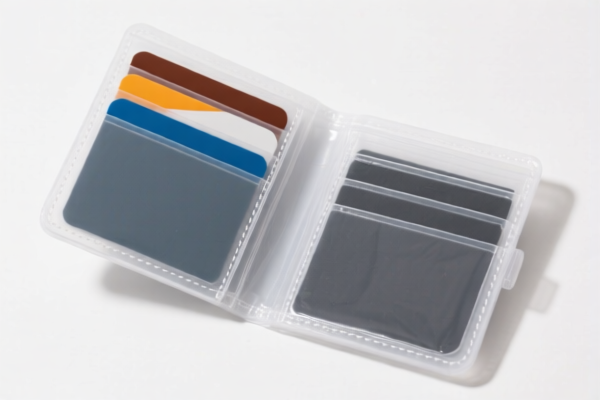
商品图片



AI分析
💼 Plastic Long Wallet: The Ultimate HS Code & Tax Master Guide (2026 Edition)
🌐 HS Code Reference & Customs Clearance Guide | 2026 Tax Regime Deep Dive | Professional Entry Strategy
📌 Product Definition: What is a "Plastic Long Wallet"?
A Plastic Long Wallet is a rigid or semi-rigid accessory designed to hold cards, cash, and identification in a folded or elongated format. In international trade, the classification depends heavily on the outer surface material and construction method, not just the fact that it's made of plastic.
Key Distinctions: * "Packaging" Classification (Chapter 39): If the wallet is considered a "container" or "carrier" without a specific leather/genuine material structure, it falls under plastic packaging chapters. * "Article of Apparel/Accessories" Classification (Chapter 42): If the outer surface is specifically composed of plastic sheets (laminated/film), it often migrates to the leather goods chapter (Chapter 42), which usually carries a significantly higher tariff.
⚠️ Critical Warning:
- If the wallet's outer surface is a plastic sheet/film → HS 4202 (High Tax: 55%+)
- If the wallet is a molded plastic container (not sheet-based) → HS 3923 (Lower Tax: 38%)
- Do not confuse "Plastic Sheets" with "Molded Plastic"!
📦 II. Detailed HS Code Breakdown (2026 Authority Comparison)
| HS Code | Product Description | Specific Scenario | Tax Complexity |
|---|---|---|---|
| 3923.90.00.80 | Plastic Wallet: Classified as "Other packaging articles" | Molded plastic containers, non-sheets, generic carriers | 🟢 Moderate (38%) |
| 3923.10.90.00 | Plastic Wallet: "Other carrying/packaging articles" | Rigid plastic cases, travel wallet boxes, non-sheets | 🟢 Moderate (38%) |
| 4202.32.20.00 | Wallet with Plastic Sheet Surface: Outer surface = plastic film | High Risk: Wallets where the outer look is plastic sheeting (laminated) | 🔴 High (55%) |
| 4202.32.10.00 | Reinforced/Laminated Plastic Wallet: Heavy-duty plastic construction | Wallets with thick, reinforced, or layered plastic sheets (often "bi-fold" style) | 🔴 Very High (Mixed: $0.121/kg + 39.6%) |
| 4202.32.20.00 | Pocket/Tote Plastic Wallet: Carried in pocket or handbag | Standard plastic sheet wallets designed for daily carry | 🔴 High (55%) |
🔍 Key Insight:
The 4202 codes (Sheet-based) carry a 55% total tariff, whereas 3923 codes (Packaging/Molded) carry only 38%. This is a 17% tax gap! - Why? US Customs views "plastic sheet" wallets as "similar to leather goods" (Chapter 42), which are taxed more heavily than "plastic packaging" (Chapter 39).
💰 III. 2026 Tax Rate Deep Dive (US Import from China)
✅ Target Market: United States (US)
✅ Origin: China (CN)
✅ Effective Date: November 10, 2025 (Current Regime)
🎯 Scenario A: The "Packaging" Route (HS 3923.xxxxxx)
Best for: Molded plastic wallets, hard-shell cases, generic carriers.
| Tax Component | Rate | Details |
|---|---|---|
| Base Duty (MFN) | 3.0% | Standard Most Favored Nation rate. |
| Section 301 (Add-on) | 25.0% | "Section 301" tariffs on Chinese goods. |
| Section 122 (New) | 10.0% | New "Section 122" tariff (China-specific). |
| TOTAL EFFECTIVE RATE | 38.0% | Ad Valorem (Value-based) |
| De Minimis Exemption | ❌ NO | Not eligible for $800 duty-free exemption. |
| Legal Path | USITC:3923.90.00.80 → 9903.88.17 (Sec 301) → 9903.88.19 (Sec 122) |
📌 Explanation:
- Base (3%): Standard duty.
- Section 301 (25%): The major "trade war" tariff.
- Section 122 (10%): A newer, aggressive tariff layer.
- Total: You pay 38% on the CIF value.
🎯 Scenario B: The "Plastic Sheet" Route (HS 4202.32.20.00)
Best for: Wallets where the outer layer is a visible plastic film/sheet.
| Tax Component | Rate | Details |
|---|---|---|
| Base Duty (MFN) | 20.0% | Leather goods equivalent rate. |
| Section 301 (Add-on) | 25.0% | Section 301 tariff. |
| Section 122 (New) | 10.0% | Section 122 tariff. |
| TOTAL EFFECTIVE RATE | 55.0% | Ad Valorem (Value-based) |
| De Minimis Exemption | ❌ NO | Not eligible. |
| Legal Path | USITC:4202.32.20.00 → 9903.88.17 (Sec 301) → 9903.88.19 (Sec 122) |
📌 Explanation:
- Base (20%): This is the "leather goods" rate. If your wallet looks like it has a plastic skin, Customs will hit you with this base rate.
- Total: 55%! This is a 17% increase over the packaging route.
🎯 Scenario C: The "Reinforced/Laminated" Route (HS 4202.32.10.00)
Best for: Thick, heavy-duty, layered plastic wallets.
| Tax Component | Rate | Details |
|---|---|---|
| Base Duty (MFN) | 12.1¢/kg + 4.6% | Mixed duty: Specific weight duty + Ad Valorem. |
| Section 301 (Add-on) | 25.0% | Section 301 tariff (on Ad Valorem part). |
| Section 122 (New) | 10.0% | Section 122 tariff (on Ad Valorem part). |
| TOTAL EFFECTIVE RATE | 12.1¢/kg + 4.6% + 35% | Weight + Value |
| De Minimis Exemption | ❌ NO | Not eligible. |
📌 Explanation:
- Complex Calculation: You pay per kilogram AND per value.
- Total: For heavy wallets, the weight tax hits hard. For light ones, the 39.6% (4.6% base + 25% + 10%) is still very high compared to the 38% packaging rate.
🛠️ IV. Practical Customs Clearance Advice (How to Save Money)
✅ 1. Strategy: Aim for HS 3923 (The "Packaging" Loophole)
If your wallet is molded plastic (injection molded) and NOT covered in a plastic sheet/film, DO declare it under 3923.90.00.80 or 3923.10.90.00. - Benefit: 38% Tax vs 55% Tax. - Action: Ensure the product is a single molded piece or made of rigid plastic blocks, not a "sheet" wrapped around a core.
✅ 2. Avoid the "Plastic Sheet" Trap (HS 4202)
If your wallet has a visible plastic film on the outside (like a clear wallet or a laminated cardholder), Customs will likely classify it as 4202. - Risk: The "Sheet" definition triggers the higher leather-goods equivalent tax. - Action: If possible, use textured plastic or molded plastic instead of laminated sheets to argue for Chapter 39.
✅ 3. Required Documentation Checklist
| Document | Purpose | Why it Matters |
|---|---|---|
| Product Composition Report | Proof of material | Must explicitly state "100% Molded Plastic" vs "Plastic Sheet" |
| Structural Diagram | Show construction | Prove it is not a "sheet wrapped" item |
| Sample Photos (Macro) | Surface texture | Show no "sheet" layers, only molded texture |
| Commercial Invoice | Value declaration | Must match HS Code description exactly |
| FBA/Carrier Labeling | US Customs ID | Ensure correct "Country of Origin: China" |
✅ 4. Declaration Strategy (The "Golden Rule")
🚫 DON'T Say: "Plastic Leather Wallet" or "Plastic Sheet Wallet" (Triggers HS 4202)
✅ DO Say: "Injection Molded Plastic Carrier" or "Hard Plastic Wallet, Non-Sheet" (Triggers HS 3923)
🌍 V. Market Comparison & Risk Summary
| HS Code Category | Base Duty | Add-on (301+122) | TOTAL RATE | Risk Level | Recommendation |
|---|---|---|---|---|---|
| 3923 (Packaging) | 3.0% | 35.0% | 38.0% | 🟡 Medium | PREFERRED for molded wallets |
| 4202.32.20 (Sheet) | 20.0% | 35.0% | 55.0% | 🔴 High | AVOID if possible (high tax) |
| 4202.32.10 (Reinforced) | 4.6% + Weight | 35.0% | ~39.6% + Weight | 🔴 High | Only if heavy-duty required |
📌 Conclusion:
- The 17% tax difference (38% vs 55%) is massive.
- If your wallet is molded (not sheet-based), force the 3923 classification.
- If your wallet has a plastic sheet surface, you must pay the 55% rate.
📌 VI. Common Mistakes & Pitfalls (Don't Make These!)
❌ Mistake 1: Calling a "Molded Plastic Wallet" a "Plastic Sheet Wallet"
👉 Result: You pay 55% instead of 38%. Overpaying by 45% on taxes!
❌ Mistake 2: Assuming all plastic wallets are Chapter 39
👉 Result: If the outer surface is a "sheet," Customs will reclassify to 4202 and assess 55%.
❌ Mistake 3: Ignoring the "Weight" tax in HS 4202.32.10
👉 Result: Heavy wallets incur 12.1¢/kg on top of the percentage, making them even more expensive.
✅ Correct Approach:
"This is a molded plastic accessory (Chapter 39), NOT a plastic sheet article (Chapter 42). Declare as 3923.90.00.80 to save 17%."
🎯 VII. Final Verdict: Strategic Action Plan
- Audit Your Product: Is the outer surface a sheet or a molded block?
- Choose the Right Code:
- Molded/Block → 3923.90.00.80 (Tax: 38%) ✅
- Sheet/Laminated → 4202.32.20.00 (Tax: 55%) ❌
- Prepare Evidence: Have photos and technical specs ready to prove it's NOT a sheet.
- File Accurately: Declare "Molded Plastic Carrier" to avoid misclassification audits.
📣 Call to Action:
🚀 Don't let a 17% tax hike eat your margins!
📞 Consult your customs broker today to re-evaluate your wallet classification.
💡 Remember: "Molded = 3923 (38%)", "Sheet = 4202 (55%)"!
✨ Precision Classification = Maximum Profit!
💼 Your wallet's tax rate depends on a single word: "Sheet" vs "Molded".
用户评价
关于 HS 编码归类
协调制度(HS)是由世界海关组织(WCO)制定的国际贸易商品分类标准。全球 200 多个国家采用 HS 系统作为海关关税、贸易统计和进出口监管的基础。
每个 HS 编码遵循以下层级结构:
- 章(2 位)——商品大类(例如:第 84 章:机器和机械设备)
- 品目(4 位)——章内的更具体分类
- 子目(6 位)——国际通用细分,所有 WCO 成员国统一使用
- 本国细分(8-10 位)——各国自行扩展的细分编码,如美国 HTSUS 10 位编码
正确的 HS 编码归类对于顺利通关、准确缴纳关税和遵守贸易法规至关重要。错误归类可能导致海关延误、多缴关税或罚款。
从CN进口到US时,适用的关税税率可能包括:
- 最惠国(MFN)税率——适用于 WTO 成员国的标准关税税率
- 普通税率——适用于无贸易协定国家
- 贸易救济关税——附加关税,如 301 条款(反倾销)、232 条款(国家安全)或反补贴税
本页内容仅供参考。如需正式归类,请咨询当地海关或持牌报关代理。