Plastic Long Wallet
CN → US| HS Code | Tariff Rate | Origin | Destination | Doc |
|---|---|---|---|---|
| 3923900080 | 38.0% | CN | US | Official Doc |
| 3923109000 | 38.0% | CN | US | Official Doc |
| 4202322000 | 55.0% | CN | US | Official Doc |
| 4202321000 | 0.0% | CN | US | Official Doc |
Product Images

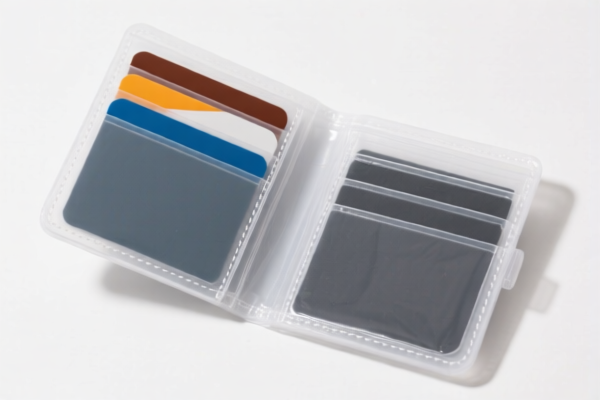


AI Analysis
💼 Plastic Long Wallet: The Ultimate HS Code & Tax Master Guide (2026 Edition)
🌐 HS Code Reference & Customs Clearance Guide | 2026 Tax Regime Deep Dive | Professional Entry Strategy
📌 Product Definition: What is a "Plastic Long Wallet"?
A Plastic Long Wallet is a rigid or semi-rigid accessory designed to hold cards, cash, and identification in a folded or elongated format. In international trade, the classification depends heavily on the outer surface material and construction method, not just the fact that it's made of plastic.
Key Distinctions: * "Packaging" Classification (Chapter 39): If the wallet is considered a "container" or "carrier" without a specific leather/genuine material structure, it falls under plastic packaging chapters. * "Article of Apparel/Accessories" Classification (Chapter 42): If the outer surface is specifically composed of plastic sheets (laminated/film), it often migrates to the leather goods chapter (Chapter 42), which usually carries a significantly higher tariff.
⚠️ Critical Warning:
- If the wallet's outer surface is a plastic sheet/film → HS 4202 (High Tax: 55%+)
- If the wallet is a molded plastic container (not sheet-based) → HS 3923 (Lower Tax: 38%)
- Do not confuse "Plastic Sheets" with "Molded Plastic"!
📦 II. Detailed HS Code Breakdown (2026 Authority Comparison)
| HS Code | Product Description | Specific Scenario | Tax Complexity |
|---|---|---|---|
| 3923.90.00.80 | Plastic Wallet: Classified as "Other packaging articles" | Molded plastic containers, non-sheets, generic carriers | 🟢 Moderate (38%) |
| 3923.10.90.00 | Plastic Wallet: "Other carrying/packaging articles" | Rigid plastic cases, travel wallet boxes, non-sheets | 🟢 Moderate (38%) |
| 4202.32.20.00 | Wallet with Plastic Sheet Surface: Outer surface = plastic film | High Risk: Wallets where the outer look is plastic sheeting (laminated) | 🔴 High (55%) |
| 4202.32.10.00 | Reinforced/Laminated Plastic Wallet: Heavy-duty plastic construction | Wallets with thick, reinforced, or layered plastic sheets (often "bi-fold" style) | 🔴 Very High (Mixed: $0.121/kg + 39.6%) |
| 4202.32.20.00 | Pocket/Tote Plastic Wallet: Carried in pocket or handbag | Standard plastic sheet wallets designed for daily carry | 🔴 High (55%) |
🔍 Key Insight:
The 4202 codes (Sheet-based) carry a 55% total tariff, whereas 3923 codes (Packaging/Molded) carry only 38%. This is a 17% tax gap! - Why? US Customs views "plastic sheet" wallets as "similar to leather goods" (Chapter 42), which are taxed more heavily than "plastic packaging" (Chapter 39).
💰 III. 2026 Tax Rate Deep Dive (US Import from China)
✅ Target Market: United States (US)
✅ Origin: China (CN)
✅ Effective Date: November 10, 2025 (Current Regime)
🎯 Scenario A: The "Packaging" Route (HS 3923.xxxxxx)
Best for: Molded plastic wallets, hard-shell cases, generic carriers.
| Tax Component | Rate | Details |
|---|---|---|
| Base Duty (MFN) | 3.0% | Standard Most Favored Nation rate. |
| Section 301 (Add-on) | 25.0% | "Section 301" tariffs on Chinese goods. |
| Section 122 (New) | 10.0% | New "Section 122" tariff (China-specific). |
| TOTAL EFFECTIVE RATE | 38.0% | Ad Valorem (Value-based) |
| De Minimis Exemption | ❌ NO | Not eligible for $800 duty-free exemption. |
| Legal Path | USITC:3923.90.00.80 → 9903.88.17 (Sec 301) → 9903.88.19 (Sec 122) |
📌 Explanation:
- Base (3%): Standard duty.
- Section 301 (25%): The major "trade war" tariff.
- Section 122 (10%): A newer, aggressive tariff layer.
- Total: You pay 38% on the CIF value.
🎯 Scenario B: The "Plastic Sheet" Route (HS 4202.32.20.00)
Best for: Wallets where the outer layer is a visible plastic film/sheet.
| Tax Component | Rate | Details |
|---|---|---|
| Base Duty (MFN) | 20.0% | Leather goods equivalent rate. |
| Section 301 (Add-on) | 25.0% | Section 301 tariff. |
| Section 122 (New) | 10.0% | Section 122 tariff. |
| TOTAL EFFECTIVE RATE | 55.0% | Ad Valorem (Value-based) |
| De Minimis Exemption | ❌ NO | Not eligible. |
| Legal Path | USITC:4202.32.20.00 → 9903.88.17 (Sec 301) → 9903.88.19 (Sec 122) |
📌 Explanation:
- Base (20%): This is the "leather goods" rate. If your wallet looks like it has a plastic skin, Customs will hit you with this base rate.
- Total: 55%! This is a 17% increase over the packaging route.
🎯 Scenario C: The "Reinforced/Laminated" Route (HS 4202.32.10.00)
Best for: Thick, heavy-duty, layered plastic wallets.
| Tax Component | Rate | Details |
|---|---|---|
| Base Duty (MFN) | 12.1¢/kg + 4.6% | Mixed duty: Specific weight duty + Ad Valorem. |
| Section 301 (Add-on) | 25.0% | Section 301 tariff (on Ad Valorem part). |
| Section 122 (New) | 10.0% | Section 122 tariff (on Ad Valorem part). |
| TOTAL EFFECTIVE RATE | 12.1¢/kg + 4.6% + 35% | Weight + Value |
| De Minimis Exemption | ❌ NO | Not eligible. |
📌 Explanation:
- Complex Calculation: You pay per kilogram AND per value.
- Total: For heavy wallets, the weight tax hits hard. For light ones, the 39.6% (4.6% base + 25% + 10%) is still very high compared to the 38% packaging rate.
🛠️ IV. Practical Customs Clearance Advice (How to Save Money)
✅ 1. Strategy: Aim for HS 3923 (The "Packaging" Loophole)
If your wallet is molded plastic (injection molded) and NOT covered in a plastic sheet/film, DO declare it under 3923.90.00.80 or 3923.10.90.00. - Benefit: 38% Tax vs 55% Tax. - Action: Ensure the product is a single molded piece or made of rigid plastic blocks, not a "sheet" wrapped around a core.
✅ 2. Avoid the "Plastic Sheet" Trap (HS 4202)
If your wallet has a visible plastic film on the outside (like a clear wallet or a laminated cardholder), Customs will likely classify it as 4202. - Risk: The "Sheet" definition triggers the higher leather-goods equivalent tax. - Action: If possible, use textured plastic or molded plastic instead of laminated sheets to argue for Chapter 39.
✅ 3. Required Documentation Checklist
| Document | Purpose | Why it Matters |
|---|---|---|
| Product Composition Report | Proof of material | Must explicitly state "100% Molded Plastic" vs "Plastic Sheet" |
| Structural Diagram | Show construction | Prove it is not a "sheet wrapped" item |
| Sample Photos (Macro) | Surface texture | Show no "sheet" layers, only molded texture |
| Commercial Invoice | Value declaration | Must match HS Code description exactly |
| FBA/Carrier Labeling | US Customs ID | Ensure correct "Country of Origin: China" |
✅ 4. Declaration Strategy (The "Golden Rule")
🚫 DON'T Say: "Plastic Leather Wallet" or "Plastic Sheet Wallet" (Triggers HS 4202)
✅ DO Say: "Injection Molded Plastic Carrier" or "Hard Plastic Wallet, Non-Sheet" (Triggers HS 3923)
🌍 V. Market Comparison & Risk Summary
| HS Code Category | Base Duty | Add-on (301+122) | TOTAL RATE | Risk Level | Recommendation |
|---|---|---|---|---|---|
| 3923 (Packaging) | 3.0% | 35.0% | 38.0% | 🟡 Medium | PREFERRED for molded wallets |
| 4202.32.20 (Sheet) | 20.0% | 35.0% | 55.0% | 🔴 High | AVOID if possible (high tax) |
| 4202.32.10 (Reinforced) | 4.6% + Weight | 35.0% | ~39.6% + Weight | 🔴 High | Only if heavy-duty required |
📌 Conclusion:
- The 17% tax difference (38% vs 55%) is massive.
- If your wallet is molded (not sheet-based), force the 3923 classification.
- If your wallet has a plastic sheet surface, you must pay the 55% rate.
📌 VI. Common Mistakes & Pitfalls (Don't Make These!)
❌ Mistake 1: Calling a "Molded Plastic Wallet" a "Plastic Sheet Wallet"
👉 Result: You pay 55% instead of 38%. Overpaying by 45% on taxes!
❌ Mistake 2: Assuming all plastic wallets are Chapter 39
👉 Result: If the outer surface is a "sheet," Customs will reclassify to 4202 and assess 55%.
❌ Mistake 3: Ignoring the "Weight" tax in HS 4202.32.10
👉 Result: Heavy wallets incur 12.1¢/kg on top of the percentage, making them even more expensive.
✅ Correct Approach:
"This is a molded plastic accessory (Chapter 39), NOT a plastic sheet article (Chapter 42). Declare as 3923.90.00.80 to save 17%."
🎯 VII. Final Verdict: Strategic Action Plan
- Audit Your Product: Is the outer surface a sheet or a molded block?
- Choose the Right Code:
- Molded/Block → 3923.90.00.80 (Tax: 38%) ✅
- Sheet/Laminated → 4202.32.20.00 (Tax: 55%) ❌
- Prepare Evidence: Have photos and technical specs ready to prove it's NOT a sheet.
- File Accurately: Declare "Molded Plastic Carrier" to avoid misclassification audits.
📣 Call to Action:
🚀 Don't let a 17% tax hike eat your margins!
📞 Consult your customs broker today to re-evaluate your wallet classification.
💡 Remember: "Molded = 3923 (38%)", "Sheet = 4202 (55%)"!
✨ Precision Classification = Maximum Profit!
💼 Your wallet's tax rate depends on a single word: "Sheet" vs "Molded".
Customer Reviews
About HS Code Classification
The Harmonized System (HS) is an internationally standardized nomenclature developed by the World Customs Organization (WCO) to classify traded products. Over 200 countries use the HS system as the basis for customs tariffs, trade statistics, and import/export regulations.
Each HS code follows a hierarchical structure:
- Chapter (2 digits) — Broad category of goods (e.g., Chapter 84: Machinery and Mechanical Appliances)
- Heading (4 digits) — More specific grouping within the chapter
- Subheading (6 digits) — Internationally standardized breakdown, used by all WCO member countries
- National subdivisions (8-10 digits) — Country-specific extensions for further classification, such as US HTSUS 10-digit codes
Correct HS code classification is essential for smooth customs clearance, accurate duty payment, and compliance with trade regulations. Misclassification can lead to customs delays, overpayment of duties, or penalties.
When importing from CN to US, the applicable tariff rates may include:
- Most-Favored-Nation (MFN) rate — The standard duty rate applied to WTO members
- General rate — Applied to countries without trade agreements
- Trade remedy duties — Additional tariffs such as Section 301 (anti-dumping), Section 232 (national security), or countervailing duties
The information provided on this page is for reference purposes only. For official classification, please consult with your local customs authority or a licensed customs broker.