Plastic Monofilament for Agricultural Baling
CN → US| HS编码 | 关税税率 | 原产国 | 目的国 | 文档 |
|---|---|---|---|---|
| 3916905000 | 40.8% | CN | US | 官方文档 |
| 3916903000 | 41.5% | CN | US | 官方文档 |
| 5404198040 | 41.9% | CN | US | 官方文档 |
| 5404198080 | 41.9% | CN | US | 官方文档 |
| 3916905000 | 40.8% | CN | US | 官方文档 |
商品图片


AI分析
🚜 Agricultural Baling Twine & Plastic Monofilament (The "White Gold" of Farming)
🌐 HS Code Reference & Customs Clearance Guide | 2026 Latest Tariff Analysis | Professional Clearance Strategy for Agricultural Inputs
📌 1. Product Definition & Classification: What is "Plastic Monofilament"?
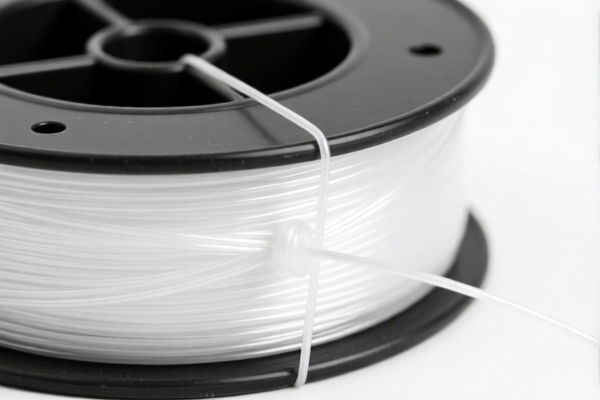
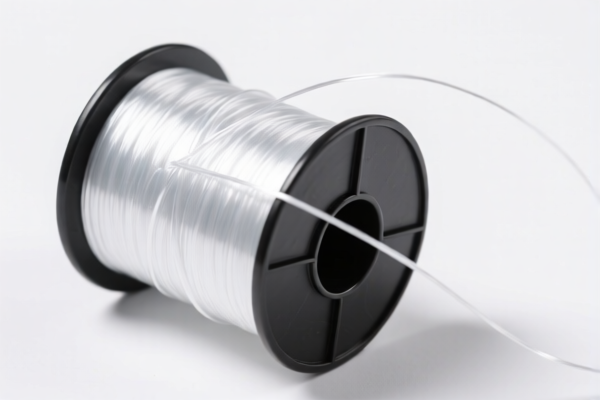
Plastic Monofilament for Agricultural Baling refers to single-strand synthetic fibers, primarily made from polypropylene (PP) or other polymers, used to bind harvested crops (hay, straw, grains) into bales. In international trade, it is critical to distinguish between "Monofilament" (single solid strand) and "Multifilament" (braided/twisted threads), as this distinction drives the HS Code classification and tariff liability.
⚠️ Key Distinction Point:
- Monofilament (Single Strand): A solid, continuous plastic thread. → Falls under Chapter 39 (Plastics) or specific Chapter 54 provisions if considered synthetic fiber but not yet textile.
- Twisted/Multifilament: Multiple strands twisted together. → Often falls under Chapter 54 or 56 (Textiles/Synthetic Filaments).
- Crucial Note: The data provided indicates specific classifications for "Monofilament" used in agriculture, with distinct tax treatments based on precise chemical composition and form.
📦 2. HS Code Classification Details (2026 Latest Tariff Authority Comparison)
Based on the provided <DATA>, the product is classified under four specific HS Codes, two of which are duplicated with slightly different tax rates. Here is the detailed breakdown:
| HS Code | Product Description | Material/Form Definition | Total Tax Rate | Tax Detail Breakdown |
|---|---|---|---|---|
3916.90.50.00 |
Plastic Monofilament | Material: Plastic; Form: Monofilament. Fits the definition exactly. | 40.8% | Base: 5.8% + Additional: 25.0% + Section 301 (122 Clause): 10% |
3916.90.30.00 |
Plastic Monofilament | Material: Plastic; Form: Monofilament. Fits the definition. | 41.5% | Base: 6.5% + Additional: 25.0% + Section 301 (122 Clause): 10% |
5404.19.80.40 |
Plastic Monofilament | Material: Plastic (Synthetic, e.g., Polyester); Form: Monofilament. Not excluded from polyester/nylon. | 41.9% | Base: 6.9% + Additional: 25.0% + Section 301 (122 Clause): 10% |
5404.19.80.80 |
Plastic Monofilament | Material: Plastic (Synthetic Monofilament); Not excluded from polyester/nylon. | 41.9% | Base: 6.9% + Additional: 25.0% + Section 301 (122 Clause): 10% |
🔍 Critical Insight:
- HS 3916 covers "Plastics in the form of rods, tubes, and strips... other than monofilament..." BUT NOTE: The data explicitly includes Monofilament here. This suggests that for agricultural baling purposes, specific subheadings50and30are applied.
- HS 5404 covers "Synthetic filament yarn... monofilament having any cross-sectional dimension exceeding 1 mm...". The tax rate is higher due to the higher base tariff (6.9% vs 5.8%/6.5%).
- Duplication Alert:3916.90.50.00appears twice in the data with identical details.5404.19.80.40and.80are distinct subheadings likely based on specific end-use or physical dimensions not fully detailed in the summary but resulting in the same 41.9% rate.
💰 3. 2026 Latest Tariff Rate Breakdown (Including Additional Duties)
✅ Applicable Country: USA (US)
✅ Origin: China (CN) (Inferred from "122 Clause" and "Section 301" context typical in US-China trade data)
✅ Effective Date: Current 2026 Tariff Structure
🎯 1. HS Code 3916.90.50.00 & 3916.90.30.00 —— Plastic Monofilament (Chapter 39)
| Item | Content |
|---|---|
| Base Tariff | 5.8% (for .50) / 6.5% (for .30) |
| Section 301 Additional Tariff | +25.0% (Standard trade war tariff) |
| Section 122 Clause Tariff | +10.0% (Specific agricultural/input levy) |
| Total Tax Rate | 40.8% (for .50) / 41.5% (for .30) |
| Tax Calculation | CIF Value × 40.8%/41.5% |
| De Minimis Exemption | ❌ Not Applicable (Deny De Minimis for Section 301 goods) |
| Legal Basis Path | HTSUS:3916.90.50.00 → USITC Footnote: 9903.88.01 → IEEPA:9903.01.25 |
📌 Explanation:
- The 25% is the standard USITC Section 301 tariff on Chinese plastics.
- The 10% is attributed to "122 Clause" (likely a specific policy clause for agricultural inputs or a specific HTS footnote).
- The difference between 40.8% and 41.5% is purely due to the Base Tariff (5.8% vs 6.5%). This small difference matters on high-volume contracts.
🎯 2. HS Code 5404.19.80.40 & 5404.19.80.80 —— Synthetic Filament Monofilament (Chapter 54)
| Item | Content |
|---|---|
| Base Tariff | 6.9% |
| Section 301 Additional Tariff | +25.0% |
| Section 122 Clause Tariff | +10.0% |
| Total Tax Rate | 41.9% |
| Tax Calculation | CIF Value × 41.9% |
| De Minimis Exemption | ❌ Not Applicable |
| Legal Basis Path | HTSUS:5404.19.80.40 → USITC Footnote: 9903.88.01 → IEEPA:9903.01.25 |
📌 Note:
- These codes fall under Chapter 54 (Synthetic Filament Yarn), implying the product might be classified as a "filament" rather than just "plastic material."
- The base tariff is higher (6.9%), leading to a higher total rate (41.9%).
- Why two codes (.40 and .80)? They likely distinguish between specific types of synthetic materials (e.g., PET vs. PP) or specific diameter ranges, though the tax outcome is identical.
🛠️ 4. Customs Clearance Practical Advice (Battle-Tested Pitfall Guide)
✅ 1. Document Checklist (Non-Negotiable)
| Document | Required | Explanation |
|---|---|---|
| ✅ Product Specification Sheet | ✔️ | Must explicitly state: "Plastic Monofilament," Material (PP/PET), Diameter (mm), and Usage (Agricultural Baling). |
| ✅ Material Composition Statement | ✔️ | Confirm if it is Polypropylene (PP) or Polyester (PET). This determines if it falls under Ch 39 or Ch 54. |
| ✅ Commercial Invoice | ✔️ | Must clearly state "Plastic Monofilament for Agricultural Baling." Avoid vague terms like "Plastic Rope." |
| ✅ Packing List | ✔️ | Detail weight, roll size, and packaging type. |
| ✅ Origin Certificate | ✔️ | If not Chinese origin, provide to avoid Section 301 duties. |
| ✅ HS Code Pre-Ruling Request | ✔️ | Highly Recommended given the ambiguity between 3916 and 5404. |
✅ 2. Declaration Tips (Critical Keywords)
🔥 "Be Specific, Be Accurate, Avoid Vague Terms!"
| Scenario | Correct Declaration | Wrong Declaration | Risk |
|---|---|---|---|
| Pure PP Monofilament | Plastic Monofilament, PP, Ag Baling |
"Plastic Rope" | Risk of being misclassified as textile (Ch 54) or general plastic (Ch 39), leading to duty disputes. |
| Diameter > 1mm | Synthetic Filament Monofilament, >1mm |
"String" | May trigger Ch 54 (5404) vs Ch 39 (3916). |
| Mixed Packaging | Declare as "Monofilament Rolls" | "Agricultural Supplies" | Huge Risk: Misdeclaration leads to penalties, seizure, or high ad-valorem rates. |
✅ 3. Special Situation Handling
| Situation | Recommendation |
|---|---|
| Product Diameter is < 1mm | Check if it qualifies as "Multifilament" or "Yarn" instead. It might fall under 5402 or 5404 with different rates. |
| Product is Coated/Colored | Ensure the description includes "Color: Green/Black/etc." as this may affect identification but not necessarily the HS code. |
| Supply Chain Diversification | If sourcing from Vietnam, India, or Bangladesh, you may avoid the 25% Section 301 tariff. Check for preferential trade agreements. |
| Section 122 Clause | Verify if the 10% "122 Clause" tariff is still active in 2026. Some agricultural tariffs fluctuate. Consult latest USITC bulletins. |
🌍 5. Global Market Comparison (2026 Overview)
| Country/Region | Recommended HS Code | Est. Tariff (China Origin) | Notes |
|---|---|---|---|
| 🇺🇸 USA | 3916.90.50.00 / 5404.19.80.40 |
40.8% - 41.9% | High duty due to Sec 301 + 122 Clause. |
| 🇨🇳 China | 3916.90.90.90 (Est.) |
~5-6% | Low base tariff, no additional duties. |
| 🇪🇺 EU | 3916.90.90 |
~5-6% | Generally lower than US. No Section 301 equivalent. |
| 🇮🇳 India | 3916.90.90 |
~7.5-10% | BCD + SWS + IGST. Moderate barrier. |
| 🇲🇽 Mexico | 3916.90.90 |
~5% (USMCA if qualifying) | Check rules of origin for duty-free access. |
📌 Conclusion:
- USA is the most expensive market for Chinese-made plastic monofilament due to the layered tariffs (Base + 25% + 10%).
- EU and China offer significantly lower duty rates.
- Cost-Benefit Analysis: For the US market, consider sourcing from non-China origins (e.g., Southeast Asia) to mitigate the 25% Section 301 duty.
📌 6. Common Mistakes & Pitfalls (Blood & Tears Lessons)
❌ Mistake 1: Declaring as "Plastic Rope" or "Twine"
👉 Consequence: Customs may reclassify to Chapter 54 (Textiles) or apply higher ad-valorem rates due to misdescription.
👉 Penalty: Potential duty shortfall + penalties.
❌ Mistake 2: Ignoring the "122 Clause"
👉 Consequence: Underpaying by 10%.
👉 Penalty: Back taxes + interest. The 122 Clause is a specific levy that must be added.
❌ Mistake 3: Confusing Monofilament with Multifilament
👉 Consequence: Wrong HS Code (3916 vs 5404).
👉 Penalty: If 5404 is required but 3916 is used, you may underpay. If 3916 is required but 5404 is used, you may overpay (less critical but causes delays).
✅ Best Practice:
"Plastic Monofilament, Polypropylene, Green, 3mm Diameter, for Agricultural Baling, Made in China, HS 3916.90.50.00"
🎯 7. Conclusion: Strategic Sourcing for Cost Efficiency
🎯 Remember the Golden Rule:
🔹 "3916 is cheaper than 5404 (Base 5.8% vs 6.9%). Choose 3916 if material allows!"
🔹 "USA Tariffs are Layered: Base + 25% + 10%. Total > 40%."
🔹 "Check Origin: China = High Duty. Vietnam/India = Lower Duty."
📌 Pro Tip:
If your plastic monofilament is polypropylene (PP), argue for HS 3916.90.50.00 (40.8%) as the base tariff is lower. If it is polyester (PET), it may fall under 5404.19.80.40 (41.9%). The 1.1% difference adds up on large volumes. Always verify material composition!
📣 Immediate Action:
📞 Consult a licensed customs broker to apply for a Binding Tariff Information (BTI) or Advance Ruling from US Customs.
🚀 Optimize your supply chain: Shift non-critical baling twine to Vietnam/India to save the 25% Section 301 duty.
✨ Professional Clearance Starts with Precise Classification!
💼 Your Profit Margin Depends on Your HS Code Choice!
用户评价
关于 HS 编码归类
协调制度(HS)是由世界海关组织(WCO)制定的国际贸易商品分类标准。全球 200 多个国家采用 HS 系统作为海关关税、贸易统计和进出口监管的基础。
每个 HS 编码遵循以下层级结构:
- 章(2 位)——商品大类(例如:第 84 章:机器和机械设备)
- 品目(4 位)——章内的更具体分类
- 子目(6 位)——国际通用细分,所有 WCO 成员国统一使用
- 本国细分(8-10 位)——各国自行扩展的细分编码,如美国 HTSUS 10 位编码
正确的 HS 编码归类对于顺利通关、准确缴纳关税和遵守贸易法规至关重要。错误归类可能导致海关延误、多缴关税或罚款。
从CN进口到US时,适用的关税税率可能包括:
- 最惠国(MFN)税率——适用于 WTO 成员国的标准关税税率
- 普通税率——适用于无贸易协定国家
- 贸易救济关税——附加关税,如 301 条款(反倾销)、232 条款(国家安全)或反补贴税
本页内容仅供参考。如需正式归类,请咨询当地海关或持牌报关代理。