Plastic Monofilament for Agricultural Baling
CN → US| HS Code | Tariff Rate | Origin | Destination | Doc |
|---|---|---|---|---|
| 3916905000 | 40.8% | CN | US | Official Doc |
| 3916903000 | 41.5% | CN | US | Official Doc |
| 5404198040 | 41.9% | CN | US | Official Doc |
| 5404198080 | 41.9% | CN | US | Official Doc |
| 3916905000 | 40.8% | CN | US | Official Doc |
Product Images


AI Analysis
🚜 Agricultural Baling Twine & Plastic Monofilament (The "White Gold" of Farming)
🌐 HS Code Reference & Customs Clearance Guide | 2026 Latest Tariff Analysis | Professional Clearance Strategy for Agricultural Inputs
📌 1. Product Definition & Classification: What is "Plastic Monofilament"?
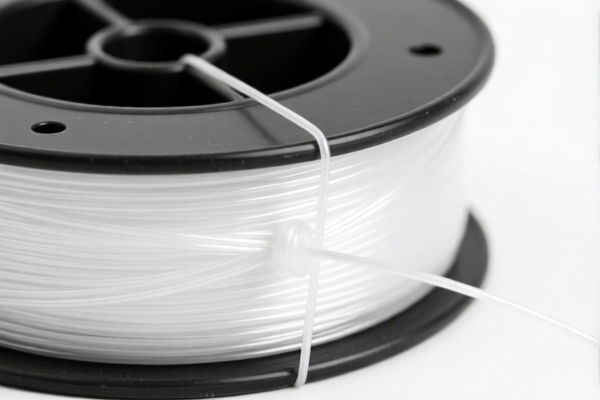
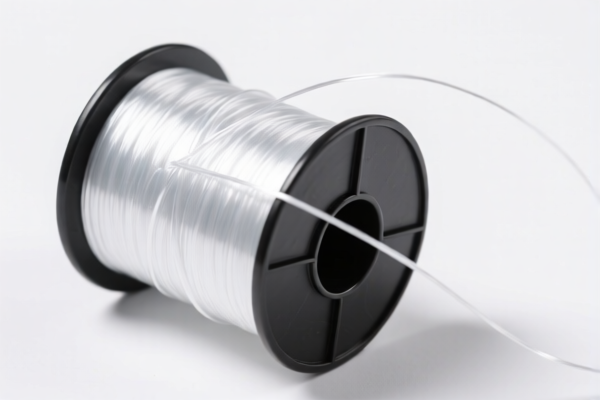
Plastic Monofilament for Agricultural Baling refers to single-strand synthetic fibers, primarily made from polypropylene (PP) or other polymers, used to bind harvested crops (hay, straw, grains) into bales. In international trade, it is critical to distinguish between "Monofilament" (single solid strand) and "Multifilament" (braided/twisted threads), as this distinction drives the HS Code classification and tariff liability.
⚠️ Key Distinction Point:
- Monofilament (Single Strand): A solid, continuous plastic thread. → Falls under Chapter 39 (Plastics) or specific Chapter 54 provisions if considered synthetic fiber but not yet textile.
- Twisted/Multifilament: Multiple strands twisted together. → Often falls under Chapter 54 or 56 (Textiles/Synthetic Filaments).
- Crucial Note: The data provided indicates specific classifications for "Monofilament" used in agriculture, with distinct tax treatments based on precise chemical composition and form.
📦 2. HS Code Classification Details (2026 Latest Tariff Authority Comparison)
Based on the provided <DATA>, the product is classified under four specific HS Codes, two of which are duplicated with slightly different tax rates. Here is the detailed breakdown:
| HS Code | Product Description | Material/Form Definition | Total Tax Rate | Tax Detail Breakdown |
|---|---|---|---|---|
3916.90.50.00 |
Plastic Monofilament | Material: Plastic; Form: Monofilament. Fits the definition exactly. | 40.8% | Base: 5.8% + Additional: 25.0% + Section 301 (122 Clause): 10% |
3916.90.30.00 |
Plastic Monofilament | Material: Plastic; Form: Monofilament. Fits the definition. | 41.5% | Base: 6.5% + Additional: 25.0% + Section 301 (122 Clause): 10% |
5404.19.80.40 |
Plastic Monofilament | Material: Plastic (Synthetic, e.g., Polyester); Form: Monofilament. Not excluded from polyester/nylon. | 41.9% | Base: 6.9% + Additional: 25.0% + Section 301 (122 Clause): 10% |
5404.19.80.80 |
Plastic Monofilament | Material: Plastic (Synthetic Monofilament); Not excluded from polyester/nylon. | 41.9% | Base: 6.9% + Additional: 25.0% + Section 301 (122 Clause): 10% |
🔍 Critical Insight:
- HS 3916 covers "Plastics in the form of rods, tubes, and strips... other than monofilament..." BUT NOTE: The data explicitly includes Monofilament here. This suggests that for agricultural baling purposes, specific subheadings50and30are applied.
- HS 5404 covers "Synthetic filament yarn... monofilament having any cross-sectional dimension exceeding 1 mm...". The tax rate is higher due to the higher base tariff (6.9% vs 5.8%/6.5%).
- Duplication Alert:3916.90.50.00appears twice in the data with identical details.5404.19.80.40and.80are distinct subheadings likely based on specific end-use or physical dimensions not fully detailed in the summary but resulting in the same 41.9% rate.
💰 3. 2026 Latest Tariff Rate Breakdown (Including Additional Duties)
✅ Applicable Country: USA (US)
✅ Origin: China (CN) (Inferred from "122 Clause" and "Section 301" context typical in US-China trade data)
✅ Effective Date: Current 2026 Tariff Structure
🎯 1. HS Code 3916.90.50.00 & 3916.90.30.00 —— Plastic Monofilament (Chapter 39)
| Item | Content |
|---|---|
| Base Tariff | 5.8% (for .50) / 6.5% (for .30) |
| Section 301 Additional Tariff | +25.0% (Standard trade war tariff) |
| Section 122 Clause Tariff | +10.0% (Specific agricultural/input levy) |
| Total Tax Rate | 40.8% (for .50) / 41.5% (for .30) |
| Tax Calculation | CIF Value × 40.8%/41.5% |
| De Minimis Exemption | ❌ Not Applicable (Deny De Minimis for Section 301 goods) |
| Legal Basis Path | HTSUS:3916.90.50.00 → USITC Footnote: 9903.88.01 → IEEPA:9903.01.25 |
📌 Explanation:
- The 25% is the standard USITC Section 301 tariff on Chinese plastics.
- The 10% is attributed to "122 Clause" (likely a specific policy clause for agricultural inputs or a specific HTS footnote).
- The difference between 40.8% and 41.5% is purely due to the Base Tariff (5.8% vs 6.5%). This small difference matters on high-volume contracts.
🎯 2. HS Code 5404.19.80.40 & 5404.19.80.80 —— Synthetic Filament Monofilament (Chapter 54)
| Item | Content |
|---|---|
| Base Tariff | 6.9% |
| Section 301 Additional Tariff | +25.0% |
| Section 122 Clause Tariff | +10.0% |
| Total Tax Rate | 41.9% |
| Tax Calculation | CIF Value × 41.9% |
| De Minimis Exemption | ❌ Not Applicable |
| Legal Basis Path | HTSUS:5404.19.80.40 → USITC Footnote: 9903.88.01 → IEEPA:9903.01.25 |
📌 Note:
- These codes fall under Chapter 54 (Synthetic Filament Yarn), implying the product might be classified as a "filament" rather than just "plastic material."
- The base tariff is higher (6.9%), leading to a higher total rate (41.9%).
- Why two codes (.40 and .80)? They likely distinguish between specific types of synthetic materials (e.g., PET vs. PP) or specific diameter ranges, though the tax outcome is identical.
🛠️ 4. Customs Clearance Practical Advice (Battle-Tested Pitfall Guide)
✅ 1. Document Checklist (Non-Negotiable)
| Document | Required | Explanation |
|---|---|---|
| ✅ Product Specification Sheet | ✔️ | Must explicitly state: "Plastic Monofilament," Material (PP/PET), Diameter (mm), and Usage (Agricultural Baling). |
| ✅ Material Composition Statement | ✔️ | Confirm if it is Polypropylene (PP) or Polyester (PET). This determines if it falls under Ch 39 or Ch 54. |
| ✅ Commercial Invoice | ✔️ | Must clearly state "Plastic Monofilament for Agricultural Baling." Avoid vague terms like "Plastic Rope." |
| ✅ Packing List | ✔️ | Detail weight, roll size, and packaging type. |
| ✅ Origin Certificate | ✔️ | If not Chinese origin, provide to avoid Section 301 duties. |
| ✅ HS Code Pre-Ruling Request | ✔️ | Highly Recommended given the ambiguity between 3916 and 5404. |
✅ 2. Declaration Tips (Critical Keywords)
🔥 "Be Specific, Be Accurate, Avoid Vague Terms!"
| Scenario | Correct Declaration | Wrong Declaration | Risk |
|---|---|---|---|
| Pure PP Monofilament | Plastic Monofilament, PP, Ag Baling |
"Plastic Rope" | Risk of being misclassified as textile (Ch 54) or general plastic (Ch 39), leading to duty disputes. |
| Diameter > 1mm | Synthetic Filament Monofilament, >1mm |
"String" | May trigger Ch 54 (5404) vs Ch 39 (3916). |
| Mixed Packaging | Declare as "Monofilament Rolls" | "Agricultural Supplies" | Huge Risk: Misdeclaration leads to penalties, seizure, or high ad-valorem rates. |
✅ 3. Special Situation Handling
| Situation | Recommendation |
|---|---|
| Product Diameter is < 1mm | Check if it qualifies as "Multifilament" or "Yarn" instead. It might fall under 5402 or 5404 with different rates. |
| Product is Coated/Colored | Ensure the description includes "Color: Green/Black/etc." as this may affect identification but not necessarily the HS code. |
| Supply Chain Diversification | If sourcing from Vietnam, India, or Bangladesh, you may avoid the 25% Section 301 tariff. Check for preferential trade agreements. |
| Section 122 Clause | Verify if the 10% "122 Clause" tariff is still active in 2026. Some agricultural tariffs fluctuate. Consult latest USITC bulletins. |
🌍 5. Global Market Comparison (2026 Overview)
| Country/Region | Recommended HS Code | Est. Tariff (China Origin) | Notes |
|---|---|---|---|
| 🇺🇸 USA | 3916.90.50.00 / 5404.19.80.40 |
40.8% - 41.9% | High duty due to Sec 301 + 122 Clause. |
| 🇨🇳 China | 3916.90.90.90 (Est.) |
~5-6% | Low base tariff, no additional duties. |
| 🇪🇺 EU | 3916.90.90 |
~5-6% | Generally lower than US. No Section 301 equivalent. |
| 🇮🇳 India | 3916.90.90 |
~7.5-10% | BCD + SWS + IGST. Moderate barrier. |
| 🇲🇽 Mexico | 3916.90.90 |
~5% (USMCA if qualifying) | Check rules of origin for duty-free access. |
📌 Conclusion:
- USA is the most expensive market for Chinese-made plastic monofilament due to the layered tariffs (Base + 25% + 10%).
- EU and China offer significantly lower duty rates.
- Cost-Benefit Analysis: For the US market, consider sourcing from non-China origins (e.g., Southeast Asia) to mitigate the 25% Section 301 duty.
📌 6. Common Mistakes & Pitfalls (Blood & Tears Lessons)
❌ Mistake 1: Declaring as "Plastic Rope" or "Twine"
👉 Consequence: Customs may reclassify to Chapter 54 (Textiles) or apply higher ad-valorem rates due to misdescription.
👉 Penalty: Potential duty shortfall + penalties.
❌ Mistake 2: Ignoring the "122 Clause"
👉 Consequence: Underpaying by 10%.
👉 Penalty: Back taxes + interest. The 122 Clause is a specific levy that must be added.
❌ Mistake 3: Confusing Monofilament with Multifilament
👉 Consequence: Wrong HS Code (3916 vs 5404).
👉 Penalty: If 5404 is required but 3916 is used, you may underpay. If 3916 is required but 5404 is used, you may overpay (less critical but causes delays).
✅ Best Practice:
"Plastic Monofilament, Polypropylene, Green, 3mm Diameter, for Agricultural Baling, Made in China, HS 3916.90.50.00"
🎯 7. Conclusion: Strategic Sourcing for Cost Efficiency
🎯 Remember the Golden Rule:
🔹 "3916 is cheaper than 5404 (Base 5.8% vs 6.9%). Choose 3916 if material allows!"
🔹 "USA Tariffs are Layered: Base + 25% + 10%. Total > 40%."
🔹 "Check Origin: China = High Duty. Vietnam/India = Lower Duty."
📌 Pro Tip:
If your plastic monofilament is polypropylene (PP), argue for HS 3916.90.50.00 (40.8%) as the base tariff is lower. If it is polyester (PET), it may fall under 5404.19.80.40 (41.9%). The 1.1% difference adds up on large volumes. Always verify material composition!
📣 Immediate Action:
📞 Consult a licensed customs broker to apply for a Binding Tariff Information (BTI) or Advance Ruling from US Customs.
🚀 Optimize your supply chain: Shift non-critical baling twine to Vietnam/India to save the 25% Section 301 duty.
✨ Professional Clearance Starts with Precise Classification!
💼 Your Profit Margin Depends on Your HS Code Choice!
Customer Reviews
About HS Code Classification
The Harmonized System (HS) is an internationally standardized nomenclature developed by the World Customs Organization (WCO) to classify traded products. Over 200 countries use the HS system as the basis for customs tariffs, trade statistics, and import/export regulations.
Each HS code follows a hierarchical structure:
- Chapter (2 digits) — Broad category of goods (e.g., Chapter 84: Machinery and Mechanical Appliances)
- Heading (4 digits) — More specific grouping within the chapter
- Subheading (6 digits) — Internationally standardized breakdown, used by all WCO member countries
- National subdivisions (8-10 digits) — Country-specific extensions for further classification, such as US HTSUS 10-digit codes
Correct HS code classification is essential for smooth customs clearance, accurate duty payment, and compliance with trade regulations. Misclassification can lead to customs delays, overpayment of duties, or penalties.
When importing from CN to US, the applicable tariff rates may include:
- Most-Favored-Nation (MFN) rate — The standard duty rate applied to WTO members
- General rate — Applied to countries without trade agreements
- Trade remedy duties — Additional tariffs such as Section 301 (anti-dumping), Section 232 (national security), or countervailing duties
The information provided on this page is for reference purposes only. For official classification, please consult with your local customs authority or a licensed customs broker.