Plastic Mop Bucket
CN → US| HS编码 | 关税税率 | 原产国 | 目的国 | 文档 |
|---|---|---|---|---|
| 3923900012 | 38.0% | CN | US | 官方文档 |
| 3926901000 | 20.9% | CN | US | 官方文档 |
| 3926904000 | 12.8% | CN | US | 官方文档 |
| 3923900014 | 38.0% | CN | US | 官方文档 |
商品图片
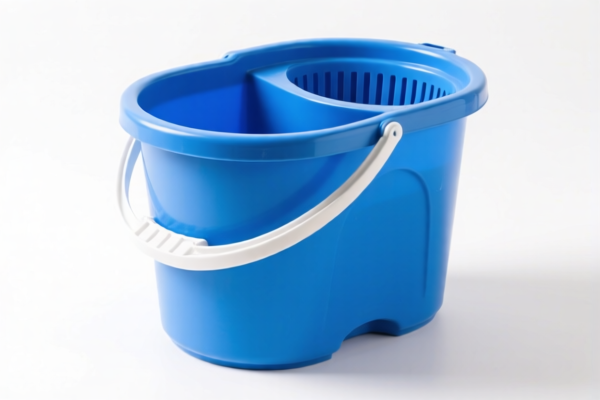
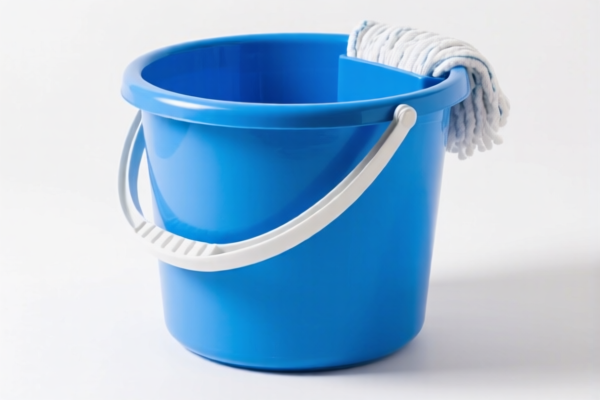
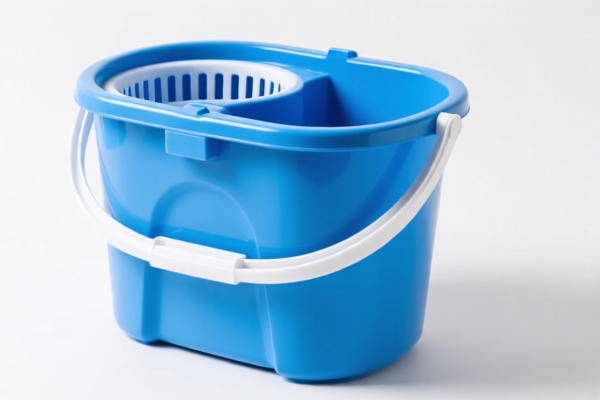
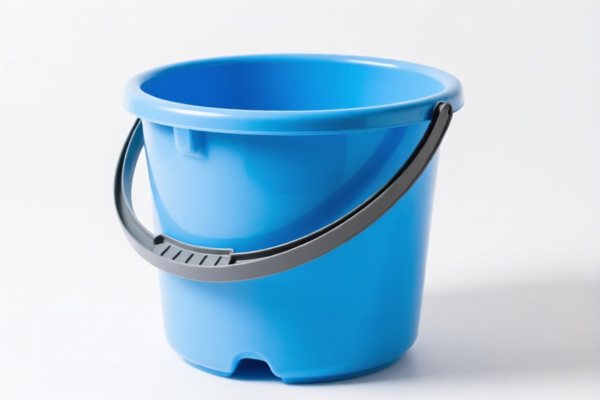
AI分析
🪣 Plastic Mop Bucket (塑料拖把桶)
🌐 HS Code Reference & Customs Clearance Guide | 2024-2026 Latest Tariff Analysis | Professional Clearance Strategy
📌 Part 1: Product Definition & Classification: What Exactly is a "Plastic Mop Bucket"?
In international trade, the "Plastic Mop Bucket" is primarily categorized under Chapter 39: Plastics and Articles Thereof. However, the specific HS Code depends heavily on whether it is classified as a "Container for Transport/Storage" (Headings 3923) or a "Other Articles of Plastics" (Heading 3926). This distinction drastically affects the total tax burden, especially when dealing with US import duties (Section 301 and Section 122 tariffs).
⚠️ Key Classification Point:
- If the bucket is specifically designed for transporting goods (e.g., bulk liquid or solid transport containers) or falls under specific packaging provisions → Chapter 3923.
- If it is a household or industrial utility item (like a mop bucket for cleaning) not primarily for transport → Chapter 3926.
📦 Part 2: HS Code Classification Details (Based on Provided Data)
Based on the provided dataset, there are 4 possible HS Codes for "Plastic Mop Bucket" (referred to variously as 塑料搬运桶). Note: While the user input is "Plastic Mop Bucket," the data provided lists "Plastic Transport Bucket" (塑料搬运桶). We will analyze based strictly on the provided <DATA> fields.
| HS Code | Summary / Description | Total Tax Rate | Key Tariff Components |
|---|---|---|---|
3923.90.00.12 |
Plastic Transport Bucket, Material: Plastic, Use: Bucket Type | 38.0% | Base: 3.0%, Add'l: 25.0%, Sec 122: 10% |
3926.90.10.00 |
Plastic Transport Bucket, Material: Plastic, Use: Transport Bucket | 20.9% | Base: 3.4%, Add'l: 7.5%, Sec 122: 10% |
3926.90.40.00 |
Plastic Transport Bucket, Material: Plastic, Form: Article/Product | 12.8% | Base: 2.8%, Add'l: 0.0%, Sec 122: 10% |
3923.90.00.14 |
Plastic Transport Bucket, Material: Plastic, Form: Bucket | 38.0% | Base: 3.0%, Add'l: 25.0%, Sec 122: 10% |
🔍 Critical Observation:
- There is a massive price difference in taxation between 38.0% (Code3923.90.00.12/.14) and 12.8% (Code3926.90.40.00).
- The difference lies in the "Additional Tariff" (加征关税):
- Codes under3923have a 25% additional tariff.
- Codes under3926.90.10have a 7.5% additional tariff.
- Code3926.90.40has 0% additional tariff (only Base + Sec 122).
💰 Part 3: Detailed Tariff Breakdown (2024-2026 Policy)
✅ Applicable Country: United States (US)
✅ Origin: China (CN) (Inferred from "122条款" and high tariffs)
✅ Policy Context: Includes Base Tariff, Section 301/Additional Tariffs, and Section 122 Tariffs.
🎯 1. 3923.90.00.12 & 3923.90.00.14 — The High-Cost Route
| Item | Detail |
|---|---|
| HS Code | 3923.90.00.12 / 3923.90.00.14 |
| Description | Plastic Transport Bucket (Bucket Type / Form) |
| Base Tariff | 3.0% |
| Additional Tariff | 25.0% (High Section 301 rate) |
| Section 122 Tariff | 10.0% |
| Total Effective Tax | 38.0% |
| Calculation | CIF Value × 38% |
| Legal Basis | Chapter 39, Heading 3923 (Packaging/Transport containers) |
📌 Explanation:
These codes fall under Chapter 3923, which covers "Articles for the conveyance or packing of goods." If Customs classifies your mop bucket as a "transport container" (even if used for mops), it triggers the 25% additional tariff. This is the most expensive classification in the dataset.
🎯 2. 3926.90.10.00 — The Moderate-Cost Route
| Item | Detail |
|---|---|
| HS Code | 3926.90.10.00 |
| Description | Plastic Transport Bucket (Use: Transport Bucket) |
| Base Tariff | 3.4% |
| Additional Tariff | 7.5% (Lower Section 301 rate) |
| Section 122 Tariff | 10.0% |
| Total Effective Tax | 20.9% |
| Calculation | CIF Value × 20.9% |
| Legal Basis | Chapter 3926 (Other plastic articles) |
📌 Explanation:
This code also falls under Chapter 3926 but is specified for "Transport Bucket" use. It enjoys a lower additional tariff of 7.5% compared to the 25% in 3923. However, it still carries a significant 10% Section 122 tariff.
🎯 3. 3926.90.40.00 — The Low-Cost Optimized Route
| Item | Detail |
|---|---|
| HS Code | 3926.90.40.00 |
| Description | Plastic Transport Bucket (Form: Product/Article) |
| Base Tariff | 2.8% |
| Additional Tariff | 0.0% (No Additional Tariff!) |
| Section 122 Tariff | 10.0% |
| Total Effective Tax | 12.8% |
| Calculation | CIF Value × 12.8% |
| Legal Basis | Chapter 3926 (Other plastic articles) |
📌 Explanation:
This is the most tax-efficient code in the dataset. It is classified as a general plastic article (3926.90.40). Crucially, it has 0% Additional Tariff. The total tax is only 12.8% (Base 2.8% + Sec 122 10%).
⚠️ Risk: This classification relies on the product being viewed as a generic "Plastic Article" rather than a specialized "Transport Container." Proper product description is key.
🛠️ Part 4: Customs Clearance Practical Advice (Avoid Pitfalls)
✅ 1. Documentation Checklist (Must-Haves)
| Document | Required? | Notes |
|---|---|---|
| ✅ Product Specification | ✔️ | Must clearly state material (Plastic), capacity, and intended use. |
| ✅ Product Photos | ✔️ | Show the bucket with/without wheels/handles to justify "Article" vs. "Transport Container." |
| ✅ Commercial Invoice | ✔️ | Description must match HS Code intent. Avoid vague terms like "General Plastic Item." |
| ✅ Material Declaration | ✔️ | Confirm 100% Plastic content to avoid mixed-material classification. |
| ✅ Labeling | ✔️ | Ensure labels do not contradict the HS Code (e.g., don't label as "Shipping Container" if using 3926.90.40). |
✅ 2. Classification Strategy: How to Choose?
| Scenario | Recommended HS Code | Reason |
|---|---|---|
| High-Volume, Price-Sensitive | 3926.90.40.00 |
Lowest Tax (12.8%). Best for mop buckets if they can be argued as general utility items. |
| Specialized Transport Use | 3926.90.10.00 |
Moderate Tax (20.9%). Use if the bucket is explicitly marketed for "transporting" liquids/solids. |
| Strict Transport Container | 3923.90.00.12 |
Highest Tax (38.0%). Only use if legally required as a "packing/transport" article. Avoid if possible. |
🔥 Pro Tip:
To qualify for3926.90.40.00(12.8%), ensure your product description emphasizes "Household/Industrial Cleaning Utility" rather than "Transport Logistics." Customs officers may challenge the classification if the product is marketed as a "Shipping Pail."
✅ 3. Section 122 Tariff Note
📌 All four codes include a 10% Section 122 Tariff.
- This is a separate, non-negotiable levy on certain Chinese plastic products.
- No exemption is listed in the data for any of these codes.
- Factor this 10% into your cost model regardless of the HS Code chosen.
🌍 Part 5: Global Market Comparison (Hypothetical)
| Market | Typical HS Code | Base Tariff | Additional Tariffs | Total Est. Tax |
|---|---|---|---|---|
| 🇺🇸 USA (This Data) | 3926.90.40.00 |
2.8% | 10% (Sec 122) | 12.8% (Best Case) |
| 🇺🇸 USA (Worse Case) | 3923.90.00.12 |
3.0% | 25% + 10% | 38.0% |
| 🇪🇺 EU | 3923.90 or 3926.90 | ~4.5% | None | ~4.5% |
| 🇨🇳 China (Export) | 3926.90 | 0% (Refundable) | N/A | N/A |
| 🇦🇺 Australia | 3926.90 | 5% | None | 5% |
📌 Conclusion:
- The US market is the most challenging due to Section 122 and Section 301 tariffs.
- Classifying under3926.90.40.00saves 25.2% in taxes compared to3923codes.
📌 Part 6: Common Errors & Pitfalls
❌ Error 1: Using "Transport Bucket" in marketing materials when declaring 3926.90.40.00.
👉 Result: Customs may reclassify to 3923 (38% tax) or 3926.90.10 (20.9%).
✅ Fix: Use terms like "Cleaning Bucket," "Utility Pail," or "Household Plastic Bucket."
❌ Error 2: Assuming all plastic buckets are the same HS Code.
👉 Result: Misclassification penalties and delayed clearance.
✅ Fix: Analyze the primary use (transport vs. utility) and choose the most favorable code that fits the facts.
❌ Error 3: Ignoring Section 122 Tariff.
👉 Result: Unexpected 10% charge on every shipment.
✅ Fix: Always include 10% in your landed cost calculation for US-bound plastic buckets.
🎯 Part 7: Conclusion & Recommendation
🎯 Strategic Recommendation:
For a Plastic Mop Bucket, the optimal classification is likely 3926.90.40.00 with a 12.8% total tax rate. This requires:
1. Product Description: Frame it as a "Household/Industrial Plastic Utility Article" rather than a "Transport Container."
2. Documentation: Ensure photos show it as a cleaning tool, not a logistics crate.
3. Cost Planning: Budget for 2.8% Base + 10% Sec 122.
🚀 Action Item:
- Contact your customs broker to confirm if3926.90.40.00is accepted for your specific product design.
- Avoid3923codes unless legally mandated, as they double your tariff burden.
- Always account for the 10% Section 122 Tariff in your financial models.
✨ Professional Clearance Starts with Precision!
💼 Your Profit Margin Depends on Your HS Code Choice!
用户评价
关于 HS 编码归类
协调制度(HS)是由世界海关组织(WCO)制定的国际贸易商品分类标准。全球 200 多个国家采用 HS 系统作为海关关税、贸易统计和进出口监管的基础。
每个 HS 编码遵循以下层级结构:
- 章(2 位)——商品大类(例如:第 84 章:机器和机械设备)
- 品目(4 位)——章内的更具体分类
- 子目(6 位)——国际通用细分,所有 WCO 成员国统一使用
- 本国细分(8-10 位)——各国自行扩展的细分编码,如美国 HTSUS 10 位编码
正确的 HS 编码归类对于顺利通关、准确缴纳关税和遵守贸易法规至关重要。错误归类可能导致海关延误、多缴关税或罚款。
从CN进口到US时,适用的关税税率可能包括:
- 最惠国(MFN)税率——适用于 WTO 成员国的标准关税税率
- 普通税率——适用于无贸易协定国家
- 贸易救济关税——附加关税,如 301 条款(反倾销)、232 条款(国家安全)或反补贴税
本页内容仅供参考。如需正式归类,请咨询当地海关或持牌报关代理。