Plastic Mop Bucket
CN → US| HS Code | Tariff Rate | Origin | Destination | Doc |
|---|---|---|---|---|
| 3923900012 | 38.0% | CN | US | Official Doc |
| 3926901000 | 20.9% | CN | US | Official Doc |
| 3926904000 | 12.8% | CN | US | Official Doc |
| 3923900014 | 38.0% | CN | US | Official Doc |
Product Images
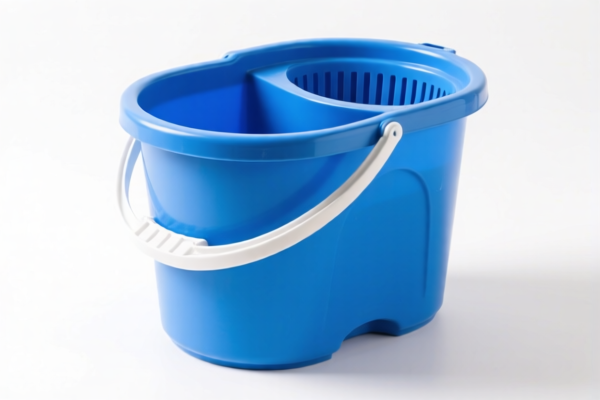
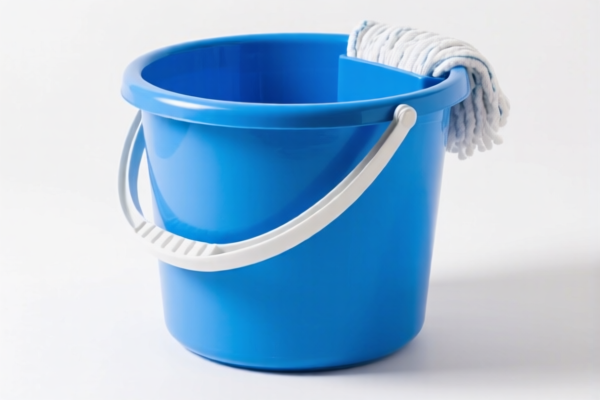
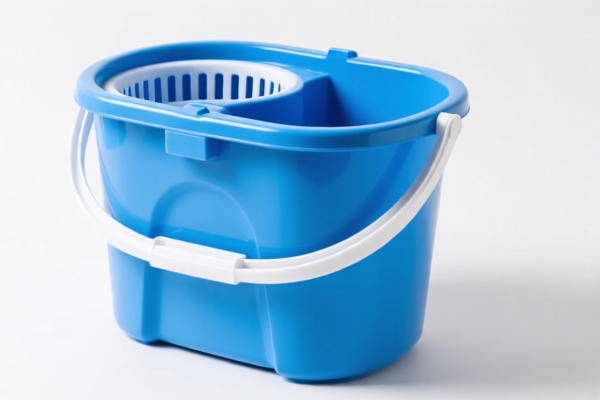
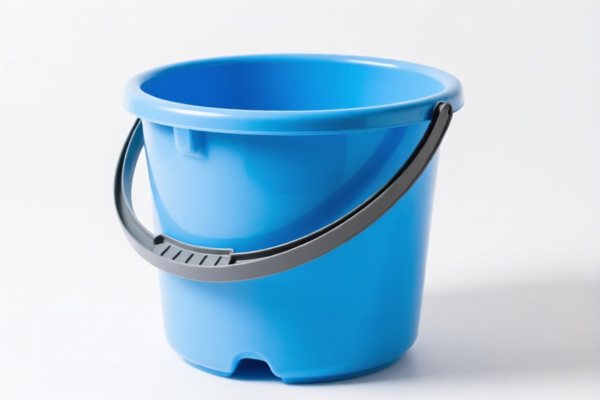
AI Analysis
🪣 Plastic Mop Bucket (塑料拖把桶)
🌐 HS Code Reference & Customs Clearance Guide | 2024-2026 Latest Tariff Analysis | Professional Clearance Strategy
📌 Part 1: Product Definition & Classification: What Exactly is a "Plastic Mop Bucket"?
In international trade, the "Plastic Mop Bucket" is primarily categorized under Chapter 39: Plastics and Articles Thereof. However, the specific HS Code depends heavily on whether it is classified as a "Container for Transport/Storage" (Headings 3923) or a "Other Articles of Plastics" (Heading 3926). This distinction drastically affects the total tax burden, especially when dealing with US import duties (Section 301 and Section 122 tariffs).
⚠️ Key Classification Point:
- If the bucket is specifically designed for transporting goods (e.g., bulk liquid or solid transport containers) or falls under specific packaging provisions → Chapter 3923.
- If it is a household or industrial utility item (like a mop bucket for cleaning) not primarily for transport → Chapter 3926.
📦 Part 2: HS Code Classification Details (Based on Provided Data)
Based on the provided dataset, there are 4 possible HS Codes for "Plastic Mop Bucket" (referred to variously as 塑料搬运桶). Note: While the user input is "Plastic Mop Bucket," the data provided lists "Plastic Transport Bucket" (塑料搬运桶). We will analyze based strictly on the provided <DATA> fields.
| HS Code | Summary / Description | Total Tax Rate | Key Tariff Components |
|---|---|---|---|
3923.90.00.12 |
Plastic Transport Bucket, Material: Plastic, Use: Bucket Type | 38.0% | Base: 3.0%, Add'l: 25.0%, Sec 122: 10% |
3926.90.10.00 |
Plastic Transport Bucket, Material: Plastic, Use: Transport Bucket | 20.9% | Base: 3.4%, Add'l: 7.5%, Sec 122: 10% |
3926.90.40.00 |
Plastic Transport Bucket, Material: Plastic, Form: Article/Product | 12.8% | Base: 2.8%, Add'l: 0.0%, Sec 122: 10% |
3923.90.00.14 |
Plastic Transport Bucket, Material: Plastic, Form: Bucket | 38.0% | Base: 3.0%, Add'l: 25.0%, Sec 122: 10% |
🔍 Critical Observation:
- There is a massive price difference in taxation between 38.0% (Code3923.90.00.12/.14) and 12.8% (Code3926.90.40.00).
- The difference lies in the "Additional Tariff" (加征关税):
- Codes under3923have a 25% additional tariff.
- Codes under3926.90.10have a 7.5% additional tariff.
- Code3926.90.40has 0% additional tariff (only Base + Sec 122).
💰 Part 3: Detailed Tariff Breakdown (2024-2026 Policy)
✅ Applicable Country: United States (US)
✅ Origin: China (CN) (Inferred from "122条款" and high tariffs)
✅ Policy Context: Includes Base Tariff, Section 301/Additional Tariffs, and Section 122 Tariffs.
🎯 1. 3923.90.00.12 & 3923.90.00.14 — The High-Cost Route
| Item | Detail |
|---|---|
| HS Code | 3923.90.00.12 / 3923.90.00.14 |
| Description | Plastic Transport Bucket (Bucket Type / Form) |
| Base Tariff | 3.0% |
| Additional Tariff | 25.0% (High Section 301 rate) |
| Section 122 Tariff | 10.0% |
| Total Effective Tax | 38.0% |
| Calculation | CIF Value × 38% |
| Legal Basis | Chapter 39, Heading 3923 (Packaging/Transport containers) |
📌 Explanation:
These codes fall under Chapter 3923, which covers "Articles for the conveyance or packing of goods." If Customs classifies your mop bucket as a "transport container" (even if used for mops), it triggers the 25% additional tariff. This is the most expensive classification in the dataset.
🎯 2. 3926.90.10.00 — The Moderate-Cost Route
| Item | Detail |
|---|---|
| HS Code | 3926.90.10.00 |
| Description | Plastic Transport Bucket (Use: Transport Bucket) |
| Base Tariff | 3.4% |
| Additional Tariff | 7.5% (Lower Section 301 rate) |
| Section 122 Tariff | 10.0% |
| Total Effective Tax | 20.9% |
| Calculation | CIF Value × 20.9% |
| Legal Basis | Chapter 3926 (Other plastic articles) |
📌 Explanation:
This code also falls under Chapter 3926 but is specified for "Transport Bucket" use. It enjoys a lower additional tariff of 7.5% compared to the 25% in 3923. However, it still carries a significant 10% Section 122 tariff.
🎯 3. 3926.90.40.00 — The Low-Cost Optimized Route
| Item | Detail |
|---|---|
| HS Code | 3926.90.40.00 |
| Description | Plastic Transport Bucket (Form: Product/Article) |
| Base Tariff | 2.8% |
| Additional Tariff | 0.0% (No Additional Tariff!) |
| Section 122 Tariff | 10.0% |
| Total Effective Tax | 12.8% |
| Calculation | CIF Value × 12.8% |
| Legal Basis | Chapter 3926 (Other plastic articles) |
📌 Explanation:
This is the most tax-efficient code in the dataset. It is classified as a general plastic article (3926.90.40). Crucially, it has 0% Additional Tariff. The total tax is only 12.8% (Base 2.8% + Sec 122 10%).
⚠️ Risk: This classification relies on the product being viewed as a generic "Plastic Article" rather than a specialized "Transport Container." Proper product description is key.
🛠️ Part 4: Customs Clearance Practical Advice (Avoid Pitfalls)
✅ 1. Documentation Checklist (Must-Haves)
| Document | Required? | Notes |
|---|---|---|
| ✅ Product Specification | ✔️ | Must clearly state material (Plastic), capacity, and intended use. |
| ✅ Product Photos | ✔️ | Show the bucket with/without wheels/handles to justify "Article" vs. "Transport Container." |
| ✅ Commercial Invoice | ✔️ | Description must match HS Code intent. Avoid vague terms like "General Plastic Item." |
| ✅ Material Declaration | ✔️ | Confirm 100% Plastic content to avoid mixed-material classification. |
| ✅ Labeling | ✔️ | Ensure labels do not contradict the HS Code (e.g., don't label as "Shipping Container" if using 3926.90.40). |
✅ 2. Classification Strategy: How to Choose?
| Scenario | Recommended HS Code | Reason |
|---|---|---|
| High-Volume, Price-Sensitive | 3926.90.40.00 |
Lowest Tax (12.8%). Best for mop buckets if they can be argued as general utility items. |
| Specialized Transport Use | 3926.90.10.00 |
Moderate Tax (20.9%). Use if the bucket is explicitly marketed for "transporting" liquids/solids. |
| Strict Transport Container | 3923.90.00.12 |
Highest Tax (38.0%). Only use if legally required as a "packing/transport" article. Avoid if possible. |
🔥 Pro Tip:
To qualify for3926.90.40.00(12.8%), ensure your product description emphasizes "Household/Industrial Cleaning Utility" rather than "Transport Logistics." Customs officers may challenge the classification if the product is marketed as a "Shipping Pail."
✅ 3. Section 122 Tariff Note
📌 All four codes include a 10% Section 122 Tariff.
- This is a separate, non-negotiable levy on certain Chinese plastic products.
- No exemption is listed in the data for any of these codes.
- Factor this 10% into your cost model regardless of the HS Code chosen.
🌍 Part 5: Global Market Comparison (Hypothetical)
| Market | Typical HS Code | Base Tariff | Additional Tariffs | Total Est. Tax |
|---|---|---|---|---|
| 🇺🇸 USA (This Data) | 3926.90.40.00 |
2.8% | 10% (Sec 122) | 12.8% (Best Case) |
| 🇺🇸 USA (Worse Case) | 3923.90.00.12 |
3.0% | 25% + 10% | 38.0% |
| 🇪🇺 EU | 3923.90 or 3926.90 | ~4.5% | None | ~4.5% |
| 🇨🇳 China (Export) | 3926.90 | 0% (Refundable) | N/A | N/A |
| 🇦🇺 Australia | 3926.90 | 5% | None | 5% |
📌 Conclusion:
- The US market is the most challenging due to Section 122 and Section 301 tariffs.
- Classifying under3926.90.40.00saves 25.2% in taxes compared to3923codes.
📌 Part 6: Common Errors & Pitfalls
❌ Error 1: Using "Transport Bucket" in marketing materials when declaring 3926.90.40.00.
👉 Result: Customs may reclassify to 3923 (38% tax) or 3926.90.10 (20.9%).
✅ Fix: Use terms like "Cleaning Bucket," "Utility Pail," or "Household Plastic Bucket."
❌ Error 2: Assuming all plastic buckets are the same HS Code.
👉 Result: Misclassification penalties and delayed clearance.
✅ Fix: Analyze the primary use (transport vs. utility) and choose the most favorable code that fits the facts.
❌ Error 3: Ignoring Section 122 Tariff.
👉 Result: Unexpected 10% charge on every shipment.
✅ Fix: Always include 10% in your landed cost calculation for US-bound plastic buckets.
🎯 Part 7: Conclusion & Recommendation
🎯 Strategic Recommendation:
For a Plastic Mop Bucket, the optimal classification is likely 3926.90.40.00 with a 12.8% total tax rate. This requires:
1. Product Description: Frame it as a "Household/Industrial Plastic Utility Article" rather than a "Transport Container."
2. Documentation: Ensure photos show it as a cleaning tool, not a logistics crate.
3. Cost Planning: Budget for 2.8% Base + 10% Sec 122.
🚀 Action Item:
- Contact your customs broker to confirm if3926.90.40.00is accepted for your specific product design.
- Avoid3923codes unless legally mandated, as they double your tariff burden.
- Always account for the 10% Section 122 Tariff in your financial models.
✨ Professional Clearance Starts with Precision!
💼 Your Profit Margin Depends on Your HS Code Choice!
Customer Reviews
About HS Code Classification
The Harmonized System (HS) is an internationally standardized nomenclature developed by the World Customs Organization (WCO) to classify traded products. Over 200 countries use the HS system as the basis for customs tariffs, trade statistics, and import/export regulations.
Each HS code follows a hierarchical structure:
- Chapter (2 digits) — Broad category of goods (e.g., Chapter 84: Machinery and Mechanical Appliances)
- Heading (4 digits) — More specific grouping within the chapter
- Subheading (6 digits) — Internationally standardized breakdown, used by all WCO member countries
- National subdivisions (8-10 digits) — Country-specific extensions for further classification, such as US HTSUS 10-digit codes
Correct HS code classification is essential for smooth customs clearance, accurate duty payment, and compliance with trade regulations. Misclassification can lead to customs delays, overpayment of duties, or penalties.
When importing from CN to US, the applicable tariff rates may include:
- Most-Favored-Nation (MFN) rate — The standard duty rate applied to WTO members
- General rate — Applied to countries without trade agreements
- Trade remedy duties — Additional tariffs such as Section 301 (anti-dumping), Section 232 (national security), or countervailing duties
The information provided on this page is for reference purposes only. For official classification, please consult with your local customs authority or a licensed customs broker.