Plastic Paper Composite Bag Container
CN → US| HS编码 | 关税税率 | 原产国 | 目的国 | 文档 |
|---|---|---|---|---|
| 4819504040 | 35.0% | CN | US | 官方文档 |
| 4819400040 | 35.0% | CN | US | 官方文档 |
| 3923210095 | 38.0% | CN | US | 官方文档 |
| 3923290000 | 38.0% | CN | US | 官方文档 |
| 4202991000 | 38.4% | CN | US | 官方文档 |
商品图片
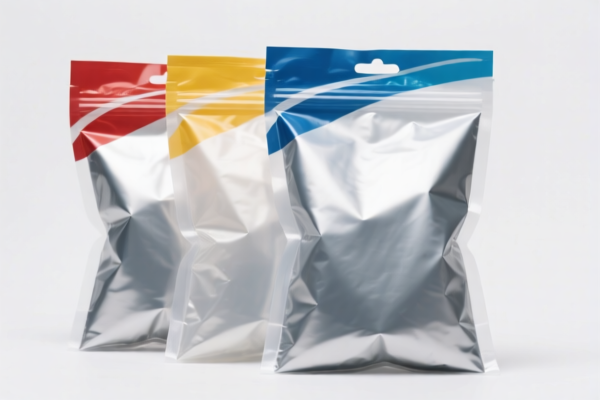
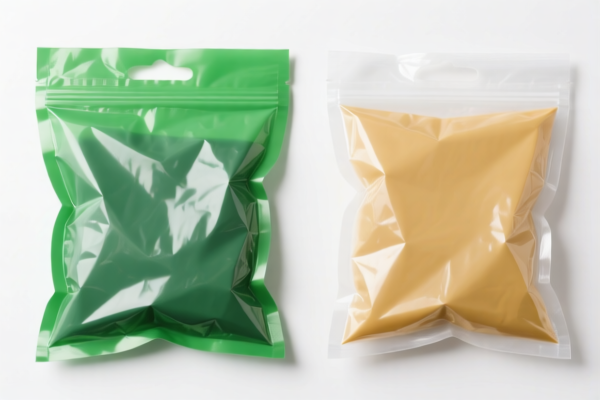
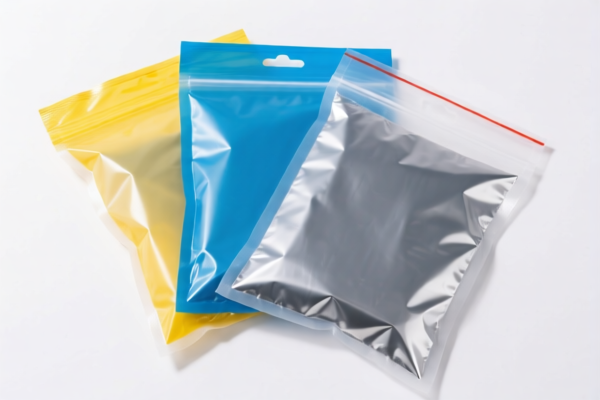
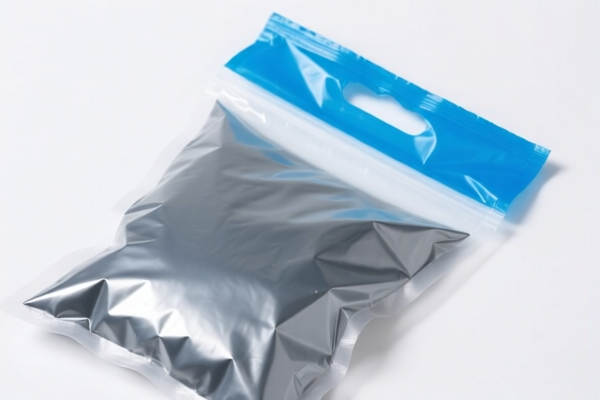
AI分析
📦 Plastic Paper Composite Bag Container
🌐 HS Code Reference & Customs Clearance Guide | 2024-2025 Latest Tariff Analysis | Professional Clearance Strategy
📌 I. Product Definition & Classification: What Exactly Is a "Plastic Paper Composite Bag"?
A Plastic Paper Composite Bag Container is a packaging unit made by laminating or combining plastic layers (e.g., polyethylene, polypropylene) with paper or cellulose layers. In international trade, classification hinges on material composition, primary function, and structural form.
⚠️ Key Distinction:
- If the plastic layer is the essential character (e.g., waterproofing, sealing integrity) → Often classified under Chapter 39 (Plastics).
- If the paper layer defines the structure or primary use (e.g., rigid form, printed packaging) → Often classified under Chapter 48 (Paper/Paperboard) or Chapter 42 (Leather goods/containers).
📊 II. HS Code Classification Details (Based on Provided Data)
| HS Code | Product Description | Key Classification Logic | Total Tax Rate |
|---|---|---|---|
4819.50.40.40 |
Composite bags/containers, classified as packaging containers under other headings. | Emphasizes packaging container function; plastic-paper composite treated as a packaging item under Chapter 48. | 35.0% |
4819.40.00.40 |
Plastic-paper composite bags; material aligns with paper/cellulose composite; form is bags/containers. | Focuses on paper/cellulose composite material; bag format triggers Chapter 48 classification. | 35.0% |
3923.21.00.95 |
Plastic-paper composite bags; plastic is the defining material; shape fits ethylene polymer sacks/bags. | Plastic-dominant; categorized as plastic sacks/bags under Chapter 39 (ethylene polymers). | 38.0% |
3923.29.00.00 |
Plastic-paper composite bags; plastic material; bag form; used for packaging supplies. | Plastic material; bag form; general plastic packaging category under Chapter 39. | 38.0% |
4202.99.10.00 |
Plastic-paper composite containers (bag-type); includes paper layer; classified as general containers. | General container category; includes paper/plastic mix; falls under Chapter 42 (other made-up articles). | 38.4% |
🔍 Critical Note:
- Chapters 39 vs. 48: The choice between3923.xxxx(Plastics) and4819.xxxx(Paper) depends on which material provides the essential character.
- Chapter 42:4202.99.10.00is a broader "other containers" category, often used when the item doesn’t fit neatly into plastic-only or paper-only definitions.
💰 III. 2024-2025 Tariff Rate Breakdown (Including Surtaxes & Policy Add-ons)
✅ Applicable Country: United States (US)
✅ Origin: China (CN)
✅ Effective Time: Current rates as of 2024-2025 (including Section 301 and IEEPA surcharges)
🎯 1. HS Codes 4819.50.40.40 & 4819.40.00.40 (Paper-Dominant Classification)
| Item | Detail |
|---|---|
| Base Tariff | 0.0% (ad valorem) |
| Section 301 Surtax | +25.0% (USITC Footnote 9903.88.01) |
| IEEPA Surtax | +10.0% (China-origin products under IEEPA Order 10995) |
| Total Effective Rate | 35.0% |
| Tax Calculation | CIF Value × 35% |
| De Minimis Exemption | ❌ Not Eligible (Section 301/IEEPA items excluded) |
| Legal Path | IEEPA:9903.01.25 → USITC:4819.50.40.40 → FOOTNOTE:9903.88.01 |
📌 Explanation:
- Even though the base tariff is 0%, the Section 301 surcharge (25%) and IEEPA surcharge (10%) push the total to 35%.
- These surcharges apply to all China-origin goods under these HS codes, regardless of base rate.
🎯 2. HS Codes 3923.21.00.95 & 3923.29.00.00 (Plastic-Dominant Classification)
| Item | Detail |
|---|---|
| Base Tariff | 3.0% (ad valorem) |
| Section 301 Surtax | +25.0% |
| IEEPA Surtax | +10.0% |
| Total Effective Rate | 38.0% |
| Tax Calculation | CIF Value × 38% |
| De Minimis Exemption | ❌ Not Eligible |
| Legal Path | IEEPA:9903.01.25 → USITC:3923.21.00.95 → FOOTNOTE:9903.88.01 |
📌 Explanation:
- Base tariff of 3% applies to plastic packaging bags/sacks.
- Plus 25% Section 301 and 10% IEEPA = 38% total.
- Plastic-based classification is 3% more expensive than paper-based due to higher base rates.
🎯 3. HS Code 4202.99.10.00 (General Container Classification)
| Item | Detail |
|---|---|
| Base Tariff | 3.4% (ad valorem) |
| Section 301 Surtax | +25.0% |
| IEEPA Surtax | +10.0% |
| Total Effective Rate | 38.4% |
| Tax Calculation | CIF Value × 38.4% |
| De Minimis Exemption | ❌ Not Eligible |
| Legal Path | IEEPA:9903.01.25 → USITC:4202.99.10.00 → FOOTNOTE:9903.88.01 |
📌 Explanation:
- Base tariff of 3.4% is slightly higher than plastic-only classification.
- Total rate: 38.4%, making this the most expensive option.
- Use this only if the item cannot be clearly classified as plastic or paper-dominant.
🛠️ IV. Customs Clearance Practical Advice (Avoiding Pitfalls)
✅ 1. Required Documentation Checklist (Mandatory)
| Document | Required? | Notes |
|---|---|---|
| ✅ Product Specification Sheet | ✔️ | Must detail layer composition (e.g., "3 layers: PE/Paper/PE") |
| ✅ Material Composition Report | ✔️ | Proof of plastic vs. paper percentage by weight |
| ✅ Product Photos (Labeled) | ✔️ | Show bag structure, seams, printing, and any plastic lining |
| ✅ Commercial Invoice | ✔️ | Clearly state "Plastic-Paper Composite Bag" |
| ✅ Packing List | ✔️ | Itemize quantities, weights, and dimensions |
| ✅ Certificate of Origin (CO) | ✔️ | Confirm China origin to apply surcharges accurately |
| ✅ Third-Party Test Report | ✔️ | Optional but helpful for material verification |
✅ 2. Declaration Tips (Golden Rules)
🔥 "Declare by Material Dominance, Not Just Shape!"
| Scenario | Correct HS Code | Wrong HS Code | Consequence |
|---|---|---|---|
| Plastic-lined paper bag (plastic >50% by weight/function) | 3923.21.00.95 or 3923.29.00.00 |
4819.40.00.40 |
Underpayment risk if audited |
| Paper bag with thin plastic coating (paper dominates structure) | 4819.40.00.40 or 4819.50.40.40 |
3923.21.00.95 |
Overpayment risk |
| Mixed-use bag (no clear dominance) | 4202.99.10.00 |
Either 39 or 48 | Higher rate (38.4%) |
| Empty vs. Filled | Same HS code | N/A | Tax applies to CIF value regardless |
✅ 3. Special Cases & Handling
| Scenario | Recommendation |
|---|---|
| Custom Printed Bags | Provide design files to prove paper layer is for branding, not structure |
| Recycled Paper Component | Still subject to surcharges; no duty reduction for recycled content |
| OEM/Private Label | Supplier’s HS code prevails; ensure consistency with factory documentation |
| Mixed Shipments | Declare each HS code separately; do not average rates |
🌍 V. Global Market Comparison (2024-2025)
| Country/Region | Recommended HS Code | Effective Tax Rate | Notes |
|---|---|---|---|
| 🇺🇸 USA | 3923.29.00.00 or 4819.40.00.40 |
35%-38.4% | High surcharges due to Section 301 & IEEPA |
| 🇨🇳 China | 3923.29.00.00 |
~5-10% | No surcharges; base rate applies |
| 🇪🇺 EU | 3923.29.00.00 |
~0-2% | Low base tariff; no China surcharges |
| 🇯🇵 Japan | 3923.29.00.00 |
~0-3% | Minimal tariffs; CE-like certifications may apply |
| 🇦🇺 Australia | 3923.29.00.00 |
~5% | No surcharges; standard MFN rates |
📌 Key Insight:
- USA is the most expensive market due to Section 301 (25%) and IEEPA (10%) surcharges.
- EU, Japan, and Australia offer significantly lower costs for the same products.
- Consider supply chain diversification (e.g., Vietnam, Mexico) to avoid US surcharges.
📌 VI. Common Mistakes & Pitfalls (Lessons Learned)
❌ Mistake 1: Classifying a plastic-heavy bag as paper-based (4819.xxxx)
👉 Result: Underpayment → Audit risk, penalties, and back taxes.
❌ Mistake 2: Ignoring Section 301 surcharges on plastic items
👉 Result: Unexpected 25% tax increase → Profit margin erosion.
❌ Mistake 3: Using generic descriptions ("Bag") on invoices
👉 Result: Customs delay, additional scrutiny, and potential reclassification.
❌ Mistake 4: Assuming de minimis exemption applies
👉 Result: No exemption for Section 301/IEEPA items → Full tax liability.
✅ Best Practice:
"Plastic-Paper Composite Bag, PE Outer Layer, Paper Core, 10x15 Inches, Empty, Printed, China Origin"
🎯 VII. Conclusion: Precise Classification Saves Money!
🎯 Remember the Golden Rule:
🔹 "Material Dominance Determines HS Code"
🔹 "Plastic Doms = Chapter 39 (38%) | Paper Doms = Chapter 48 (35%)"
🔹 "USA Surcharges Are Unavoidable for China-Origin"
📌 Pro Tip:
- If your composite bag has >50% plastic by weight/function → Use 3923.29.00.00 (38%).
- If paper dominates → Use 4819.40.00.40 (35%).
- Unclear? → Use 4202.99.10.00 (38.4%) but justify with documentation.
📣 Immediate Action:
📞 Consult a Customs Broker + Provide Material Test Reports + Apply for Pre-Ruling (if possible)
🚀 Optimize Your Supply Chain to reduce US duty exposure!
✨ Professional Clearance Starts with Accurate Classification!
💼 Every Percentage Point Saved Is Pure Profit!
用户评价
关于 HS 编码归类
协调制度(HS)是由世界海关组织(WCO)制定的国际贸易商品分类标准。全球 200 多个国家采用 HS 系统作为海关关税、贸易统计和进出口监管的基础。
每个 HS 编码遵循以下层级结构:
- 章(2 位)——商品大类(例如:第 84 章:机器和机械设备)
- 品目(4 位)——章内的更具体分类
- 子目(6 位)——国际通用细分,所有 WCO 成员国统一使用
- 本国细分(8-10 位)——各国自行扩展的细分编码,如美国 HTSUS 10 位编码
正确的 HS 编码归类对于顺利通关、准确缴纳关税和遵守贸易法规至关重要。错误归类可能导致海关延误、多缴关税或罚款。
从CN进口到US时,适用的关税税率可能包括:
- 最惠国(MFN)税率——适用于 WTO 成员国的标准关税税率
- 普通税率——适用于无贸易协定国家
- 贸易救济关税——附加关税,如 301 条款(反倾销)、232 条款(国家安全)或反补贴税
本页内容仅供参考。如需正式归类,请咨询当地海关或持牌报关代理。