Plastic Plates
CN → US| HS编码 | 关税税率 | 原产国 | 目的国 | 文档 |
|---|---|---|---|---|
| 3923109000 | 38.0% | CN | US | 官方文档 |
| 3923900080 | 38.0% | CN | US | 官方文档 |
| 3924102000 | 24.0% | CN | US | 官方文档 |
| 3924104000 | 13.4% | CN | US | 官方文档 |
| 3920995000 | 40.8% | CN | US | 官方文档 |
商品图片
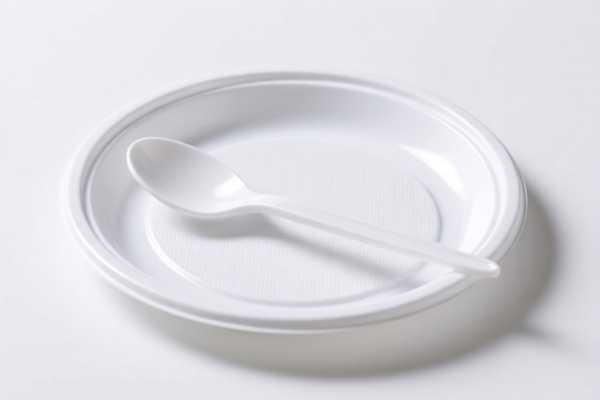
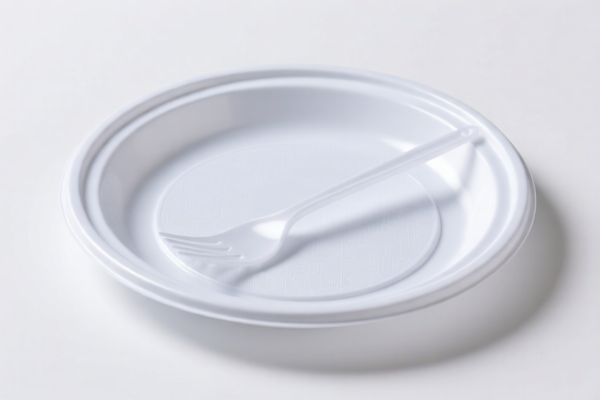
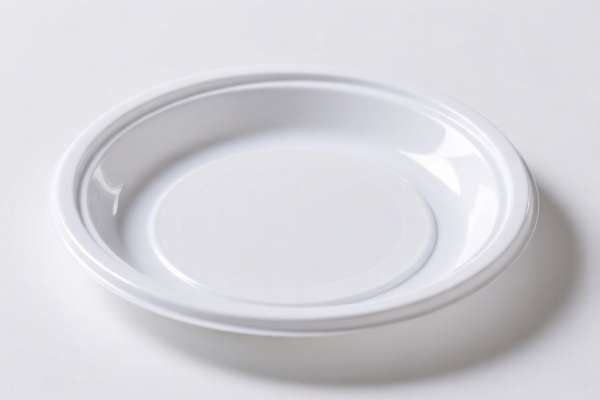
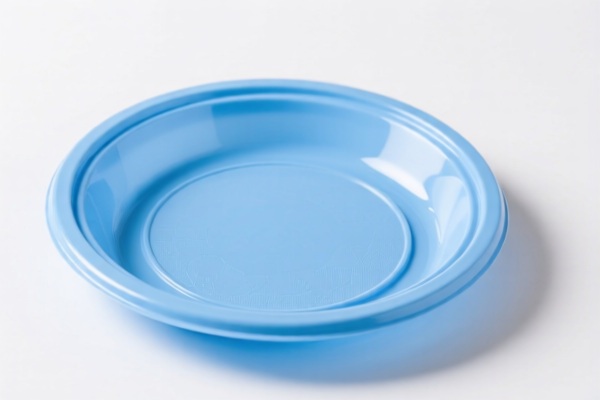
AI分析
🍽️ Plastic Plates: HS Code Classification & U.S. Customs Clearance Strategy
🌐 HS Code Reference & Customs Clearance Guide | 2024/2025 Latest Tariff Analysis | Professional Entry Strategies
📌 I. Product Definition & Classification: Do You Really Understand "Plastic Plates"?
"Plastic Plates" are versatile consumer goods used in dining, food service, packaging, or industrial contexts. In international trade, they are not a single commodity. Their classification depends entirely on material, form, function, and end-use. Misclassification can lead to severe tariff discrepancies (from 13.4% to 40.8%) and customs delays.
In the U.S. Harmonized Tariff Schedule (HTSUS), plastic plates fall primarily under two chapters: 1. Chapter 39 (Plastics and Articles Thereof): * 3924: Plastic tableware (dishes, plates, bowls). This is the most common and favorable classification for consumer plates. * 3923: Plastic articles for the conveyance or packing of goods (boxes, trays). * 3920: Plastic plates, sheets, film, foil, and tape (raw material forms).
⚠️ Critical Distinction:
- If the item is a finished plate for eating/serving → Likely 3924.10.xx.
- If it is a tray for holding other goods (e.g., pizza tray, shipping tray) → Likely 3923.xx.
- If it is a sheet/panel of plastic (not shaped into a vessel) → Likely 3920.xx.
📦 II. Detailed HS Code Classification (Based on Provided Data)
The following analysis is strictly based on the provided <DATA> JSON content. All classifications apply to Plastic Plates with the specific descriptions noted.
| HS Code | Summary Description | Key Classification Logic |
|---|---|---|
| 3924.10.20.00 | Plastic plate, material: plastic, form: plate, fully fits the definition of "plates and dishes" in plastic tableware. | ✅ Correct for Consumer Dining Plates. This is the standard HTSUS code for plastic tableware. |
| 3924.10.40.00 | Plastic plate, material: plastic, use/form fits the definition of "plates" in the tableware category. | ✅ Correct for Consumer Dining Plates. Often overlaps with 3924.10.20.00 but may differ by specific sub-category details (e.g., disposable vs. durable). |
| 3923.10.90.00 | Plastic plate, material: plastic, form: other than boxes, cases, crates, trays, etc. (classified as "other") under articles for conveyance/packing. | ⚠️ Incorrect for Dining. Used if the item is a tray for carrying goods, not for eating directly. |
| 3923.90.00.80 | Plastic plate, material: plastic, use: other articles for packaging or containers. | ⚠️ Incorrect for Dining. Used for packaging components or non-food-contact plastic goods. |
| 3920.99.50.00 | Plastic plate, material: plastic, form: fits "plate/panel" attribute under "plates, sheets, film, foil, and tape". | ⚠️ Incorrect for Finished Plates. Used for raw plastic sheets/panels, not shaped eating ware. |
🔍 Key Takeaway:
- For actual eating plates, the correct classification is almost certainly 3924.10.20.00 or 3924.10.40.00.
- Classifying dining plates under 3923 or 3920 is a common error that leads to higher tariffs and potential customs rejection.
💰 III. 2024/2025 Latest Tariff Rate Breakdown (Including Surtaxes)
✅ Applicable Country: United States (US)
✅ Origin: China (CN)
✅ Effective Time: Current rates as per provided data (includes Section 301 and IEEPA surcharges)
🎯 1. 3924.10.20.00 —— Plastic Tableware (Plates/Dishes)
| Item | Details |
|---|---|
| Base Tariff | 6.5% |
| Surtax (Section 301) | +7.5% |
| IEEPA Surtax (122 Clause) | +10% |
| Total Effective Tariff | 24.0% |
| Tax Calculation | CIF Value × 24.0% |
| Legal Basis Path | HTSUS:3924.10.20.00 → USITC Footnote → IEEPA:122 |
📌 Explanation:
- This is the most favorable rate for plastic plates among the provided codes.
- The base tariff (6.5%) is moderate, but the addition of Section 301 (7.5%) and IEEPA (10%) brings the total to 24%.
- Recommendation: Use this code for standard plastic eating plates.
🎯 2. 3924.10.40.00 —— Plastic Tableware (Other Plates/Dishes)
| Item | Details |
|---|---|
| Base Tariff | 3.4% |
| Surtax (Section 301) | +0.0% (Exempt or Not Applicable per data) |
| IEEPA Surtax (122 Clause) | +10% |
| Total Effective Tariff | 13.4% |
| Tax Calculation | CIF Value × 13.4% |
| Legal Basis Path | HTSUS:3924.10.40.00 → USITC Footnote → IEEPA:122 |
📌 Explanation:
- Lowest Tariff Option: At 13.4%, this is significantly cheaper than other classifications.
- Crucial: This rate applies only if the product strictly fits the definition of this sub-heading. It may apply to specific types of plastic tableware (e.g., certain disposable items or non-durable goods).
- Risk: If customs determines the goods do not fit this specific sub-heading, they may reassess under 3924.10.20.00 (24%) or higher.
🎯 3. 3923.10.90.00 —— Plastic Articles for Conveyance/Packing (Other)
| Item | Details |
|---|---|
| Base Tariff | 3.0% |
| Surtax (Section 301) | +25.0% |
| IEEPA Surtax (122 Clause) | +10% |
| Total Effective Tariff | 38.0% |
| Tax Calculation | CIF Value × 38.0% |
| Legal Basis Path | HTSUS:3923.10.90.00 → USITC Footnote → IEEPA:122 |
📌 Explanation:
- High Tariff: 38% is significantly higher than tableware codes.
- When Used: Only for trays used for carrying other goods (e.g., pizza delivery trays, industrial pallets). Do not use for eating plates.
🎯 4. 3923.90.00.80 —— Other Plastic Packaging Articles
| Item | Details |
|---|---|
| Base Tariff | 3.0% |
| Surtax (Section 301) | +25.0% |
| IEEPA Surtax (122 Clause) | +10% |
| Total Effective Tariff | 38.0% |
| Tax Calculation | CIF Value × 38.0% |
| Legal Basis Path | HTSUS:3923.90.00.80 → USITC Footnote → IEEPA:122 |
📌 Explanation:
- High Tariff: Same as above. Used for non-tableware plastic packaging items.
🎯 5. 3920.99.50.00 —— Plastic Plates, Sheets, etc. (Other)
| Item | Details |
|---|---|
| Base Tariff | 5.8% |
| Surtax (Section 301) | +25.0% |
| IEEPA Surtax (122 Clause) | +10% |
| Total Effective Tariff | 40.8% |
| Tax Calculation | CIF Value × 40.8% |
| Legal Basis Path | HTSUS:3920.99.50.00 → USITC Footnote → IEEPA:122 |
📌 Explanation:
- Highest Tariff: 40.8% is the most expensive option.
- When Used: Only for unshaped plastic sheets/panels. Misclassifying finished plates here is a major compliance error.
🛠️ IV. Customs Clearance Practical Advice (Real-World Pitfall Guide)
✅ 1. Essential Documentation Checklist (No Exceptions)
| Document | Mandatory? | Description |
|---|---|---|
| ✅ Product Specification Sheet | ✔️ | Must include material (e.g., PP, PS, PET), dimensions, wall thickness, and intended use. |
| ✅ Product Photos | ✔️ | Clear images showing the item is a plate/dish (concave shape for food), not a flat sheet or a tray for other goods. |
| ✅ Commercial Invoice | ✔️ | Must clearly state "Plastic Tableware" or "Plastic Plates for Dining Use". Avoid vague terms like "Plastic Part" or "Plastic Sheet". |
| ✅ Proof of Material | ✔️ | Material safety data sheet (MSDS) or compliance certificate (FDA Food Contact approval if applicable). |
| ✅ Country of Origin Certificate | ✔️ | Required for determining surtax applicability (Section 301/IEEPA). |
✅ 2. Declaration Strategy (Key Mantra)
🔥 "Form Defines Function, Use Defines Code, Be Precise or Pay More!"
| Scenario | Correct Declaration | Incorrect Declaration | Consequence of Error |
|---|---|---|---|
| Dining Plate (Consumer) | 3924.10.20.00 or 3924.10.40.00 |
3923.10.90.00 (Tray) or 3920.99.50.00 (Sheet) |
Tariff Jump: From 13.4–24% → 38–40.8% + Penalties |
| Pizza Tray (Food Service) | 3923.10.90.00 |
3924.10.20.00 (Tableware) |
Potential Rejection if not clearly a "conveyance" item |
| Plastic Sheet (Raw Material) | 3920.99.50.00 |
3924.10.20.00 (Tableware) |
Major Classification Error, High Risk of Audit |
📌 Critical Note:
- If you declare "Plastic Plates" but send flat plastic sheets, customs will flag it.
- If you declare "Plastic Plates" but send eating dishes, do NOT use3923or3920codes to save on base tariff. The surtaxes make it more expensive anyway. Stick to 3924.
✅ 3. Special Cases Handling
| Situation | Handling Advice |
|---|---|
| Disposable vs. Durable | Check if 3924.10.40.00 (13.4%) applies to disposable items. If so, specify "Disposable Plastic Plate" on invoice. If durable, use 3924.10.20.00 (24%). |
| Set with Other Items | If sold as a "Plate + Fork" set, the set is generally classified by its essential character. If plates dominate, classify under 3924. Do not split. |
| Sample vs. Bulk | Ensure samples are clearly marked "NOT FOR SALE" and declared correctly to avoid surtax disputes. |
🌍 V. Global Market Comparison (2024/2025)
| Country/Region | Recommended HS Code | Base Tariff | Total Tariff (China Origin) | Notes |
|---|---|---|---|---|
| 🇺🇸 United States | 3924.10.20.00 / 3924.10.40.00 |
3.4% - 6.5% | 13.4% - 24.0% | Surtaxes (301 + IEEPA) apply. |
| 🇨🇳 China | 3924.10.20.00 |
6.5% | 6.5% | No additional surtaxes for imports into China. |
| 🇪🇺 European Union | 3924.10.00 |
3.5% - 6.5% | 3.5% - 6.5% | No Section 301 or IEEPA surtaxes. |
| 🇬🇧 United Kingdom | 3924.10.00 |
3.5% - 6.5% | 3.5% - 6.5% | Post-Brexit tariffs align closely with EU. |
📌 Conclusion:
- The US is the most expensive market due to cumulative surtaxes (301 + IEEPA).
- EU and UK remain competitive with lower effective tariffs.
- Cost Optimization: If targeting the US, ensure accurate classification under3924.10.40.00(13.4%) if applicable, as it saves 10.6% compared to3924.10.20.00.
📌 VI. Common Mistakes & Pitfall Guide (Lessons Learned)
❌ Mistake 1: Using 3923.10.90.00 for eating plates to "save" on base tariff.
👉 Result: Tariff jumps from 24% to 38% due to higher Section 301 surtax. Loss of profit.
❌ Mistake 2: Using 3920.99.50.00 for finished plates.
👉 Result: 40.8% tariff + Customs seizure for misclassification. Complete shipment delay.
❌ Mistake 3: Vague invoice description ("Plastic Part").
👉 Result: Customs cannot determine end-use → Assume highest duty rate or request additional info → Delays.
❌ Mistake 4: Assuming all plastic plates are the same.
👉 Result: Missing out on the 13.4% rate of 3924.10.40.00 by using 3924.10.20.00 (24%). Unnecessary cost.
✅ Correct Practice:
"Plastic Tableware, Disposable, PP Material, Round Shape, Diameter 20cm, FDA Compliant"
Code:3924.10.40.00(If eligible) or3924.10.20.00
🎯 VII. Conclusion: Precision Classification, Maximized Profit
🎯 Remember the Mantra:
🔹 "Tableware is 3924, Packing is 3923, Sheets are 3920!"
🔹 "13.4% is better than 24%, which is better than 38%!"
🔹 "Be specific on the invoice, avoid the 40% trap!"
📌 Pro Tip:
If your plastic plates are made from recycled material or have specific eco-friendly certifications, consult with a customs broker to see if any specific sub-headings offer preferential treatment. Also, consider applying for a Binding Ruling from U.S. Customs if you are importing large volumes, to lock in the 13.4% rate if applicable.
📣 Immediate Action:
📞 Contact a Licensed Customs Broker
📄 Provide Detailed Product Specs + Photos
🚀 Ensure Your Invoice Reads "Plastic Tableware"
💰 Save 10-27% in Tariffs by Classifying Correctly!
✨ Professional Clearance Starts with Accurate Classification!
💼 Every Percentage Point Counts in International Trade!
用户评价
关于 HS 编码归类
协调制度(HS)是由世界海关组织(WCO)制定的国际贸易商品分类标准。全球 200 多个国家采用 HS 系统作为海关关税、贸易统计和进出口监管的基础。
每个 HS 编码遵循以下层级结构:
- 章(2 位)——商品大类(例如:第 84 章:机器和机械设备)
- 品目(4 位)——章内的更具体分类
- 子目(6 位)——国际通用细分,所有 WCO 成员国统一使用
- 本国细分(8-10 位)——各国自行扩展的细分编码,如美国 HTSUS 10 位编码
正确的 HS 编码归类对于顺利通关、准确缴纳关税和遵守贸易法规至关重要。错误归类可能导致海关延误、多缴关税或罚款。
从CN进口到US时,适用的关税税率可能包括:
- 最惠国(MFN)税率——适用于 WTO 成员国的标准关税税率
- 普通税率——适用于无贸易协定国家
- 贸易救济关税——附加关税,如 301 条款(反倾销)、232 条款(国家安全)或反补贴税
本页内容仅供参考。如需正式归类,请咨询当地海关或持牌报关代理。