Plastic Plates
CN → US| HS Code | Tariff Rate | Origin | Destination | Doc |
|---|---|---|---|---|
| 3923109000 | 38.0% | CN | US | Official Doc |
| 3923900080 | 38.0% | CN | US | Official Doc |
| 3924102000 | 24.0% | CN | US | Official Doc |
| 3924104000 | 13.4% | CN | US | Official Doc |
| 3920995000 | 40.8% | CN | US | Official Doc |
Product Images
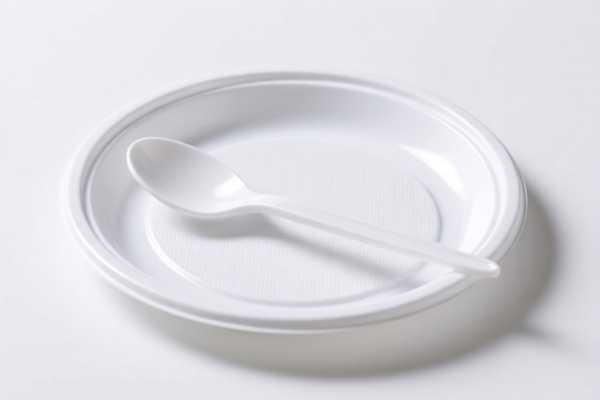
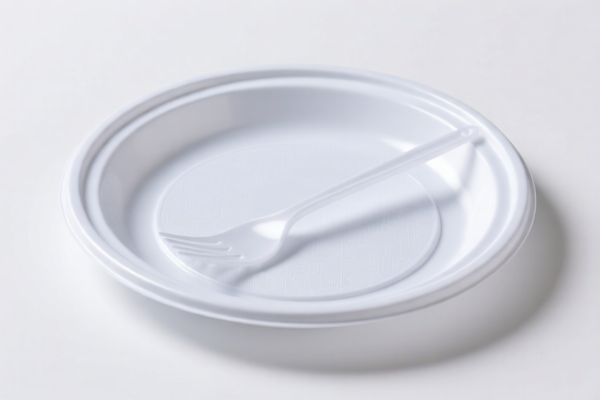
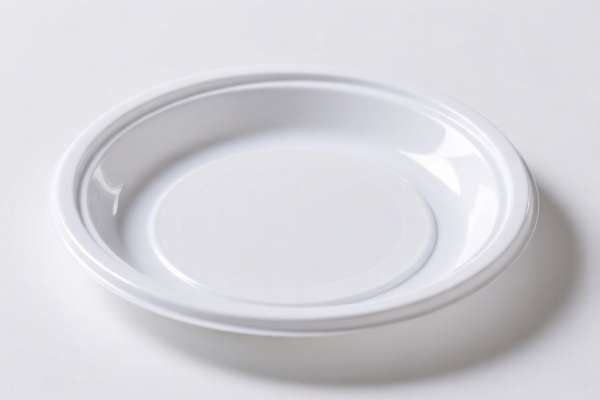
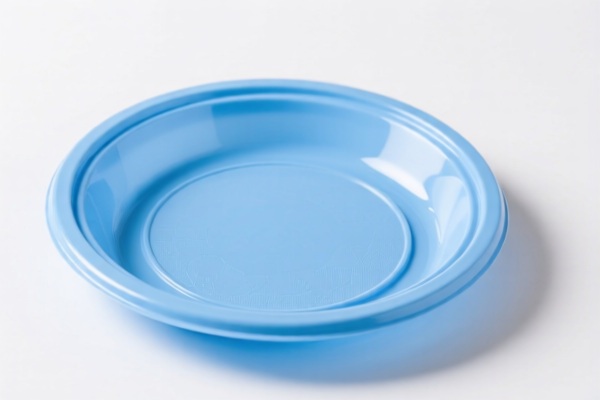
AI Analysis
🍽️ Plastic Plates: HS Code Classification & U.S. Customs Clearance Strategy
🌐 HS Code Reference & Customs Clearance Guide | 2024/2025 Latest Tariff Analysis | Professional Entry Strategies
📌 I. Product Definition & Classification: Do You Really Understand "Plastic Plates"?
"Plastic Plates" are versatile consumer goods used in dining, food service, packaging, or industrial contexts. In international trade, they are not a single commodity. Their classification depends entirely on material, form, function, and end-use. Misclassification can lead to severe tariff discrepancies (from 13.4% to 40.8%) and customs delays.
In the U.S. Harmonized Tariff Schedule (HTSUS), plastic plates fall primarily under two chapters: 1. Chapter 39 (Plastics and Articles Thereof): * 3924: Plastic tableware (dishes, plates, bowls). This is the most common and favorable classification for consumer plates. * 3923: Plastic articles for the conveyance or packing of goods (boxes, trays). * 3920: Plastic plates, sheets, film, foil, and tape (raw material forms).
⚠️ Critical Distinction:
- If the item is a finished plate for eating/serving → Likely 3924.10.xx.
- If it is a tray for holding other goods (e.g., pizza tray, shipping tray) → Likely 3923.xx.
- If it is a sheet/panel of plastic (not shaped into a vessel) → Likely 3920.xx.
📦 II. Detailed HS Code Classification (Based on Provided Data)
The following analysis is strictly based on the provided <DATA> JSON content. All classifications apply to Plastic Plates with the specific descriptions noted.
| HS Code | Summary Description | Key Classification Logic |
|---|---|---|
| 3924.10.20.00 | Plastic plate, material: plastic, form: plate, fully fits the definition of "plates and dishes" in plastic tableware. | ✅ Correct for Consumer Dining Plates. This is the standard HTSUS code for plastic tableware. |
| 3924.10.40.00 | Plastic plate, material: plastic, use/form fits the definition of "plates" in the tableware category. | ✅ Correct for Consumer Dining Plates. Often overlaps with 3924.10.20.00 but may differ by specific sub-category details (e.g., disposable vs. durable). |
| 3923.10.90.00 | Plastic plate, material: plastic, form: other than boxes, cases, crates, trays, etc. (classified as "other") under articles for conveyance/packing. | ⚠️ Incorrect for Dining. Used if the item is a tray for carrying goods, not for eating directly. |
| 3923.90.00.80 | Plastic plate, material: plastic, use: other articles for packaging or containers. | ⚠️ Incorrect for Dining. Used for packaging components or non-food-contact plastic goods. |
| 3920.99.50.00 | Plastic plate, material: plastic, form: fits "plate/panel" attribute under "plates, sheets, film, foil, and tape". | ⚠️ Incorrect for Finished Plates. Used for raw plastic sheets/panels, not shaped eating ware. |
🔍 Key Takeaway:
- For actual eating plates, the correct classification is almost certainly 3924.10.20.00 or 3924.10.40.00.
- Classifying dining plates under 3923 or 3920 is a common error that leads to higher tariffs and potential customs rejection.
💰 III. 2024/2025 Latest Tariff Rate Breakdown (Including Surtaxes)
✅ Applicable Country: United States (US)
✅ Origin: China (CN)
✅ Effective Time: Current rates as per provided data (includes Section 301 and IEEPA surcharges)
🎯 1. 3924.10.20.00 —— Plastic Tableware (Plates/Dishes)
| Item | Details |
|---|---|
| Base Tariff | 6.5% |
| Surtax (Section 301) | +7.5% |
| IEEPA Surtax (122 Clause) | +10% |
| Total Effective Tariff | 24.0% |
| Tax Calculation | CIF Value × 24.0% |
| Legal Basis Path | HTSUS:3924.10.20.00 → USITC Footnote → IEEPA:122 |
📌 Explanation:
- This is the most favorable rate for plastic plates among the provided codes.
- The base tariff (6.5%) is moderate, but the addition of Section 301 (7.5%) and IEEPA (10%) brings the total to 24%.
- Recommendation: Use this code for standard plastic eating plates.
🎯 2. 3924.10.40.00 —— Plastic Tableware (Other Plates/Dishes)
| Item | Details |
|---|---|
| Base Tariff | 3.4% |
| Surtax (Section 301) | +0.0% (Exempt or Not Applicable per data) |
| IEEPA Surtax (122 Clause) | +10% |
| Total Effective Tariff | 13.4% |
| Tax Calculation | CIF Value × 13.4% |
| Legal Basis Path | HTSUS:3924.10.40.00 → USITC Footnote → IEEPA:122 |
📌 Explanation:
- Lowest Tariff Option: At 13.4%, this is significantly cheaper than other classifications.
- Crucial: This rate applies only if the product strictly fits the definition of this sub-heading. It may apply to specific types of plastic tableware (e.g., certain disposable items or non-durable goods).
- Risk: If customs determines the goods do not fit this specific sub-heading, they may reassess under 3924.10.20.00 (24%) or higher.
🎯 3. 3923.10.90.00 —— Plastic Articles for Conveyance/Packing (Other)
| Item | Details |
|---|---|
| Base Tariff | 3.0% |
| Surtax (Section 301) | +25.0% |
| IEEPA Surtax (122 Clause) | +10% |
| Total Effective Tariff | 38.0% |
| Tax Calculation | CIF Value × 38.0% |
| Legal Basis Path | HTSUS:3923.10.90.00 → USITC Footnote → IEEPA:122 |
📌 Explanation:
- High Tariff: 38% is significantly higher than tableware codes.
- When Used: Only for trays used for carrying other goods (e.g., pizza delivery trays, industrial pallets). Do not use for eating plates.
🎯 4. 3923.90.00.80 —— Other Plastic Packaging Articles
| Item | Details |
|---|---|
| Base Tariff | 3.0% |
| Surtax (Section 301) | +25.0% |
| IEEPA Surtax (122 Clause) | +10% |
| Total Effective Tariff | 38.0% |
| Tax Calculation | CIF Value × 38.0% |
| Legal Basis Path | HTSUS:3923.90.00.80 → USITC Footnote → IEEPA:122 |
📌 Explanation:
- High Tariff: Same as above. Used for non-tableware plastic packaging items.
🎯 5. 3920.99.50.00 —— Plastic Plates, Sheets, etc. (Other)
| Item | Details |
|---|---|
| Base Tariff | 5.8% |
| Surtax (Section 301) | +25.0% |
| IEEPA Surtax (122 Clause) | +10% |
| Total Effective Tariff | 40.8% |
| Tax Calculation | CIF Value × 40.8% |
| Legal Basis Path | HTSUS:3920.99.50.00 → USITC Footnote → IEEPA:122 |
📌 Explanation:
- Highest Tariff: 40.8% is the most expensive option.
- When Used: Only for unshaped plastic sheets/panels. Misclassifying finished plates here is a major compliance error.
🛠️ IV. Customs Clearance Practical Advice (Real-World Pitfall Guide)
✅ 1. Essential Documentation Checklist (No Exceptions)
| Document | Mandatory? | Description |
|---|---|---|
| ✅ Product Specification Sheet | ✔️ | Must include material (e.g., PP, PS, PET), dimensions, wall thickness, and intended use. |
| ✅ Product Photos | ✔️ | Clear images showing the item is a plate/dish (concave shape for food), not a flat sheet or a tray for other goods. |
| ✅ Commercial Invoice | ✔️ | Must clearly state "Plastic Tableware" or "Plastic Plates for Dining Use". Avoid vague terms like "Plastic Part" or "Plastic Sheet". |
| ✅ Proof of Material | ✔️ | Material safety data sheet (MSDS) or compliance certificate (FDA Food Contact approval if applicable). |
| ✅ Country of Origin Certificate | ✔️ | Required for determining surtax applicability (Section 301/IEEPA). |
✅ 2. Declaration Strategy (Key Mantra)
🔥 "Form Defines Function, Use Defines Code, Be Precise or Pay More!"
| Scenario | Correct Declaration | Incorrect Declaration | Consequence of Error |
|---|---|---|---|
| Dining Plate (Consumer) | 3924.10.20.00 or 3924.10.40.00 |
3923.10.90.00 (Tray) or 3920.99.50.00 (Sheet) |
Tariff Jump: From 13.4–24% → 38–40.8% + Penalties |
| Pizza Tray (Food Service) | 3923.10.90.00 |
3924.10.20.00 (Tableware) |
Potential Rejection if not clearly a "conveyance" item |
| Plastic Sheet (Raw Material) | 3920.99.50.00 |
3924.10.20.00 (Tableware) |
Major Classification Error, High Risk of Audit |
📌 Critical Note:
- If you declare "Plastic Plates" but send flat plastic sheets, customs will flag it.
- If you declare "Plastic Plates" but send eating dishes, do NOT use3923or3920codes to save on base tariff. The surtaxes make it more expensive anyway. Stick to 3924.
✅ 3. Special Cases Handling
| Situation | Handling Advice |
|---|---|
| Disposable vs. Durable | Check if 3924.10.40.00 (13.4%) applies to disposable items. If so, specify "Disposable Plastic Plate" on invoice. If durable, use 3924.10.20.00 (24%). |
| Set with Other Items | If sold as a "Plate + Fork" set, the set is generally classified by its essential character. If plates dominate, classify under 3924. Do not split. |
| Sample vs. Bulk | Ensure samples are clearly marked "NOT FOR SALE" and declared correctly to avoid surtax disputes. |
🌍 V. Global Market Comparison (2024/2025)
| Country/Region | Recommended HS Code | Base Tariff | Total Tariff (China Origin) | Notes |
|---|---|---|---|---|
| 🇺🇸 United States | 3924.10.20.00 / 3924.10.40.00 |
3.4% - 6.5% | 13.4% - 24.0% | Surtaxes (301 + IEEPA) apply. |
| 🇨🇳 China | 3924.10.20.00 |
6.5% | 6.5% | No additional surtaxes for imports into China. |
| 🇪🇺 European Union | 3924.10.00 |
3.5% - 6.5% | 3.5% - 6.5% | No Section 301 or IEEPA surtaxes. |
| 🇬🇧 United Kingdom | 3924.10.00 |
3.5% - 6.5% | 3.5% - 6.5% | Post-Brexit tariffs align closely with EU. |
📌 Conclusion:
- The US is the most expensive market due to cumulative surtaxes (301 + IEEPA).
- EU and UK remain competitive with lower effective tariffs.
- Cost Optimization: If targeting the US, ensure accurate classification under3924.10.40.00(13.4%) if applicable, as it saves 10.6% compared to3924.10.20.00.
📌 VI. Common Mistakes & Pitfall Guide (Lessons Learned)
❌ Mistake 1: Using 3923.10.90.00 for eating plates to "save" on base tariff.
👉 Result: Tariff jumps from 24% to 38% due to higher Section 301 surtax. Loss of profit.
❌ Mistake 2: Using 3920.99.50.00 for finished plates.
👉 Result: 40.8% tariff + Customs seizure for misclassification. Complete shipment delay.
❌ Mistake 3: Vague invoice description ("Plastic Part").
👉 Result: Customs cannot determine end-use → Assume highest duty rate or request additional info → Delays.
❌ Mistake 4: Assuming all plastic plates are the same.
👉 Result: Missing out on the 13.4% rate of 3924.10.40.00 by using 3924.10.20.00 (24%). Unnecessary cost.
✅ Correct Practice:
"Plastic Tableware, Disposable, PP Material, Round Shape, Diameter 20cm, FDA Compliant"
Code:3924.10.40.00(If eligible) or3924.10.20.00
🎯 VII. Conclusion: Precision Classification, Maximized Profit
🎯 Remember the Mantra:
🔹 "Tableware is 3924, Packing is 3923, Sheets are 3920!"
🔹 "13.4% is better than 24%, which is better than 38%!"
🔹 "Be specific on the invoice, avoid the 40% trap!"
📌 Pro Tip:
If your plastic plates are made from recycled material or have specific eco-friendly certifications, consult with a customs broker to see if any specific sub-headings offer preferential treatment. Also, consider applying for a Binding Ruling from U.S. Customs if you are importing large volumes, to lock in the 13.4% rate if applicable.
📣 Immediate Action:
📞 Contact a Licensed Customs Broker
📄 Provide Detailed Product Specs + Photos
🚀 Ensure Your Invoice Reads "Plastic Tableware"
💰 Save 10-27% in Tariffs by Classifying Correctly!
✨ Professional Clearance Starts with Accurate Classification!
💼 Every Percentage Point Counts in International Trade!
Customer Reviews
About HS Code Classification
The Harmonized System (HS) is an internationally standardized nomenclature developed by the World Customs Organization (WCO) to classify traded products. Over 200 countries use the HS system as the basis for customs tariffs, trade statistics, and import/export regulations.
Each HS code follows a hierarchical structure:
- Chapter (2 digits) — Broad category of goods (e.g., Chapter 84: Machinery and Mechanical Appliances)
- Heading (4 digits) — More specific grouping within the chapter
- Subheading (6 digits) — Internationally standardized breakdown, used by all WCO member countries
- National subdivisions (8-10 digits) — Country-specific extensions for further classification, such as US HTSUS 10-digit codes
Correct HS code classification is essential for smooth customs clearance, accurate duty payment, and compliance with trade regulations. Misclassification can lead to customs delays, overpayment of duties, or penalties.
When importing from CN to US, the applicable tariff rates may include:
- Most-Favored-Nation (MFN) rate — The standard duty rate applied to WTO members
- General rate — Applied to countries without trade agreements
- Trade remedy duties — Additional tariffs such as Section 301 (anti-dumping), Section 232 (national security), or countervailing duties
The information provided on this page is for reference purposes only. For official classification, please consult with your local customs authority or a licensed customs broker.