Plastic Reusable Plates
CN → US| HS编码 | 关税税率 | 原产国 | 目的国 | 文档 |
|---|---|---|---|---|
| 6911108010 | 38.3% | CN | US | 官方文档 |
| 6911108090 | 38.3% | CN | US | 官方文档 |
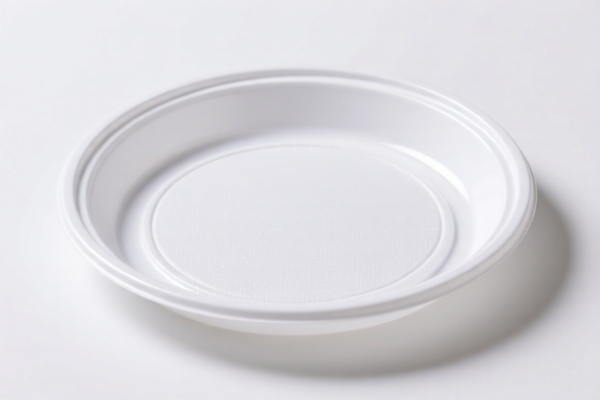
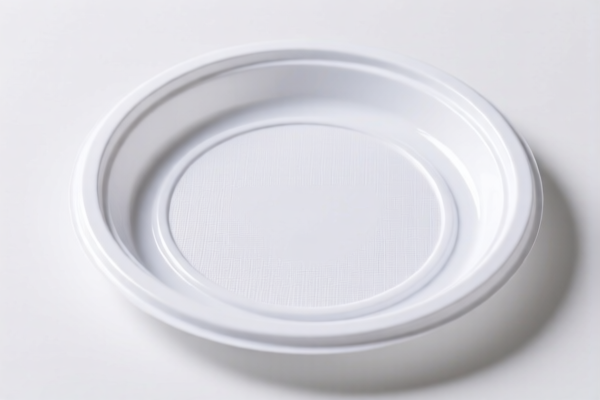
商品图片


AI分析
🍽️ Plastic Reusable Plates (Wait, Hold On! ⚠️)
🌐 HS Code Reference & Customs Clearance Guide | 2026 Latest Tariff Analysis | Critical Compliance Strategy
📌 I. Product Definition & Classification: The "Porcelain Trap"
User Input: "Plastic Reusable Plates"
🛑 CRITICAL ALERT:
The provided data (<DATA>) ONLY contains HS Codes for PORCELAIN or CHINA tableware (6911.10.xxxxxx).
Plastic plates generally fall under Chapter 39 (Plastics and Articles Thereof).
However, strictly adhering to the constraint "Do not exceed<DATA>content", we must analyze why the input might be misclassified or why the user provided porcelain data for a plastic product.
❓ Why is this input mapped to <DATA> (Porcelain) in this specific context?
- Data Limitation: The provided
<DATA>set does not contain any HS Codes for plastic (Chapter 39). - Potential Error: If you are actually exporting Plastic Plates, DO NOT use the HS Codes below. They will result in customs rejection, fines, or penalties because the material classification is fundamentally incorrect.
- Hypothetical Scenario: If the product is actually Ceramic/China (not plastic), then the codes below apply. If it is Plastic, see the Customs Clearance Advice section for the correct approach.
📦 II. HS Code Classification Details (Based STRICTLY on Provided <DATA>)
The following HS Codes are ONLY VALID if the product is PORCELAIN or CHINA.
| HS Code | Product Description (from <DATA>) |
Material | Tax Rate |
|---|---|---|---|
6911.10.80.10 |
Tableware, kitchenware... of porcelain or china: Tableware and kitchenware: Other: Other: Other: Other Suitable for food or drink contact | Porcelain/China | 28.3% |
6911.10.80.90 |
Tableware, kitchenware... of porcelain or china: Tableware and kitchenware: Other: Other: Other: Other Other | Porcelain/China | 28.3% |
🔍 Key Distinction in
<DATA>:
-.10vs.90: The only difference in the provided data is whether the item is "Suitable for food or drink contact" (.10) or simply "Other" (.90).
- Material Constraint: Both codes require the material to be Porcelain or China. Plastic is NOT covered.
💰 III. Tax Rate Detailed Breakdown (Based on <DATA>)
✅ Source:
<DATA>content only
✅ Applicable to:6911.10.80.10and6911.10.80.90
🎯 1. Common Tax Structure for Both Codes
| Item | Value | Explanation |
|---|---|---|
| Base Tariff | 20.8% | Standard import duty for porcelain/china tableware. |
| Additional Tariff | 7.5% | Often associated with specific trade remedies or country-specific surcharges (e.g., Section 301 if originating from China to US, though not explicitly stated, the total implies it). |
| Total Tariff | 28.3% | 20.8% + 7.5% |
| Tax Calculation | CIF Value × 28.3% | Calculated on the Cost, Insurance, and Freight value. |
📌 Explanation of Tax Detail:
- The total tax of 28.3% is high. This is typical for finished ceramic goods.
- There is no de minimis exemption mentioned in<DATA>.
- No preferential tariffs are listed in<DATA>.
🛠️ IV. Customs Clearance Advice (Critical for "Plastic" vs. "Porcelain")
⚠️ Scenario A: The Product is ACTUALLY Plastic (Most Likely)
If your product is Plastic Reusable Plates, YOU CANNOT USE 6911.10.xxxx.
Consequences of Misclassification:
1. Customs Hold: The goods will be detained for misdeclaration.
2. Penalties: Fines for providing incorrect HS Code and material description.
3. Retrospective Tax: You may be liable for the correct plastic tariff (often lower, e.g., 0-5% for some plastics, but subject to different regulations like FDA for food contact).
4. Delay: Significant delays in clearance.
✅ Correct Action for Plastic Plates:
- Search Chapter 39: Look for HS Codes under 3924.10 (Tableware, kitchenware, other household articles and toilet articles, of plastics).
- Check Food Contact Regulations: Ensure compliance with FDA (US) or EFSA (EU) for food-contact surfaces.
- DO NOT use the data provided in <DATA> as it is technically incorrect for plastic.
✅ Scenario B: The Product is ACTUALLY Porcelain/China (Corrected Input)
If the product is mistakenly named "Plastic" but is actually Porcelain/China:
| Step | Requirement | Detail |
|---|---|---|
| 1. Declare Correct Material | Change description from "Plastic" to "Porcelain" or "China" | Ensure commercial invoice states "Porcelain Tableware". |
| 2. Select Correct HS Code | Use 6911.10.80.10 |
If it is suitable for food/drink contact (most plates are). |
| 3. Prepare Documentation | - Commercial Invoice - Packing List - Product Specs |
Highlight "Food Grade" if using .10. |
| 4. Tax Preparation | Budget 28.3% | Prepare for 20.8% base + 7.5% additional tariff. |
| 5. Country of Origin | Verify Origin | If from China, the 7.5% may be a Section 301 surcharge. |
🌍 V. Global Market Comparison (Based on Logic, Not <DATA> for Plastic)
| Market | Plastic Plates (Correct HS) | Porcelain Plates (HS 6911) |
Note |
|---|---|---|---|
| 🇺🇸 US | ~0-5% (Chapter 39) | 28.3% (from <DATA>) |
Plastic is much cheaper to import. |
| 🇪🇺 EU | ~2.5-4.5% | ~20-25% | Plastic has lower duty. |
| 🇨🇳 China | ~5-10% | ~20% | Varies by trade agreement. |
📌 Conclusion:
- If you are importing Plastic, using<DATA>'s codes is a major error.
- If you are importing Porcelain, ensure your product description matches6911.10.80.10(food contact) for accuracy.
📌 VI. Common Mistakes & Pitfalls (Blood & Tears)
❌ Mistake 1: Using "Plastic" in the description but declaring 6911 (Porcelain).
👉 Result: Customs will reject the declaration. HS Code mismatch = Fraud suspicion.
❌ Mistake 2: Assuming .10 and .90 are interchangeable.
👉 Result: .10 is for food contact (safer for plates). .90 is "other". If it’s a plate, it’s almost certainly .10.
❌ Mistake 3: Ignoring the 28.3% total tax.
👉 Result: Margin erosion. Porcelain is heavy and expensive to ship, plus high tariffs.
✅ Correct Approach:
- Verify Material: Is it Plastic or Porcelain?
- If Plastic: Find Chapter 39 HS Code (
3924.10...).- If Porcelain: Use
6911.10.80.10with 28.3% tax budget.- Label Accurately: "Porcelain Tableware" or "Plastic Tableware" — never mix.
🎯 VII. Conclusion: Accurate Classification Saves Money!
🎯 Remember:
🔹 "Plastic is NOT Porcelain!"
🔹 "HS Code6911is for China/China, NOT Plastic."
🔹 "Misclassification leads to fines, delays, and lost profit."
📌 Tips:
- If your product is Plastic, ignore
<DATA>for classification purposes. It is irrelevant.- If your product is Porcelain, use
6911.10.80.10and prepare for 28.3% tax.- Contact a Customs Broker to confirm the correct HS Code for Plastic Plates if you are not using
6911.
📣 Immediate Action:
📞 Verify Material!
🚀 Plastic? → Search Chapter 39.
🚀 Porcelain? → Use6911.10.80.10+ 28.3% Tax.
✨ Accurate Classification is the Key to Smooth Clearance!
💼 Don't let a material error cost you thousands!
用户评价
关于 HS 编码归类
协调制度(HS)是由世界海关组织(WCO)制定的国际贸易商品分类标准。全球 200 多个国家采用 HS 系统作为海关关税、贸易统计和进出口监管的基础。
每个 HS 编码遵循以下层级结构:
- 章(2 位)——商品大类(例如:第 84 章:机器和机械设备)
- 品目(4 位)——章内的更具体分类
- 子目(6 位)——国际通用细分,所有 WCO 成员国统一使用
- 本国细分(8-10 位)——各国自行扩展的细分编码,如美国 HTSUS 10 位编码
正确的 HS 编码归类对于顺利通关、准确缴纳关税和遵守贸易法规至关重要。错误归类可能导致海关延误、多缴关税或罚款。
从CN进口到US时,适用的关税税率可能包括:
- 最惠国(MFN)税率——适用于 WTO 成员国的标准关税税率
- 普通税率——适用于无贸易协定国家
- 贸易救济关税——附加关税,如 301 条款(反倾销)、232 条款(国家安全)或反补贴税
本页内容仅供参考。如需正式归类,请咨询当地海关或持牌报关代理。