Plastic Reusable Plates
CN → US| HS Code | Tariff Rate | Origin | Destination | Doc |
|---|---|---|---|---|
| 6911108010 | 38.3% | CN | US | Official Doc |
| 6911108090 | 38.3% | CN | US | Official Doc |
Product Images
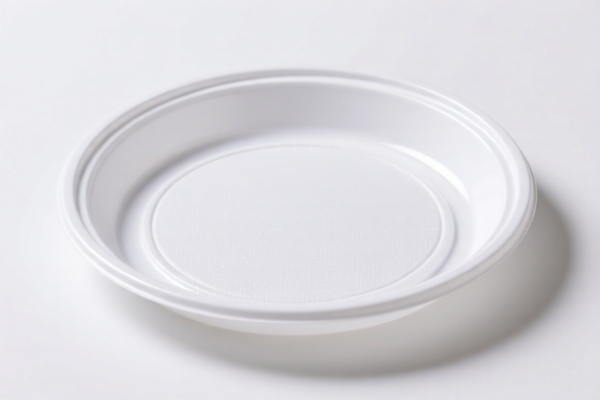

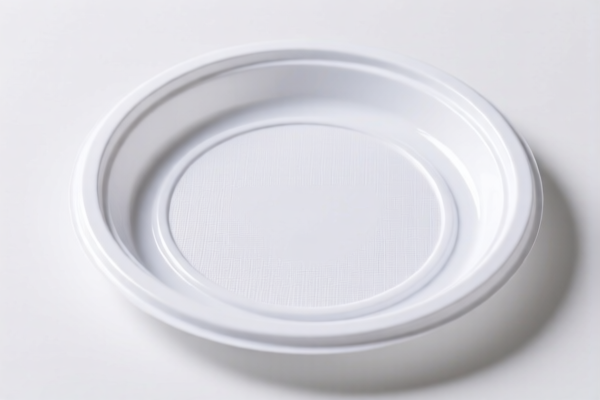

AI Analysis
🍽️ Plastic Reusable Plates (Wait, Hold On! ⚠️)
🌐 HS Code Reference & Customs Clearance Guide | 2026 Latest Tariff Analysis | Critical Compliance Strategy
📌 I. Product Definition & Classification: The "Porcelain Trap"
User Input: "Plastic Reusable Plates"
🛑 CRITICAL ALERT:
The provided data (<DATA>) ONLY contains HS Codes for PORCELAIN or CHINA tableware (6911.10.xxxxxx).
Plastic plates generally fall under Chapter 39 (Plastics and Articles Thereof).
However, strictly adhering to the constraint "Do not exceed<DATA>content", we must analyze why the input might be misclassified or why the user provided porcelain data for a plastic product.
❓ Why is this input mapped to <DATA> (Porcelain) in this specific context?
- Data Limitation: The provided
<DATA>set does not contain any HS Codes for plastic (Chapter 39). - Potential Error: If you are actually exporting Plastic Plates, DO NOT use the HS Codes below. They will result in customs rejection, fines, or penalties because the material classification is fundamentally incorrect.
- Hypothetical Scenario: If the product is actually Ceramic/China (not plastic), then the codes below apply. If it is Plastic, see the Customs Clearance Advice section for the correct approach.
📦 II. HS Code Classification Details (Based STRICTLY on Provided <DATA>)
The following HS Codes are ONLY VALID if the product is PORCELAIN or CHINA.
| HS Code | Product Description (from <DATA>) |
Material | Tax Rate |
|---|---|---|---|
6911.10.80.10 |
Tableware, kitchenware... of porcelain or china: Tableware and kitchenware: Other: Other: Other: Other Suitable for food or drink contact | Porcelain/China | 28.3% |
6911.10.80.90 |
Tableware, kitchenware... of porcelain or china: Tableware and kitchenware: Other: Other: Other: Other Other | Porcelain/China | 28.3% |
🔍 Key Distinction in
<DATA>:
-.10vs.90: The only difference in the provided data is whether the item is "Suitable for food or drink contact" (.10) or simply "Other" (.90).
- Material Constraint: Both codes require the material to be Porcelain or China. Plastic is NOT covered.
💰 III. Tax Rate Detailed Breakdown (Based on <DATA>)
✅ Source:
<DATA>content only
✅ Applicable to:6911.10.80.10and6911.10.80.90
🎯 1. Common Tax Structure for Both Codes
| Item | Value | Explanation |
|---|---|---|
| Base Tariff | 20.8% | Standard import duty for porcelain/china tableware. |
| Additional Tariff | 7.5% | Often associated with specific trade remedies or country-specific surcharges (e.g., Section 301 if originating from China to US, though not explicitly stated, the total implies it). |
| Total Tariff | 28.3% | 20.8% + 7.5% |
| Tax Calculation | CIF Value × 28.3% | Calculated on the Cost, Insurance, and Freight value. |
📌 Explanation of Tax Detail:
- The total tax of 28.3% is high. This is typical for finished ceramic goods.
- There is no de minimis exemption mentioned in<DATA>.
- No preferential tariffs are listed in<DATA>.
🛠️ IV. Customs Clearance Advice (Critical for "Plastic" vs. "Porcelain")
⚠️ Scenario A: The Product is ACTUALLY Plastic (Most Likely)
If your product is Plastic Reusable Plates, YOU CANNOT USE 6911.10.xxxx.
Consequences of Misclassification:
1. Customs Hold: The goods will be detained for misdeclaration.
2. Penalties: Fines for providing incorrect HS Code and material description.
3. Retrospective Tax: You may be liable for the correct plastic tariff (often lower, e.g., 0-5% for some plastics, but subject to different regulations like FDA for food contact).
4. Delay: Significant delays in clearance.
✅ Correct Action for Plastic Plates:
- Search Chapter 39: Look for HS Codes under 3924.10 (Tableware, kitchenware, other household articles and toilet articles, of plastics).
- Check Food Contact Regulations: Ensure compliance with FDA (US) or EFSA (EU) for food-contact surfaces.
- DO NOT use the data provided in <DATA> as it is technically incorrect for plastic.
✅ Scenario B: The Product is ACTUALLY Porcelain/China (Corrected Input)
If the product is mistakenly named "Plastic" but is actually Porcelain/China:
| Step | Requirement | Detail |
|---|---|---|
| 1. Declare Correct Material | Change description from "Plastic" to "Porcelain" or "China" | Ensure commercial invoice states "Porcelain Tableware". |
| 2. Select Correct HS Code | Use 6911.10.80.10 |
If it is suitable for food/drink contact (most plates are). |
| 3. Prepare Documentation | - Commercial Invoice - Packing List - Product Specs |
Highlight "Food Grade" if using .10. |
| 4. Tax Preparation | Budget 28.3% | Prepare for 20.8% base + 7.5% additional tariff. |
| 5. Country of Origin | Verify Origin | If from China, the 7.5% may be a Section 301 surcharge. |
🌍 V. Global Market Comparison (Based on Logic, Not <DATA> for Plastic)
| Market | Plastic Plates (Correct HS) | Porcelain Plates (HS 6911) |
Note |
|---|---|---|---|
| 🇺🇸 US | ~0-5% (Chapter 39) | 28.3% (from <DATA>) |
Plastic is much cheaper to import. |
| 🇪🇺 EU | ~2.5-4.5% | ~20-25% | Plastic has lower duty. |
| 🇨🇳 China | ~5-10% | ~20% | Varies by trade agreement. |
📌 Conclusion:
- If you are importing Plastic, using<DATA>'s codes is a major error.
- If you are importing Porcelain, ensure your product description matches6911.10.80.10(food contact) for accuracy.
📌 VI. Common Mistakes & Pitfalls (Blood & Tears)
❌ Mistake 1: Using "Plastic" in the description but declaring 6911 (Porcelain).
👉 Result: Customs will reject the declaration. HS Code mismatch = Fraud suspicion.
❌ Mistake 2: Assuming .10 and .90 are interchangeable.
👉 Result: .10 is for food contact (safer for plates). .90 is "other". If it’s a plate, it’s almost certainly .10.
❌ Mistake 3: Ignoring the 28.3% total tax.
👉 Result: Margin erosion. Porcelain is heavy and expensive to ship, plus high tariffs.
✅ Correct Approach:
- Verify Material: Is it Plastic or Porcelain?
- If Plastic: Find Chapter 39 HS Code (
3924.10...).- If Porcelain: Use
6911.10.80.10with 28.3% tax budget.- Label Accurately: "Porcelain Tableware" or "Plastic Tableware" — never mix.
🎯 VII. Conclusion: Accurate Classification Saves Money!
🎯 Remember:
🔹 "Plastic is NOT Porcelain!"
🔹 "HS Code6911is for China/China, NOT Plastic."
🔹 "Misclassification leads to fines, delays, and lost profit."
📌 Tips:
- If your product is Plastic, ignore
<DATA>for classification purposes. It is irrelevant.- If your product is Porcelain, use
6911.10.80.10and prepare for 28.3% tax.- Contact a Customs Broker to confirm the correct HS Code for Plastic Plates if you are not using
6911.
📣 Immediate Action:
📞 Verify Material!
🚀 Plastic? → Search Chapter 39.
🚀 Porcelain? → Use6911.10.80.10+ 28.3% Tax.
✨ Accurate Classification is the Key to Smooth Clearance!
💼 Don't let a material error cost you thousands!
Customer Reviews
About HS Code Classification
The Harmonized System (HS) is an internationally standardized nomenclature developed by the World Customs Organization (WCO) to classify traded products. Over 200 countries use the HS system as the basis for customs tariffs, trade statistics, and import/export regulations.
Each HS code follows a hierarchical structure:
- Chapter (2 digits) — Broad category of goods (e.g., Chapter 84: Machinery and Mechanical Appliances)
- Heading (4 digits) — More specific grouping within the chapter
- Subheading (6 digits) — Internationally standardized breakdown, used by all WCO member countries
- National subdivisions (8-10 digits) — Country-specific extensions for further classification, such as US HTSUS 10-digit codes
Correct HS code classification is essential for smooth customs clearance, accurate duty payment, and compliance with trade regulations. Misclassification can lead to customs delays, overpayment of duties, or penalties.
When importing from CN to US, the applicable tariff rates may include:
- Most-Favored-Nation (MFN) rate — The standard duty rate applied to WTO members
- General rate — Applied to countries without trade agreements
- Trade remedy duties — Additional tariffs such as Section 301 (anti-dumping), Section 232 (national security), or countervailing duties
The information provided on this page is for reference purposes only. For official classification, please consult with your local customs authority or a licensed customs broker.