Plastic Shell Pull Rod Travel Suitcase
CN → US| HS编码 | 关税税率 | 原产国 | 目的国 | 文档 |
|---|---|---|---|---|
| 3926901000 | 20.9% | CN | US | 官方文档 |
| 3926909989 | 22.8% | CN | US | 官方文档 |
| 4202122120 | 55.0% | CN | US | 官方文档 |
| 4202122150 | 55.0% | CN | US | 官方文档 |
商品图片
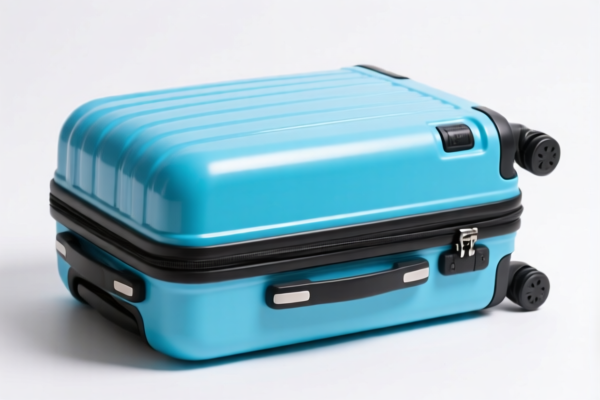
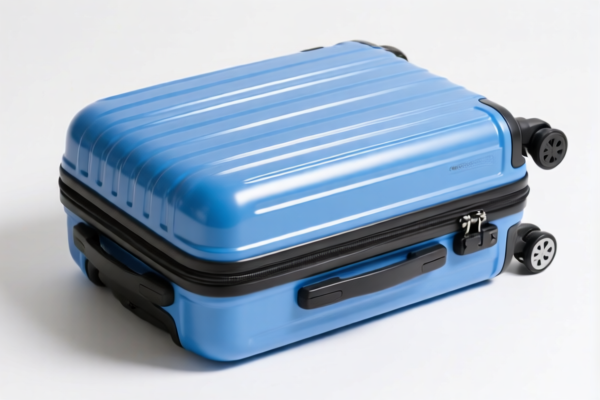
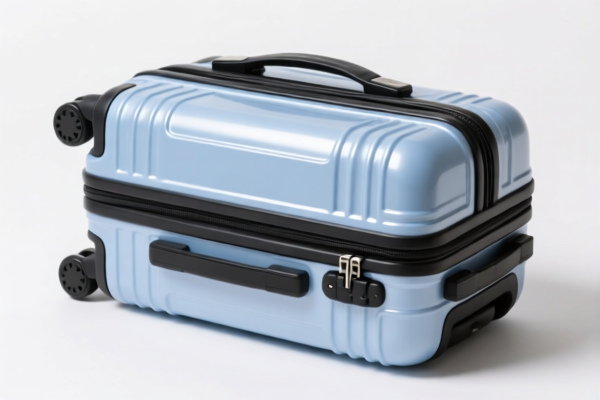
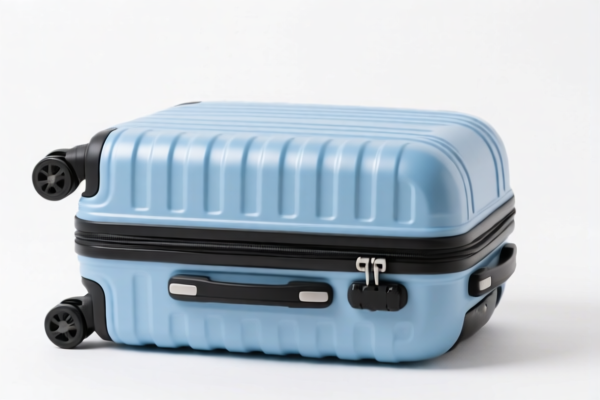
AI分析
🧳 Plastic Shell Pull Rod Travel Suitcase
🌐 HS Code Reference & Customs Clearance Guide | 2026 Latest Tariff Analysis | Professional-Grade Strategy
📌 Part I: Product Definition & Classification: Do You Really Understand "Travel Suitcases"?
A Plastic Shell Pull Rod Travel Suitcase is a rigid or semi-rigid luggage item designed for air, rail, or road travel, featuring a hard outer shell (plastic), an integrated pull-rod telescopic handle, and wheels. In international trade, it is strictly distinguished from soft-sided luggage and accessories based on its material composition and structural integrity.
Hard-Shell Suitcases (Plastic): Those with an outer surface primarily composed of plastics (e.g., ABS, PC, PP). Soft-Sided Suitcases (Textile): Those with an outer surface of textile materials.
⚠️ Key Distinction Point:
- If the outer surface is made of plastic, it falls under Heading 4202.12.
- If the outer surface is textile, it falls under Heading 4202.11.
- Crucial Note: The presence of a "pull rod" or wheels does not change the classification from Heading 4202 to other headings (like 8712 for bicycles, which is a common misconception). It remains a "suitcase."
📦 Part II: HS Code Classification Details (2026 Latest Tariff Authority Comparison)
| HS Code | Product Description | Applicable Scenario | Outer Material | Structure |
|---|---|---|---|---|
4202.12.21.20 |
Trunks, suitcases, vanity cases and similar containers: With outer surface of plastics: Structured, rigid on all sides | Hard-shell suitcases with rigid plastic casing (ABS/PC), typically with pull rods and wheels | ✅ Plastic | ✅ Rigid on all sides |
4202.12.21.50 |
Trunks, suitcases, vanity cases and similar containers: With outer surface of plastics: Other | Other plastic suitcases not classified above (e.g., semi-rigid, specific non-standard shapes) | ✅ Plastic | ❓ Other |
🔍 Critical Reminder:
- The HS Code4202.12.21.20specifically targets structured, rigid on all sides containers with an outer surface of plastics. This is the most common classification for standard "hard-shell" travel suitcases with pull rods. - The HS Code4202.12.21.50is a residual category for other plastic suitcases. If the suitcase is clearly "structured and rigid," it should ideally be classified under20, but if it's a specific non-standard plastic case, it may fall here. However, based on the provided DATA, both are relevant.
💰 Part III: 2026 Latest Tariff Rate Breakdown (Including Additional Duties & Policy Surcharges)
✅ Applicable Country: United States (US)
✅ Origin: China (CN)
✅ Effective Date: From November 10, 2025 (including subsequent imports)
🎯 1. 4202.12.21.20 —— Structured, Rigid on All Sides Plastic Suitcases
| Item | Content |
|---|---|
| Base Tariff Rate | 0.0% (ad valorem) |
| USITC Additional Duty | 0.0% |
| IEEPA Additional Duty | 0.0% |
| Total Tax Rate | 0.0% |
| Tax Calculation | CIF Value × 0% = $0 |
| De Minimis Eligibility | ✅ Yes (if value < $800, no duties apply; if > $800, still 0% duty) |
| Legal Basis Path | HTSUS:4202.12.21.20 |
📌 Explanation:
- Zero Duty: This specific subheading for structured, rigid plastic suitcases enjoys a 0% base tariff. - No Additional Surcharges: Unlike electronics or steel products, plastic suitcases in this specific rigid category are exempt from the 25% USITC Section 301 duties and the 10% IEEPA surcharges for Chinese origins. - Cost Advantage: This is a highly favorable classification for cost reduction.
🎯 2. 4202.12.21.50 —— Other Plastic Suitcases
| Item | Content |
|---|---|
| Base Tariff Rate | 5.3% (ad valorem) |
| USITC Additional Duty | 7.5% |
| IEEPA Additional Duty | 0.0% |
| Total Tax Rate | 12.8% |
| Tax Calculation | CIF Value × 12.8% |
| De Minimis Eligibility | ✅ Yes (if value < $800, no duties apply; if > $800, 12.8% duty applies) |
| Legal Basis Path | HTSUS:4202.12.21.50 |
📌 Explanation:
- Higher Duty: If the suitcase is not classified as "structured, rigid on all sides" (e.g., soft-sided plastic composite, or non-rigid structure), it falls under this residual code. - Total 12.8%: This includes a base rate of 5.3% and a specific additional duty of 7.5%. - Risk: Misclassification from20to50results in an extra 12.8% cost.
🛠️ Part IV: Customs Clearance Practical Advice (Real-World Pitfall Avoidance Guide)
✅ 1. Preparation Checklist (Mandatory)
| Document | Must Provide | Description |
|---|---|---|
| ✅ Product Specifications | ✔️ | Material composition (e.g., 100% Polycarbonate), dimensions, weight, presence of wheels/pull rod. |
| ✅ Product Photos | ✔️ | Clear images of the outer shell (to prove it is plastic, not textile) and the interior structure (to prove it is "rigid"). |
| ✅ Commercial Invoice | ✔️ | Must clearly state: "Plastic Shell Travel Suitcase, Hard Rigid Case, with Telescopic Handle." |
| ✅ Packing List | ✔️ | Detail contents (e.g., "1 PC Suitcase + 1 PC Cleaning Cloth"). Do not split components. |
| ✅ Origin Certificate | ✔️ | To prove China origin (or other, if applicable) for tariff determination. |
| ✅ Structure Diagram | ✔️ | Optional but recommended to prove "rigid on all sides" if challenged. |
✅ 2. Declaration Tips (Key Mantra)
🔥 "Rigid Plastic, Code 20, Zero Duty! Soft/Other, Code 50, 12.8% Duty!"
| Scenario | Correct Declaration | Wrong Practice |
|---|---|---|
| Hard, rigid plastic shell suitcase | 4202.12.21.20 (0% Duty) |
Misclassifying as 4202.12.21.50 → 12.8% Penalty |
| Soft-sided suitcase with plastic lining | 4202.11.11.10 (Textile Code) |
Using Plastic Code → Wrong Classification |
| Plastic Shell + Pull Rod + Wheels | 4202.12.21.20 |
Trying to split into "Handle" and "Shell" → Audit Risk |
| Non-rigid, foldable plastic case | 4202.12.21.50 (12.8% Duty) |
Forcing "Rigid" classification → Customs Dispute |
✅ 3. Special Cases Handling
| Situation | Handling Advice |
|---|---|
| OEM Custom Suitcases | Provide design drawings to prove "rigid structure." If the shell is thin but maintains shape, argue for "rigid." |
| Mixed Materials (e.g., Plastic Shell + Fabric Straps) | If plastic is the principal material of the outer surface, classify under 4202.12 (Plastic), not Textile. |
| Suitcase with Wheels & Handle | Always declare as a whole unit. Do not declare wheels as "parts" (8714) or handles as "accessories." |
| Anti-Theft Locks Integrated | Still classified under 4202. The lock is a functional part of the suitcase. |
🌍 Part V: Global Market Comparison (2026 Latest)
| Country/Region | Recommended HS Code | Tariff (China Origin) | Certification Requirements | Notes |
|---|---|---|---|---|
| 🇺🇸 USA | 4202.12.21.20 |
0.0% | None | Zero duty for rigid plastic suitcases |
| 🇺🇸 USA | 4202.12.21.50 |
12.8% | None | Higher duty for other plastic cases |
| 🇨🇳 China | 4202.12.21.20 |
5.0% (Import Tariff) | None | Standard import duty |
| 🇪🇺 EU | 4202.12.20 |
4.0% | CE (if electronic components) | Standard EU duty |
| 🇬🇧 UK | 4202.12.20 |
4.0% | UKCA | Standard UK duty |
| 🇦🇺 Australia | 4202.12.20 |
5.0% | None | Standard duty |
📌 Conclusion:
- The USA offers a significant advantage for rigid plastic suitcases (4202.12.21.20) with 0% duty.
- However, precise classification is critical. If the case is not "structured and rigid," it falls into the 12.8% bucket.
- EU and other markets do not offer this 0% benefit for plastics, making the US market more attractive for this specific product type.
📌 Part VI: Common Errors & Pitfall Guide (Blood & Tears Lessons)
❌ Error 1: Classifying a rigid plastic suitcase as 4202.11 (Textile)
👉 Consequence: Wrong classification, potential penalties, and incorrect duty calculation (Textile may have different rates).
❌ Error 2: Classifying a rigid plastic suitcase as 4202.12.21.50 when it should be 20
👉 Consequence: Paying 12.8% duty instead of 0%. A $1,000 shipment loses $128.
❌ Error 3: Declaring "Plastic Case" without specifying "Rigid Structure"
👉 Consequence: Customs officer may doubt the classification, leading to delayed release or audit.
❌ Error 4: Splitting the declaration into "Shell" and "Pull Rod"
👉 Consequence: The pull rod may be classified as "parts of luggage" (8302 or 8714), leading to complex duty calculations and higher overall costs.
✅ Correct Practice:
"Travel Suitcase, 28-inch, Hard Shell, 100% Polycarbonate (PC), Rigid Structure, with Telescopic Handle and Spinner Wheels, Model XYZ."
🎯 Part VII: Conclusion: Precise Classification Saves Money!
🎯 Remember the Mantra:
🔹 "Rigid Plastic = Code 20 = 0% Duty!"
🔹 "Non-Rigid/Other Plastic = Code 50 = 12.8% Duty!"
🔹 "Don't Split the Suitcase! Declare as One Unit!"
📌 Pro Tip:
If your suitcase is made in Vietnam or Thailand, the IEEPA/Section 301 duties may not apply even if it falls under 4202.12.21.50, potentially reducing the cost further. Always check the country of origin for tariff benefits.
📣 Immediate Action:
📞 Contact your freight forwarder + Provide clear photos of the rigid shell + Request HS Code Pre-Ruling from US CBP if unsure.
🚀 Let your suitcases clear customs smoothly, save costs, and boost profits!
✨ Professional Customs Clearance Starts with Accurate Classification!
💼 Your every dollar saved is worth the precise declaration!
用户评价
关于 HS 编码归类
协调制度(HS)是由世界海关组织(WCO)制定的国际贸易商品分类标准。全球 200 多个国家采用 HS 系统作为海关关税、贸易统计和进出口监管的基础。
每个 HS 编码遵循以下层级结构:
- 章(2 位)——商品大类(例如:第 84 章:机器和机械设备)
- 品目(4 位)——章内的更具体分类
- 子目(6 位)——国际通用细分,所有 WCO 成员国统一使用
- 本国细分(8-10 位)——各国自行扩展的细分编码,如美国 HTSUS 10 位编码
正确的 HS 编码归类对于顺利通关、准确缴纳关税和遵守贸易法规至关重要。错误归类可能导致海关延误、多缴关税或罚款。
从CN进口到US时,适用的关税税率可能包括:
- 最惠国(MFN)税率——适用于 WTO 成员国的标准关税税率
- 普通税率——适用于无贸易协定国家
- 贸易救济关税——附加关税,如 301 条款(反倾销)、232 条款(国家安全)或反补贴税
本页内容仅供参考。如需正式归类,请咨询当地海关或持牌报关代理。