Plastic Shell Pull Rod Travel Suitcase
CN → US| HS Code | Tariff Rate | Origin | Destination | Doc |
|---|---|---|---|---|
| 3926901000 | 20.9% | CN | US | Official Doc |
| 3926909989 | 22.8% | CN | US | Official Doc |
| 4202122120 | 55.0% | CN | US | Official Doc |
| 4202122150 | 55.0% | CN | US | Official Doc |
Product Images
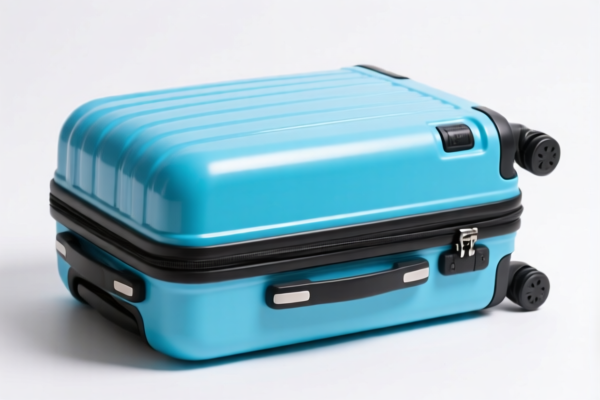
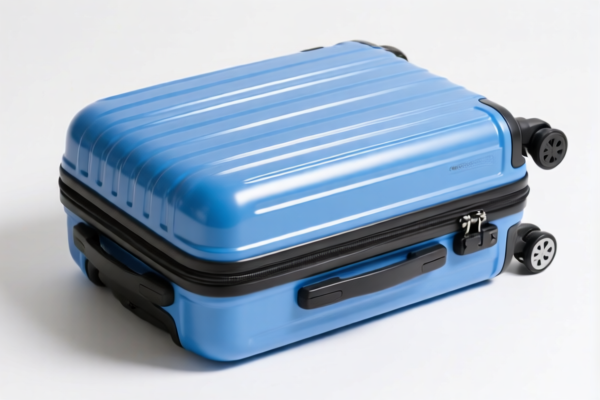
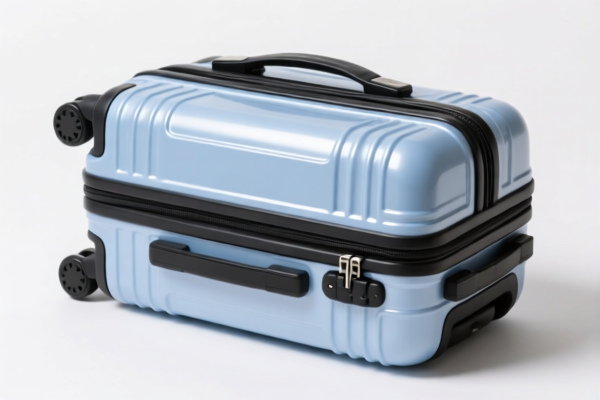
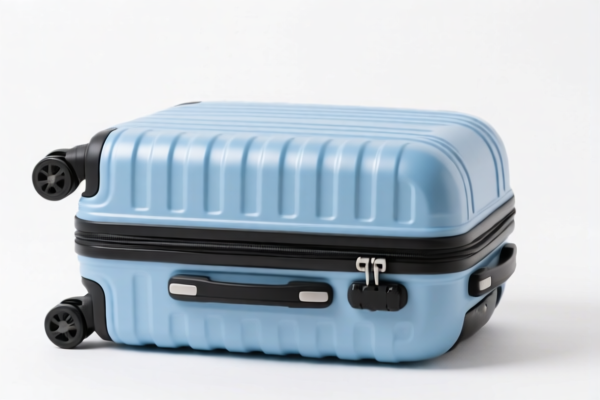
AI Analysis
🧳 Plastic Shell Pull Rod Travel Suitcase
🌐 HS Code Reference & Customs Clearance Guide | 2026 Latest Tariff Analysis | Professional-Grade Strategy
📌 Part I: Product Definition & Classification: Do You Really Understand "Travel Suitcases"?
A Plastic Shell Pull Rod Travel Suitcase is a rigid or semi-rigid luggage item designed for air, rail, or road travel, featuring a hard outer shell (plastic), an integrated pull-rod telescopic handle, and wheels. In international trade, it is strictly distinguished from soft-sided luggage and accessories based on its material composition and structural integrity.
Hard-Shell Suitcases (Plastic): Those with an outer surface primarily composed of plastics (e.g., ABS, PC, PP). Soft-Sided Suitcases (Textile): Those with an outer surface of textile materials.
⚠️ Key Distinction Point:
- If the outer surface is made of plastic, it falls under Heading 4202.12.
- If the outer surface is textile, it falls under Heading 4202.11.
- Crucial Note: The presence of a "pull rod" or wheels does not change the classification from Heading 4202 to other headings (like 8712 for bicycles, which is a common misconception). It remains a "suitcase."
📦 Part II: HS Code Classification Details (2026 Latest Tariff Authority Comparison)
| HS Code | Product Description | Applicable Scenario | Outer Material | Structure |
|---|---|---|---|---|
4202.12.21.20 |
Trunks, suitcases, vanity cases and similar containers: With outer surface of plastics: Structured, rigid on all sides | Hard-shell suitcases with rigid plastic casing (ABS/PC), typically with pull rods and wheels | ✅ Plastic | ✅ Rigid on all sides |
4202.12.21.50 |
Trunks, suitcases, vanity cases and similar containers: With outer surface of plastics: Other | Other plastic suitcases not classified above (e.g., semi-rigid, specific non-standard shapes) | ✅ Plastic | ❓ Other |
🔍 Critical Reminder:
- The HS Code4202.12.21.20specifically targets structured, rigid on all sides containers with an outer surface of plastics. This is the most common classification for standard "hard-shell" travel suitcases with pull rods. - The HS Code4202.12.21.50is a residual category for other plastic suitcases. If the suitcase is clearly "structured and rigid," it should ideally be classified under20, but if it's a specific non-standard plastic case, it may fall here. However, based on the provided DATA, both are relevant.
💰 Part III: 2026 Latest Tariff Rate Breakdown (Including Additional Duties & Policy Surcharges)
✅ Applicable Country: United States (US)
✅ Origin: China (CN)
✅ Effective Date: From November 10, 2025 (including subsequent imports)
🎯 1. 4202.12.21.20 —— Structured, Rigid on All Sides Plastic Suitcases
| Item | Content |
|---|---|
| Base Tariff Rate | 0.0% (ad valorem) |
| USITC Additional Duty | 0.0% |
| IEEPA Additional Duty | 0.0% |
| Total Tax Rate | 0.0% |
| Tax Calculation | CIF Value × 0% = $0 |
| De Minimis Eligibility | ✅ Yes (if value < $800, no duties apply; if > $800, still 0% duty) |
| Legal Basis Path | HTSUS:4202.12.21.20 |
📌 Explanation:
- Zero Duty: This specific subheading for structured, rigid plastic suitcases enjoys a 0% base tariff. - No Additional Surcharges: Unlike electronics or steel products, plastic suitcases in this specific rigid category are exempt from the 25% USITC Section 301 duties and the 10% IEEPA surcharges for Chinese origins. - Cost Advantage: This is a highly favorable classification for cost reduction.
🎯 2. 4202.12.21.50 —— Other Plastic Suitcases
| Item | Content |
|---|---|
| Base Tariff Rate | 5.3% (ad valorem) |
| USITC Additional Duty | 7.5% |
| IEEPA Additional Duty | 0.0% |
| Total Tax Rate | 12.8% |
| Tax Calculation | CIF Value × 12.8% |
| De Minimis Eligibility | ✅ Yes (if value < $800, no duties apply; if > $800, 12.8% duty applies) |
| Legal Basis Path | HTSUS:4202.12.21.50 |
📌 Explanation:
- Higher Duty: If the suitcase is not classified as "structured, rigid on all sides" (e.g., soft-sided plastic composite, or non-rigid structure), it falls under this residual code. - Total 12.8%: This includes a base rate of 5.3% and a specific additional duty of 7.5%. - Risk: Misclassification from20to50results in an extra 12.8% cost.
🛠️ Part IV: Customs Clearance Practical Advice (Real-World Pitfall Avoidance Guide)
✅ 1. Preparation Checklist (Mandatory)
| Document | Must Provide | Description |
|---|---|---|
| ✅ Product Specifications | ✔️ | Material composition (e.g., 100% Polycarbonate), dimensions, weight, presence of wheels/pull rod. |
| ✅ Product Photos | ✔️ | Clear images of the outer shell (to prove it is plastic, not textile) and the interior structure (to prove it is "rigid"). |
| ✅ Commercial Invoice | ✔️ | Must clearly state: "Plastic Shell Travel Suitcase, Hard Rigid Case, with Telescopic Handle." |
| ✅ Packing List | ✔️ | Detail contents (e.g., "1 PC Suitcase + 1 PC Cleaning Cloth"). Do not split components. |
| ✅ Origin Certificate | ✔️ | To prove China origin (or other, if applicable) for tariff determination. |
| ✅ Structure Diagram | ✔️ | Optional but recommended to prove "rigid on all sides" if challenged. |
✅ 2. Declaration Tips (Key Mantra)
🔥 "Rigid Plastic, Code 20, Zero Duty! Soft/Other, Code 50, 12.8% Duty!"
| Scenario | Correct Declaration | Wrong Practice |
|---|---|---|
| Hard, rigid plastic shell suitcase | 4202.12.21.20 (0% Duty) |
Misclassifying as 4202.12.21.50 → 12.8% Penalty |
| Soft-sided suitcase with plastic lining | 4202.11.11.10 (Textile Code) |
Using Plastic Code → Wrong Classification |
| Plastic Shell + Pull Rod + Wheels | 4202.12.21.20 |
Trying to split into "Handle" and "Shell" → Audit Risk |
| Non-rigid, foldable plastic case | 4202.12.21.50 (12.8% Duty) |
Forcing "Rigid" classification → Customs Dispute |
✅ 3. Special Cases Handling
| Situation | Handling Advice |
|---|---|
| OEM Custom Suitcases | Provide design drawings to prove "rigid structure." If the shell is thin but maintains shape, argue for "rigid." |
| Mixed Materials (e.g., Plastic Shell + Fabric Straps) | If plastic is the principal material of the outer surface, classify under 4202.12 (Plastic), not Textile. |
| Suitcase with Wheels & Handle | Always declare as a whole unit. Do not declare wheels as "parts" (8714) or handles as "accessories." |
| Anti-Theft Locks Integrated | Still classified under 4202. The lock is a functional part of the suitcase. |
🌍 Part V: Global Market Comparison (2026 Latest)
| Country/Region | Recommended HS Code | Tariff (China Origin) | Certification Requirements | Notes |
|---|---|---|---|---|
| 🇺🇸 USA | 4202.12.21.20 |
0.0% | None | Zero duty for rigid plastic suitcases |
| 🇺🇸 USA | 4202.12.21.50 |
12.8% | None | Higher duty for other plastic cases |
| 🇨🇳 China | 4202.12.21.20 |
5.0% (Import Tariff) | None | Standard import duty |
| 🇪🇺 EU | 4202.12.20 |
4.0% | CE (if electronic components) | Standard EU duty |
| 🇬🇧 UK | 4202.12.20 |
4.0% | UKCA | Standard UK duty |
| 🇦🇺 Australia | 4202.12.20 |
5.0% | None | Standard duty |
📌 Conclusion:
- The USA offers a significant advantage for rigid plastic suitcases (4202.12.21.20) with 0% duty.
- However, precise classification is critical. If the case is not "structured and rigid," it falls into the 12.8% bucket.
- EU and other markets do not offer this 0% benefit for plastics, making the US market more attractive for this specific product type.
📌 Part VI: Common Errors & Pitfall Guide (Blood & Tears Lessons)
❌ Error 1: Classifying a rigid plastic suitcase as 4202.11 (Textile)
👉 Consequence: Wrong classification, potential penalties, and incorrect duty calculation (Textile may have different rates).
❌ Error 2: Classifying a rigid plastic suitcase as 4202.12.21.50 when it should be 20
👉 Consequence: Paying 12.8% duty instead of 0%. A $1,000 shipment loses $128.
❌ Error 3: Declaring "Plastic Case" without specifying "Rigid Structure"
👉 Consequence: Customs officer may doubt the classification, leading to delayed release or audit.
❌ Error 4: Splitting the declaration into "Shell" and "Pull Rod"
👉 Consequence: The pull rod may be classified as "parts of luggage" (8302 or 8714), leading to complex duty calculations and higher overall costs.
✅ Correct Practice:
"Travel Suitcase, 28-inch, Hard Shell, 100% Polycarbonate (PC), Rigid Structure, with Telescopic Handle and Spinner Wheels, Model XYZ."
🎯 Part VII: Conclusion: Precise Classification Saves Money!
🎯 Remember the Mantra:
🔹 "Rigid Plastic = Code 20 = 0% Duty!"
🔹 "Non-Rigid/Other Plastic = Code 50 = 12.8% Duty!"
🔹 "Don't Split the Suitcase! Declare as One Unit!"
📌 Pro Tip:
If your suitcase is made in Vietnam or Thailand, the IEEPA/Section 301 duties may not apply even if it falls under 4202.12.21.50, potentially reducing the cost further. Always check the country of origin for tariff benefits.
📣 Immediate Action:
📞 Contact your freight forwarder + Provide clear photos of the rigid shell + Request HS Code Pre-Ruling from US CBP if unsure.
🚀 Let your suitcases clear customs smoothly, save costs, and boost profits!
✨ Professional Customs Clearance Starts with Accurate Classification!
💼 Your every dollar saved is worth the precise declaration!
Customer Reviews
About HS Code Classification
The Harmonized System (HS) is an internationally standardized nomenclature developed by the World Customs Organization (WCO) to classify traded products. Over 200 countries use the HS system as the basis for customs tariffs, trade statistics, and import/export regulations.
Each HS code follows a hierarchical structure:
- Chapter (2 digits) — Broad category of goods (e.g., Chapter 84: Machinery and Mechanical Appliances)
- Heading (4 digits) — More specific grouping within the chapter
- Subheading (6 digits) — Internationally standardized breakdown, used by all WCO member countries
- National subdivisions (8-10 digits) — Country-specific extensions for further classification, such as US HTSUS 10-digit codes
Correct HS code classification is essential for smooth customs clearance, accurate duty payment, and compliance with trade regulations. Misclassification can lead to customs delays, overpayment of duties, or penalties.
When importing from CN to US, the applicable tariff rates may include:
- Most-Favored-Nation (MFN) rate — The standard duty rate applied to WTO members
- General rate — Applied to countries without trade agreements
- Trade remedy duties — Additional tariffs such as Section 301 (anti-dumping), Section 232 (national security), or countervailing duties
The information provided on this page is for reference purposes only. For official classification, please consult with your local customs authority or a licensed customs broker.