Plastic Venetian Blackout Blinds
CN → US| HS编码 | 关税税率 | 原产国 | 目的国 | 文档 |
|---|---|---|---|---|
| 5903102090 | 35.0% | CN | US | 官方文档 |
| 3920991000 | 41.0% | CN | US | 官方文档 |
| 3926909989 | 22.8% | CN | US | 官方文档 |
| 3920995000 | 40.8% | CN | US | 官方文档 |
| 3926909987 | 22.8% | CN | US | 官方文档 |
商品图片
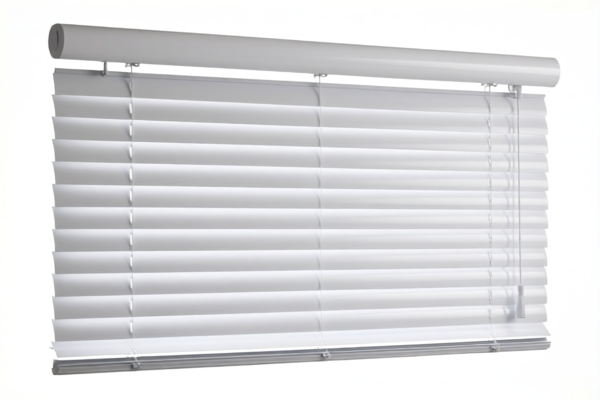
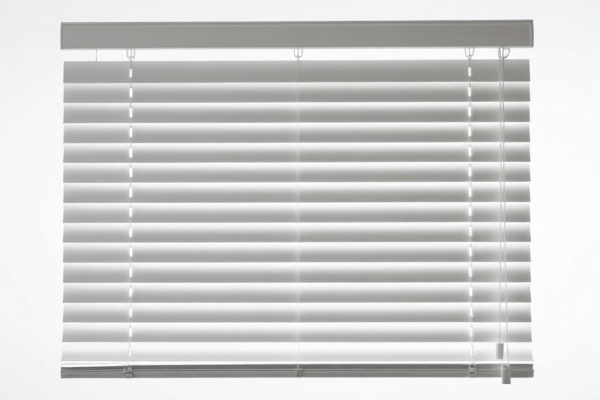
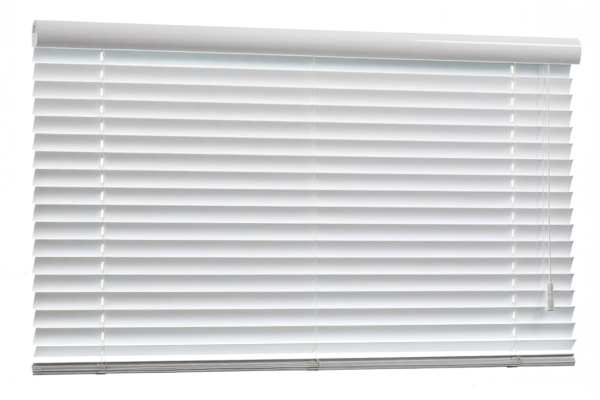
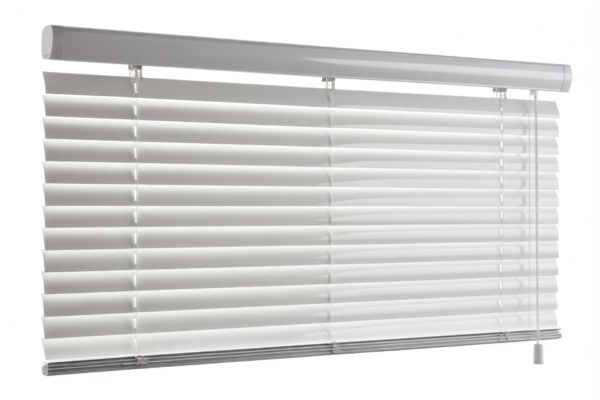
AI分析
🪟 Plastic Venetian Blackout Blinds: The Ultimate HS Code & Tariff Breakdown (2026 Update)
🌐 HS Code Reference & Customs Clearance Guide | 2026 Latest Tariff Analysis | Professional Compliance Strategy
📌 Part 1: Product Definition & Classification – What Exactly Are “Plastic Venetian Blinds”?
Plastic Venetian Blinds are window covering systems composed of horizontal slats made primarily of PVC or other plastic polymers. They serve dual purposes: light control and privacy, with “blackout” variants designed to block nearly 100% of external light. In international trade, these products are often misclassified due to ambiguity between “window coverings,” “plastic sheets,” and “general plastic articles.”
⚠️ Key Distinction Points:
- If the product is primarily used as a functional window covering (e.g., installed in homes/offices, operates via wand/chain) → Consider Chapter 59 or Chapter 39 based on material/form.
- If the slats are sold as loose components or in roll/board form before assembly → May fall under plastic sheets/films (HS 3920) or general plastic articles (HS 3926).
- Blackout function does NOT change HS classification but may affect customs scrutiny if marketed as “energy-saving” or “smart home” products.
📦 Part 2: HS Code Classification Details (2026 Latest Tariff Authority Cross-Reference)
| HS Code | Product Description | Application Scenario | Material/Form | Total Tax Rate |
|---|---|---|---|---|
5903.10.20.90 |
Plastic Venetian Blinds, primarily used as window coverings | Residential/Commercial window treatments | Finished blinds, plastic material, functional form | 35.0% |
3920.99.10.00 |
Plastic slats/films for blinds, in sheet/board form | Raw material or semi-finished blinds | Composite laminated plastic sheets | 41.0% |
3926.90.99.89 |
General plastic household items – blinds as final accessory | Generic plastic home accessories | Final plastic product, no specific window-covering classification | 22.8% |
3920.99.50.00 |
Other plastic sheets/films/blinds not elsewhere specified | Unassembled or bulk plastic slats | Plastic film/sheet category | 40.8% |
3926.90.99.87 |
Other plastic articles – blinds under fallback category | Non-specific plastic consumer goods | Plastic item, no precise functional classification | 22.8% |
🔍 Critical Reminder:
- Finished blinds (assembled, ready-to-install) should ideally be classified under 5903.10.20.90 if recognized as “textile-like” or “curtain-type” window coverings.
- Loose slats, rolls, or unmounted components may fall under 3920 (plastic sheets) or 3926 (other plastic articles).
- Misclassification risk: Declaring finished blinds as “plastic sheets” to avoid higher taxes can lead to customs penalties, delays, or seizure.
💰 Part 3: 2026 Latest Tariff Rate Breakdown (Including Surtaxes & Policy Add-ons)
✅ Applicable Country: United States (US)
✅ Country of Origin: China (CN)
✅ Effective Date: November 10, 2025 (and onward)
🎯 1. 5903.10.20.90 – Plastic Venetian Blinds (Finished Window Coverings)
| Item | Detail |
|---|---|
| Base Duty Rate | 0% (ad valorem) |
| USITC Surtax | +25% (Under USITC Footnote 9903.88.01) |
| IEEPA Surtax | +10% (China/HK origin, per IEEPA Order 10903) |
| Total Rate | 35.0% |
| Tax Calculation | CIF Value × 35% |
| De Minimis Eligible? | ❌ No (deny_de_minimis applies) |
| Legal Basis Path | IEEPA:9903.01.25 → IEEPA:9903.01.24 → USITC:5903.10.20.90 → FOOTNOTE:9903.88.01 |
📌 Explanation:
- The 25% USITC surtax is applied under Section 301 of the Trade Act for specific Chinese imports.
- The 10% IEEPA surtax targets broad categories of Chinese-manufactured goods.
- Total 35% is moderate compared to other plastic goods but higher than non-China origins.
- No de minimis exemption means even small shipments (e.g., samples) are subject to full duty.
🎯 2. 3920.99.10.00 – Plastic Sheets/Films (Unassembled Blinds)
| Item | Detail |
|---|---|
| Base Duty Rate | 6% |
| USITC Surtax | +25% |
| IEEPA Surtax | +10% |
| Total Rate | 41.0% |
| Tax Calculation | CIF Value × 41% |
| De Minimis Eligible? | ❌ No |
| Legal Basis Path | IEEPA:9903.01.25 → IEEPA:9903.01.24 → USITC:3920.99.10.00 → FOOTNOTE:9903.88.01 |
📌 Note:
- This rate applies if blinds are declared as plastic composite sheets rather than functional window coverings.
- Higher burden: 41% vs. 35% for finished blinds.
- Risky if customs verifies product is actually ready-to-hang blinds.
🎯 3. 3926.90.99.89 & 3926.90.99.87 – Other Plastic Articles (Fallback Categories)
| Item | Detail |
|---|---|
| Base Duty Rate | 5.3% |
| USITC Surtax | +7.5% |
| IEEPA Surtax | +10% |
| Total Rate | 22.8% |
| Tax Calculation | CIF Value × 22.8% |
| De Minimis Eligible? | ❌ No |
| Legal Basis Path | IEEPA:9903.01.25 → IEEPA:9903.01.24 → USITC:3926.90.99.89 / .87 |
📌 Caution:
- These codes are fallback categories with lower base tariffs but 7.5% USITC surtax (vs. 25% for Chapter 39).
- High audit risk: Customs may reject this classification if product clearly functions as window covering.
- Potential penalty: Misclassification can lead to back duties + interest + fines.
🛠️ Part 4: Customs Clearance Practical Advice (Avoiding Pitfalls)
✅ 1. Required Documentation Checklist
| Document | Mandatory? | Notes |
|---|---|---|
| ✅ Product Specification Sheet | ✔️ | Include dimensions, slat width, material (PVC/plastic), blackout rating |
| ✅ Product Photos (Installed & Uninstalled) | ✔️ | Show wand/chain mechanism, mounting brackets |
| ✅ Commercial Invoice | ✔️ | Clearly state “Plastic Venetian Blinds – Window Covering” |
| ✅ Packing List | ✔️ | Detail quantity per carton, gross/net weight |
| ✅ Certificate of Origin (CO) | ✔️ | Essential for origin verification |
| ✅ Third-Party Test Report | ✔️ | Fire resistance, UV stability, environmental compliance (RoHS/REACH) |
| ✅ Bill of Lading/Air Waybill | ✔️ | Standard shipping docs |
✅ 2. Declaration Tips (Key Mnemonic)
🔥 “Finished Blinds: 5903; Raw Sheets: 3920; Fallback: 3926 – Choose Wisely or Face the Penalty!”
| Scenario | Correct HS Code | Wrong Approach |
|---|---|---|
| Ready-to-install blinds with wand/chain | 5903.10.20.90 |
Declaring as “plastic parts” → 41% or audit |
| Bulk slats without hardware | 3920.99.10.00 or 3926.90.99.89 |
Mislabeling as finished blinds → penalty |
| Mixed shipment (blinds + mounting kits) | Single HS Code for primary item | Split declaration → higher combined duty |
✅ 3. Special Cases Handling
| Case | Recommendation |
|---|---|
| OEM/Private Label Blinds | Provide customer PO + design specs to prove functional identity |
| Smart Blinds (Motorized) | Still 5903.10.20.90 unless electronics dominate → may shift to 8543 |
| Export to Non-US Markets | EU: 0–4%; UK: 0–5%; Canada: 0–6% – US is highest-tariff market |
| Small Sample Shipments | No de minimis – still pay 22.8–41% duty unless below $800 (but China-origin excluded) |
🌍 Part 5: Global Market Comparison (2026)
| Country/Region | Recommended HS Code | Duty Rate | Certification Required | Notes |
|---|---|---|---|---|
| 🇺🇸 USA | 5903.10.20.90 |
35% (China) | FCC/CE (if electronic) | Highest duty among major markets |
| 🇨🇳 China | 5903.10.20.90 |
5% | CCC (if applicable) | No surtax |
| 🇪🇺 EU | 5903.10.20.90 |
0–4% | CE, REACH | Low barrier |
| 🇬🇧 UK | 5903.10.20.90 |
0–5% | UKCA | Post-Brexit alignment |
| 🇨🇦 Canada | 5903.10.20.90 |
0–6% | Health Canada (if fire-retardant) | Free trade under CUSMA |
| 🇦🇺 Australia | 5903.10.20.90 |
5% | ACS | No surtax |
📌 Conclusion:
- USA imposes the highest effective tariff for Chinese-made plastic blinds.
- Diversify sourcing: Consider Vietnam, Thailand, or Mexico for IEEPA exemption (0–5% duty).
- Pre-ruling recommendation: File CBP Advance Ruling to lock in favorable classification.
📌 Part 6: Common Mistakes & How to Avoid Them (Lessons Learned)
❌ Mistake 1: Declaring finished blinds as “plastic sheets” to save duty
👉 Consequence: Customs audit → 41% applied + penalty + delay
❌ Mistake 2: Omitting “window covering” in product description
👉 Consequence: Misclassification risk → 22.8–41% uncertainty
❌ Mistake 3: Assuming de minimis applies to China-origin goods
👉 Consequence: All shipments subject to full duty – no $800 exemption for CN
❌ Mistake 4: Using generic “blinds” without material/function details
👉 Consequence: Customs rejection → shipment held at port
✅ Best Practice Declaration Example:
“Plastic Venetian Blinds, PVC Material, Horizontal Slat Design, Blackout Function, Ready for Window Installation, Model XYZ, RoHS Certified, Origin: China”
🎯 Part 7: Final Thoughts – Precision Classification Saves Money!
🎯 Remember the Mnemonic:
🔹 “Finished Blinds: 35%; Raw Sheets: 41%; Fallback: 22.8% – But Audit Risk is HIGH!”
🔹 “One HS Code Per Shipment, Clear Description, Avoid Penalties!”
📌 Pro Tip:
If your blinds are manufactured in Vietnam, Thailand, or Mexico, apply for IEEPA Exemption → Duty drops to 0–5%.
File CBP Advance Ruling before first shipment to lock in classification and avoid surprises.
📣 Take Action Now:
📞 Hire a Licensed Customs Broker + Provide Product Photos + Apply for CBP Advance Ruling
🚀 Ensure smooth clearance, minimize duty, maximize profit!
✨ Professional Classification Starts Here!
💼 Every Percent Saved is Profit Gained!
用户评价
关于 HS 编码归类
协调制度(HS)是由世界海关组织(WCO)制定的国际贸易商品分类标准。全球 200 多个国家采用 HS 系统作为海关关税、贸易统计和进出口监管的基础。
每个 HS 编码遵循以下层级结构:
- 章(2 位)——商品大类(例如:第 84 章:机器和机械设备)
- 品目(4 位)——章内的更具体分类
- 子目(6 位)——国际通用细分,所有 WCO 成员国统一使用
- 本国细分(8-10 位)——各国自行扩展的细分编码,如美国 HTSUS 10 位编码
正确的 HS 编码归类对于顺利通关、准确缴纳关税和遵守贸易法规至关重要。错误归类可能导致海关延误、多缴关税或罚款。
从CN进口到US时,适用的关税税率可能包括:
- 最惠国(MFN)税率——适用于 WTO 成员国的标准关税税率
- 普通税率——适用于无贸易协定国家
- 贸易救济关税——附加关税,如 301 条款(反倾销)、232 条款(国家安全)或反补贴税
本页内容仅供参考。如需正式归类,请咨询当地海关或持牌报关代理。