Plastic Venetian Blackout Blinds
CN → US| HS Code | Tariff Rate | Origin | Destination | Doc |
|---|---|---|---|---|
| 5903102090 | 35.0% | CN | US | Official Doc |
| 3920991000 | 41.0% | CN | US | Official Doc |
| 3926909989 | 22.8% | CN | US | Official Doc |
| 3920995000 | 40.8% | CN | US | Official Doc |
| 3926909987 | 22.8% | CN | US | Official Doc |
Product Images
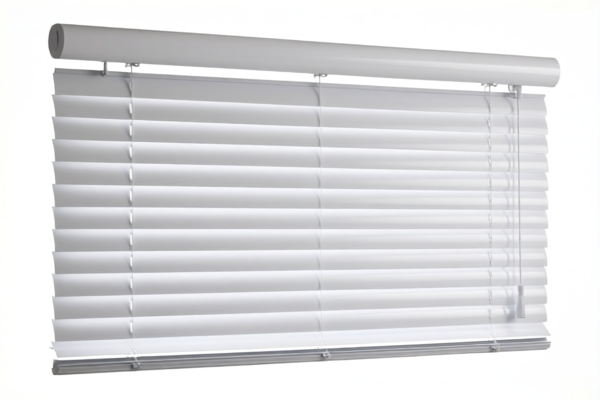
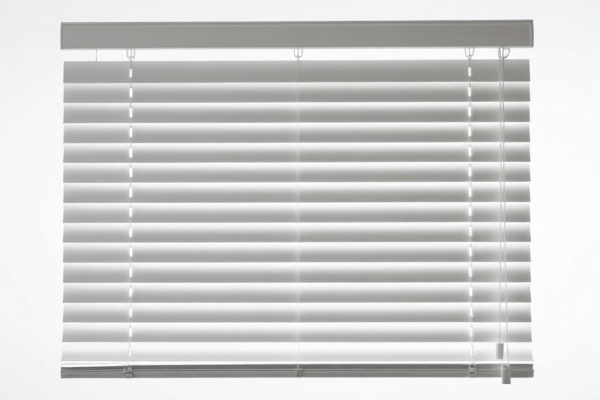
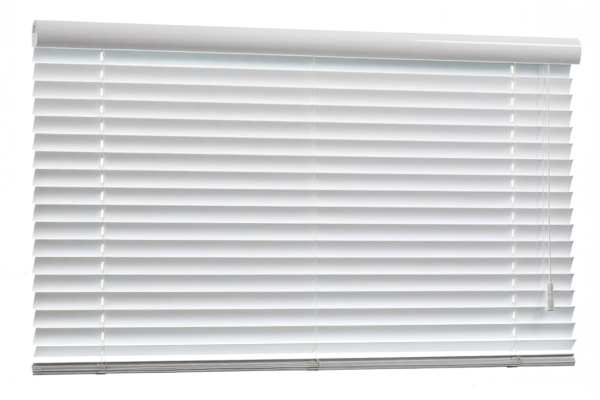
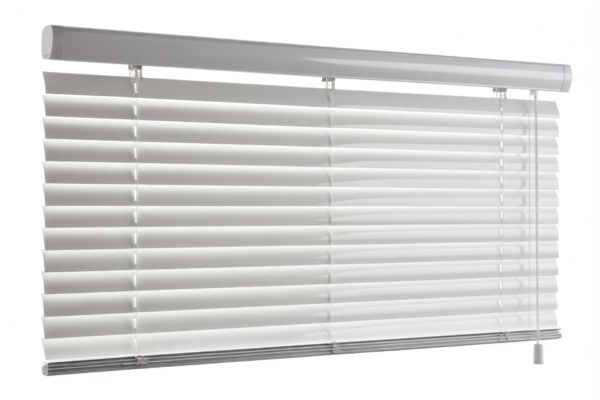
AI Analysis
🪟 Plastic Venetian Blackout Blinds: The Ultimate HS Code & Tariff Breakdown (2026 Update)
🌐 HS Code Reference & Customs Clearance Guide | 2026 Latest Tariff Analysis | Professional Compliance Strategy
📌 Part 1: Product Definition & Classification – What Exactly Are “Plastic Venetian Blinds”?
Plastic Venetian Blinds are window covering systems composed of horizontal slats made primarily of PVC or other plastic polymers. They serve dual purposes: light control and privacy, with “blackout” variants designed to block nearly 100% of external light. In international trade, these products are often misclassified due to ambiguity between “window coverings,” “plastic sheets,” and “general plastic articles.”
⚠️ Key Distinction Points:
- If the product is primarily used as a functional window covering (e.g., installed in homes/offices, operates via wand/chain) → Consider Chapter 59 or Chapter 39 based on material/form.
- If the slats are sold as loose components or in roll/board form before assembly → May fall under plastic sheets/films (HS 3920) or general plastic articles (HS 3926).
- Blackout function does NOT change HS classification but may affect customs scrutiny if marketed as “energy-saving” or “smart home” products.
📦 Part 2: HS Code Classification Details (2026 Latest Tariff Authority Cross-Reference)
| HS Code | Product Description | Application Scenario | Material/Form | Total Tax Rate |
|---|---|---|---|---|
5903.10.20.90 |
Plastic Venetian Blinds, primarily used as window coverings | Residential/Commercial window treatments | Finished blinds, plastic material, functional form | 35.0% |
3920.99.10.00 |
Plastic slats/films for blinds, in sheet/board form | Raw material or semi-finished blinds | Composite laminated plastic sheets | 41.0% |
3926.90.99.89 |
General plastic household items – blinds as final accessory | Generic plastic home accessories | Final plastic product, no specific window-covering classification | 22.8% |
3920.99.50.00 |
Other plastic sheets/films/blinds not elsewhere specified | Unassembled or bulk plastic slats | Plastic film/sheet category | 40.8% |
3926.90.99.87 |
Other plastic articles – blinds under fallback category | Non-specific plastic consumer goods | Plastic item, no precise functional classification | 22.8% |
🔍 Critical Reminder:
- Finished blinds (assembled, ready-to-install) should ideally be classified under 5903.10.20.90 if recognized as “textile-like” or “curtain-type” window coverings.
- Loose slats, rolls, or unmounted components may fall under 3920 (plastic sheets) or 3926 (other plastic articles).
- Misclassification risk: Declaring finished blinds as “plastic sheets” to avoid higher taxes can lead to customs penalties, delays, or seizure.
💰 Part 3: 2026 Latest Tariff Rate Breakdown (Including Surtaxes & Policy Add-ons)
✅ Applicable Country: United States (US)
✅ Country of Origin: China (CN)
✅ Effective Date: November 10, 2025 (and onward)
🎯 1. 5903.10.20.90 – Plastic Venetian Blinds (Finished Window Coverings)
| Item | Detail |
|---|---|
| Base Duty Rate | 0% (ad valorem) |
| USITC Surtax | +25% (Under USITC Footnote 9903.88.01) |
| IEEPA Surtax | +10% (China/HK origin, per IEEPA Order 10903) |
| Total Rate | 35.0% |
| Tax Calculation | CIF Value × 35% |
| De Minimis Eligible? | ❌ No (deny_de_minimis applies) |
| Legal Basis Path | IEEPA:9903.01.25 → IEEPA:9903.01.24 → USITC:5903.10.20.90 → FOOTNOTE:9903.88.01 |
📌 Explanation:
- The 25% USITC surtax is applied under Section 301 of the Trade Act for specific Chinese imports.
- The 10% IEEPA surtax targets broad categories of Chinese-manufactured goods.
- Total 35% is moderate compared to other plastic goods but higher than non-China origins.
- No de minimis exemption means even small shipments (e.g., samples) are subject to full duty.
🎯 2. 3920.99.10.00 – Plastic Sheets/Films (Unassembled Blinds)
| Item | Detail |
|---|---|
| Base Duty Rate | 6% |
| USITC Surtax | +25% |
| IEEPA Surtax | +10% |
| Total Rate | 41.0% |
| Tax Calculation | CIF Value × 41% |
| De Minimis Eligible? | ❌ No |
| Legal Basis Path | IEEPA:9903.01.25 → IEEPA:9903.01.24 → USITC:3920.99.10.00 → FOOTNOTE:9903.88.01 |
📌 Note:
- This rate applies if blinds are declared as plastic composite sheets rather than functional window coverings.
- Higher burden: 41% vs. 35% for finished blinds.
- Risky if customs verifies product is actually ready-to-hang blinds.
🎯 3. 3926.90.99.89 & 3926.90.99.87 – Other Plastic Articles (Fallback Categories)
| Item | Detail |
|---|---|
| Base Duty Rate | 5.3% |
| USITC Surtax | +7.5% |
| IEEPA Surtax | +10% |
| Total Rate | 22.8% |
| Tax Calculation | CIF Value × 22.8% |
| De Minimis Eligible? | ❌ No |
| Legal Basis Path | IEEPA:9903.01.25 → IEEPA:9903.01.24 → USITC:3926.90.99.89 / .87 |
📌 Caution:
- These codes are fallback categories with lower base tariffs but 7.5% USITC surtax (vs. 25% for Chapter 39).
- High audit risk: Customs may reject this classification if product clearly functions as window covering.
- Potential penalty: Misclassification can lead to back duties + interest + fines.
🛠️ Part 4: Customs Clearance Practical Advice (Avoiding Pitfalls)
✅ 1. Required Documentation Checklist
| Document | Mandatory? | Notes |
|---|---|---|
| ✅ Product Specification Sheet | ✔️ | Include dimensions, slat width, material (PVC/plastic), blackout rating |
| ✅ Product Photos (Installed & Uninstalled) | ✔️ | Show wand/chain mechanism, mounting brackets |
| ✅ Commercial Invoice | ✔️ | Clearly state “Plastic Venetian Blinds – Window Covering” |
| ✅ Packing List | ✔️ | Detail quantity per carton, gross/net weight |
| ✅ Certificate of Origin (CO) | ✔️ | Essential for origin verification |
| ✅ Third-Party Test Report | ✔️ | Fire resistance, UV stability, environmental compliance (RoHS/REACH) |
| ✅ Bill of Lading/Air Waybill | ✔️ | Standard shipping docs |
✅ 2. Declaration Tips (Key Mnemonic)
🔥 “Finished Blinds: 5903; Raw Sheets: 3920; Fallback: 3926 – Choose Wisely or Face the Penalty!”
| Scenario | Correct HS Code | Wrong Approach |
|---|---|---|
| Ready-to-install blinds with wand/chain | 5903.10.20.90 |
Declaring as “plastic parts” → 41% or audit |
| Bulk slats without hardware | 3920.99.10.00 or 3926.90.99.89 |
Mislabeling as finished blinds → penalty |
| Mixed shipment (blinds + mounting kits) | Single HS Code for primary item | Split declaration → higher combined duty |
✅ 3. Special Cases Handling
| Case | Recommendation |
|---|---|
| OEM/Private Label Blinds | Provide customer PO + design specs to prove functional identity |
| Smart Blinds (Motorized) | Still 5903.10.20.90 unless electronics dominate → may shift to 8543 |
| Export to Non-US Markets | EU: 0–4%; UK: 0–5%; Canada: 0–6% – US is highest-tariff market |
| Small Sample Shipments | No de minimis – still pay 22.8–41% duty unless below $800 (but China-origin excluded) |
🌍 Part 5: Global Market Comparison (2026)
| Country/Region | Recommended HS Code | Duty Rate | Certification Required | Notes |
|---|---|---|---|---|
| 🇺🇸 USA | 5903.10.20.90 |
35% (China) | FCC/CE (if electronic) | Highest duty among major markets |
| 🇨🇳 China | 5903.10.20.90 |
5% | CCC (if applicable) | No surtax |
| 🇪🇺 EU | 5903.10.20.90 |
0–4% | CE, REACH | Low barrier |
| 🇬🇧 UK | 5903.10.20.90 |
0–5% | UKCA | Post-Brexit alignment |
| 🇨🇦 Canada | 5903.10.20.90 |
0–6% | Health Canada (if fire-retardant) | Free trade under CUSMA |
| 🇦🇺 Australia | 5903.10.20.90 |
5% | ACS | No surtax |
📌 Conclusion:
- USA imposes the highest effective tariff for Chinese-made plastic blinds.
- Diversify sourcing: Consider Vietnam, Thailand, or Mexico for IEEPA exemption (0–5% duty).
- Pre-ruling recommendation: File CBP Advance Ruling to lock in favorable classification.
📌 Part 6: Common Mistakes & How to Avoid Them (Lessons Learned)
❌ Mistake 1: Declaring finished blinds as “plastic sheets” to save duty
👉 Consequence: Customs audit → 41% applied + penalty + delay
❌ Mistake 2: Omitting “window covering” in product description
👉 Consequence: Misclassification risk → 22.8–41% uncertainty
❌ Mistake 3: Assuming de minimis applies to China-origin goods
👉 Consequence: All shipments subject to full duty – no $800 exemption for CN
❌ Mistake 4: Using generic “blinds” without material/function details
👉 Consequence: Customs rejection → shipment held at port
✅ Best Practice Declaration Example:
“Plastic Venetian Blinds, PVC Material, Horizontal Slat Design, Blackout Function, Ready for Window Installation, Model XYZ, RoHS Certified, Origin: China”
🎯 Part 7: Final Thoughts – Precision Classification Saves Money!
🎯 Remember the Mnemonic:
🔹 “Finished Blinds: 35%; Raw Sheets: 41%; Fallback: 22.8% – But Audit Risk is HIGH!”
🔹 “One HS Code Per Shipment, Clear Description, Avoid Penalties!”
📌 Pro Tip:
If your blinds are manufactured in Vietnam, Thailand, or Mexico, apply for IEEPA Exemption → Duty drops to 0–5%.
File CBP Advance Ruling before first shipment to lock in classification and avoid surprises.
📣 Take Action Now:
📞 Hire a Licensed Customs Broker + Provide Product Photos + Apply for CBP Advance Ruling
🚀 Ensure smooth clearance, minimize duty, maximize profit!
✨ Professional Classification Starts Here!
💼 Every Percent Saved is Profit Gained!
Customer Reviews
About HS Code Classification
The Harmonized System (HS) is an internationally standardized nomenclature developed by the World Customs Organization (WCO) to classify traded products. Over 200 countries use the HS system as the basis for customs tariffs, trade statistics, and import/export regulations.
Each HS code follows a hierarchical structure:
- Chapter (2 digits) — Broad category of goods (e.g., Chapter 84: Machinery and Mechanical Appliances)
- Heading (4 digits) — More specific grouping within the chapter
- Subheading (6 digits) — Internationally standardized breakdown, used by all WCO member countries
- National subdivisions (8-10 digits) — Country-specific extensions for further classification, such as US HTSUS 10-digit codes
Correct HS code classification is essential for smooth customs clearance, accurate duty payment, and compliance with trade regulations. Misclassification can lead to customs delays, overpayment of duties, or penalties.
When importing from CN to US, the applicable tariff rates may include:
- Most-Favored-Nation (MFN) rate — The standard duty rate applied to WTO members
- General rate — Applied to countries without trade agreements
- Trade remedy duties — Additional tariffs such as Section 301 (anti-dumping), Section 232 (national security), or countervailing duties
The information provided on this page is for reference purposes only. For official classification, please consult with your local customs authority or a licensed customs broker.