Plastic Wall Cloth Textile Reinforcement
CN → US| HS编码 | 关税税率 | 原产国 | 目的国 | 文档 |
|---|---|---|---|---|
| 3921901100 | 39.2% | CN | US | 官方文档 |
| 5903102090 | 35.0% | CN | US | 官方文档 |
| 5603943000 | 35.0% | CN | US | 官方文档 |
| 5603143000 | 35.0% | CN | US | 官方文档 |
| 3921121100 | 39.2% | CN | US | 官方文档 |
商品图片
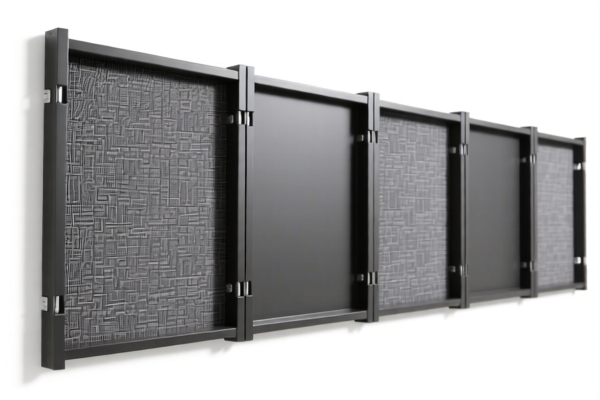
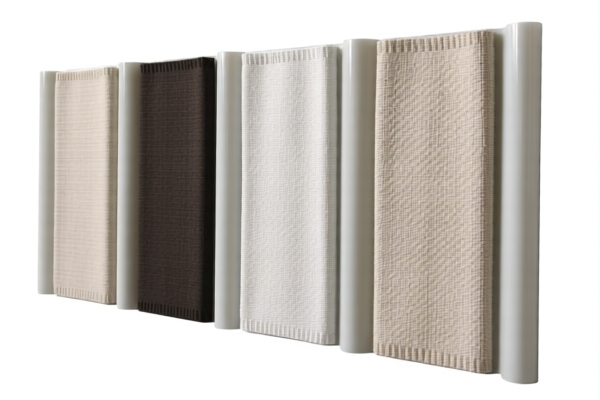
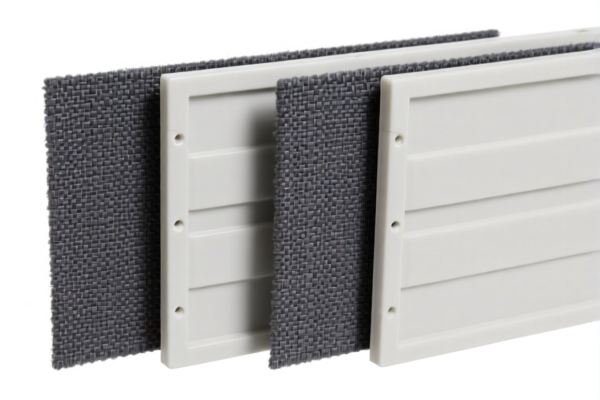

AI分析
🧱 Plastic Wall Cloth (Textile Reinforcement)
🌐 HS Code Reference & Customs Clearance Guide | 2026 Latest Tariff Analysis | Professional-Level Strategy
📌 1. Product Definition and Classification: Do You Really Understand "Plastic Wall Cloth"?
Plastic Wall Cloth (Textile Reinforcement) is a composite building material used for interior wall decoration and protection. In international trade, its classification depends heavily on the material composition and structure. It is essentially a textile substrate (like non-woven fabric or woven cloth) that has been impregnated, coated, or laminated with plastic (typically PVC).
Key Structural Features: * Base: Textile reinforcement (provides strength and flexibility). * Coating/Lamination: Plastic layer (PVC, PE, etc., provides waterproofing, durability, and aesthetic finish). * Form: Rolls or sheets (flexible, sheet-like form).
⚠️ Critical Distinction Point:
- If the textile is merely covered or impregnated with plastic and retains its textile nature → Likely falls under Chapter 59 (Impregnated/Coated Textiles) or Chapter 56 (Non-wovens).
- If the plastic forms the essential character, especially if it is a thin film laminated onto the textile → May fall under Chapter 39 (Plastics and Articles Thereof).
- Ambiguity Alert: Since the exact fiber content (e.g., % polyester vs. cotton) and weight are not specified, the classification relies on "residual" or "other" categories, making pre-ruling highly recommended.
📦 2. HS Code Classification Details (2026 Latest Tariff Authoritative Comparison)
Based on the provided data, here are the four most probable HS Codes and their rationales:
| HS Code | Product Description | Matching Logic | Total Tax Rate (US/CN Origin) |
|---|---|---|---|
3921.90.11.00 |
Other plates, sheets, film, foil and strip, of plastics, not reinforced, laminated, supported or similarly combined with other materials | Mismatch Logic Applied: Although it is reinforced, this code is used as a fallback for plastic sheets where specific textile-reinforced codes don't perfectly fit due to lack of weight/fiber data. "Other" category catch-all. | 39.2% |
5903.10.20.90 |
Textile fabrics impregnated, coated, covered or laminated with plastics, other than those of heading 5902 | Strong Match: "Plastic" material + "Wall cloth (textile reinforced)" fits the definition of textile fabric impregnated/laminated with plastic (likely PVC). Uses "Other" as a residual category. | 35.0% |
5603.94.30.00 |
Other non-woven fabrics, whether or not impregnated, coated, covered or laminated, weighing more than 70 g/m² but not more than 150 g/m² | Plausible Match: If the "textile reinforcement" is non-woven and has a specific weight range, this code applies. "Plastic" corresponds to the coating/lamination characteristic. | 35.0% |
5603.14.30.00 |
Other non-woven fabrics, whether or not impregnated, coated, covered or laminated, weighing 70 g/m² or more but less than 150 g/m², of synthetic fibres | Possible Match: Similar to above, assumes synthetic fiber content. Fits the "laminated/coated with plastic" logic for non-wovens. | 35.0% |
🔍 Key Takeaway:
- Chapter 39 (3921...) treats it primarily as a plastic sheet.
- Chapter 59 (5903...) and Chapter 56 (5603...) treat it primarily as a textile/non-woven fabric with plastic treatment.
- Tax Impact: The difference between 35.0% and 39.2% is significant. Misclassification can lead to penalties.
💰 3. 2026 Latest Tariff Rate Breakdown (Including Surcharges & Policy Add-ons)
✅ Applicable Country: United States (US)
✅ Origin: China (CN)
✅ Effective Date: From November 10, 2025 (and subsequent imports)
🎯 1. 3921.90.11.00 — Plastic Plates, Sheets, Film, etc. (Other)
| Item | Content |
|---|---|
| Basic Tariff | 4.2% (ad valorem) |
| Section 301 Surcharge | +25.0% (USITC Footnote 9903.88.01 / 301 Tariffs) |
| IEEPA Surcharge | +10.0% (Against Chinese/Hong Kong products, effective from Nov 10, 2025) |
| Total Tax Rate | 39.2% |
| Tax Calculation | CIF Value × 39.2% |
| De Minimis Exemption | ❌ Not Available (deny_de_minimis) |
| Legal Basis Path | IEEPA:9903.01.25 → IEEPA:9903.01.24 → USITC:3921.90.11.00 → FOOTNOTE:9903.88.01 |
📌 Explanation:
- The 25% is the standard Section 301 tariff on many plastic articles.
- The 10% is the new IEEPA surcharge on Chinese goods.
- Total 39.2% is very high. This classification treats the item as a plastic product, ignoring the textile reinforcement as secondary.
🎯 2. 5903.10.20.90 — Impregnated/Coated/Laminated Textile Fabrics (Other)
| Item | Content |
|---|---|
| Basic Tariff | 0.0% (ad valorem) |
| Section 301 Surcharge | +25.0% |
| IEEPA Surcharge | +10.0% |
| Total Tax Rate | 35.0% |
| Tax Calculation | CIF Value × 35.0% |
| De Minimis Exemption | ❌ Not Available (deny_de_minimis) |
| Legal Basis Path | IEEPA:9901.25 → IEEPA:9903.01.24 → USITC:5903.10.20.90 → FOOTNOTE:9903.88.01 |
📌 Note:
- This code assumes the item is a textile fabric first, coated with plastic.
- The 0% basic tariff is offset by the 25% + 10% = 35% total.
- This is 4.2% cheaper than the Chapter 39 classification.
🎯 3. 5603.94.30.00 & 5603.14.30.00 — Non-Woven Fabrics (Weight-Specific)
| Item | Content |
|---|---|
| Basic Tariff | 0.0% (ad valorem) |
| Section 301 Surcharge | +25.0% |
| IEEPA Surcharge | +10.0% |
| Total Tax Rate | 35.0% |
| Tax Calculation | CIF Value × 35.0% |
| De Minimis Exemption | ❌ Not Available (deny_de_minimis) |
| Legal Basis Path | IEEPA:9901.25 → IEEPA:9903.01.24 → USITC:5603.xxxxxx → FOOTNOTE:9903.88.01 |
📌 Note:
- These codes apply only if the textile reinforcement is non-woven and meets specific weight criteria (70g/m²–150g/m²).
- If the wall cloth is heavier or lighter, or is woven, these codes do not apply.
- Like5903, the total rate is 35.0%.
🛠️ 4. Customs Clearance Practical Advice (Battle-Tested Pitfall Guide)
✅ 1. Preparation Checklist (Indispensable)
| Document | Must Provide | Explanation |
|---|---|---|
| ✅ Product Specification Sheet | ✔️ | Must include: Material composition (e.g., 60% Polyester, 40% PVC), Weight (g/m²), Width, Thickness. |
| ✅ Technical Data Sheet (TDS) | ✔️ | To prove it is "impregnated/laminated" textile, not just a plastic sheet with a textured surface. |
| ✅ Product Photos | ✔️ | Clear images of the cross-section (showing textile layers + plastic coating) and surface. |
| ✅ Bill of Materials (BOM) | ✔️ | Breakdown of textile vs. plastic content by weight. |
| ✅ Commercial Invoice | ✔️ | Describe as "Textile Wall Covering, PVC-Laminated" rather than just "Plastic Wall Cloth" to avoid Chapter 39 bias. |
| ✅ Packing List | ✔️ | Consistent with invoice. |
✅ 2. Declaration Strategy (Key Mnemonics)
🔥 "Textile Base Wins, Plastic Coating Defines, Weight Matters for Non-Wovens!"
| Scenario | Correct Declaration | Wrong Practice | Consequence |
|---|---|---|---|
| Woven fabric base + Plastic coating | 5903.10.20.90 |
3921.90.11.00 |
Overpay 4.2% + potential audit |
| Non-woven base + Plastic coating (70-150g/m²) | 5603.94.30.00 or 5603.14.30.00 |
3921.90.11.00 |
Overpay 4.2% |
| Non-woven base + Plastic coating (<70g/m² or >150g/m²) | 5603.93 or 5603.99 series (Check exact weight) |
Use 5603.94/14 incorrectly |
Classification error |
| Plastic film with random textile fibers embedded (not woven/knitted/non-woven structure) | 3921.90.11.00 |
5903... |
Risk of penalty if textile isn't a "fabric" |
✅ 3. Special Circumstances Handling
| Situation | Handling Advice |
|---|---|
| High Weight (>150g/m²) | If non-woven and >150g/m², it may fall under 5603.93 or 5603.99. Verify weight! |
| Woven Fabric | Must use Chapter 59 (5903...). Chapter 56 (5603...) is for non-wovens only. |
| PVC vs. PE Coating | Both fall under 5903.10 (Plastics: PVC). If it's PE, it might be 5903.20 or 5903.90. Check material safety data sheet (MSDS). |
| Decorative Pattern | If the pattern is printed on the plastic layer, it doesn't change the HS code, but ensure the description matches. |
🌍 5. Global Market Customs Comparison (2026 Latest)
| Country/Region | Recommended HS Code | Tariff (China Origin) | Certification Requirements | Notes |
|---|---|---|---|---|
| 🇺🇸 United States | 5903.10.20.90 |
35.0% (25%+10%) | None specific | Avoid 3921 unless necessary. 35% is better than 39.2%. |
| 🇨🇳 China | 5903.10.20.90 |
5-10% (Est.) | CCC (if applicable) | Lower base tariffs in China. |
| 🇪🇺 European Union | 5903.10.20 |
0% - 6.5% | REACH, CE | No Section 301/IEEPA equivalents. VAT applies. |
| 🇨🇦 Canada | 5903.10.20 |
0% (If MFN) | CFIA | Check CUSMA eligibility if originating in USMCA countries. |
| 🇦🇺 Australia | 5903.10.20 |
5% | ACCC | Standard GST applies. |
📌 Conclusion:
- USA is the most critical market for tax optimization.
- Chapter 59 (5903...) is the preferred classification for most "Plastic Wall Cloth" products because it offers a 35.0% rate vs. 39.2% for Chapter 39.
- Key Differentiator: Is it a woven fabric (5903) or a non-woven fabric (5603)? This depends on the textile reinforcement structure.
📌 6. Common Errors & Pitfall Guide (Blood-and-Tears Lessons)
❌ Error 1: Classifying as 3921.90.11.00 because it contains "Plastic"
👉 Consequence: You pay 4.2% more unnecessarily. If the textile is the essential character, use Chapter 59 or 56.
❌ Error 2: Ignoring the Weight for Non-Wovens (5603...)
👉 Consequence: If you use 5603.94 for a product weighing 60g/m², customs will reclassify it, leading to penalties and delays.
❌ Error 3: Not specifying "Textile Reinforcement" in the description
👉 Consequence: Customs may assume it's a pure plastic sheet (3921), leading to wrong duty assessment.
❌ Error 4: Using "Wallpaper" as the generic term
👉 Consequence: "Wallpaper" can be paper-based (4814). If it's textile-based, it must be 5903 or 5603. Be specific: "Vinyl-Coated Textile Wall Covering."
✅ Correct Practice:
"Textile Wall Cloth, Reinforced with Non-Woven Polyester Fabric, Laminated with PVC, Weight: 120g/m², Width: 1.2m"
🎯 7. Conclusion: Professional Declaration, Save Time, Reduce Costs!
🎯 Remember the Mnemonic:
🔹 "Textile Base, Plastic Face: Chapter 59 is the Place!"
🔹 "Non-Woven Check Weight: 70-150g is the Sweet Spot!"
🔹 "35% vs 39.2%: Don't Leave 4.2% on the Table!"
📌 Pro Tip:
If your wall cloth is originating in Vietnam, Thailand, or Malaysia, you may qualify for IEEPA Exemption or lower tariffs.
Recommendation: Apply for an Advance Ruling (Binding Tariff Information) with CBP before shipment to lock in the 35.0% rate and avoid disputes.
📣 Immediate Action:
📞 Contact your freight forwarder + Provide Technical Data Sheet + Request HS Code Pre-Ruling
🚀 Let your Plastic Wall Cloth clear customs smoothly, legally, and cost-effectively!
✨ Professional Customs Clearance Starts with Accurate Classification!
💼 Every cent counts in your supply chain!
用户评价
关于 HS 编码归类
协调制度(HS)是由世界海关组织(WCO)制定的国际贸易商品分类标准。全球 200 多个国家采用 HS 系统作为海关关税、贸易统计和进出口监管的基础。
每个 HS 编码遵循以下层级结构:
- 章(2 位)——商品大类(例如:第 84 章:机器和机械设备)
- 品目(4 位)——章内的更具体分类
- 子目(6 位)——国际通用细分,所有 WCO 成员国统一使用
- 本国细分(8-10 位)——各国自行扩展的细分编码,如美国 HTSUS 10 位编码
正确的 HS 编码归类对于顺利通关、准确缴纳关税和遵守贸易法规至关重要。错误归类可能导致海关延误、多缴关税或罚款。
从CN进口到US时,适用的关税税率可能包括:
- 最惠国(MFN)税率——适用于 WTO 成员国的标准关税税率
- 普通税率——适用于无贸易协定国家
- 贸易救济关税——附加关税,如 301 条款(反倾销)、232 条款(国家安全)或反补贴税
本页内容仅供参考。如需正式归类,请咨询当地海关或持牌报关代理。