Plastic Wall Cloth Textile Reinforcement
CN → US| HS Code | Tariff Rate | Origin | Destination | Doc |
|---|---|---|---|---|
| 3921901100 | 39.2% | CN | US | Official Doc |
| 5903102090 | 35.0% | CN | US | Official Doc |
| 5603943000 | 35.0% | CN | US | Official Doc |
| 5603143000 | 35.0% | CN | US | Official Doc |
| 3921121100 | 39.2% | CN | US | Official Doc |
Product Images
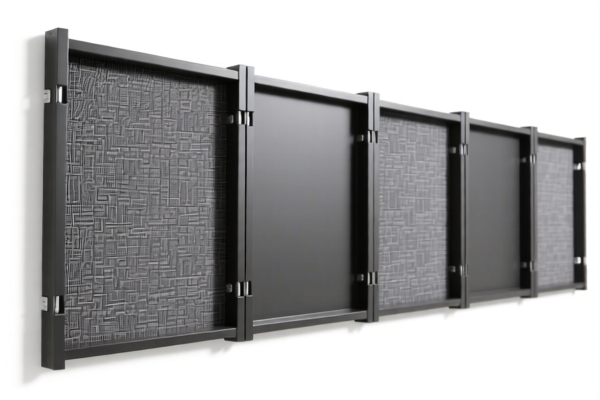
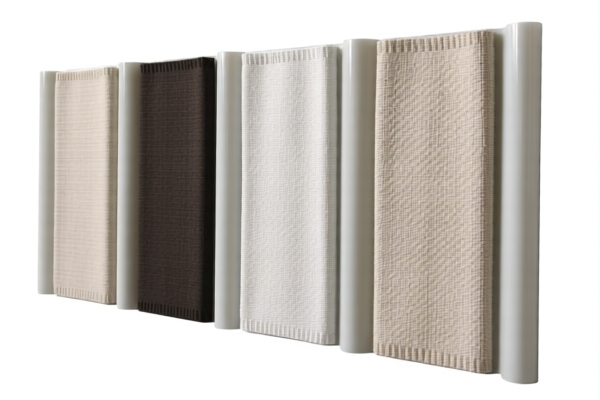
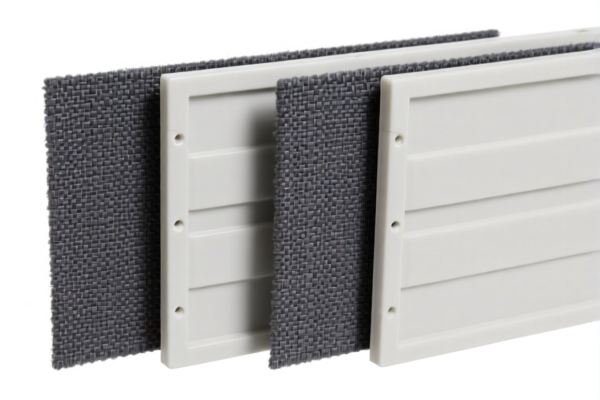

AI Analysis
🧱 Plastic Wall Cloth (Textile Reinforcement)
🌐 HS Code Reference & Customs Clearance Guide | 2026 Latest Tariff Analysis | Professional-Level Strategy
📌 1. Product Definition and Classification: Do You Really Understand "Plastic Wall Cloth"?
Plastic Wall Cloth (Textile Reinforcement) is a composite building material used for interior wall decoration and protection. In international trade, its classification depends heavily on the material composition and structure. It is essentially a textile substrate (like non-woven fabric or woven cloth) that has been impregnated, coated, or laminated with plastic (typically PVC).
Key Structural Features: * Base: Textile reinforcement (provides strength and flexibility). * Coating/Lamination: Plastic layer (PVC, PE, etc., provides waterproofing, durability, and aesthetic finish). * Form: Rolls or sheets (flexible, sheet-like form).
⚠️ Critical Distinction Point:
- If the textile is merely covered or impregnated with plastic and retains its textile nature → Likely falls under Chapter 59 (Impregnated/Coated Textiles) or Chapter 56 (Non-wovens).
- If the plastic forms the essential character, especially if it is a thin film laminated onto the textile → May fall under Chapter 39 (Plastics and Articles Thereof).
- Ambiguity Alert: Since the exact fiber content (e.g., % polyester vs. cotton) and weight are not specified, the classification relies on "residual" or "other" categories, making pre-ruling highly recommended.
📦 2. HS Code Classification Details (2026 Latest Tariff Authoritative Comparison)
Based on the provided data, here are the four most probable HS Codes and their rationales:
| HS Code | Product Description | Matching Logic | Total Tax Rate (US/CN Origin) |
|---|---|---|---|
3921.90.11.00 |
Other plates, sheets, film, foil and strip, of plastics, not reinforced, laminated, supported or similarly combined with other materials | Mismatch Logic Applied: Although it is reinforced, this code is used as a fallback for plastic sheets where specific textile-reinforced codes don't perfectly fit due to lack of weight/fiber data. "Other" category catch-all. | 39.2% |
5903.10.20.90 |
Textile fabrics impregnated, coated, covered or laminated with plastics, other than those of heading 5902 | Strong Match: "Plastic" material + "Wall cloth (textile reinforced)" fits the definition of textile fabric impregnated/laminated with plastic (likely PVC). Uses "Other" as a residual category. | 35.0% |
5603.94.30.00 |
Other non-woven fabrics, whether or not impregnated, coated, covered or laminated, weighing more than 70 g/m² but not more than 150 g/m² | Plausible Match: If the "textile reinforcement" is non-woven and has a specific weight range, this code applies. "Plastic" corresponds to the coating/lamination characteristic. | 35.0% |
5603.14.30.00 |
Other non-woven fabrics, whether or not impregnated, coated, covered or laminated, weighing 70 g/m² or more but less than 150 g/m², of synthetic fibres | Possible Match: Similar to above, assumes synthetic fiber content. Fits the "laminated/coated with plastic" logic for non-wovens. | 35.0% |
🔍 Key Takeaway:
- Chapter 39 (3921...) treats it primarily as a plastic sheet.
- Chapter 59 (5903...) and Chapter 56 (5603...) treat it primarily as a textile/non-woven fabric with plastic treatment.
- Tax Impact: The difference between 35.0% and 39.2% is significant. Misclassification can lead to penalties.
💰 3. 2026 Latest Tariff Rate Breakdown (Including Surcharges & Policy Add-ons)
✅ Applicable Country: United States (US)
✅ Origin: China (CN)
✅ Effective Date: From November 10, 2025 (and subsequent imports)
🎯 1. 3921.90.11.00 — Plastic Plates, Sheets, Film, etc. (Other)
| Item | Content |
|---|---|
| Basic Tariff | 4.2% (ad valorem) |
| Section 301 Surcharge | +25.0% (USITC Footnote 9903.88.01 / 301 Tariffs) |
| IEEPA Surcharge | +10.0% (Against Chinese/Hong Kong products, effective from Nov 10, 2025) |
| Total Tax Rate | 39.2% |
| Tax Calculation | CIF Value × 39.2% |
| De Minimis Exemption | ❌ Not Available (deny_de_minimis) |
| Legal Basis Path | IEEPA:9903.01.25 → IEEPA:9903.01.24 → USITC:3921.90.11.00 → FOOTNOTE:9903.88.01 |
📌 Explanation:
- The 25% is the standard Section 301 tariff on many plastic articles.
- The 10% is the new IEEPA surcharge on Chinese goods.
- Total 39.2% is very high. This classification treats the item as a plastic product, ignoring the textile reinforcement as secondary.
🎯 2. 5903.10.20.90 — Impregnated/Coated/Laminated Textile Fabrics (Other)
| Item | Content |
|---|---|
| Basic Tariff | 0.0% (ad valorem) |
| Section 301 Surcharge | +25.0% |
| IEEPA Surcharge | +10.0% |
| Total Tax Rate | 35.0% |
| Tax Calculation | CIF Value × 35.0% |
| De Minimis Exemption | ❌ Not Available (deny_de_minimis) |
| Legal Basis Path | IEEPA:9901.25 → IEEPA:9903.01.24 → USITC:5903.10.20.90 → FOOTNOTE:9903.88.01 |
📌 Note:
- This code assumes the item is a textile fabric first, coated with plastic.
- The 0% basic tariff is offset by the 25% + 10% = 35% total.
- This is 4.2% cheaper than the Chapter 39 classification.
🎯 3. 5603.94.30.00 & 5603.14.30.00 — Non-Woven Fabrics (Weight-Specific)
| Item | Content |
|---|---|
| Basic Tariff | 0.0% (ad valorem) |
| Section 301 Surcharge | +25.0% |
| IEEPA Surcharge | +10.0% |
| Total Tax Rate | 35.0% |
| Tax Calculation | CIF Value × 35.0% |
| De Minimis Exemption | ❌ Not Available (deny_de_minimis) |
| Legal Basis Path | IEEPA:9901.25 → IEEPA:9903.01.24 → USITC:5603.xxxxxx → FOOTNOTE:9903.88.01 |
📌 Note:
- These codes apply only if the textile reinforcement is non-woven and meets specific weight criteria (70g/m²–150g/m²).
- If the wall cloth is heavier or lighter, or is woven, these codes do not apply.
- Like5903, the total rate is 35.0%.
🛠️ 4. Customs Clearance Practical Advice (Battle-Tested Pitfall Guide)
✅ 1. Preparation Checklist (Indispensable)
| Document | Must Provide | Explanation |
|---|---|---|
| ✅ Product Specification Sheet | ✔️ | Must include: Material composition (e.g., 60% Polyester, 40% PVC), Weight (g/m²), Width, Thickness. |
| ✅ Technical Data Sheet (TDS) | ✔️ | To prove it is "impregnated/laminated" textile, not just a plastic sheet with a textured surface. |
| ✅ Product Photos | ✔️ | Clear images of the cross-section (showing textile layers + plastic coating) and surface. |
| ✅ Bill of Materials (BOM) | ✔️ | Breakdown of textile vs. plastic content by weight. |
| ✅ Commercial Invoice | ✔️ | Describe as "Textile Wall Covering, PVC-Laminated" rather than just "Plastic Wall Cloth" to avoid Chapter 39 bias. |
| ✅ Packing List | ✔️ | Consistent with invoice. |
✅ 2. Declaration Strategy (Key Mnemonics)
🔥 "Textile Base Wins, Plastic Coating Defines, Weight Matters for Non-Wovens!"
| Scenario | Correct Declaration | Wrong Practice | Consequence |
|---|---|---|---|
| Woven fabric base + Plastic coating | 5903.10.20.90 |
3921.90.11.00 |
Overpay 4.2% + potential audit |
| Non-woven base + Plastic coating (70-150g/m²) | 5603.94.30.00 or 5603.14.30.00 |
3921.90.11.00 |
Overpay 4.2% |
| Non-woven base + Plastic coating (<70g/m² or >150g/m²) | 5603.93 or 5603.99 series (Check exact weight) |
Use 5603.94/14 incorrectly |
Classification error |
| Plastic film with random textile fibers embedded (not woven/knitted/non-woven structure) | 3921.90.11.00 |
5903... |
Risk of penalty if textile isn't a "fabric" |
✅ 3. Special Circumstances Handling
| Situation | Handling Advice |
|---|---|
| High Weight (>150g/m²) | If non-woven and >150g/m², it may fall under 5603.93 or 5603.99. Verify weight! |
| Woven Fabric | Must use Chapter 59 (5903...). Chapter 56 (5603...) is for non-wovens only. |
| PVC vs. PE Coating | Both fall under 5903.10 (Plastics: PVC). If it's PE, it might be 5903.20 or 5903.90. Check material safety data sheet (MSDS). |
| Decorative Pattern | If the pattern is printed on the plastic layer, it doesn't change the HS code, but ensure the description matches. |
🌍 5. Global Market Customs Comparison (2026 Latest)
| Country/Region | Recommended HS Code | Tariff (China Origin) | Certification Requirements | Notes |
|---|---|---|---|---|
| 🇺🇸 United States | 5903.10.20.90 |
35.0% (25%+10%) | None specific | Avoid 3921 unless necessary. 35% is better than 39.2%. |
| 🇨🇳 China | 5903.10.20.90 |
5-10% (Est.) | CCC (if applicable) | Lower base tariffs in China. |
| 🇪🇺 European Union | 5903.10.20 |
0% - 6.5% | REACH, CE | No Section 301/IEEPA equivalents. VAT applies. |
| 🇨🇦 Canada | 5903.10.20 |
0% (If MFN) | CFIA | Check CUSMA eligibility if originating in USMCA countries. |
| 🇦🇺 Australia | 5903.10.20 |
5% | ACCC | Standard GST applies. |
📌 Conclusion:
- USA is the most critical market for tax optimization.
- Chapter 59 (5903...) is the preferred classification for most "Plastic Wall Cloth" products because it offers a 35.0% rate vs. 39.2% for Chapter 39.
- Key Differentiator: Is it a woven fabric (5903) or a non-woven fabric (5603)? This depends on the textile reinforcement structure.
📌 6. Common Errors & Pitfall Guide (Blood-and-Tears Lessons)
❌ Error 1: Classifying as 3921.90.11.00 because it contains "Plastic"
👉 Consequence: You pay 4.2% more unnecessarily. If the textile is the essential character, use Chapter 59 or 56.
❌ Error 2: Ignoring the Weight for Non-Wovens (5603...)
👉 Consequence: If you use 5603.94 for a product weighing 60g/m², customs will reclassify it, leading to penalties and delays.
❌ Error 3: Not specifying "Textile Reinforcement" in the description
👉 Consequence: Customs may assume it's a pure plastic sheet (3921), leading to wrong duty assessment.
❌ Error 4: Using "Wallpaper" as the generic term
👉 Consequence: "Wallpaper" can be paper-based (4814). If it's textile-based, it must be 5903 or 5603. Be specific: "Vinyl-Coated Textile Wall Covering."
✅ Correct Practice:
"Textile Wall Cloth, Reinforced with Non-Woven Polyester Fabric, Laminated with PVC, Weight: 120g/m², Width: 1.2m"
🎯 7. Conclusion: Professional Declaration, Save Time, Reduce Costs!
🎯 Remember the Mnemonic:
🔹 "Textile Base, Plastic Face: Chapter 59 is the Place!"
🔹 "Non-Woven Check Weight: 70-150g is the Sweet Spot!"
🔹 "35% vs 39.2%: Don't Leave 4.2% on the Table!"
📌 Pro Tip:
If your wall cloth is originating in Vietnam, Thailand, or Malaysia, you may qualify for IEEPA Exemption or lower tariffs.
Recommendation: Apply for an Advance Ruling (Binding Tariff Information) with CBP before shipment to lock in the 35.0% rate and avoid disputes.
📣 Immediate Action:
📞 Contact your freight forwarder + Provide Technical Data Sheet + Request HS Code Pre-Ruling
🚀 Let your Plastic Wall Cloth clear customs smoothly, legally, and cost-effectively!
✨ Professional Customs Clearance Starts with Accurate Classification!
💼 Every cent counts in your supply chain!
Customer Reviews
About HS Code Classification
The Harmonized System (HS) is an internationally standardized nomenclature developed by the World Customs Organization (WCO) to classify traded products. Over 200 countries use the HS system as the basis for customs tariffs, trade statistics, and import/export regulations.
Each HS code follows a hierarchical structure:
- Chapter (2 digits) — Broad category of goods (e.g., Chapter 84: Machinery and Mechanical Appliances)
- Heading (4 digits) — More specific grouping within the chapter
- Subheading (6 digits) — Internationally standardized breakdown, used by all WCO member countries
- National subdivisions (8-10 digits) — Country-specific extensions for further classification, such as US HTSUS 10-digit codes
Correct HS code classification is essential for smooth customs clearance, accurate duty payment, and compliance with trade regulations. Misclassification can lead to customs delays, overpayment of duties, or penalties.
When importing from CN to US, the applicable tariff rates may include:
- Most-Favored-Nation (MFN) rate — The standard duty rate applied to WTO members
- General rate — Applied to countries without trade agreements
- Trade remedy duties — Additional tariffs such as Section 301 (anti-dumping), Section 232 (national security), or countervailing duties
The information provided on this page is for reference purposes only. For official classification, please consult with your local customs authority or a licensed customs broker.