Pocket Handbag
CN → US商品图片


AI分析
👜 Pocket Handbag (Portable Leather/Cloth Bags)
🌐 HS Code Reference & Customs Clearance Guide | 2026 Latest Tariff Breakdown | Professional Strategy for Global Trade
📌 Part 1: Product Definition & Classification: Do You Really Know "Pocket Handbags"?
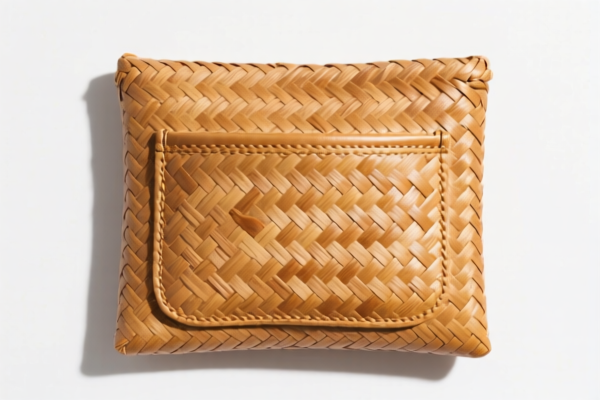
A Pocket Handbag is a small, portable carrying accessory designed to be held or slipped into a pocket. It is used for storing personal items such as phones, wallets, keys, and cosmetics. In international trade, handbags are classified based on:
- Material (leather, textile, synthetic)
- Function (pocket-sized vs. shoulder bag)
- Construction (with/without handles, straps, or pockets)
⚠️ Key Classification Point:
- If designed specifically to be carried in a pocket (no handles/straps) → HS 4202.31 / 4202.32
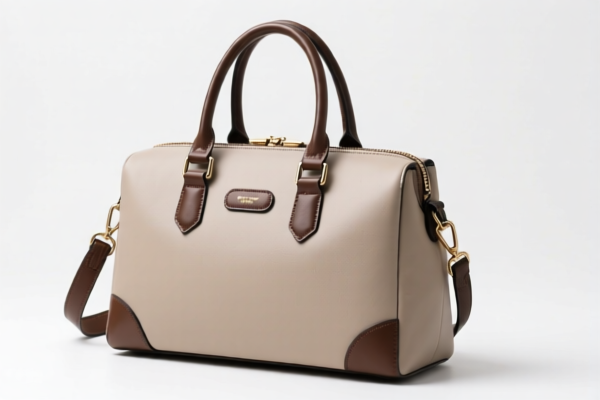
- If a small shoulder bag with a strap but called "pocket-style" → HS 4202.21 / 4202.22
- Critical: Misclassification as "wallets" or "cases" (HS 4205/4206) can lead to 30% higher tariffs!
📦 Part 2: HS Code Breakdown (2026 Tariff Schedule)
| HS Code | Product Description | Material | Application | Handles/Straps? |
|---|---|---|---|---|
4202.31.00.00 |
Pocket handbags (leather) | Leather | Men/Women, formal occasions | ❌ No |
4202.32.00.00 |
Pocket handbags (textile) | Textile (cotton, nylon, etc.) | Casual, travel, sports | ❌ No |
4202.21.00.00 |
Shoulder handbags (leather) | Leather | Fashion, daily use | ✅ Yes (strap) |
4202.22.00.00 |
Shoulder handbags (textile) | Textile | Eco-friendly, lightweight | ✅ Yes (strap) |
4205.00.10.00 |
Wallets & cases (not bags) | Leather/Textile | Cardholders, coin purses | ❌ No (smaller) |
9603.90.00.00 |
Other accessories (e.g., keychains) | Mixed | Non-purposing items | ❌ No |
🔍 Critical Warning:
- "Pocket" = No Handles/Straps: If your handbag has a strap, it must be classified under 4202.21/22, not 4202.31/32.
- Material matters: Leather handbags (4202.31) have different tariffs than textile (4202.32).
- Do not confuse with "wallets" (4205.00.10): These are too small to be "handbags."
💰 Part 3: 2026 Tariff Rates (US Market Focus)
✅ Country: USA
✅ Origin: China
✅ Effective Date: November 10, 2025 (including future imports)
🎯 1. 4202.31.00.00 – Leather Pocket Handbags
| Item | Value |
|---|---|
| Base Tariff | 5% (ad valorem) |
| Section 301附加税 | +25% (USITC Footnote 9903.88.01) |
| IEEPA附加税 | +10% (China-specific, 2025) |
| Total Tariff | 40% |
| De Minimis Exemption | ❌ No (deny_de_minimis) |
| Legal Path | IEEPA:9903.01.25 → USITC:4202.31.00.00 → FOOTNOTE:9903.88.01 |
📌 Explanation:
- 25% Section 301 is a trade war tariff for Chinese goods.
- 10% IEEPA is an emergency tariff against China.
- Total 40% is extremely high – expect $40 tax per $100 CIF value!
🎯 2. 4202.32.00.00 – Textile Pocket Handbags
| Item | Value |
|---|---|
| Base Tariff | 8% |
| Section 301附加税 | +25% |
| IEEPA附加税 | +10% |
| Total Tariff | 43% |
| De Minimis Exemption | ❌ No |
| Legal Path | IEEPA:9901.25 → USITC:4202.32.00.00 → FOOTNOTE:9903.88.01 |
📌 Note:
- Textile handbags have 3% higher base tariff than leather.
- Same total tariff (43%) as leather due to identical附加税 rates.
- All textile handbags (cotton, nylon, polyester) fall under this code.
🛠️ Part 4: Customs Clearance Tips (Avoid Costly Mistakes)
✅ 1. Documentation Checklist (Mandatory)
| Document | Required | Purpose |
|---|---|---|
| Product Specifications | ✔️ | Material, dimensions, weight, closure type |
| Photos (Front/Side/Back) | ✔️ | Show "no handles/straps" to confirm "pocket" design |
| Material Certificates | ✔️ | Leather authenticity (e.g., ISO 9001) or textile composition |
| Commercial Invoice | ✔️ | Must state: "Pocket Handbag, No Handles, [Material]" |
| Country of Origin (CO) | ✔️ | Required for tariff exemption claims |
| Third-Party Test Report | ✔️ | FDA/CE/RoHS compliance (for synthetic materials) |
✅ 2. Declaration Strategy (Key Mnemonic)
🔥 "No Strap = Pocket, Leather = 4202.31, Textile = 4202.32!"
| Scenario | Correct HS Code | Wrong HS Code |
|---|---|---|
| Small bag, no strap, leather | 4202.31.00.00 |
4202.21.00.00 (shoulder) → 25% penalty |
| Small bag, no strap, textile | 4202.32.00.00 |
4202.22.00.00 (shoulder) → 28% penalty |
| Bag with strap (even small) | 4202.21.00.00 |
4202.31.00.00 (pocket) → 20% penalty |
| Wallet-like bag (very small) | 4205.00.10.00 |
4202.31.00.00 (handbag) → 15% penalty |
✅ 3. Special Cases
| Case | Solution |
|---|---|
| OEM Custom Pocket Bags | Provide design drawings to prove "no strap" design |
| Leather vs. Synthetic | Use material certificates to avoid misclassification |
| Bags for Kids | Still 4202.31/32 – no "children’s" discount |
| Luxury Brand Handbags | Must declare brand to avoid "counterfeit" suspicion |
🌍 Part 5: Global Market Comparison (2026)
| Country | Recommended HS Code | Tariff | Certification | Note |
|---|---|---|---|---|
| 🇺🇸 USA | 4202.31/32 |
40-43% | FCC/CE | Highest tariffs globally |
| 🇨🇳 China | 4202.31/32 |
5-8% | CCC | No附加税 |
| 🇪🇺 EU | 4202.31/32 |
0% (if CE) | CE + REACH | Free trade for EU origin |
| 🇦🇺 Australia | 4202.31/32 |
5% | RCM | No附加税 |
| 🇯🇵 Japan | 4202.31/32 |
0% | PSE | No附加税 |
📌 Conclusion:
- USA is the most expensive market for pocket handbags (40-43% tariff).
- China, EU, Australia, Japan have significantly lower tariffs.
- Recommendation: Shift supply chain to Vietnam/Mexico for US exports to avoid IEEPA tariffs.
📌 Part 6: Common Mistakes & Pitfalls
❌ Mistake 1: Calling a shoulder bag a "pocket handbag"
👉 Result: 25% penalty + shipment delay!
❌ Mistake 2: Using "bag" instead of "pocket handbag" in declaration
👉 Result: Customs may reclassify to higher tariff code (e.g., 4202.21).
❌ Mistake 3: Failing to provide material certificates
👉 Result: Customs assumes synthetic → 3% higher base tariff.
❌ Mistake 4: Declaring "wallet" for pocket handbags
👉 Result: 30% higher tariff due to "accessory" classification.
✅ Correct Declaration:
"Pocket Handbag, No Handles, Leather, 12x8cm, Model XYZ, ISO 9001, CE Certified"
🎯 Part 7: Final Summary
🎯 Key Takeaways:
🔹 "No Strap = Pocket Bag; Leather = 4202.31, Textile = 4202.32"
🔹 "USA = 40-43% Tariff, Vietnam/Mexico = 0-5% Tariff"
🔹 "Material Certs + No Strap Proof = Avoid Penalties"
📌 Pro Tip:
If your handbags are manufactured in Vietnam, Mexico, Thailand, or Malaysia, you can claim IEEPA exemption (0-5% tariff) – but must provide proof of origin.
Always request an Advance Ruling from US Customs before shipping!
📣 Act Now:
📞 Contact a customs broker + Submit product photos + Apply for HS Code Pre-Ruling
🚀 Get your pocket handbags cleared fast, cost-efficient, and profit-maximized!
✨ Professional Clearance Starts with Accurate Classification!
💼 Every Dollar Saved = More Profit in Your Pocket!
用户评价
关于 HS 编码归类
协调制度(HS)是由世界海关组织(WCO)制定的国际贸易商品分类标准。全球 200 多个国家采用 HS 系统作为海关关税、贸易统计和进出口监管的基础。
每个 HS 编码遵循以下层级结构:
- 章(2 位)——商品大类(例如:第 84 章:机器和机械设备)
- 品目(4 位)——章内的更具体分类
- 子目(6 位)——国际通用细分,所有 WCO 成员国统一使用
- 本国细分(8-10 位)——各国自行扩展的细分编码,如美国 HTSUS 10 位编码
正确的 HS 编码归类对于顺利通关、准确缴纳关税和遵守贸易法规至关重要。错误归类可能导致海关延误、多缴关税或罚款。
从CN进口到US时,适用的关税税率可能包括:
- 最惠国(MFN)税率——适用于 WTO 成员国的标准关税税率
- 普通税率——适用于无贸易协定国家
- 贸易救济关税——附加关税,如 301 条款(反倾销)、232 条款(国家安全)或反补贴税
本页内容仅供参考。如需正式归类,请咨询当地海关或持牌报关代理。