Pocket Handbag
CN → USProduct Images
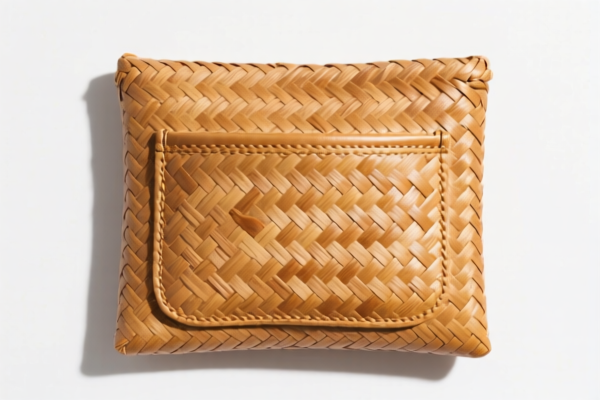


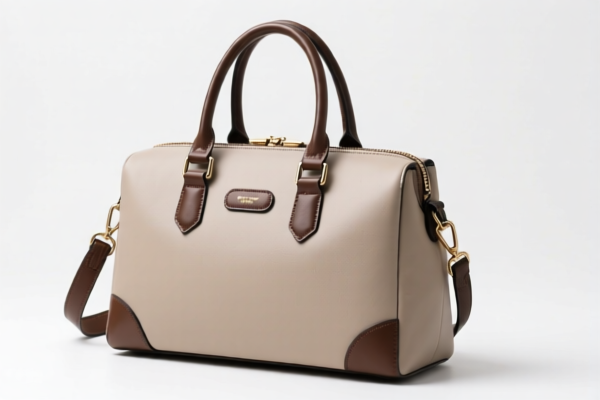
AI Analysis
👜 Pocket Handbag (Portable Leather/Cloth Bags)
🌐 HS Code Reference & Customs Clearance Guide | 2026 Latest Tariff Breakdown | Professional Strategy for Global Trade
📌 Part 1: Product Definition & Classification: Do You Really Know "Pocket Handbags"?
A Pocket Handbag is a small, portable carrying accessory designed to be held or slipped into a pocket. It is used for storing personal items such as phones, wallets, keys, and cosmetics. In international trade, handbags are classified based on:
- Material (leather, textile, synthetic)
- Function (pocket-sized vs. shoulder bag)
- Construction (with/without handles, straps, or pockets)
⚠️ Key Classification Point:
- If designed specifically to be carried in a pocket (no handles/straps) → HS 4202.31 / 4202.32
- If a small shoulder bag with a strap but called "pocket-style" → HS 4202.21 / 4202.22
- Critical: Misclassification as "wallets" or "cases" (HS 4205/4206) can lead to 30% higher tariffs!
📦 Part 2: HS Code Breakdown (2026 Tariff Schedule)
| HS Code | Product Description | Material | Application | Handles/Straps? |
|---|---|---|---|---|
4202.31.00.00 |
Pocket handbags (leather) | Leather | Men/Women, formal occasions | ❌ No |
4202.32.00.00 |
Pocket handbags (textile) | Textile (cotton, nylon, etc.) | Casual, travel, sports | ❌ No |
4202.21.00.00 |
Shoulder handbags (leather) | Leather | Fashion, daily use | ✅ Yes (strap) |
4202.22.00.00 |
Shoulder handbags (textile) | Textile | Eco-friendly, lightweight | ✅ Yes (strap) |
4205.00.10.00 |
Wallets & cases (not bags) | Leather/Textile | Cardholders, coin purses | ❌ No (smaller) |
9603.90.00.00 |
Other accessories (e.g., keychains) | Mixed | Non-purposing items | ❌ No |
🔍 Critical Warning:
- "Pocket" = No Handles/Straps: If your handbag has a strap, it must be classified under 4202.21/22, not 4202.31/32.
- Material matters: Leather handbags (4202.31) have different tariffs than textile (4202.32).
- Do not confuse with "wallets" (4205.00.10): These are too small to be "handbags."
💰 Part 3: 2026 Tariff Rates (US Market Focus)
✅ Country: USA
✅ Origin: China
✅ Effective Date: November 10, 2025 (including future imports)
🎯 1. 4202.31.00.00 – Leather Pocket Handbags
| Item | Value |
|---|---|
| Base Tariff | 5% (ad valorem) |
| Section 301附加税 | +25% (USITC Footnote 9903.88.01) |
| IEEPA附加税 | +10% (China-specific, 2025) |
| Total Tariff | 40% |
| De Minimis Exemption | ❌ No (deny_de_minimis) |
| Legal Path | IEEPA:9903.01.25 → USITC:4202.31.00.00 → FOOTNOTE:9903.88.01 |
📌 Explanation:
- 25% Section 301 is a trade war tariff for Chinese goods.
- 10% IEEPA is an emergency tariff against China.
- Total 40% is extremely high – expect $40 tax per $100 CIF value!
🎯 2. 4202.32.00.00 – Textile Pocket Handbags
| Item | Value |
|---|---|
| Base Tariff | 8% |
| Section 301附加税 | +25% |
| IEEPA附加税 | +10% |
| Total Tariff | 43% |
| De Minimis Exemption | ❌ No |
| Legal Path | IEEPA:9901.25 → USITC:4202.32.00.00 → FOOTNOTE:9903.88.01 |
📌 Note:
- Textile handbags have 3% higher base tariff than leather.
- Same total tariff (43%) as leather due to identical附加税 rates.
- All textile handbags (cotton, nylon, polyester) fall under this code.
🛠️ Part 4: Customs Clearance Tips (Avoid Costly Mistakes)
✅ 1. Documentation Checklist (Mandatory)
| Document | Required | Purpose |
|---|---|---|
| Product Specifications | ✔️ | Material, dimensions, weight, closure type |
| Photos (Front/Side/Back) | ✔️ | Show "no handles/straps" to confirm "pocket" design |
| Material Certificates | ✔️ | Leather authenticity (e.g., ISO 9001) or textile composition |
| Commercial Invoice | ✔️ | Must state: "Pocket Handbag, No Handles, [Material]" |
| Country of Origin (CO) | ✔️ | Required for tariff exemption claims |
| Third-Party Test Report | ✔️ | FDA/CE/RoHS compliance (for synthetic materials) |
✅ 2. Declaration Strategy (Key Mnemonic)
🔥 "No Strap = Pocket, Leather = 4202.31, Textile = 4202.32!"
| Scenario | Correct HS Code | Wrong HS Code |
|---|---|---|
| Small bag, no strap, leather | 4202.31.00.00 |
4202.21.00.00 (shoulder) → 25% penalty |
| Small bag, no strap, textile | 4202.32.00.00 |
4202.22.00.00 (shoulder) → 28% penalty |
| Bag with strap (even small) | 4202.21.00.00 |
4202.31.00.00 (pocket) → 20% penalty |
| Wallet-like bag (very small) | 4205.00.10.00 |
4202.31.00.00 (handbag) → 15% penalty |
✅ 3. Special Cases
| Case | Solution |
|---|---|
| OEM Custom Pocket Bags | Provide design drawings to prove "no strap" design |
| Leather vs. Synthetic | Use material certificates to avoid misclassification |
| Bags for Kids | Still 4202.31/32 – no "children’s" discount |
| Luxury Brand Handbags | Must declare brand to avoid "counterfeit" suspicion |
🌍 Part 5: Global Market Comparison (2026)
| Country | Recommended HS Code | Tariff | Certification | Note |
|---|---|---|---|---|
| 🇺🇸 USA | 4202.31/32 |
40-43% | FCC/CE | Highest tariffs globally |
| 🇨🇳 China | 4202.31/32 |
5-8% | CCC | No附加税 |
| 🇪🇺 EU | 4202.31/32 |
0% (if CE) | CE + REACH | Free trade for EU origin |
| 🇦🇺 Australia | 4202.31/32 |
5% | RCM | No附加税 |
| 🇯🇵 Japan | 4202.31/32 |
0% | PSE | No附加税 |
📌 Conclusion:
- USA is the most expensive market for pocket handbags (40-43% tariff).
- China, EU, Australia, Japan have significantly lower tariffs.
- Recommendation: Shift supply chain to Vietnam/Mexico for US exports to avoid IEEPA tariffs.
📌 Part 6: Common Mistakes & Pitfalls
❌ Mistake 1: Calling a shoulder bag a "pocket handbag"
👉 Result: 25% penalty + shipment delay!
❌ Mistake 2: Using "bag" instead of "pocket handbag" in declaration
👉 Result: Customs may reclassify to higher tariff code (e.g., 4202.21).
❌ Mistake 3: Failing to provide material certificates
👉 Result: Customs assumes synthetic → 3% higher base tariff.
❌ Mistake 4: Declaring "wallet" for pocket handbags
👉 Result: 30% higher tariff due to "accessory" classification.
✅ Correct Declaration:
"Pocket Handbag, No Handles, Leather, 12x8cm, Model XYZ, ISO 9001, CE Certified"
🎯 Part 7: Final Summary
🎯 Key Takeaways:
🔹 "No Strap = Pocket Bag; Leather = 4202.31, Textile = 4202.32"
🔹 "USA = 40-43% Tariff, Vietnam/Mexico = 0-5% Tariff"
🔹 "Material Certs + No Strap Proof = Avoid Penalties"
📌 Pro Tip:
If your handbags are manufactured in Vietnam, Mexico, Thailand, or Malaysia, you can claim IEEPA exemption (0-5% tariff) – but must provide proof of origin.
Always request an Advance Ruling from US Customs before shipping!
📣 Act Now:
📞 Contact a customs broker + Submit product photos + Apply for HS Code Pre-Ruling
🚀 Get your pocket handbags cleared fast, cost-efficient, and profit-maximized!
✨ Professional Clearance Starts with Accurate Classification!
💼 Every Dollar Saved = More Profit in Your Pocket!
Customer Reviews
About HS Code Classification
The Harmonized System (HS) is an internationally standardized nomenclature developed by the World Customs Organization (WCO) to classify traded products. Over 200 countries use the HS system as the basis for customs tariffs, trade statistics, and import/export regulations.
Each HS code follows a hierarchical structure:
- Chapter (2 digits) — Broad category of goods (e.g., Chapter 84: Machinery and Mechanical Appliances)
- Heading (4 digits) — More specific grouping within the chapter
- Subheading (6 digits) — Internationally standardized breakdown, used by all WCO member countries
- National subdivisions (8-10 digits) — Country-specific extensions for further classification, such as US HTSUS 10-digit codes
Correct HS code classification is essential for smooth customs clearance, accurate duty payment, and compliance with trade regulations. Misclassification can lead to customs delays, overpayment of duties, or penalties.
When importing from CN to US, the applicable tariff rates may include:
- Most-Favored-Nation (MFN) rate — The standard duty rate applied to WTO members
- General rate — Applied to countries without trade agreements
- Trade remedy duties — Additional tariffs such as Section 301 (anti-dumping), Section 232 (national security), or countervailing duties
The information provided on this page is for reference purposes only. For official classification, please consult with your local customs authority or a licensed customs broker.