Polyamide Plastic Sheets (Non Reinforced)
CN → US| HS编码 | 关税税率 | 原产国 | 目的国 | 文档 |
|---|---|---|---|---|
| 3921904090 | 39.2% | CN | US | 官方文档 |
| 3921905050 | 39.8% | CN | US | 官方文档 |
| 3920991000 | 41.0% | CN | US | 官方文档 |
| 3920920000 | 39.2% | CN | US | 官方文档 |
商品图片
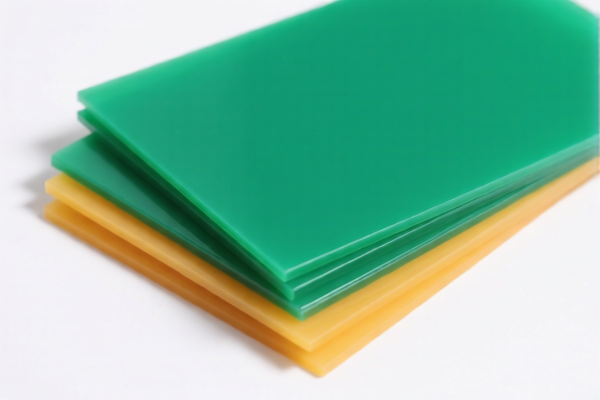
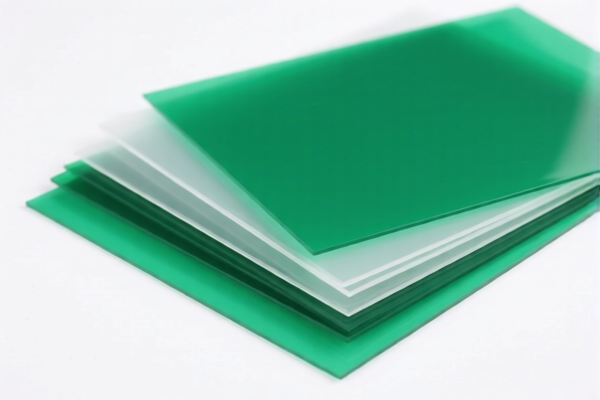
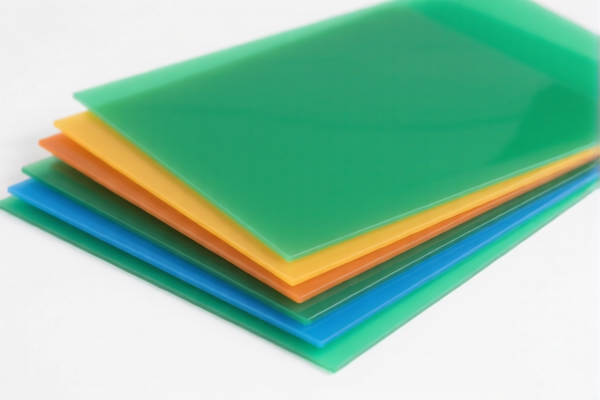
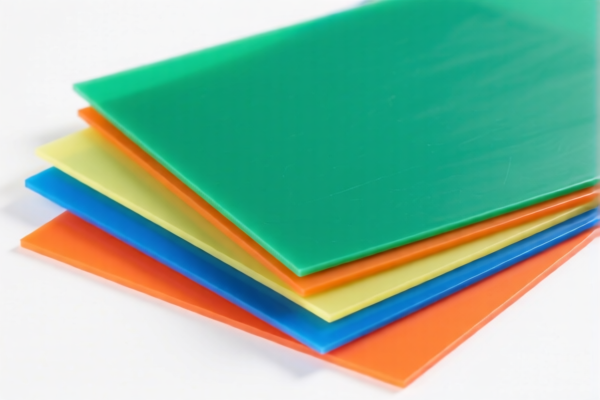
AI分析
🛡️ Polyamide Plastic Sheets (Non-Reinforced): The "High-Risk" Classification Guide
🌐 HS Code Reference & Customs Clearance Strategy | 2026 Tariff Breakdown | Professional Clearance Protocol
📌 I. Product Definition: What Exactly is "Polyamide Plastic"?
Polyamide (commonly known as Nylon) is a semi-crystalline thermoplastic polymer renowned for its high strength, durability, and abrasion resistance. In international trade, the distinction between "Sheet/Plate" and "Film" is critical and dictates the HS Code, tariff rate, and regulatory compliance.
Core Distinctions: * Polyamide Sheets/Plates (Chaps/Pian): Thicker, rigid or semi-rigid forms. Usually defined by mechanical stiffness. * Polyamide Films (Membranes): Thin, flexible sheets, often used for packaging or lamination. * Reinforced vs. Non-Reinforced: "Non-reinforced" means no paper, textile, or metal backing is used to strengthen the material. It is pure polymer.
⚠️ Critical Warning:
Misclassifying a rigid Sheet as a flexible Film (or vice versa) can lead to massive tax discrepancies (up to 10% difference in base rates) and customs seizures. The physical form (rigid vs. flexible) is the primary determinant.
📦 II. HS Code Classification Matrix (2026 Latest Tariff Schedule)
Based on the provided data, there are 4 distinct classifications for Polyamide plastics. The choice depends on whether the product is imported as a Sheet (Harder/Thicker) or a Film (Flexible/Thinner).
| HS Code | Product Description | Key Characteristics | Total Tax Rate |
|---|---|---|---|
3920.92.00.00 |
Polyamide Plastic Sheets/Plates/Films | Flexible Film Definition Meets the criteria for "Plastic plates, sheets, film, foil and strip" under Heading 3920. Non-paper reinforced. |
39.2% |
3921.90.40.90 |
Polyamide Plastic Films (Non-Reinforced) | Flexible Film Definition Specifically defined as "Plastic flexible materials not reinforced, laminated, supported...". Non-paper reinforced. |
39.2% |
3921.90.50.50 |
Polyamide Plastic Films (Other) | Flexible Film Definition Other items under 3921. Excludes high-pressure paper-reinforced decorative laminates. |
39.8% |
3920.99.10.00 |
Polyamide Plastic Sheets/Plates | Rigid Sheet Definition Other plastic plates, sheets, film, etc. (Under 3920). Usually implies thicker, rigid structural forms. |
41.0% |
🔍 Deep Dive into Differences: *
3920.92.00.00vs.3921.90.40.90: Both have a 39.2% tax rate. However,3920.92is the standard code for "Polyamide" sheets/films under Heading 3920.3921.90.40.90is for "Other" plastic flexible materials. If your product is strictly "Polyamide,"3920.92is often the more precise fit, but3921is accepted if it meets the "non-reinforced flexible" definition. *3920.99.10.00(The Expensive One): This code carries a 41.0% tax rate (2.8% higher than the others). It is typically used for rigid sheets/plates that do not fall under specific subheadings for Polyamide (like 3920.92). Avoid this if your product is flexible film. *3921.90.50.50(The Slightly Higher Rate): This is for "Other" plastic flexible materials. It has a 39.8% tax rate. Use this only if the product doesn't fit the strict "Polyamide" definition of 3920.92 but is still a non-reinforced flexible plastic.
💰 III. 2026 Latest Tariff Breakdown (Detailed Tax Structure)
✅ Applicable Country: United States (US)
✅ Origin: China (CN)
✅ Effective Date: Post-2025 November 10 (Including subsequent imports)
🎯 1. 3920.92.00.00 & 3921.90.40.90 —— The Standard Polyamide Codes
| Item | Content |
|---|---|
| Base Tariff | 4.2% (Ad valorem) |
| Section 301 Tariff (Retaliatory) | +25.0% |
| Section 122 Tariff (IEEPA) | +10.0% |
| Total Effective Tax Rate | 39.2% |
| Tax Calculation | CIF Value × 39.2% |
| De Minimis Exemption | ❌ NOT Eligible (Deny De Minimis) |
| Legal Authority Path | USITC:3920.92.00.00 → Section 301: 881.4(a) → IEEPA:9903.01.25 |
📌 Explanation:
- Base 4.2%: The standard Most Favored Nation (MFN) rate for Polyamide sheets/films.
- Section 301 (+25%): Trump-era tariffs retained under Biden, targeting Chinese-manufactured plastics.
- Section 122 (+10%): Newer trade enforcement action targeting specific material categories, applying a flat 10% on top.
- Total: 39.2%. This is a high-cost category. Do not rely on "de minimis" (under $800) exemptions; these goods are explicitly excluded.
🎯 2. 3921.90.50.50 —— The "Other" Flexible Plastic
| Item | Content |
|---|---|
| Base Tariff | 4.8% (Ad valorem) |
| Section 301 Tariff | +25.0% |
| Section 122 Tariff | +10.0% |
| Total Effective Tax Rate | 39.8% |
| Tax Calculation | CIF Value × 39.8% |
| De Minimis Exemption | ❌ NOT Eligible |
| Legal Authority Path | USITC:3921.90.50.50 → Section 301 → IEEPA |
📌 Note:
- The base tariff is slightly higher (4.8% vs 4.2%) because this is a residual "Other" category.
- Still subject to the full 35% in additional duties.
🎯 3. 3920.99.10.00 —— The Rigid Sheet Premium
| Item | Content |
|---|---|
| Base Tariff | 6.0% (Ad valorem) |
| Section 301 Tariff | +25.0% |
| Section 122 Tariff | +10.0% |
| Total Effective Tax Rate | 41.0% |
| Tax Calculation | CIF Value × 41.0% |
| De Minimis Exemption | ❌ NOT Eligible |
| Legal Authority Path | USITC:3920.99.10.00 → Section 301 → IEEPA |
📌 Warning:
- This is the most expensive option.
- It is applied to rigid sheets that are not specifically classified under Polyamide (3920.92) or other specific plastics.
- If your "Polyamide" product is actually a rigid sheet, you must pay 41%. If it is flexible, argue for3920.92or3921.90.40to save 1.8%.
🛠️ IV. Customs Clearance Best Practices (Avoiding Pitfalls)
✅ 1. Documentation Checklist (Non-Negotiable)
| Document | Requirement | Reason |
|---|---|---|
| Product Specification Sheet | ✔️ Must Include | Define Thickness, Width, Length, and Material Composition (100% Polyamide/Nylon). |
| Physical Form Proof | ✔️ Crucial | Photos showing flexibility (for Film) or rigidity (for Sheet). This determines 3920 vs 3921. |
| Commercial Invoice | ✔️ Precise Description | Use terms like "Non-Reinforced Polyamide Plastic Film" or "Polyamide Plastic Sheet". Avoid generic "Plastic." |
| Bill of Lading | ✔️ Weight & Volume | Match invoice exactly. Discrepancies trigger audits. |
| Certificate of Origin | ✔️ CN Origin | Required to apply Section 301 and IEEPA tariffs correctly. |
| Third-Party Test Report | ✔️ Recommended | ASTM D638 (Tensile Strength) or D790 (Flexural Modulus) to prove material type if challenged. |
✅ 2. Declaration Strategy (Key Mantra)
🔥 "Define Flexibility, Specify Material, Exclude Paper, Avoid 'Other'!"
| Scenario | Correct HS Code | Risk if Wrong |
|---|---|---|
| Thin, Flexible Polyamide (e.g., for packaging) | 3920.92.00.00 or 3921.90.40.90 (39.2%) |
If misclassified as "Other" (3921.90.50.50), you overpay by 0.6%. |
| Thick, Rigid Polyamide (e.g., for gears/sheets) | 3920.99.10.00 (41.0%) |
If misclassified as Film, you might underdeclare taxes, leading to penalties + back taxes. |
| Paper-Reinforced Polyamide | NOT IN LIST | These codes explicitly exclude paper-reinforced items. Misclassification = Seizure. |
| Polyamide + Glass Fiber Reinforced | NOT IN LIST | "Non-reinforced" is key. Reinforced goods have different codes and potentially different tariffs. |
✅ 3. Special Considerations
| Situation | Action Item |
|---|---|
| "Non-Reinforced" Claim | Ensure no paper, textile, or metal backing is present. Even a thin paper liner can disqualify from 3921.90.40.90. |
| Mixed Shipments | If shipping both Sheets and Films, separate entries are required. Do not mix under one code. |
| Pre-Ruling (Advance Ruling) | Highly Recommended. Apply for an CBP Advance Ruling to lock in the HS Code (especially between 3920.92 and 3921.90) before shipment. |
| Section 122 Compliance | Ensure your supplier certifies that the product is not subject to any other emerging trade restrictions. |
🌍 V. Global Market Comparison (2026 Overview)
| Market | Recommended HS Code | Approx. Duty (China Origin) | Key Certification |
|---|---|---|---|
| 🇺🇸 USA | 3920.92.00.00 / 3921.90.40.90 |
39.2% | No specific FDA/FCC, but Section 301/122 apply. |
| 🇨🇳 China | 3920.92.00.00 |
4.2% | GB Standards (Quality) |
| 🇪🇺 EU | 3920.92.00.00 |
4.0% + VAT | REACH Compliance (Chemical Safety) |
| 🇬🇧 UK | 3920.92.00.00 |
4.0% + VAT | UKCA Marking |
| 🇯🇵 Japan | 3920.92.00.00 |
6.0% | FSC (Food Safety) if food-contact |
📌 Conclusion:
The US market is uniquely punitive against Chinese polyamide plastics due to the 35% additional duties (25% + 10%).
- Cost Impact: A $10,000 shipment incurs $3,920 in duties.
- Strategy: Consider third-country routing (e.g., Vietnam, Mexico) if eligible for Origin Change, or factor this 39.2% into your pricing model.
📌 VI. Common Mistakes & Blood Lessons
❌ Mistake 1: Calling all Polyamide products "Plastic Film" to use 3921.90.40.90.
👉 Consequence: If the item is rigid (Sheet), CBP will reclassify to 3920.99.10.00, adding 1.8% back taxes + penalties.
❌ Mistake 2: Ignoring the "Non-Reinforced" clause.
👉 Consequence: If your product has a paper backing (common for decorative laminates), it cannot use these codes. It requires a different classification, potentially with different tariff treatments.
❌ Mistake 3: Assuming "De Minimis" ($800) applies.
👉 Consequence: Absolute Denial. Polyamide sheets/films from China are explicitly listed as ineligible for de minimis entry under current US trade law. Expect full duty collection on every package.
❌ Mistake 4: Using generic "Nylon" without specifying form.
👉 Consequence: CBP will assign the highest applicable duty (41.0%) due to uncertainty.
✅ Correct Approach:
"Polyamide Plastic Film, Non-Reinforced, 0.5mm Thickness, Flexible, 100% Nylon 6,6, Roll Form."
→ Use3920.92.00.00or3921.90.40.90.
🎯 VII. Final Recommendations
- Confirm Physical Form: Is it a Film (flexible, thin) or a Sheet (rigid, thick)?
- If Film → Use
3920.92.00.00or3921.90.40.90(39.2%). - If Sheet → Use
3920.99.10.00(41.0%).
- If Film → Use
- Verify "Non-Reinforced": Ensure NO paper, fabric, or metal layers are present.
- Budget for 39.2% - 41.0%: This is not a low-duty category.
- Seek Advance Ruling: Spend $200-$500 on a CBP Advance Ruling to lock in the 39.2% rate and avoid post-entry audits.
📣 Immediate Action:
📞 Consult a Customs Broker to verify the exact physical characteristics of your polyamide product.
📄 Prepare Specifications highlighting "Non-Reinforced" and "Flexible/Rigid" status.
🚀 Plan for High Duties: Factor the 39.2%+ into your landed cost immediately.
✨ Precision in Classification, Protection in Profit!
💼 Don't let a 2.8% rate difference erase your margin.
用户评价
关于 HS 编码归类
协调制度(HS)是由世界海关组织(WCO)制定的国际贸易商品分类标准。全球 200 多个国家采用 HS 系统作为海关关税、贸易统计和进出口监管的基础。
每个 HS 编码遵循以下层级结构:
- 章(2 位)——商品大类(例如:第 84 章:机器和机械设备)
- 品目(4 位)——章内的更具体分类
- 子目(6 位)——国际通用细分,所有 WCO 成员国统一使用
- 本国细分(8-10 位)——各国自行扩展的细分编码,如美国 HTSUS 10 位编码
正确的 HS 编码归类对于顺利通关、准确缴纳关税和遵守贸易法规至关重要。错误归类可能导致海关延误、多缴关税或罚款。
从CN进口到US时,适用的关税税率可能包括:
- 最惠国(MFN)税率——适用于 WTO 成员国的标准关税税率
- 普通税率——适用于无贸易协定国家
- 贸易救济关税——附加关税,如 301 条款(反倾销)、232 条款(国家安全)或反补贴税
本页内容仅供参考。如需正式归类,请咨询当地海关或持牌报关代理。