Polyamide Plastic Sheets (Non Reinforced)
CN → US| HS Code | Tariff Rate | Origin | Destination | Doc |
|---|---|---|---|---|
| 3921904090 | 39.2% | CN | US | Official Doc |
| 3921905050 | 39.8% | CN | US | Official Doc |
| 3920991000 | 41.0% | CN | US | Official Doc |
| 3920920000 | 39.2% | CN | US | Official Doc |
Product Images
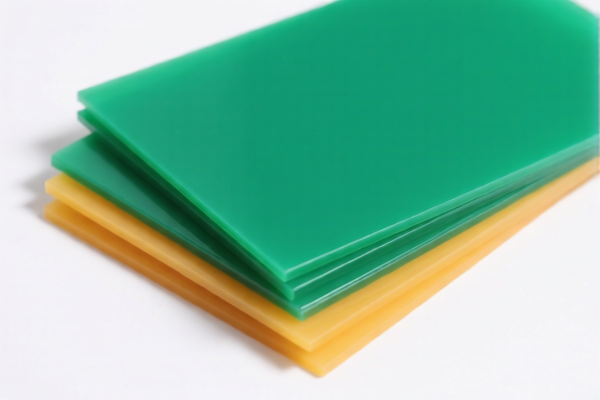
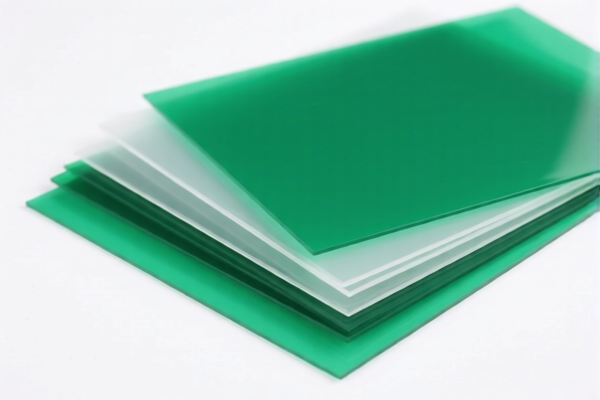
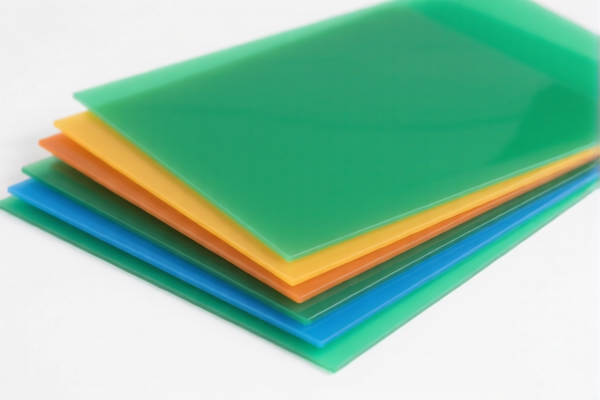
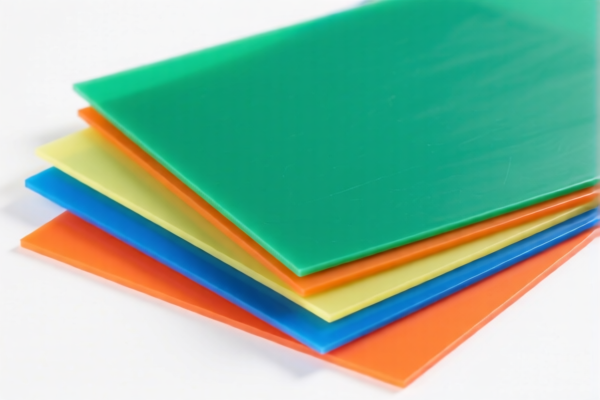
AI Analysis
🛡️ Polyamide Plastic Sheets (Non-Reinforced): The "High-Risk" Classification Guide
🌐 HS Code Reference & Customs Clearance Strategy | 2026 Tariff Breakdown | Professional Clearance Protocol
📌 I. Product Definition: What Exactly is "Polyamide Plastic"?
Polyamide (commonly known as Nylon) is a semi-crystalline thermoplastic polymer renowned for its high strength, durability, and abrasion resistance. In international trade, the distinction between "Sheet/Plate" and "Film" is critical and dictates the HS Code, tariff rate, and regulatory compliance.
Core Distinctions: * Polyamide Sheets/Plates (Chaps/Pian): Thicker, rigid or semi-rigid forms. Usually defined by mechanical stiffness. * Polyamide Films (Membranes): Thin, flexible sheets, often used for packaging or lamination. * Reinforced vs. Non-Reinforced: "Non-reinforced" means no paper, textile, or metal backing is used to strengthen the material. It is pure polymer.
⚠️ Critical Warning:
Misclassifying a rigid Sheet as a flexible Film (or vice versa) can lead to massive tax discrepancies (up to 10% difference in base rates) and customs seizures. The physical form (rigid vs. flexible) is the primary determinant.
📦 II. HS Code Classification Matrix (2026 Latest Tariff Schedule)
Based on the provided data, there are 4 distinct classifications for Polyamide plastics. The choice depends on whether the product is imported as a Sheet (Harder/Thicker) or a Film (Flexible/Thinner).
| HS Code | Product Description | Key Characteristics | Total Tax Rate |
|---|---|---|---|
3920.92.00.00 |
Polyamide Plastic Sheets/Plates/Films | Flexible Film Definition Meets the criteria for "Plastic plates, sheets, film, foil and strip" under Heading 3920. Non-paper reinforced. |
39.2% |
3921.90.40.90 |
Polyamide Plastic Films (Non-Reinforced) | Flexible Film Definition Specifically defined as "Plastic flexible materials not reinforced, laminated, supported...". Non-paper reinforced. |
39.2% |
3921.90.50.50 |
Polyamide Plastic Films (Other) | Flexible Film Definition Other items under 3921. Excludes high-pressure paper-reinforced decorative laminates. |
39.8% |
3920.99.10.00 |
Polyamide Plastic Sheets/Plates | Rigid Sheet Definition Other plastic plates, sheets, film, etc. (Under 3920). Usually implies thicker, rigid structural forms. |
41.0% |
🔍 Deep Dive into Differences: *
3920.92.00.00vs.3921.90.40.90: Both have a 39.2% tax rate. However,3920.92is the standard code for "Polyamide" sheets/films under Heading 3920.3921.90.40.90is for "Other" plastic flexible materials. If your product is strictly "Polyamide,"3920.92is often the more precise fit, but3921is accepted if it meets the "non-reinforced flexible" definition. *3920.99.10.00(The Expensive One): This code carries a 41.0% tax rate (2.8% higher than the others). It is typically used for rigid sheets/plates that do not fall under specific subheadings for Polyamide (like 3920.92). Avoid this if your product is flexible film. *3921.90.50.50(The Slightly Higher Rate): This is for "Other" plastic flexible materials. It has a 39.8% tax rate. Use this only if the product doesn't fit the strict "Polyamide" definition of 3920.92 but is still a non-reinforced flexible plastic.
💰 III. 2026 Latest Tariff Breakdown (Detailed Tax Structure)
✅ Applicable Country: United States (US)
✅ Origin: China (CN)
✅ Effective Date: Post-2025 November 10 (Including subsequent imports)
🎯 1. 3920.92.00.00 & 3921.90.40.90 —— The Standard Polyamide Codes
| Item | Content |
|---|---|
| Base Tariff | 4.2% (Ad valorem) |
| Section 301 Tariff (Retaliatory) | +25.0% |
| Section 122 Tariff (IEEPA) | +10.0% |
| Total Effective Tax Rate | 39.2% |
| Tax Calculation | CIF Value × 39.2% |
| De Minimis Exemption | ❌ NOT Eligible (Deny De Minimis) |
| Legal Authority Path | USITC:3920.92.00.00 → Section 301: 881.4(a) → IEEPA:9903.01.25 |
📌 Explanation:
- Base 4.2%: The standard Most Favored Nation (MFN) rate for Polyamide sheets/films.
- Section 301 (+25%): Trump-era tariffs retained under Biden, targeting Chinese-manufactured plastics.
- Section 122 (+10%): Newer trade enforcement action targeting specific material categories, applying a flat 10% on top.
- Total: 39.2%. This is a high-cost category. Do not rely on "de minimis" (under $800) exemptions; these goods are explicitly excluded.
🎯 2. 3921.90.50.50 —— The "Other" Flexible Plastic
| Item | Content |
|---|---|
| Base Tariff | 4.8% (Ad valorem) |
| Section 301 Tariff | +25.0% |
| Section 122 Tariff | +10.0% |
| Total Effective Tax Rate | 39.8% |
| Tax Calculation | CIF Value × 39.8% |
| De Minimis Exemption | ❌ NOT Eligible |
| Legal Authority Path | USITC:3921.90.50.50 → Section 301 → IEEPA |
📌 Note:
- The base tariff is slightly higher (4.8% vs 4.2%) because this is a residual "Other" category.
- Still subject to the full 35% in additional duties.
🎯 3. 3920.99.10.00 —— The Rigid Sheet Premium
| Item | Content |
|---|---|
| Base Tariff | 6.0% (Ad valorem) |
| Section 301 Tariff | +25.0% |
| Section 122 Tariff | +10.0% |
| Total Effective Tax Rate | 41.0% |
| Tax Calculation | CIF Value × 41.0% |
| De Minimis Exemption | ❌ NOT Eligible |
| Legal Authority Path | USITC:3920.99.10.00 → Section 301 → IEEPA |
📌 Warning:
- This is the most expensive option.
- It is applied to rigid sheets that are not specifically classified under Polyamide (3920.92) or other specific plastics.
- If your "Polyamide" product is actually a rigid sheet, you must pay 41%. If it is flexible, argue for3920.92or3921.90.40to save 1.8%.
🛠️ IV. Customs Clearance Best Practices (Avoiding Pitfalls)
✅ 1. Documentation Checklist (Non-Negotiable)
| Document | Requirement | Reason |
|---|---|---|
| Product Specification Sheet | ✔️ Must Include | Define Thickness, Width, Length, and Material Composition (100% Polyamide/Nylon). |
| Physical Form Proof | ✔️ Crucial | Photos showing flexibility (for Film) or rigidity (for Sheet). This determines 3920 vs 3921. |
| Commercial Invoice | ✔️ Precise Description | Use terms like "Non-Reinforced Polyamide Plastic Film" or "Polyamide Plastic Sheet". Avoid generic "Plastic." |
| Bill of Lading | ✔️ Weight & Volume | Match invoice exactly. Discrepancies trigger audits. |
| Certificate of Origin | ✔️ CN Origin | Required to apply Section 301 and IEEPA tariffs correctly. |
| Third-Party Test Report | ✔️ Recommended | ASTM D638 (Tensile Strength) or D790 (Flexural Modulus) to prove material type if challenged. |
✅ 2. Declaration Strategy (Key Mantra)
🔥 "Define Flexibility, Specify Material, Exclude Paper, Avoid 'Other'!"
| Scenario | Correct HS Code | Risk if Wrong |
|---|---|---|
| Thin, Flexible Polyamide (e.g., for packaging) | 3920.92.00.00 or 3921.90.40.90 (39.2%) |
If misclassified as "Other" (3921.90.50.50), you overpay by 0.6%. |
| Thick, Rigid Polyamide (e.g., for gears/sheets) | 3920.99.10.00 (41.0%) |
If misclassified as Film, you might underdeclare taxes, leading to penalties + back taxes. |
| Paper-Reinforced Polyamide | NOT IN LIST | These codes explicitly exclude paper-reinforced items. Misclassification = Seizure. |
| Polyamide + Glass Fiber Reinforced | NOT IN LIST | "Non-reinforced" is key. Reinforced goods have different codes and potentially different tariffs. |
✅ 3. Special Considerations
| Situation | Action Item |
|---|---|
| "Non-Reinforced" Claim | Ensure no paper, textile, or metal backing is present. Even a thin paper liner can disqualify from 3921.90.40.90. |
| Mixed Shipments | If shipping both Sheets and Films, separate entries are required. Do not mix under one code. |
| Pre-Ruling (Advance Ruling) | Highly Recommended. Apply for an CBP Advance Ruling to lock in the HS Code (especially between 3920.92 and 3921.90) before shipment. |
| Section 122 Compliance | Ensure your supplier certifies that the product is not subject to any other emerging trade restrictions. |
🌍 V. Global Market Comparison (2026 Overview)
| Market | Recommended HS Code | Approx. Duty (China Origin) | Key Certification |
|---|---|---|---|
| 🇺🇸 USA | 3920.92.00.00 / 3921.90.40.90 |
39.2% | No specific FDA/FCC, but Section 301/122 apply. |
| 🇨🇳 China | 3920.92.00.00 |
4.2% | GB Standards (Quality) |
| 🇪🇺 EU | 3920.92.00.00 |
4.0% + VAT | REACH Compliance (Chemical Safety) |
| 🇬🇧 UK | 3920.92.00.00 |
4.0% + VAT | UKCA Marking |
| 🇯🇵 Japan | 3920.92.00.00 |
6.0% | FSC (Food Safety) if food-contact |
📌 Conclusion:
The US market is uniquely punitive against Chinese polyamide plastics due to the 35% additional duties (25% + 10%).
- Cost Impact: A $10,000 shipment incurs $3,920 in duties.
- Strategy: Consider third-country routing (e.g., Vietnam, Mexico) if eligible for Origin Change, or factor this 39.2% into your pricing model.
📌 VI. Common Mistakes & Blood Lessons
❌ Mistake 1: Calling all Polyamide products "Plastic Film" to use 3921.90.40.90.
👉 Consequence: If the item is rigid (Sheet), CBP will reclassify to 3920.99.10.00, adding 1.8% back taxes + penalties.
❌ Mistake 2: Ignoring the "Non-Reinforced" clause.
👉 Consequence: If your product has a paper backing (common for decorative laminates), it cannot use these codes. It requires a different classification, potentially with different tariff treatments.
❌ Mistake 3: Assuming "De Minimis" ($800) applies.
👉 Consequence: Absolute Denial. Polyamide sheets/films from China are explicitly listed as ineligible for de minimis entry under current US trade law. Expect full duty collection on every package.
❌ Mistake 4: Using generic "Nylon" without specifying form.
👉 Consequence: CBP will assign the highest applicable duty (41.0%) due to uncertainty.
✅ Correct Approach:
"Polyamide Plastic Film, Non-Reinforced, 0.5mm Thickness, Flexible, 100% Nylon 6,6, Roll Form."
→ Use3920.92.00.00or3921.90.40.90.
🎯 VII. Final Recommendations
- Confirm Physical Form: Is it a Film (flexible, thin) or a Sheet (rigid, thick)?
- If Film → Use
3920.92.00.00or3921.90.40.90(39.2%). - If Sheet → Use
3920.99.10.00(41.0%).
- If Film → Use
- Verify "Non-Reinforced": Ensure NO paper, fabric, or metal layers are present.
- Budget for 39.2% - 41.0%: This is not a low-duty category.
- Seek Advance Ruling: Spend $200-$500 on a CBP Advance Ruling to lock in the 39.2% rate and avoid post-entry audits.
📣 Immediate Action:
📞 Consult a Customs Broker to verify the exact physical characteristics of your polyamide product.
📄 Prepare Specifications highlighting "Non-Reinforced" and "Flexible/Rigid" status.
🚀 Plan for High Duties: Factor the 39.2%+ into your landed cost immediately.
✨ Precision in Classification, Protection in Profit!
💼 Don't let a 2.8% rate difference erase your margin.
Customer Reviews
About HS Code Classification
The Harmonized System (HS) is an internationally standardized nomenclature developed by the World Customs Organization (WCO) to classify traded products. Over 200 countries use the HS system as the basis for customs tariffs, trade statistics, and import/export regulations.
Each HS code follows a hierarchical structure:
- Chapter (2 digits) — Broad category of goods (e.g., Chapter 84: Machinery and Mechanical Appliances)
- Heading (4 digits) — More specific grouping within the chapter
- Subheading (6 digits) — Internationally standardized breakdown, used by all WCO member countries
- National subdivisions (8-10 digits) — Country-specific extensions for further classification, such as US HTSUS 10-digit codes
Correct HS code classification is essential for smooth customs clearance, accurate duty payment, and compliance with trade regulations. Misclassification can lead to customs delays, overpayment of duties, or penalties.
When importing from CN to US, the applicable tariff rates may include:
- Most-Favored-Nation (MFN) rate — The standard duty rate applied to WTO members
- General rate — Applied to countries without trade agreements
- Trade remedy duties — Additional tariffs such as Section 301 (anti-dumping), Section 232 (national security), or countervailing duties
The information provided on this page is for reference purposes only. For official classification, please consult with your local customs authority or a licensed customs broker.