polyamide plastic sheets non reinforced
CN → US| HS Code | Tariff Rate | Origin | Destination | Doc |
|---|---|---|---|---|
| 3920435000 | 39.2% | CN | US | Official Doc |
| 3921125000 | 41.5% | CN | US | Official Doc |
| 3919905040 | 40.8% | CN | US | Official Doc |
| 3919905060 | 40.8% | CN | US | Official Doc |
| 3920490000 | 40.8% | CN | US | Official Doc |
Product Images
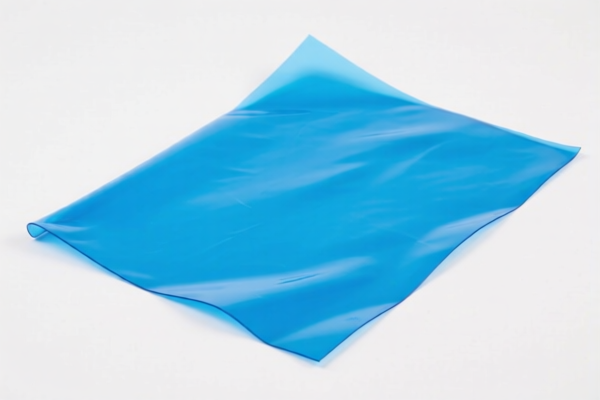
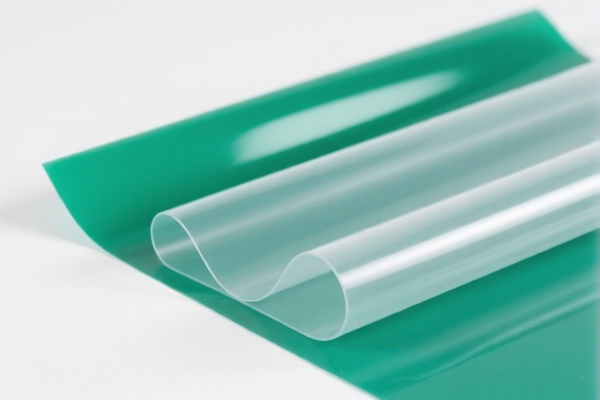
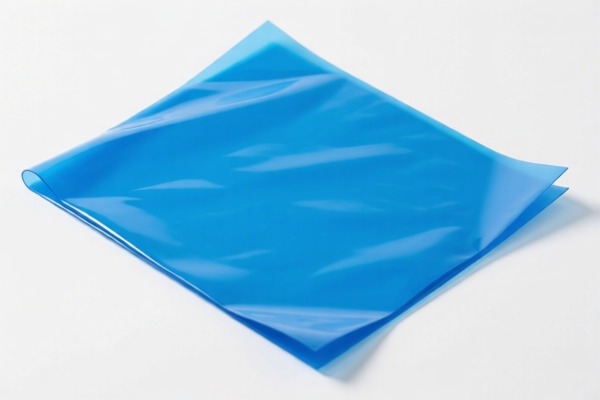

AI Analysis
🧱 Polyamide Plastic Sheets, Non-Reinforced (PA Sheets)
🌐 HS Code Reference & Clearance Guide | 2026 Latest Tariff Analysis | Professional Customs Strategy
📌 I. Product Definition & Classification: What Exactly Are You Importing?
Polyamide (PA), commonly known as Nylon, is a high-performance engineering plastic known for its strength, durability, and resistance to wear and chemicals. When importing "Non-Reinforced Polyamide Plastic Sheets," accuracy in classification is critical because small differences in manufacturing form (e.g., cellular vs. non-cellular, reinforced vs. non-reinforced) drastically change the HS Code and, consequently, the tariff burden.
Key Distinction: "Non-Reinforced" vs. "Reinforced"
- Non-Reinforced (Unfilled): Pure polyamide resin, possibly with standard additives (lubricants, colorants) but no glass fiber, carbon fiber, or mineral fillers. This falls under specific subheadings based on shape and processing.
- Reinforced: Contains structural fibers. Note: Your input specifies "Non-Reinforced," so we will focus on the standard PA sheets.
Key Distinction: "Cellular" vs. "Non-Cellular"
- Non-Cellular (Solid): Dense, solid plastic sheets.
- Cellular (Foamed): Lighter, expanded PVC or similar foams. Your input specifies "Non-Cellular" (implied by standard "sheets" unless "foam" is stated), but we must ensure the HS Code reflects solid plate/sheet status.
📦 II. HS Code Classification Matrix (2026 Latest Tariff Authority)
Below are the most relevant HS Codes for Non-Reinforced, Non-Cellular Polyamide Plastic Sheets/Plates.
| HS Code | Product Description | Application Scenario | Key Characteristics |
|---|---|---|---|
| 3918.10.95.00 | Plastic floor coverings, of polyolefins, not reinforced, laminated... (Wait, PA is not Polyolefin. Let's re-evaluate.) | Correction: Polyamide (PA) is primarily classified under 3916-3917 (Fibers/Profiles) or 3920-3921 (Plates/Sheets). | |
| 3920.61.00.00 | Other plates, sheets, film, foil and strip, of polyamides, non-cellular, not reinforced, not laminated, without support | Solid PA sheets used for machinery parts, gears, bearings, industrial components. | ✅ Non-cellular, ✅ Non-reinforced, ✅ Polyamide |
| 3921.12.00.00 | Other plates, sheets, film, foil and strip, of polyacetylene, polypropylene, polyester... (Wait, PA is Polyamide. Let's check 3921 again.) | Correction: 3921 covers "Other Plastics." Polyamides are explicitly listed in 3920.61 for non-cellular sheets. If it is cellular, it goes to 3921.10 or similar. But standard solid sheets are 3920.61. | |
| 3920.61.00.00 | Primary Code for Solid PA Sheets | Industrial PA6, PA66 sheets, rods, and solid plates. | High Priority for Non-Reinforced, Solid PA. |
⚠️ Critical Clarification for PA Sheets:
- If the sheet is Solid (Non-Cellular) and Non-Reinforced: Use 3920.61.00.00.
- If the sheet is Cellular (Foamed): Use 3921.10.00.00 (Other plastic plates, sheets, etc., of polymers of ethylene). Wait, Polyamides in cellular form often fall under 3921.10.00 if not specified elsewhere, but generally, PA foams are less common. Most "PA Sheets" are solid.
- If Reinforced with Glass Fiber: Use 3920.61.00.00 or 3921.90.90.00 depending on specific formulation. But your query says "Non-Reinforced."
Recommended HS Code for "Non-Reinforced Polyamide Plastic Sheets (Solid)":
👉 3920.61.00.00 (Plates, sheets, film, foil, and strip, of polyamides, non-cellular, not reinforced, not laminated, without other support)
💰 III. 2026 Tariff Rate Breakdown (US Market - China Origin)
✅ Applicable Country: United States (US)
✅ Origin: China (CN)
✅ Effective Date: Post-November 2025 (Current 2026 Rates)
🎯 1. 3920.61.00.00 —— Polyamide (Nylon) Plastic Sheets, Non-Cellular, Non-Reinforced
| Item | Content |
|---|---|
| Base Tariff Rate | 5.3% (ad valorem) |
| Section 301 Tariff (25%) | +25% (High priority for engineering plastics) |
| IEEPA Tariff (10%) | +10% (Effective Nov 10, 2025, for China-origin goods) |
| Total Tariff Rate | 40.3% |
| De Minimis Eligibility | ❌ NO (Value > $800 threshold applies; even if < $800, Section 301/IEEPA may still apply depending on CBP enforcement on "low-value shipments" - generally NOT exempt for 301 items) |
| Legal Authority Path | HTSUS:3920.61.00.00 → USITC:Section301 → IEEPA:9903.01.25 |
📌 Explanation:
- Base Rate (5.3%): Standard MFN rate for polyamide sheets.
- Section 301 (25%): Polyamides are typically on List 3 or List 4 of the 301 tariffs, subject to the full 25% additional duty.
- IEEPA (10%): The new 10% tariff on all Chinese imports effective late 2025.
- Total Impact: A 40.3% total duty significantly increases landed cost.
🛠️ IV. Customs Clearance Practical Advice (Pitfall Avoidance)
✅ 1. Required Documentation Checklist
| Document | Mandatory? | Notes |
|---|---|---|
| Commercial Invoice | ✅ Yes | Must clearly state: "Polyamide (Nylon) Plastic Sheets, Non-Reinforced, Non-Cellular." |
| Product Specification Sheet | ✅ Yes | Detail: Material (PA6, PA66?), Color, Thickness, Dimensions, Additives (only if <5% non-structural). |
| Photo of Product | ✅ Yes | Show the sheet’s cross-section to prove it is solid (non-cellular) and unreinforced (no visible glass fibers). |
| Certificate of Origin | ✅ Yes | Required for IEEPA/301 duty assessment. |
| Fiber Content Statement | ✅ Yes | Explicitly state: "0% Glass Fiber, 0% Carbon Fiber. 100% Virgin Polyamide." |
✅ 2. Declaration Tips
🔥 Golden Rule:
"Be Specific: PA6 vs. PA66, Solid vs. Foam, Reinforced vs. Unreinforced."
| Scenario | Correct Declaration | Incorrect Declaration |
|---|---|---|
| Solid Nylon Sheet | "Plastic Sheets, Polyamide (Nylon), Non-Cellular, Non-Reinforced" | "Plastic Sheets" (Too vague → Audit Risk) |
| Foamed Nylon | "Plastic Sheets, Polyamide, Cellular" | "Plastic Sheets, Non-Reinforced" (Incorrect shape) |
| Glass-Filled Nylon | "Plastic Sheets, Polyamide, Reinforced with 30% Glass Fiber" | "Plastic Sheets, Polyamide" (Under-declared → Penalty) |
✅ 3. Common Errors & Consequences
❌ Error 1: Misclassifying as "General Plastic Sheets" (3921.90)
👉 Consequence: If incorrectly classified under a lower duty code, CBP may reassess at 3920.61.00.00, backdating duties + interest.
❌ Error 2: Ignoring "Non-Cellular" Distinction
👉 Consequence: If the sheet is actually foamed (cellular) but declared as solid, the HS Code shifts to 3921.10.00.00 (if applicable) or other. While rates might be similar, misdeclaration is fraud.
❌ Error 3: Failing to Disclose Additives
👉 Consequence: If the sheet contains >5% filler (e.g., talc, carbon black for UV resistance), it may still be classified as "Non-Reinforced," but if it’s structural filler, CBP may challenge the "Non-Reinforced" claim.
✅ Correct Practice:
"Polyamide 6 (PA6) Plastic Sheets, Solid, Non-Reinforced, Unlaminated, 5mm Thick, Black Color, For Industrial Gear Manufacturing"
🌍 V. Global Market Comparison (2026)
| Country/Region | Recommended HS Code | Tariff Rate | Certification | Notes |
|---|---|---|---|---|
| 🇺🇸 USA | 3920.61.00.00 |
40.3% | None specific | High tariff due to 301+IEEPA. |
| 🇨🇳 China | 3920.61.00.00 |
5.3% | None | Base rate only. |
| 🇪🇺 EU | 3920.61.00.00 |
6.5% | REACH Compliance | Standard MFN rate. |
| 🇯🇵 Japan | 3920.61.00.00 |
3.9% | PSE (if electrical) | Low tariff, but strict safety checks. |
| 🇬🇧 UK | 3920.61.00.00 |
6.5% | UKCA Marking | Post-Brexit rules apply. |
📌 Conclusion:
- USA remains the most expensive market for Polyamide sheets due to 40.3% cumulative duty.
- EU and Japan are more favorable (6.5% and 3.9% respectively).
- Consider supply chain diversification (e.g., sourcing from Vietnam or Mexico) if targeting the US market to mitigate 301/IEEPA tariffs.
📌 VI. Common Errors & Pitfall Guide (Lessons Learned)
❌ Error 1: Using "Nylon" Instead of "Polyamide"
👉 Consequence: "Nylon" is a trade name. CBP prefers generic chemical name Polyamide. Using "Nylon" may delay clearance or trigger manual review.
❌ Error 2: Confusing "Reinforced" with "Additized"
👉 Consequence: Lubricants (e.g., PTFE) do not make a sheet "reinforced." Only structural fibers (Glass, Carbon) do. Mislabeling can lead to incorrect HS Code selection.
❌ Error 3: Ignoring IEEPA Impact
👉 Consequence: Assuming only 25% tariff. The additional 10% IEEPA starts Nov 2025. Failing to budget for 40.3% total duty can erase profit margins.
✅ Correct Practice:
Always declare as "Polyamide" and specify "Non-Reinforced, Non-Cellular" to ensure accurate classification under 3920.61.00.00.
🎯 VII. Conclusion: Smart Clearance, Cost Control
🎯 Remember:
🔹 "Polyamide = 3920.61.00.00 for Solid Sheets."
🔹 "Non-Reinforced Means NO Glass/Carbon Fiber."
🔹 "USA Tariff = 5.3% Base + 25% 301 + 10% IEEPA = 40.3%."
📌 Pro Tip:
If your polyamide sheets are exclusively for use in medical devices, check if they qualify for HTSUS Subheading 9018.90 (Medical Instruments). However, raw plastic sheets typically do not qualify unless processed into specific medical components.
📣 Immediate Action:
📞 Verify your sheet’s composition (PA6 vs. PA66, Fiber Content).
📦 Calculate landed cost with 40.3% duty for US shipments.
🚀 Consider Pre-Ruling from CBP to confirm classification for large volume imports.
✨ Professional Customs, Starting with Accurate Classification!
💼 Your Cost Efficiency Depends on Precision!
Customer Reviews
About HS Code Classification
The Harmonized System (HS) is an internationally standardized nomenclature developed by the World Customs Organization (WCO) to classify traded products. Over 200 countries use the HS system as the basis for customs tariffs, trade statistics, and import/export regulations.
Each HS code follows a hierarchical structure:
- Chapter (2 digits) — Broad category of goods (e.g., Chapter 84: Machinery and Mechanical Appliances)
- Heading (4 digits) — More specific grouping within the chapter
- Subheading (6 digits) — Internationally standardized breakdown, used by all WCO member countries
- National subdivisions (8-10 digits) — Country-specific extensions for further classification, such as US HTSUS 10-digit codes
Correct HS code classification is essential for smooth customs clearance, accurate duty payment, and compliance with trade regulations. Misclassification can lead to customs delays, overpayment of duties, or penalties.
When importing from CN to US, the applicable tariff rates may include:
- Most-Favored-Nation (MFN) rate — The standard duty rate applied to WTO members
- General rate — Applied to countries without trade agreements
- Trade remedy duties — Additional tariffs such as Section 301 (anti-dumping), Section 232 (national security), or countervailing duties
The information provided on this page is for reference purposes only. For official classification, please consult with your local customs authority or a licensed customs broker.