Polyamide Plate Gasket
CN → US| HS编码 | 关税税率 | 原产国 | 目的国 | 文档 |
|---|---|---|---|---|
| 9021100090 | 10.0% | CN | US | 官方文档 |
| 3921905050 | 39.8% | CN | US | 官方文档 |
| 9021908100 | 10.0% | CN | US | 官方文档 |
| 3908907000 | 41.5% | CN | US | 官方文档 |
商品图片


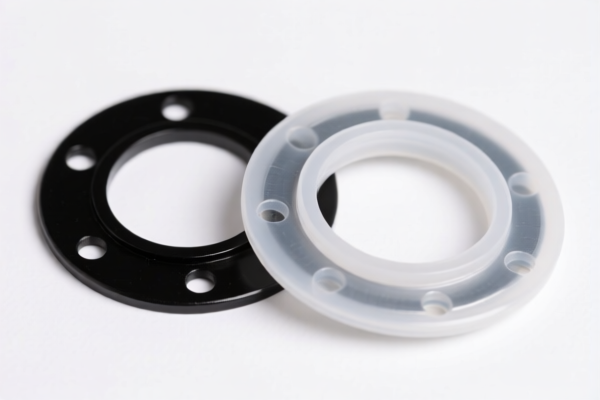

AI分析
🛡️ Polyamide Plate Gasket (Polyamide Medical Grade Board)
🌐 HS Code Reference & Customs Clearance Guide | 2026 Latest Tariff Analysis | Professional Clearance Strategy
📌 I. Product Definition & Classification: What Exactly Is "Polyamide Plate Gasket"?
In international trade, Polyamide Plate Gasket typically refers to semi-finished medical materials or industrial plastic boards made of polyamide (Nylon). The classification depends heavily on the form, specific use, and processing state.
Key distinctions: 1. Medical Grade Intermediate (9021): If intended for orthopedic devices (fracture fixation, prosthetics) in a raw board form, it falls under Chapter 90 (Medical Instruments). 2. Plastic Sheet (3921): If classified generally as a plastic plate/board without specific medical device intent at the import stage, it falls under Chapter 39 (Plastics). 3. Polyamide Resin (3908): If classified strictly by raw material type as "other polyamides in primary forms," it falls under Chapter 39, Section 3908. 4. Medical Device Components (9021.90): If explicitly recognized as a component for plastic/corrective orthopedic appliances, it may be classified under general medical apparatus parts.
⚠️ Key Distinction Point:
- If the product is a semi-finished medical material for surgical/orthopedic use → 9021.10.00.90 / 9021.90.81.00 (0% Base Duty).
- If treated as a general plastic board or polyamide resin sheet → 3921.90.50.50 / 3908.90.70.00 (High Additional Duties).
📦 II. HS Code Classification Details (2026 Latest Tariff Authority Comparison)
| HS Code | Product Description | Application Scenario | Material/Form | Duty Status |
|---|---|---|---|---|
9021.10.00.90 |
Polyamide medical grade board; orthopedic/bone fracture appliance intermediate | Semi-finished material for orthopedic implants, fracture fixation devices | Polyamide Board | ✅ 0% Base Duty |
3921.90.50.50 |
Polyamide medical grade board; other plastic plates, sheets, films | General plastic board classification, broad "other plastic" category | Polyamide (Plastic) Board | ❌ 4.8% Base + 25% Sec 301 |
9021.90.81.00 |
Polyamide medical grade board; plastic/corrective orthopedic appliances component | Components for plastic orthopedic devices, high polymer medical material | Polyamide Medical Material | ✅ 0% Base Duty |
3908.90.70.00 |
Polyamide medical grade board; other polyamides in primary forms | Raw polyamide resin forms, basic industrial definition | Polyamide Resin/Form | ❌ 6.5% Base + 25% Sec 301 |
🔍 Key Reminder:
- Medical Intent is Crucial: To enjoy 0% base duty, the product must clearly be destined for medical/orthopedic use (Ch 90). If declared as a general "plastic board," it triggers Ch 39 tariffs.
- US Section 301 Tariff (25%) applies to all China-origin goods under Ch 39 (Codes 3908, 3921).
- IEEPA 10% is an additional layered tariff on many Chinese goods, often stacking with Sec 301.
💰 III. 2026 Latest Tariff Rate Breakdown (Including Surtaxes, Policy Add-ons)
✅ Applicable Country: USA (US)
✅ Origin: China (CN)
✅ Effective Time: 2025/2026 Period (Current Trade Policy)
🎯 1. 9021.10.00.90 —— Polyamide Medical Grade Board (Orthopedic Intermediate)
| Item | Content |
|---|---|
| Base Duty Rate | 0.0% (ad valorem) |
| USITC Surcharge (Sec 301) | 0.0% (Medical devices often exempt from Sec 301 if correctly classified under Ch 90) |
| IEEPA Surcharge | +10.0% (Applied to China-origin goods under this subheading per 122 Clause) |
| Total Tariff Rate | 10.0% |
| Tax Calculation | CIF Value × 10% |
| De Minimis Exemption? | ❌ No (deny_de_minimis applies to high-duty items) |
| Legal Basis Path | IEEPA:122 Clause → USITC:9021.10.00.90 |
📌 Explanation:
- Base 0%: Medical instruments and parts (Ch 90) generally enjoy low or zero base duties.
- IEEPA 10%: This is a specific surcharge applied under recent executive orders/clauses targeting certain Chinese medical supply chain items.
- Total 10%: Significantly lower than plastic alternatives. Crucial to prove "Medical Use" to avoid higher rates.
🎯 2. 3921.90.50.50 —— Other Plastic Plates, Sheets, Films (Polyamide Board)
| Item | Content |
|---|---|
| Base Duty Rate | 4.8% |
| USITC Surcharge (Sec 301) | +25.0% (US Trade Act Section 301) |
| IEEPA Surcharge | +10.0% (122 Clause Surcharge) |
| Total Tariff Rate | 39.8% |
| Tax Calculation | CIF Value × 39.8% |
| De Minimis Exemption? | ❌ No |
| Legal Basis Path | IEEPA:9903.01.25 → USITC:3921.90.50.50 → FOOTNOTE:Sec301 |
📌 Note:
- High Cost Warning: If misclassified as a general plastic board, you pay 39.8% duty.
- Base 4.8%: Standard for "Other plastic plates."
- 25% Sec 301: Applies to virtually all Chinese plastic articles.
- 10% IEEPA: Additional layer on top.
- Difference:39.8% - 10.0% = 29.8%extra cost if not classified as medical.
🎯 3. 9021.90.81.00 —— Parts of Plastic/Corrective Orthopedic Appliances
| Item | Content |
|---|---|
| Base Duty Rate | 0.0% |
| USITC Surcharge (Sec 301) | 0.0% (Exempt under Ch 90 medical parts) |
| IEEPA Surcharge | +10.0% |
| Total Tariff Rate | 10.0% |
| Tax Calculation | CIF Value × 10% |
| De Minimis Exemption? | ❌ No |
| Legal Basis Path | IEEPA:122 Clause → USITC:9021.90.81.00 |
📌 Note:
- Similar to9021.10.00.90, this code covers broader medical device components.
- Zero Base Duty is the key advantage.
- Ensure documentation clearly states "Part of Orthopedic Appliance" to justify Ch 90 classification.
🎯 4. 3908.90.70.00 —— Other Polyamides in Primary Forms
| Item | Content |
|---|---|
| Base Duty Rate | 6.5% |
| USITC Surcharge (Sec 301) | +25.0% |
| IEEPA Surcharge | +10.0% |
| Total Tariff Rate | 41.5% |
| Tax Calculation | CIF Value × 41.5% |
| De Minimis Exemption? | ❌ No |
| Legal Basis Path | IEEPA:9903.01.25 → USITC:3908.90.70.00 → FOOTNOTE:Sec301 |
📌 Note:
- Highest Risk Code: Classifying a finished board as "primary form resin" is risky and expensive.
- Base 6.5%: Standard for polyamides.
- 35% Total Surtax: 25% Sec 301 + 10% IEEPA.
- Avoid This: Unless the product is raw pellets or unprocessed resin, do not use this code for boards.
🛠️ IV. Customs Clearance Practical Advice (Real-World Pitfall Avoidance)
✅ 1. Required Documentation Checklist (Mandatory)
| Document | Must Provide? | Notes |
|---|---|---|
| ✅ Product Specification Sheet | ✔️ | Must specify: "Medical Grade Polyamide," "ISO 13485 Compliant," intended for orthopedic/surgical use. |
| ✅ Certificate of Analysis (CoA) | ✔️ | Proves medical-grade purity and material properties. |
| ✅ Usage Statement / Letter of Intent | ✔️ | Explicitly state: "This board is a semi-finished material for manufacturing orthopedic fixation devices." |
| ✅ Product Photos | ✔️ | Show board form, labeling, and any medical certification marks. |
| ✅ Commercial Invoice | ✔️ | Description must match HS code intent (e.g., "Medical Polyamide Board for Orthopedics"). |
| ✅ COO (Certificate of Origin) | ✔️ | Required for origin verification. |
✅ 2. Declaration Tips (Key Mantras)
🔥 "Medical Intent, Not Plastic! Declare Use, Save Duty!"
| Scenario | Correct Declaration | Wrong Declaration |
|---|---|---|
| Polyamide board for implants | 9021.10.00.90 (Medical Grade) |
3921.90.50.50 (Plastic Board) → 39.8% Duty |
| Polyamide sheet for orthotics | 9021.90.81.00 (Orthopedic Part) |
3908.90.70.00 (Resin) → 41.5% Duty |
| Raw Polyamide Pellets | 3908.90.70.00 (Primary Form) |
9021... (Medical Device) → Misclassification Risk |
✅ 3. Special Case Handling
| Scenario | Handling Advice |
|---|---|
| OEM Medical Boards | Provide the end-user medical device manufacturer's order to prove medical intent. |
| Dual-Use Material | If the same board can be used for both medical and industrial purposes, declare for its primary intended use (Medical) if supported by contracts/specs. |
| Customs Audit | Be prepared to provide ISO 13485 certificates and biocompatibility test reports to prove "Medical Grade." |
| 122 Clause (IEEPA 10%) | Even with 0% base duty, the 10% IEEPA surcharge applies. Cannot be avoided for China-origin goods under these codes. |
🌍 V. Global Market Comparison (2026 Latest)
| Country/Region | Recommended HS Code | Base Duty | Surtaxes (China) | Total Estimate | Notes |
|---|---|---|---|---|---|
| 🇺🇸 USA | 9021.10.00.90 |
0% | +10% (IEEPA) | 10% | Best option if medical intent proven. |
| 🇺🇸 USA | 3921.90.50.50 |
4.8% | +35% (Sec301+IEEPA) | 39.8% | Avoid if possible. |
| 🇨🇳 China | 3921.90.50.50 |
4.8% | None | 4.8% | Import to China is cheaper. |
| 🇪🇺 EU | 3921.90.50.50 |
5.0% | None | 5.0% | EU does not have Sec 301. |
| 🇬🇧 UK | 3921.90.50.50 |
5.0% | None | 5.0% | Post-Brexit tariffs apply. |
📌 Conclusion:
- USA is the high-risk market due to Section 301 and IEEPA surcharges.
- Classification is everything: A $100 board can cost $10 in duty (Ch 90) or $39.80 in duty (Ch 39).
- EU/UK: Lower tariffs, but CE/UKCA marking is required for medical devices.
📌 VI. Common Errors & Pitfall Guide (Lessons Learned)
❌ Error 1: Declaring "Polyamide Board" without specifying "Medical Use"
👉 Result: Customs defaults to Ch 39 (Plastic) → 39.8% Duty instead of 10%.
❌ Error 2: Using 3908.90.70.00 for finished boards
👉 Result: Misclassification as "Primary Form" → 41.5% Duty + Potential Penalties for incorrect description.
❌ Error 3: Ignoring the 122 Clause (IEEPA 10%)
👉 Result: Even with 0% base duty, you must pay 10% under IEEPA for China-origin goods under Ch 90 medical codes.
👉 Correction: Budget for 10% total duty, not 0%.
❌ Error 4: Lack of Medical Certification Documentation
👉 Result: Customs denies Ch 90 classification → Re-classifies to Ch 39 → Back Duties + Fines.
✅ Correct Approach:
"Polyamide Medical Grade Board, ISO 13485, for Orthopedic Fracture Fixation Devices, Model XYZ, Certificate of Medical Conformity Attached."
🎯 VII. Conclusion: Precision Classification Saves Money!
🎯 Key Takeaway:
🔹 "Medical Intent = 10% Duty. Plastic Intent = 39.8% Duty."
🔹 "IEEPA 10% is mandatory for China-origin goods, even in Medical Codes."
🔹 "Docs Prove Purpose: Specs, CoA, and Letters of Intent are Non-Negotiable."
📌 Pro Tip:
If you are importing large volumes, apply for a Binding Ruling (ISF/Pre-Classification) from CBP to lock in the
9021classification. This prevents random audits from reclassifying your goods to Ch 39.
📣 Immediate Action:
📞 Contact your customs broker with medical-specific documentation.
📄 Ensure your commercial invoice explicitly states "FOR MEDICAL/ORTHOPEDIC USE."
🚀 Save 29.8% in tariffs by getting the HS code right!
✨ Professional Clearance Starts with Accurate Classification!
💼 Every percentage point matters in your profit margin!
用户评价
关于 HS 编码归类
协调制度(HS)是由世界海关组织(WCO)制定的国际贸易商品分类标准。全球 200 多个国家采用 HS 系统作为海关关税、贸易统计和进出口监管的基础。
每个 HS 编码遵循以下层级结构:
- 章(2 位)——商品大类(例如:第 84 章:机器和机械设备)
- 品目(4 位)——章内的更具体分类
- 子目(6 位)——国际通用细分,所有 WCO 成员国统一使用
- 本国细分(8-10 位)——各国自行扩展的细分编码,如美国 HTSUS 10 位编码
正确的 HS 编码归类对于顺利通关、准确缴纳关税和遵守贸易法规至关重要。错误归类可能导致海关延误、多缴关税或罚款。
从CN进口到US时,适用的关税税率可能包括:
- 最惠国(MFN)税率——适用于 WTO 成员国的标准关税税率
- 普通税率——适用于无贸易协定国家
- 贸易救济关税——附加关税,如 301 条款(反倾销)、232 条款(国家安全)或反补贴税
本页内容仅供参考。如需正式归类,请咨询当地海关或持牌报关代理。