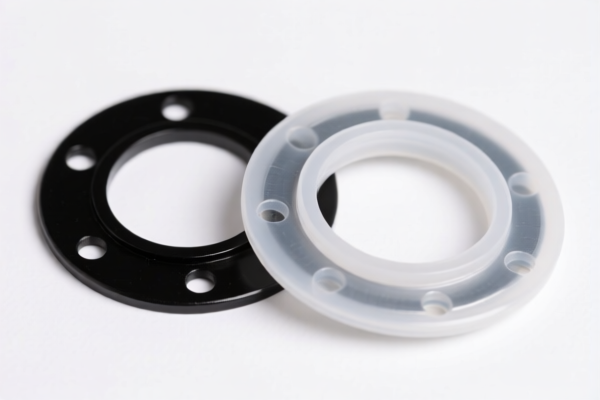
Polyamide Plate Gasket
CN → US| HS Code | Tariff Rate | Origin | Destination | Doc |
|---|---|---|---|---|
| 9021100090 | 10.0% | CN | US | Official Doc |
| 3921905050 | 39.8% | CN | US | Official Doc |
| 9021908100 | 10.0% | CN | US | Official Doc |
| 3908907000 | 41.5% | CN | US | Official Doc |
Product Images



AI Analysis
🛡️ Polyamide Plate Gasket (Polyamide Medical Grade Board)
🌐 HS Code Reference & Customs Clearance Guide | 2026 Latest Tariff Analysis | Professional Clearance Strategy
📌 I. Product Definition & Classification: What Exactly Is "Polyamide Plate Gasket"?
In international trade, Polyamide Plate Gasket typically refers to semi-finished medical materials or industrial plastic boards made of polyamide (Nylon). The classification depends heavily on the form, specific use, and processing state.
Key distinctions: 1. Medical Grade Intermediate (9021): If intended for orthopedic devices (fracture fixation, prosthetics) in a raw board form, it falls under Chapter 90 (Medical Instruments). 2. Plastic Sheet (3921): If classified generally as a plastic plate/board without specific medical device intent at the import stage, it falls under Chapter 39 (Plastics). 3. Polyamide Resin (3908): If classified strictly by raw material type as "other polyamides in primary forms," it falls under Chapter 39, Section 3908. 4. Medical Device Components (9021.90): If explicitly recognized as a component for plastic/corrective orthopedic appliances, it may be classified under general medical apparatus parts.
⚠️ Key Distinction Point:
- If the product is a semi-finished medical material for surgical/orthopedic use → 9021.10.00.90 / 9021.90.81.00 (0% Base Duty).
- If treated as a general plastic board or polyamide resin sheet → 3921.90.50.50 / 3908.90.70.00 (High Additional Duties).
📦 II. HS Code Classification Details (2026 Latest Tariff Authority Comparison)
| HS Code | Product Description | Application Scenario | Material/Form | Duty Status |
|---|---|---|---|---|
9021.10.00.90 |
Polyamide medical grade board; orthopedic/bone fracture appliance intermediate | Semi-finished material for orthopedic implants, fracture fixation devices | Polyamide Board | ✅ 0% Base Duty |
3921.90.50.50 |
Polyamide medical grade board; other plastic plates, sheets, films | General plastic board classification, broad "other plastic" category | Polyamide (Plastic) Board | ❌ 4.8% Base + 25% Sec 301 |
9021.90.81.00 |
Polyamide medical grade board; plastic/corrective orthopedic appliances component | Components for plastic orthopedic devices, high polymer medical material | Polyamide Medical Material | ✅ 0% Base Duty |
3908.90.70.00 |
Polyamide medical grade board; other polyamides in primary forms | Raw polyamide resin forms, basic industrial definition | Polyamide Resin/Form | ❌ 6.5% Base + 25% Sec 301 |
🔍 Key Reminder:
- Medical Intent is Crucial: To enjoy 0% base duty, the product must clearly be destined for medical/orthopedic use (Ch 90). If declared as a general "plastic board," it triggers Ch 39 tariffs.
- US Section 301 Tariff (25%) applies to all China-origin goods under Ch 39 (Codes 3908, 3921).
- IEEPA 10% is an additional layered tariff on many Chinese goods, often stacking with Sec 301.
💰 III. 2026 Latest Tariff Rate Breakdown (Including Surtaxes, Policy Add-ons)
✅ Applicable Country: USA (US)
✅ Origin: China (CN)
✅ Effective Time: 2025/2026 Period (Current Trade Policy)
🎯 1. 9021.10.00.90 —— Polyamide Medical Grade Board (Orthopedic Intermediate)
| Item | Content |
|---|---|
| Base Duty Rate | 0.0% (ad valorem) |
| USITC Surcharge (Sec 301) | 0.0% (Medical devices often exempt from Sec 301 if correctly classified under Ch 90) |
| IEEPA Surcharge | +10.0% (Applied to China-origin goods under this subheading per 122 Clause) |
| Total Tariff Rate | 10.0% |
| Tax Calculation | CIF Value × 10% |
| De Minimis Exemption? | ❌ No (deny_de_minimis applies to high-duty items) |
| Legal Basis Path | IEEPA:122 Clause → USITC:9021.10.00.90 |
📌 Explanation:
- Base 0%: Medical instruments and parts (Ch 90) generally enjoy low or zero base duties.
- IEEPA 10%: This is a specific surcharge applied under recent executive orders/clauses targeting certain Chinese medical supply chain items.
- Total 10%: Significantly lower than plastic alternatives. Crucial to prove "Medical Use" to avoid higher rates.
🎯 2. 3921.90.50.50 —— Other Plastic Plates, Sheets, Films (Polyamide Board)
| Item | Content |
|---|---|
| Base Duty Rate | 4.8% |
| USITC Surcharge (Sec 301) | +25.0% (US Trade Act Section 301) |
| IEEPA Surcharge | +10.0% (122 Clause Surcharge) |
| Total Tariff Rate | 39.8% |
| Tax Calculation | CIF Value × 39.8% |
| De Minimis Exemption? | ❌ No |
| Legal Basis Path | IEEPA:9903.01.25 → USITC:3921.90.50.50 → FOOTNOTE:Sec301 |
📌 Note:
- High Cost Warning: If misclassified as a general plastic board, you pay 39.8% duty.
- Base 4.8%: Standard for "Other plastic plates."
- 25% Sec 301: Applies to virtually all Chinese plastic articles.
- 10% IEEPA: Additional layer on top.
- Difference:39.8% - 10.0% = 29.8%extra cost if not classified as medical.
🎯 3. 9021.90.81.00 —— Parts of Plastic/Corrective Orthopedic Appliances
| Item | Content |
|---|---|
| Base Duty Rate | 0.0% |
| USITC Surcharge (Sec 301) | 0.0% (Exempt under Ch 90 medical parts) |
| IEEPA Surcharge | +10.0% |
| Total Tariff Rate | 10.0% |
| Tax Calculation | CIF Value × 10% |
| De Minimis Exemption? | ❌ No |
| Legal Basis Path | IEEPA:122 Clause → USITC:9021.90.81.00 |
📌 Note:
- Similar to9021.10.00.90, this code covers broader medical device components.
- Zero Base Duty is the key advantage.
- Ensure documentation clearly states "Part of Orthopedic Appliance" to justify Ch 90 classification.
🎯 4. 3908.90.70.00 —— Other Polyamides in Primary Forms
| Item | Content |
|---|---|
| Base Duty Rate | 6.5% |
| USITC Surcharge (Sec 301) | +25.0% |
| IEEPA Surcharge | +10.0% |
| Total Tariff Rate | 41.5% |
| Tax Calculation | CIF Value × 41.5% |
| De Minimis Exemption? | ❌ No |
| Legal Basis Path | IEEPA:9903.01.25 → USITC:3908.90.70.00 → FOOTNOTE:Sec301 |
📌 Note:
- Highest Risk Code: Classifying a finished board as "primary form resin" is risky and expensive.
- Base 6.5%: Standard for polyamides.
- 35% Total Surtax: 25% Sec 301 + 10% IEEPA.
- Avoid This: Unless the product is raw pellets or unprocessed resin, do not use this code for boards.
🛠️ IV. Customs Clearance Practical Advice (Real-World Pitfall Avoidance)
✅ 1. Required Documentation Checklist (Mandatory)
| Document | Must Provide? | Notes |
|---|---|---|
| ✅ Product Specification Sheet | ✔️ | Must specify: "Medical Grade Polyamide," "ISO 13485 Compliant," intended for orthopedic/surgical use. |
| ✅ Certificate of Analysis (CoA) | ✔️ | Proves medical-grade purity and material properties. |
| ✅ Usage Statement / Letter of Intent | ✔️ | Explicitly state: "This board is a semi-finished material for manufacturing orthopedic fixation devices." |
| ✅ Product Photos | ✔️ | Show board form, labeling, and any medical certification marks. |
| ✅ Commercial Invoice | ✔️ | Description must match HS code intent (e.g., "Medical Polyamide Board for Orthopedics"). |
| ✅ COO (Certificate of Origin) | ✔️ | Required for origin verification. |
✅ 2. Declaration Tips (Key Mantras)
🔥 "Medical Intent, Not Plastic! Declare Use, Save Duty!"
| Scenario | Correct Declaration | Wrong Declaration |
|---|---|---|
| Polyamide board for implants | 9021.10.00.90 (Medical Grade) |
3921.90.50.50 (Plastic Board) → 39.8% Duty |
| Polyamide sheet for orthotics | 9021.90.81.00 (Orthopedic Part) |
3908.90.70.00 (Resin) → 41.5% Duty |
| Raw Polyamide Pellets | 3908.90.70.00 (Primary Form) |
9021... (Medical Device) → Misclassification Risk |
✅ 3. Special Case Handling
| Scenario | Handling Advice |
|---|---|
| OEM Medical Boards | Provide the end-user medical device manufacturer's order to prove medical intent. |
| Dual-Use Material | If the same board can be used for both medical and industrial purposes, declare for its primary intended use (Medical) if supported by contracts/specs. |
| Customs Audit | Be prepared to provide ISO 13485 certificates and biocompatibility test reports to prove "Medical Grade." |
| 122 Clause (IEEPA 10%) | Even with 0% base duty, the 10% IEEPA surcharge applies. Cannot be avoided for China-origin goods under these codes. |
🌍 V. Global Market Comparison (2026 Latest)
| Country/Region | Recommended HS Code | Base Duty | Surtaxes (China) | Total Estimate | Notes |
|---|---|---|---|---|---|
| 🇺🇸 USA | 9021.10.00.90 |
0% | +10% (IEEPA) | 10% | Best option if medical intent proven. |
| 🇺🇸 USA | 3921.90.50.50 |
4.8% | +35% (Sec301+IEEPA) | 39.8% | Avoid if possible. |
| 🇨🇳 China | 3921.90.50.50 |
4.8% | None | 4.8% | Import to China is cheaper. |
| 🇪🇺 EU | 3921.90.50.50 |
5.0% | None | 5.0% | EU does not have Sec 301. |
| 🇬🇧 UK | 3921.90.50.50 |
5.0% | None | 5.0% | Post-Brexit tariffs apply. |
📌 Conclusion:
- USA is the high-risk market due to Section 301 and IEEPA surcharges.
- Classification is everything: A $100 board can cost $10 in duty (Ch 90) or $39.80 in duty (Ch 39).
- EU/UK: Lower tariffs, but CE/UKCA marking is required for medical devices.
📌 VI. Common Errors & Pitfall Guide (Lessons Learned)
❌ Error 1: Declaring "Polyamide Board" without specifying "Medical Use"
👉 Result: Customs defaults to Ch 39 (Plastic) → 39.8% Duty instead of 10%.
❌ Error 2: Using 3908.90.70.00 for finished boards
👉 Result: Misclassification as "Primary Form" → 41.5% Duty + Potential Penalties for incorrect description.
❌ Error 3: Ignoring the 122 Clause (IEEPA 10%)
👉 Result: Even with 0% base duty, you must pay 10% under IEEPA for China-origin goods under Ch 90 medical codes.
👉 Correction: Budget for 10% total duty, not 0%.
❌ Error 4: Lack of Medical Certification Documentation
👉 Result: Customs denies Ch 90 classification → Re-classifies to Ch 39 → Back Duties + Fines.
✅ Correct Approach:
"Polyamide Medical Grade Board, ISO 13485, for Orthopedic Fracture Fixation Devices, Model XYZ, Certificate of Medical Conformity Attached."
🎯 VII. Conclusion: Precision Classification Saves Money!
🎯 Key Takeaway:
🔹 "Medical Intent = 10% Duty. Plastic Intent = 39.8% Duty."
🔹 "IEEPA 10% is mandatory for China-origin goods, even in Medical Codes."
🔹 "Docs Prove Purpose: Specs, CoA, and Letters of Intent are Non-Negotiable."
📌 Pro Tip:
If you are importing large volumes, apply for a Binding Ruling (ISF/Pre-Classification) from CBP to lock in the
9021classification. This prevents random audits from reclassifying your goods to Ch 39.
📣 Immediate Action:
📞 Contact your customs broker with medical-specific documentation.
📄 Ensure your commercial invoice explicitly states "FOR MEDICAL/ORTHOPEDIC USE."
🚀 Save 29.8% in tariffs by getting the HS code right!
✨ Professional Clearance Starts with Accurate Classification!
💼 Every percentage point matters in your profit margin!
Customer Reviews
About HS Code Classification
The Harmonized System (HS) is an internationally standardized nomenclature developed by the World Customs Organization (WCO) to classify traded products. Over 200 countries use the HS system as the basis for customs tariffs, trade statistics, and import/export regulations.
Each HS code follows a hierarchical structure:
- Chapter (2 digits) — Broad category of goods (e.g., Chapter 84: Machinery and Mechanical Appliances)
- Heading (4 digits) — More specific grouping within the chapter
- Subheading (6 digits) — Internationally standardized breakdown, used by all WCO member countries
- National subdivisions (8-10 digits) — Country-specific extensions for further classification, such as US HTSUS 10-digit codes
Correct HS code classification is essential for smooth customs clearance, accurate duty payment, and compliance with trade regulations. Misclassification can lead to customs delays, overpayment of duties, or penalties.
When importing from CN to US, the applicable tariff rates may include:
- Most-Favored-Nation (MFN) rate — The standard duty rate applied to WTO members
- General rate — Applied to countries without trade agreements
- Trade remedy duties — Additional tariffs such as Section 301 (anti-dumping), Section 232 (national security), or countervailing duties
The information provided on this page is for reference purposes only. For official classification, please consult with your local customs authority or a licensed customs broker.