Polybutene Resin Powder
CN → US| HS编码 | 关税税率 | 原产国 | 目的国 | 文档 |
|---|---|---|---|---|
| 5503909000 | 39.3% | CN | US | 官方文档 |
| 5404198080 | 41.9% | CN | US | 官方文档 |
| 5404900000 | 35.0% | CN | US | 官方文档 |
| 3901105020 | 41.5% | CN | US | 官方文档 |
| 3902900050 | 41.5% | CN | US | 官方文档 |
商品图片
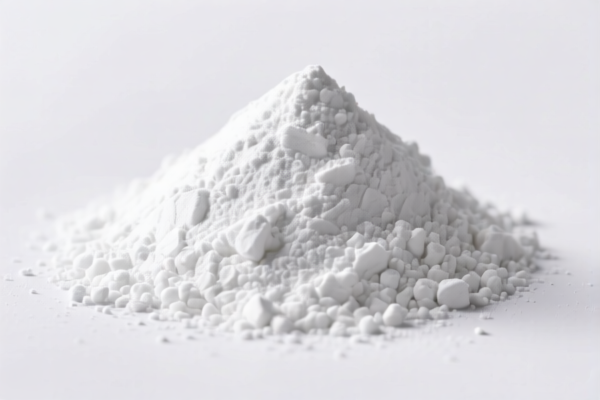
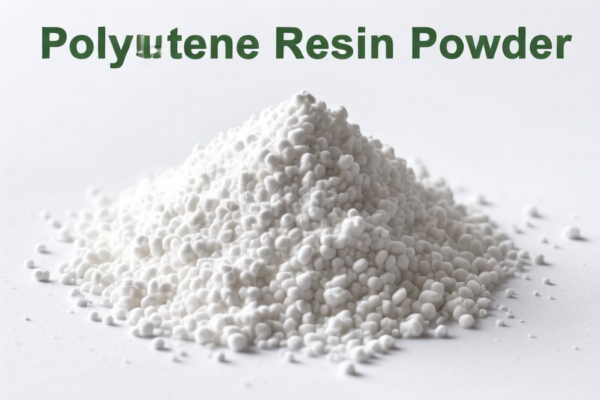
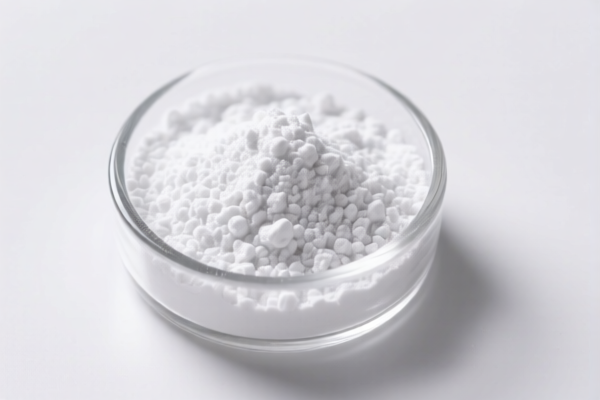

AI分析
🧪 Polybutene Resin Powder (Industrial Chemical Raw Material)
🌐 HS Code Reference & Clearance Guide | 2026 Latest Tariff Structure | Professional Entry Strategy
📌 I. Product Definition & Classification: What Exactly is "Polybutene Resin"?
Polybutene (often referred to as Polyisobutene or PIB in industrial contexts, though chemically distinct from Polypropylene) is a synthetic polymer derived from butene monomers. In international trade, Polybutene Resin Powder is not a single uniform entity. Its classification depends heavily on its physical form (primary shape vs. fiber) and chemical structure (ethylene vs. general olefin polymer).
Key Distinction: * Resin/Granules/Powder (Primary Shape): If the material is in basic, unprocessed polymer form (powder, pellets, or granules), it falls under Chapter 39 (Plastics). * Fibers (Textile Form): If the resin has been extruded into filaments or staple fibers for textile use, it falls under Chapters 54 or 55.
⚠️ Critical Decision Point:
- Is it raw material for making plastics/films? → Chapter 39
- Is it textile fiber (staple or filament)? → Chapter 54/55
- Note: The data below covers both possibilities based on specific physical characteristics.
📦 II. HS Code Classification Matrix (Based on Provided Data)
| HS Code | Product Description | Physical Form | Chemical Basis | Tax Complexity |
|---|---|---|---|---|
| 3901.10.50.20 | Primary Shape Resin | Powder/Pellets | Ethylene Polymer | 🔴 High |
| 3902.90.00.50 | Primary Shape Resin | Powder/Pellets | Other Olefin Polymer | 🔴 High |
| 5404.19.80.80 | Synthetic Filament/Fiber | Fibers/Yarn | Polybutene Material | 🔴🔴 Very High |
| 5404.90.00.00 | Other Synthetic Monofilament | Fibers/Yarn | Polybutene Material | 🟠 High |
| 5503.90.90.00 | Synthetic Staple Fibers | Staple/Fiber | Polybutene Material | 🟠 High |
🔍 Detailed Explanation of Classifications:
1. 🧱 Primary Shape Classification (Raw Material)
If your "Powder" is actually raw polymer resin (often supplied as powder, flakes, or fine pellets for industrial processing):
3901.10.50.20: Classified as Ethylene Polymers in primary forms.- Summary: "Polybutene resin classified as ethylene polymer primary shape, conforming to resin material and primary form."
- Use Case: When the chemical structure is specifically identified as an ethylene-based polymer.
3902.90.00.50: Classified as Other olefin polymers in primary forms.- Summary: "Polybutene resin classified as olefin polymer primary shape, conforming to resin material and primary form."
- Use Case: When the polymer is a general olefin (like isobutene or butene copolymers) not specifically fitting ethylene codes.
2. 🧵 Fiber Classification (Textile Application)
If the "Powder" is a misnomer and the product is actually fibrous, or if the question implies potential fiber usage:
5404.19.80.80: Classified as Synthetic Monofilament/Filament.- Summary: "Polybutene resin fiber classified as synthetic monofilament/fiber, conforming to polybutene material and resin fiber form."
- Characteristics: Continuous filaments, likely non-textile industrial use.
5404.90.00.00: Classified as Other Synthetic Monofilament.- Summary: "Polybutene resin fiber classified as other synthetic monofilament, conforming to polybutene material and fiber form."
- Characteristics: Other types of synthetic continuous filaments.
5503.90.90.00: Classified as Synthetic Staple Fibers.- Summary: "Polybutene resin fiber classified as synthetic staple fiber, conforming to polybutene material and fiber form."
- Characteristics: Short fibers used for spinning into yarn (textiles).
💰 III. 2026 Latest Tariff Rate Breakdown (Detailed Policy Analysis)
✅ Applicable Country: United States (US)
✅ Origin: China (CN)
✅ Effective Date: November 10, 2025 (and subsequent imports)
All codes below carry significant additional tariffs due to trade restrictions. The Total Tax Rate is a composite of Base Duty, Section 301 Tariffs, and Section 122/IEEPA Tariffs.
🎯 A. Resin/Primary Shape Codes (Ch 39)
1. 3901.10.50.20 (Ethylene Polymer Primary)
| Item | Details |
|---|---|
| Base Duty | 6.5% (Ad valorem) |
| Section 301 Tariff | +25.0% |
| Section 122 / IEEPA Tariff | +10.0% |
| TOTAL TAX RATE | 41.5% |
| Calculation | CIF Value × 41.5% |
| De Minimis Exemption | ❌ NOT Eligible (Deny De Minimis) |
📌 Explanation:
- The 25% is the standard Section 301 tariff on Chinese plastics/polyers.
- The 10% is an additional levy under Section 122 or IEEPA provisions targeting specific Chinese goods.
- Base Duty 6.5% is relatively high for resins, reflecting protectionist trade policies.
2. 3902.90.00.50 (Other Olefin Polymer Primary)
| Item | Details |
|---|---|
| Base Duty | 6.5% |
| Section 301 Tariff | +25.0% |
| Section 122 / IEEPA Tariff | +10.0% |
| TOTAL TAX RATE | 41.5% |
| Calculation | CIF Value × 41.5% |
| De Minimis Exemption | ❌ NOT Eligible |
📌 Note: Identical tariff structure to
3901...due to similar trade policy treatment for olefin polymers.
🎯 B. Fiber Codes (Ch 54 & 55)
3. 5404.19.80.80 (Synthetic Monofilament/Fiber)
| Item | Details |
|---|---|
| Base Duty | 6.9% |
| Section 301 Tariff | +25.0% |
| Section 122 / IEEPA Tariff | +10.0% |
| TOTAL TAX RATE | 41.9% |
| Calculation | CIF Value × 41.9% |
| De Minimis Exemption | ❌ NOT Eligible |
📌 Explanation:
- This is the highest base duty among the listed codes.
- Synthetic monofilaments are subject to strict scrutiny under Section 301.
4. 5404.90.00.00 (Other Synthetic Monofilament)
| Item | Details |
|---|---|
| Base Duty | 0.0% |
| Section 301 Tariff | +25.0% |
| Section 122 / IEEPA Tariff | +10.0% |
| TOTAL TAX RATE | 35.0% |
| Calculation | CIF Value × 35.0% |
| De Minimis Exemption | ❌ NOT Eligible |
📌 Key Insight:
- Although the Total Rate (35%) is lower than the Resin rates (41.5%+), it is because the Base Duty is 0%.
- Warning: Do not assume this is "cheap." The 35% flat rate is still punitive compared to pre-trade-war rates.
5. 5503.90.90.00 (Synthetic Staple Fiber)
| Item | Details |
|---|---|
| Base Duty | 4.3% |
| Section 301 Tariff | +25.0% |
| Section 122 / IEEPA Tariff | +10.0% |
| TOTAL TAX RATE | 39.3% |
| Calculation | CIF Value × 39.3% |
| De Minimis Exemption | ❌ NOT Eligible |
📌 Explanation:
- Staple fibers (for textiles) have a moderate base duty (4.3%).
- Total burden is 39.3%, which is slightly lower than primary resins but still very high.
🛠️ IV. Customs Clearance Recommendations (Practical Pitfall Avoidance)
✅ 1. Critical Documentation Checklist
| Document | Mandatory? | Why It Matters |
|---|---|---|
| ✅ Product Specification Sheet | YES | Must clearly state: "Polybutene Resin" OR "Polybutene Fiber". Must include molecular weight, density, and physical form (Powder/Pellet vs. Fiber). |
| ✅ Material Safety Data Sheet (MSDS) | YES | Required for chemical products. Confirms it is not hazardous waste. |
| ✅ Commercial Invoice | YES | Must explicitly list HS Code and state: "Goods produced in China." |
| ✅ Packing List | YES | Detail net/gross weight accurately. Powder may require specific container liner info. |
| ✅ Certificate of Origin (CO) | YES | Crucial for Section 301 compliance. Must be issued by Chinese customs or authorized body. |
| ✅ Non-Deterioration Statement | Optional | If powder is hygroscopic, declare storage conditions to avoid rejection. |
✅ 2. Classification Strategy (Avoid Misclassification!)
| Scenario | Correct Classification | Risk of Error |
|---|---|---|
| Raw Powder for Plastic Injection | 3901.10.50.20 or 3902.90.00.50 |
🔴 High Risk: If declared as "Plastic Part," it may be rejected or re-classified with penalties. |
| Fibrous Powder (Staple Fiber) | 5503.90.90.00 |
🟠 Medium Risk: Ensure it is not mistaken for "Synthetic Staple Fiber for Textiles" which might have different regulatory reviews. |
| Monofilament/Pellet-like Fiber | 5404.19.80.80 |
🟡 Low Risk: Clearly distinguish from "resin." If it melts into a single strand, it's a filament, not a resin powder. |
🔥 Golden Rule:
"Form dictates Function, Function dictates Code."
- If it’s powder/granules → Chapter 39
- If it’s fibers/strands → Chapter 54/55
✅ 3. Special Handling for "Powder"
- Leakage Prevention: Polybutene powder can be fine and dusty. Use vacuum-sealed bags inside pallets to prevent spillage during transit, which could lead to customs inspection delays.
- Hygroscopic Nature: If the powder absorbs moisture, declare "Keep Dry" on the packaging. Wet powder may be considered "damaged" or "substandard," leading to refusal of entry.
🌍 V. Global Market Comparison (2026 Context)
| Region | Recommended HS Code (Resin) | Est. Total Duty (China Origin) | Notes |
|---|---|---|---|
| 🇺🇸 USA | 3901.10.50.20 or 3902.90.00.50 |
41.5% | High Section 301 + 122/IEEPA taxes. No De Minimis. |
| 🇨🇳 China | 3901.10.50.20 |
5-6.5% | Standard MFN rate. No additional tariffs. |
| 🇪🇺 EU | 3901.10.50 (approx.) |
5-6% | No Section 301 equivalent. Standard EU duty. |
| 🇯🇵 Japan | 3901.10.50 |
6% | EPA tariff may apply if Origin Certificate provided. |
📌 Conclusion for US Importers:
The 41.5%–41.9% total duty rate is a major cost driver.
- Mitigation Strategy: Consider sourcing from Vietnam, Thailand, or Mexico (subject to rules of origin) to potentially avoid Section 301 and IEEPA tariffs.
- Pre-Clearance: Apply for an Advance Ruling from US CBP if you are unsure whether your "powder" is technically a "resin" or a "fiber," as misclassification can lead to retroactive duties and fines.
📌 VI. Common Mistakes & Pitfalls (Lessons Learned)
❌ Mistake 1: Declaring "Polybutene Powder" as "Plastic Raw Material" without specifying the chemical name.
👉 Consequence: Customs may reclassify under a higher tariff heading or demand additional lab tests → Delay of 2-4 weeks.
❌ Mistake 2: Confusing "Polybutene" with "Polybutylene Terephthalate (PBT)."
👉 Consequence: PBT is a polyester (HS 3907.90), while Polybutene is a polyolefin (HS 3901/3902). Different taxes! Misclassification leads to underpayment penalties.
❌ Mistake 3: Ignoring the "122/IEEPA" 10% surcharge.
👉 Consequence: Under-quoting the total landed cost. Many importers only account for the 25% Section 301 tariff, missing the extra 10%, leading to budget overruns.
❌ Mistake 4: Using "De Minimis" ($800) for shipments under $800.
👉 Consequence: DENIED. As per the data, these codes are NOT eligible for De Minimis exemption. Even $100 shipments are subject to full duties and processing fees.
🎯 VII. Final Verdict & Action Plan
🎯 Key Takeaway:
For Polybutene Resin Powder, the most likely HS codes are 3901.10.50.20 or 3902.90.00.50, carrying a total tariff of 41.5%.
If the product is actually fiber, use 5404.19.80.80 (41.9%) or 5503.90.90.00 (39.3%).
✅ Action Steps: 1. Confirm Physical Form: Is it truly powder/resin, or is it fiber? Check the product sheet. 2. Select HS Code: Use 39xx for resin, 54xx/55xx for fiber. 3. Calculate Landed Cost: Include 41.5% (Resin) or 39.3-41.9% (Fiber) in your pricing model. 4. Apply for Advance Ruling: If volume is high, get a binding opinion from CBP to avoid future disputes. 5. Secure CO: Ensure the Certificate of Origin is perfect to prove Chinese origin for Section 301 assessment.
✨ Professional Clearance Starts with Accurate Classification!
💼 Don't let a 10% tax oversight wipe out your profit margin!
用户评价
关于 HS 编码归类
协调制度(HS)是由世界海关组织(WCO)制定的国际贸易商品分类标准。全球 200 多个国家采用 HS 系统作为海关关税、贸易统计和进出口监管的基础。
每个 HS 编码遵循以下层级结构:
- 章(2 位)——商品大类(例如:第 84 章:机器和机械设备)
- 品目(4 位)——章内的更具体分类
- 子目(6 位)——国际通用细分,所有 WCO 成员国统一使用
- 本国细分(8-10 位)——各国自行扩展的细分编码,如美国 HTSUS 10 位编码
正确的 HS 编码归类对于顺利通关、准确缴纳关税和遵守贸易法规至关重要。错误归类可能导致海关延误、多缴关税或罚款。
从CN进口到US时,适用的关税税率可能包括:
- 最惠国(MFN)税率——适用于 WTO 成员国的标准关税税率
- 普通税率——适用于无贸易协定国家
- 贸易救济关税——附加关税,如 301 条款(反倾销)、232 条款(国家安全)或反补贴税
本页内容仅供参考。如需正式归类,请咨询当地海关或持牌报关代理。