Polybutene Resin Powder
CN → US| HS Code | Tariff Rate | Origin | Destination | Doc |
|---|---|---|---|---|
| 5503909000 | 39.3% | CN | US | Official Doc |
| 5404198080 | 41.9% | CN | US | Official Doc |
| 5404900000 | 35.0% | CN | US | Official Doc |
| 3901105020 | 41.5% | CN | US | Official Doc |
| 3902900050 | 41.5% | CN | US | Official Doc |
Product Images
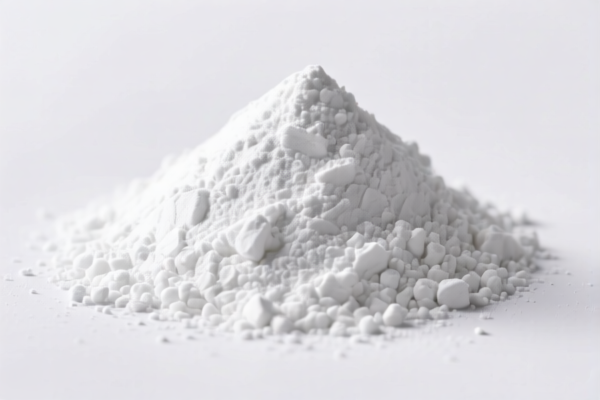
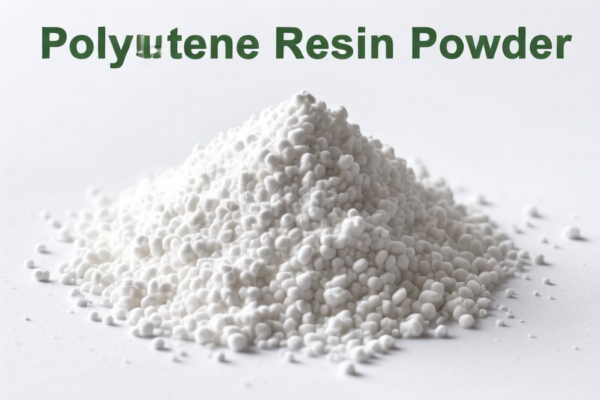
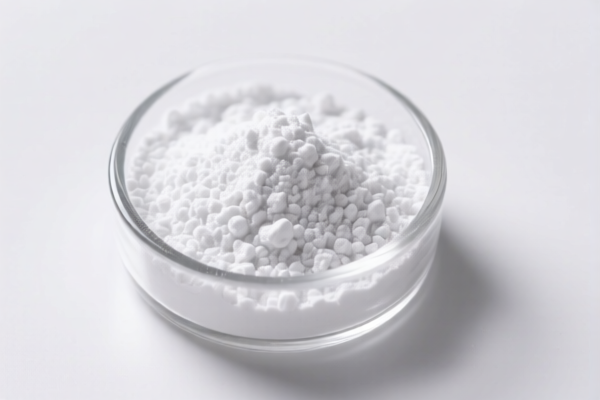

AI Analysis
🧪 Polybutene Resin Powder (Industrial Chemical Raw Material)
🌐 HS Code Reference & Clearance Guide | 2026 Latest Tariff Structure | Professional Entry Strategy
📌 I. Product Definition & Classification: What Exactly is "Polybutene Resin"?
Polybutene (often referred to as Polyisobutene or PIB in industrial contexts, though chemically distinct from Polypropylene) is a synthetic polymer derived from butene monomers. In international trade, Polybutene Resin Powder is not a single uniform entity. Its classification depends heavily on its physical form (primary shape vs. fiber) and chemical structure (ethylene vs. general olefin polymer).
Key Distinction: * Resin/Granules/Powder (Primary Shape): If the material is in basic, unprocessed polymer form (powder, pellets, or granules), it falls under Chapter 39 (Plastics). * Fibers (Textile Form): If the resin has been extruded into filaments or staple fibers for textile use, it falls under Chapters 54 or 55.
⚠️ Critical Decision Point:
- Is it raw material for making plastics/films? → Chapter 39
- Is it textile fiber (staple or filament)? → Chapter 54/55
- Note: The data below covers both possibilities based on specific physical characteristics.
📦 II. HS Code Classification Matrix (Based on Provided Data)
| HS Code | Product Description | Physical Form | Chemical Basis | Tax Complexity |
|---|---|---|---|---|
| 3901.10.50.20 | Primary Shape Resin | Powder/Pellets | Ethylene Polymer | 🔴 High |
| 3902.90.00.50 | Primary Shape Resin | Powder/Pellets | Other Olefin Polymer | 🔴 High |
| 5404.19.80.80 | Synthetic Filament/Fiber | Fibers/Yarn | Polybutene Material | 🔴🔴 Very High |
| 5404.90.00.00 | Other Synthetic Monofilament | Fibers/Yarn | Polybutene Material | 🟠 High |
| 5503.90.90.00 | Synthetic Staple Fibers | Staple/Fiber | Polybutene Material | 🟠 High |
🔍 Detailed Explanation of Classifications:
1. 🧱 Primary Shape Classification (Raw Material)
If your "Powder" is actually raw polymer resin (often supplied as powder, flakes, or fine pellets for industrial processing):
3901.10.50.20: Classified as Ethylene Polymers in primary forms.- Summary: "Polybutene resin classified as ethylene polymer primary shape, conforming to resin material and primary form."
- Use Case: When the chemical structure is specifically identified as an ethylene-based polymer.
3902.90.00.50: Classified as Other olefin polymers in primary forms.- Summary: "Polybutene resin classified as olefin polymer primary shape, conforming to resin material and primary form."
- Use Case: When the polymer is a general olefin (like isobutene or butene copolymers) not specifically fitting ethylene codes.
2. 🧵 Fiber Classification (Textile Application)
If the "Powder" is a misnomer and the product is actually fibrous, or if the question implies potential fiber usage:
5404.19.80.80: Classified as Synthetic Monofilament/Filament.- Summary: "Polybutene resin fiber classified as synthetic monofilament/fiber, conforming to polybutene material and resin fiber form."
- Characteristics: Continuous filaments, likely non-textile industrial use.
5404.90.00.00: Classified as Other Synthetic Monofilament.- Summary: "Polybutene resin fiber classified as other synthetic monofilament, conforming to polybutene material and fiber form."
- Characteristics: Other types of synthetic continuous filaments.
5503.90.90.00: Classified as Synthetic Staple Fibers.- Summary: "Polybutene resin fiber classified as synthetic staple fiber, conforming to polybutene material and fiber form."
- Characteristics: Short fibers used for spinning into yarn (textiles).
💰 III. 2026 Latest Tariff Rate Breakdown (Detailed Policy Analysis)
✅ Applicable Country: United States (US)
✅ Origin: China (CN)
✅ Effective Date: November 10, 2025 (and subsequent imports)
All codes below carry significant additional tariffs due to trade restrictions. The Total Tax Rate is a composite of Base Duty, Section 301 Tariffs, and Section 122/IEEPA Tariffs.
🎯 A. Resin/Primary Shape Codes (Ch 39)
1. 3901.10.50.20 (Ethylene Polymer Primary)
| Item | Details |
|---|---|
| Base Duty | 6.5% (Ad valorem) |
| Section 301 Tariff | +25.0% |
| Section 122 / IEEPA Tariff | +10.0% |
| TOTAL TAX RATE | 41.5% |
| Calculation | CIF Value × 41.5% |
| De Minimis Exemption | ❌ NOT Eligible (Deny De Minimis) |
📌 Explanation:
- The 25% is the standard Section 301 tariff on Chinese plastics/polyers.
- The 10% is an additional levy under Section 122 or IEEPA provisions targeting specific Chinese goods.
- Base Duty 6.5% is relatively high for resins, reflecting protectionist trade policies.
2. 3902.90.00.50 (Other Olefin Polymer Primary)
| Item | Details |
|---|---|
| Base Duty | 6.5% |
| Section 301 Tariff | +25.0% |
| Section 122 / IEEPA Tariff | +10.0% |
| TOTAL TAX RATE | 41.5% |
| Calculation | CIF Value × 41.5% |
| De Minimis Exemption | ❌ NOT Eligible |
📌 Note: Identical tariff structure to
3901...due to similar trade policy treatment for olefin polymers.
🎯 B. Fiber Codes (Ch 54 & 55)
3. 5404.19.80.80 (Synthetic Monofilament/Fiber)
| Item | Details |
|---|---|
| Base Duty | 6.9% |
| Section 301 Tariff | +25.0% |
| Section 122 / IEEPA Tariff | +10.0% |
| TOTAL TAX RATE | 41.9% |
| Calculation | CIF Value × 41.9% |
| De Minimis Exemption | ❌ NOT Eligible |
📌 Explanation:
- This is the highest base duty among the listed codes.
- Synthetic monofilaments are subject to strict scrutiny under Section 301.
4. 5404.90.00.00 (Other Synthetic Monofilament)
| Item | Details |
|---|---|
| Base Duty | 0.0% |
| Section 301 Tariff | +25.0% |
| Section 122 / IEEPA Tariff | +10.0% |
| TOTAL TAX RATE | 35.0% |
| Calculation | CIF Value × 35.0% |
| De Minimis Exemption | ❌ NOT Eligible |
📌 Key Insight:
- Although the Total Rate (35%) is lower than the Resin rates (41.5%+), it is because the Base Duty is 0%.
- Warning: Do not assume this is "cheap." The 35% flat rate is still punitive compared to pre-trade-war rates.
5. 5503.90.90.00 (Synthetic Staple Fiber)
| Item | Details |
|---|---|
| Base Duty | 4.3% |
| Section 301 Tariff | +25.0% |
| Section 122 / IEEPA Tariff | +10.0% |
| TOTAL TAX RATE | 39.3% |
| Calculation | CIF Value × 39.3% |
| De Minimis Exemption | ❌ NOT Eligible |
📌 Explanation:
- Staple fibers (for textiles) have a moderate base duty (4.3%).
- Total burden is 39.3%, which is slightly lower than primary resins but still very high.
🛠️ IV. Customs Clearance Recommendations (Practical Pitfall Avoidance)
✅ 1. Critical Documentation Checklist
| Document | Mandatory? | Why It Matters |
|---|---|---|
| ✅ Product Specification Sheet | YES | Must clearly state: "Polybutene Resin" OR "Polybutene Fiber". Must include molecular weight, density, and physical form (Powder/Pellet vs. Fiber). |
| ✅ Material Safety Data Sheet (MSDS) | YES | Required for chemical products. Confirms it is not hazardous waste. |
| ✅ Commercial Invoice | YES | Must explicitly list HS Code and state: "Goods produced in China." |
| ✅ Packing List | YES | Detail net/gross weight accurately. Powder may require specific container liner info. |
| ✅ Certificate of Origin (CO) | YES | Crucial for Section 301 compliance. Must be issued by Chinese customs or authorized body. |
| ✅ Non-Deterioration Statement | Optional | If powder is hygroscopic, declare storage conditions to avoid rejection. |
✅ 2. Classification Strategy (Avoid Misclassification!)
| Scenario | Correct Classification | Risk of Error |
|---|---|---|
| Raw Powder for Plastic Injection | 3901.10.50.20 or 3902.90.00.50 |
🔴 High Risk: If declared as "Plastic Part," it may be rejected or re-classified with penalties. |
| Fibrous Powder (Staple Fiber) | 5503.90.90.00 |
🟠 Medium Risk: Ensure it is not mistaken for "Synthetic Staple Fiber for Textiles" which might have different regulatory reviews. |
| Monofilament/Pellet-like Fiber | 5404.19.80.80 |
🟡 Low Risk: Clearly distinguish from "resin." If it melts into a single strand, it's a filament, not a resin powder. |
🔥 Golden Rule:
"Form dictates Function, Function dictates Code."
- If it’s powder/granules → Chapter 39
- If it’s fibers/strands → Chapter 54/55
✅ 3. Special Handling for "Powder"
- Leakage Prevention: Polybutene powder can be fine and dusty. Use vacuum-sealed bags inside pallets to prevent spillage during transit, which could lead to customs inspection delays.
- Hygroscopic Nature: If the powder absorbs moisture, declare "Keep Dry" on the packaging. Wet powder may be considered "damaged" or "substandard," leading to refusal of entry.
🌍 V. Global Market Comparison (2026 Context)
| Region | Recommended HS Code (Resin) | Est. Total Duty (China Origin) | Notes |
|---|---|---|---|
| 🇺🇸 USA | 3901.10.50.20 or 3902.90.00.50 |
41.5% | High Section 301 + 122/IEEPA taxes. No De Minimis. |
| 🇨🇳 China | 3901.10.50.20 |
5-6.5% | Standard MFN rate. No additional tariffs. |
| 🇪🇺 EU | 3901.10.50 (approx.) |
5-6% | No Section 301 equivalent. Standard EU duty. |
| 🇯🇵 Japan | 3901.10.50 |
6% | EPA tariff may apply if Origin Certificate provided. |
📌 Conclusion for US Importers:
The 41.5%–41.9% total duty rate is a major cost driver.
- Mitigation Strategy: Consider sourcing from Vietnam, Thailand, or Mexico (subject to rules of origin) to potentially avoid Section 301 and IEEPA tariffs.
- Pre-Clearance: Apply for an Advance Ruling from US CBP if you are unsure whether your "powder" is technically a "resin" or a "fiber," as misclassification can lead to retroactive duties and fines.
📌 VI. Common Mistakes & Pitfalls (Lessons Learned)
❌ Mistake 1: Declaring "Polybutene Powder" as "Plastic Raw Material" without specifying the chemical name.
👉 Consequence: Customs may reclassify under a higher tariff heading or demand additional lab tests → Delay of 2-4 weeks.
❌ Mistake 2: Confusing "Polybutene" with "Polybutylene Terephthalate (PBT)."
👉 Consequence: PBT is a polyester (HS 3907.90), while Polybutene is a polyolefin (HS 3901/3902). Different taxes! Misclassification leads to underpayment penalties.
❌ Mistake 3: Ignoring the "122/IEEPA" 10% surcharge.
👉 Consequence: Under-quoting the total landed cost. Many importers only account for the 25% Section 301 tariff, missing the extra 10%, leading to budget overruns.
❌ Mistake 4: Using "De Minimis" ($800) for shipments under $800.
👉 Consequence: DENIED. As per the data, these codes are NOT eligible for De Minimis exemption. Even $100 shipments are subject to full duties and processing fees.
🎯 VII. Final Verdict & Action Plan
🎯 Key Takeaway:
For Polybutene Resin Powder, the most likely HS codes are 3901.10.50.20 or 3902.90.00.50, carrying a total tariff of 41.5%.
If the product is actually fiber, use 5404.19.80.80 (41.9%) or 5503.90.90.00 (39.3%).
✅ Action Steps: 1. Confirm Physical Form: Is it truly powder/resin, or is it fiber? Check the product sheet. 2. Select HS Code: Use 39xx for resin, 54xx/55xx for fiber. 3. Calculate Landed Cost: Include 41.5% (Resin) or 39.3-41.9% (Fiber) in your pricing model. 4. Apply for Advance Ruling: If volume is high, get a binding opinion from CBP to avoid future disputes. 5. Secure CO: Ensure the Certificate of Origin is perfect to prove Chinese origin for Section 301 assessment.
✨ Professional Clearance Starts with Accurate Classification!
💼 Don't let a 10% tax oversight wipe out your profit margin!
Customer Reviews
About HS Code Classification
The Harmonized System (HS) is an internationally standardized nomenclature developed by the World Customs Organization (WCO) to classify traded products. Over 200 countries use the HS system as the basis for customs tariffs, trade statistics, and import/export regulations.
Each HS code follows a hierarchical structure:
- Chapter (2 digits) — Broad category of goods (e.g., Chapter 84: Machinery and Mechanical Appliances)
- Heading (4 digits) — More specific grouping within the chapter
- Subheading (6 digits) — Internationally standardized breakdown, used by all WCO member countries
- National subdivisions (8-10 digits) — Country-specific extensions for further classification, such as US HTSUS 10-digit codes
Correct HS code classification is essential for smooth customs clearance, accurate duty payment, and compliance with trade regulations. Misclassification can lead to customs delays, overpayment of duties, or penalties.
When importing from CN to US, the applicable tariff rates may include:
- Most-Favored-Nation (MFN) rate — The standard duty rate applied to WTO members
- General rate — Applied to countries without trade agreements
- Trade remedy duties — Additional tariffs such as Section 301 (anti-dumping), Section 232 (national security), or countervailing duties
The information provided on this page is for reference purposes only. For official classification, please consult with your local customs authority or a licensed customs broker.