Polycarbonate Bulletproof Panel
CN → US商品图片

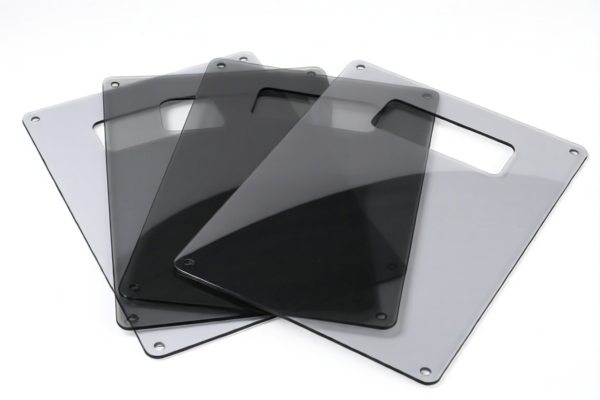
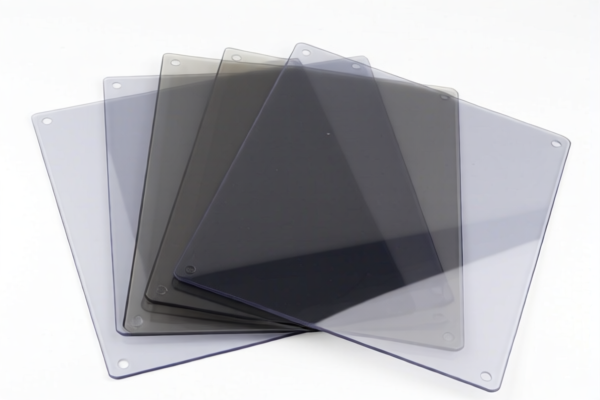
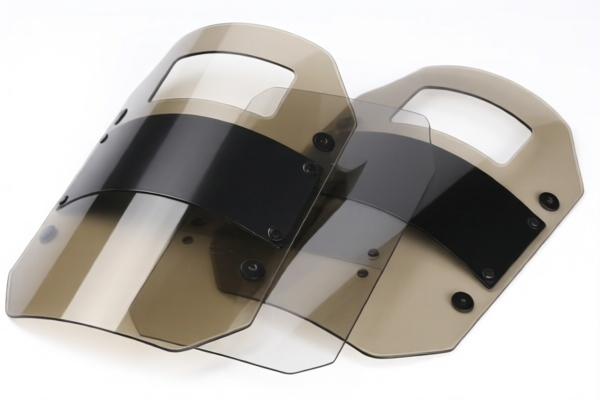
AI分析
🛡️ Polycarbonate Bulletproof Panel (Multi-Layer Security Glazing)
🌐 HS Code Reference & Customs Clearance Guide | 2026 Latest Tariff Analysis | Professional Entry Strategy
📌 I. Product Definition & Classification: What is a "Bulletproof Panel"?
Polycarbonate bulletproof panels (often referred to as Ballistic Glazing or Multi-Layer Security Glazing) are composite security products designed to resist projectile impact. They are NOT simple plastic sheets. They consist of multiple layers: 1. Glass Layers: Tempered or laminated glass for hardness and initial impact resistance. 2. Polycarbonate (PC) Layers: High-impact transparent plastic for energy absorption and spall containment. 3. Interlayers: Bonded with PVB (Polyvinyl Butyral) or SGP (Ionoplast) resin under high pressure and temperature.
⚠️ Critical Classification Distinction:
- Layered/Laminated Glass with Plastic/PC interlayer: Classified under Glass heading (Chapter 70), because the glass provides the primary structural rigidity and optical clarity, and it is "layered" or "laminated."
- Solid Polycarbonate Sheets (Non-layered): If it is a single sheet of polycarbonate without glass layers, it falls under Plastics (Chapter 39).
- ⚡ Most "Bulletproof" Panels for vehicles/buildings are Laminated Glass-PC composites. Therefore, they are HS 7007 or 7009, NOT 3916/3920.
📦 II. HS Code Classification Details (2026 Latest Tariff Alignment)
| HS Code | Product Description | Applicable Scenario | Layer Structure |
|---|---|---|---|
| 7007.11.00 | Laminated safety glass, even if cut to shape, not curved | Architectural windows, storefronts, stationary security glazing | Glass + PVB/SGP + Glass/PC |
| 7007.21.00 | Toughened (tempered) safety glass, even if cut to shape, not curved | Vehicles (cars, buses, trains), stationary security | Tempered Glass + Interlayer |
| 7009.91.00 | Rear-view mirrors and similar glass articles (rare for large panels) | Not typically used for ballistic panels | N/A |
| 7007.19.00 | Other laminated safety glass (curved or specific shapes) | Custom curved ballistic shields, specialized vehicle windows | Laminated composite |
| 3920.62.00 | Other plates, sheets, film, foil and strip of polyesters | ONLY IF it is a solid PC sheet without glass layers | Pure Polycarbonate Sheet |
🔍 Key Reminder:
- Customs authorities globally (including US CBP) classify ballistic glass under Chapter 70 (Glass) because it is defined as "laminated safety glass."
- Misclassifying as 3920 (Plastics) is a common error that leads to lower duty rates but higher risk of penalties for misdeclaration.
- 8528 (Monitors) or 8708 (Auto Parts) may apply if the panel is pre-installed in a specific vehicle or device, but loose panels are 7007.
💰 III. 2026 Latest Tariff Rate Details (US Import from China)
✅ Applicable Country: United States (US)
✅ Origin: China (CN)
✅ Effective Date: November 10, 2025 (and onwards)
🎯 1. 7007.11.00 – Laminated Safety Glass (Glass-PC Composite)
| Item | Detail |
|---|---|
| Base Rate | 5.3% (ad valorem) |
| USITC Additional Duty (Section 301) | +25% |
| IEEPA Additional Duty | +10% (China-origin) |
| Total Effective Rate | 40.3% |
| Calculation Basis | CIF Value × 40.3% |
| De Minimis Exemption | ❌ Not Eligible (deny_de_minimis) |
| Legal Path | IEEPA:9903.01.24 → USITC:7007.11.00 → FOOTNOTE:9903.88.01 |
📌 Explanation:
- Even though it contains polycarbonate, the glass layering dictates the HS code under US HTSUS.
- The 25% Section 301 duty applies to laminated safety glass from China.
- The 10% IEEPA duty is an additional surcharge for Chinese-origin goods.
- Total burden: ~40.3%. This is a significant cost driver.
🎯 2. 7007.21.00 – Toughened Safety Glass (Vehicle/Transport Use)
| Item | Detail |
|---|---|
| Base Rate | 5.3% |
| USITC Additional Duty (Section 301) | +25% |
| IEEPA Additional Duty | +10% |
| Total Effective Rate | 40.3% |
| De Minimis Exemption | ❌ Not Eligible |
| Legal Path | IEEPA:9901.25 → IEEPA:9903.01.24 → USITC:7007.21.00 |
📌 Note:
- If the bulletproof panel is specifically for automotive use (e.g., armored vehicles, buses), it may be classified here.
- Rate is identical to architectural laminated glass due to similar Section 301 treatment.
🚫 3. Misclassification Risk: 3920.62.00 (Pure Polycarbonate Sheets)
| Item | Detail |
|---|---|
| Base Rate | 5.7% |
| USITC Additional Duty (Section 301) | +7.5% (if under certain thresholds) or +25% |
| IEEPA Additional Duty | +10% |
| Risk | HIGH PENALTY |
⚠️ Warning:
- If you declare a laminated glass-PC panel as 3920.62.00 to avoid the 25% Section 301 duty on glass, Customs may reject the entry, assess back duties + penalties, and potentially flag you for fraud.
- The physical composition (glass layers) legally overrides the presence of polycarbonate.
🛠️ IV. Customs Clearance Operational Advice
✅ 1. Required Documentation Checklist
| Document | Mandatory? | Notes |
|---|---|---|
| Product Specification Sheet | ✔️ | Must explicitly state: "Laminated Safety Glass with Polycarbonate Interlayer" |
| Ballistic Test Report | ✔️ | ASTM F1233 or NIJ Standards. Proves it is "safety glass," not just plastic. |
| Layer Structure Diagram | ✔️ | Critical for Customs to distinguish from pure PC sheets (Ch 39). |
| Commercial Invoice | ✔️ | Description: "Laminated Ballistic Glass Panel, PC-Glass Composite, Non-Curved" |
| Bill of Lading | ✔️ | Ensure weight and dimensions match invoice. |
| FCC/CE/RoHS | ❌ | Usually not required for passive glass, but good for compliance proof. |
✅ 2. Declaration Strategy (Key Mnemonic)
🔥 "Glass Layers First, PC Second, Don't Declare as Plastic!"
| Scenario | Correct HS Code | Incorrect HS Code | Consequence of Error |
|---|---|---|---|
| Loose Ballistic Panel (Architectural) | 7007.11.00 |
3920.62.00 |
Underpayment of duty + Penalties |
| Loose Ballistic Panel (Automotive) | 7007.21.00 |
8708.99.00 |
Misclassification + Delay |
| Pre-installed in Armored Vehicle | 8708.99.00 (as part) |
7007.11.00 |
Wrong chapter for auto parts |
| Pure PC Sheet (No Glass) | 3920.62.00 |
7007.11.00 |
Overpayment (lower rate for plastics?) |
💡 Tip:
- If the panel is curved, use7007.19.00.
- If the panel is flat, use7007.11.00.
✅ 3. Special Cases
| Situation | Handling Advice |
|---|---|
| Armored Vehicles (Complete) | The entire vehicle may fall under 8705 or 8708. The glass is considered a part. Duty may be lower if declared as vehicle parts. |
| Transshipment (Third Country) | If shipped from Vietnam/Malaysia, ensure substantial transformation occurred. Direct shipping from China triggers IEEPA/301 duties. |
| Samples | Even samples of ballistic glass are subject to full duties if declared as commercial goods. Use "No Commercial Value" carefully with proper proof. |
🌍 V. Global Market Comparison (2026)
| Country/Region | Recommended HS Code | Tariff (China Origin) | Certification | Notes |
|---|---|---|---|---|
| 🇺🇸 USA | 7007.11.00 |
40.3% (5.3% + 25% + 10%) | ASTM F1233 | High barriers; 301 + IEEPA |
| 🇪🇺 EU | 7007.11.00 |
5.3% (Most Favored Nation) | CE (EN 1063) | No Section 301 equivalent, but high technical standards |
| 🇨🇳 China | 7007.11.00 |
5.3% | CCC (if applicable) | Low export duty, high import duty on foreign glass |
| 🇦🇺 Australia | 7007.11.00 |
5.0% | AS/NZS 2208 | No major anti-dumping on glass currently |
| 🇬🇧 UK | 7007.11.00 |
5.3% | UKCA | Post-Brexit tariff follows EU structure closely |
📌 Conclusion:
- USA is the most expensive market due to layered tariffs (Section 301 + IEEPA).
- EU/UK/Australia are more favorable tariff-wise, but technical compliance (EN 1063/AS 2208) is stricter.
📌 VI. Common Mistakes & Pitfalls (Blood Lessons)
❌ Mistake 1: Declaring bulletproof glass as "Plastic Sheet" (3920) to save 25% duty.
👉 Result: Customs lab test shows glass layers → Seizure + 3x Penalty.
❌ Mistake 2: Ignoring IEEPA 10% surcharge in cost calculations.
👉 Result: Margin erosion. The 40.3% total rate must be baked into pricing.
❌ Mistake 3: Confusing Ballistic Glass with Anti-Shatter Film.
👉 Result: Anti-shatter film (applied to existing glass) may be classified under 3919/3920 with lower duties. But manufactured laminated panels are 7007.
❌ Mistake 4: Not providing Layer Diagrams.
👉 Result: Customs holds cargo for classification review → Storage fees + Delays.
✅ Correct Declaration Example:
"Laminated Safety Glass Panel, 10mm Thick, Consisting of 2mm Glass + 0.76mm PVB + 3mm Polycarbonate + 0.76mm PVB + 2mm Glass. ASTM F1233 Certified. For Architectural Security Use."
🎯 VII. Conclusion: Precision is Profit
🎯 Remember:
🔹 "Glass Layers = Chapter 70. Plastic Alone = Chapter 39."
🔹 "USA Import? Expect ~40% Duty. Budget Accordingly."
🔹 "Never misclassify laminated glass as plastic. The penalty is not worth the savings."
📌 Pro Tip:
If your product is exported to the US, consider:
1. Pre-Ruling: Apply for a CBP Binding Ruling before shipping.
2. Supply Chain Diversification: If possible, source or assemble in a non-China country (e.g., Vietnam, Mexico) to mitigate IEEPA/301 duties (check Rules of Origin carefully).
3. Value Engineering: For non-ballistic security, consider polycarbonate-only sheets if ballistic rating allows, to switch to Chapter 39 (potentially lower duties, but verify technical specs).
📣 Immediate Action:
📞 Contact your Customs Broker with the Layer Structure Diagram.
📄 Request a Pre-Lodgment Review for high-value shipments.
🚀 Secure Your Supply Chain against 2026 tariff escalations!
✨ Smart Classification, Smarter Borders!
💼 Protect Your Profit Margins with Accurate HS Codes!
用户评价
关于 HS 编码归类
协调制度(HS)是由世界海关组织(WCO)制定的国际贸易商品分类标准。全球 200 多个国家采用 HS 系统作为海关关税、贸易统计和进出口监管的基础。
每个 HS 编码遵循以下层级结构:
- 章(2 位)——商品大类(例如:第 84 章:机器和机械设备)
- 品目(4 位)——章内的更具体分类
- 子目(6 位)——国际通用细分,所有 WCO 成员国统一使用
- 本国细分(8-10 位)——各国自行扩展的细分编码,如美国 HTSUS 10 位编码
正确的 HS 编码归类对于顺利通关、准确缴纳关税和遵守贸易法规至关重要。错误归类可能导致海关延误、多缴关税或罚款。
从CN进口到US时,适用的关税税率可能包括:
- 最惠国(MFN)税率——适用于 WTO 成员国的标准关税税率
- 普通税率——适用于无贸易协定国家
- 贸易救济关税——附加关税,如 301 条款(反倾销)、232 条款(国家安全)或反补贴税
本页内容仅供参考。如需正式归类,请咨询当地海关或持牌报关代理。