Polycarbonate Bulletproof Panel
CN → USProduct Images

AI Analysis
🛡️ Polycarbonate Bulletproof Panel (Multi-Layer Security Glazing)
🌐 HS Code Reference & Customs Clearance Guide | 2026 Latest Tariff Analysis | Professional Entry Strategy
📌 I. Product Definition & Classification: What is a "Bulletproof Panel"?
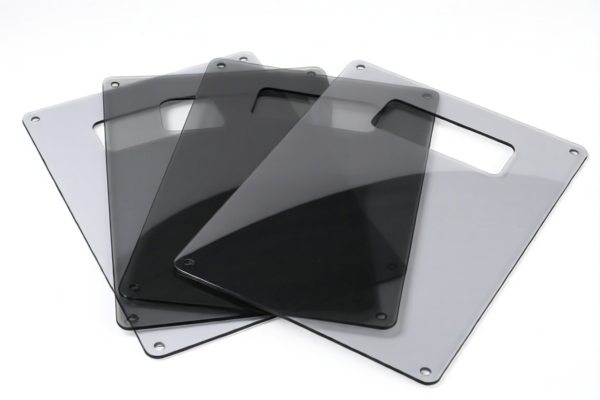
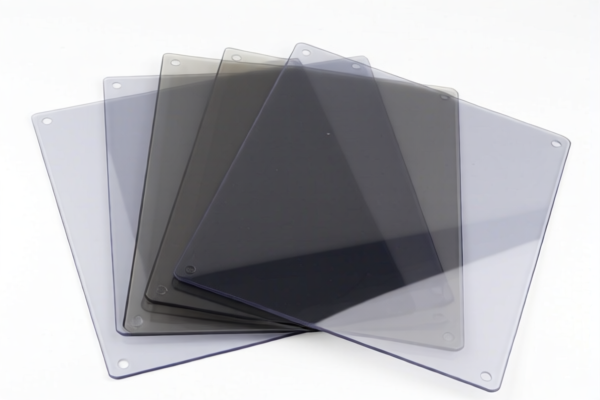
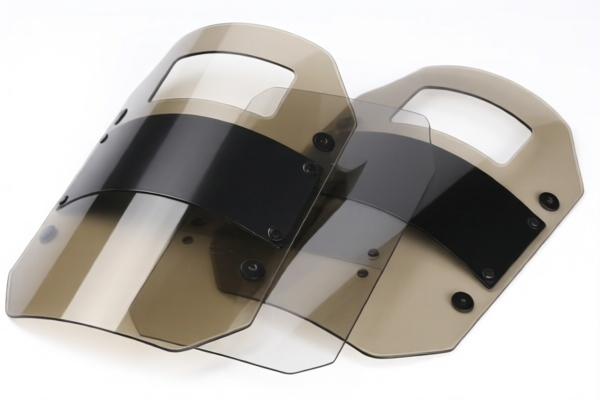
Polycarbonate bulletproof panels (often referred to as Ballistic Glazing or Multi-Layer Security Glazing) are composite security products designed to resist projectile impact. They are NOT simple plastic sheets. They consist of multiple layers: 1. Glass Layers: Tempered or laminated glass for hardness and initial impact resistance. 2. Polycarbonate (PC) Layers: High-impact transparent plastic for energy absorption and spall containment. 3. Interlayers: Bonded with PVB (Polyvinyl Butyral) or SGP (Ionoplast) resin under high pressure and temperature.
⚠️ Critical Classification Distinction:
- Layered/Laminated Glass with Plastic/PC interlayer: Classified under Glass heading (Chapter 70), because the glass provides the primary structural rigidity and optical clarity, and it is "layered" or "laminated."
- Solid Polycarbonate Sheets (Non-layered): If it is a single sheet of polycarbonate without glass layers, it falls under Plastics (Chapter 39).
- ⚡ Most "Bulletproof" Panels for vehicles/buildings are Laminated Glass-PC composites. Therefore, they are HS 7007 or 7009, NOT 3916/3920.
📦 II. HS Code Classification Details (2026 Latest Tariff Alignment)
| HS Code | Product Description | Applicable Scenario | Layer Structure |
|---|---|---|---|
| 7007.11.00 | Laminated safety glass, even if cut to shape, not curved | Architectural windows, storefronts, stationary security glazing | Glass + PVB/SGP + Glass/PC |
| 7007.21.00 | Toughened (tempered) safety glass, even if cut to shape, not curved | Vehicles (cars, buses, trains), stationary security | Tempered Glass + Interlayer |
| 7009.91.00 | Rear-view mirrors and similar glass articles (rare for large panels) | Not typically used for ballistic panels | N/A |
| 7007.19.00 | Other laminated safety glass (curved or specific shapes) | Custom curved ballistic shields, specialized vehicle windows | Laminated composite |
| 3920.62.00 | Other plates, sheets, film, foil and strip of polyesters | ONLY IF it is a solid PC sheet without glass layers | Pure Polycarbonate Sheet |
🔍 Key Reminder:
- Customs authorities globally (including US CBP) classify ballistic glass under Chapter 70 (Glass) because it is defined as "laminated safety glass."
- Misclassifying as 3920 (Plastics) is a common error that leads to lower duty rates but higher risk of penalties for misdeclaration.
- 8528 (Monitors) or 8708 (Auto Parts) may apply if the panel is pre-installed in a specific vehicle or device, but loose panels are 7007.
💰 III. 2026 Latest Tariff Rate Details (US Import from China)
✅ Applicable Country: United States (US)
✅ Origin: China (CN)
✅ Effective Date: November 10, 2025 (and onwards)
🎯 1. 7007.11.00 – Laminated Safety Glass (Glass-PC Composite)
| Item | Detail |
|---|---|
| Base Rate | 5.3% (ad valorem) |
| USITC Additional Duty (Section 301) | +25% |
| IEEPA Additional Duty | +10% (China-origin) |
| Total Effective Rate | 40.3% |
| Calculation Basis | CIF Value × 40.3% |
| De Minimis Exemption | ❌ Not Eligible (deny_de_minimis) |
| Legal Path | IEEPA:9903.01.24 → USITC:7007.11.00 → FOOTNOTE:9903.88.01 |
📌 Explanation:
- Even though it contains polycarbonate, the glass layering dictates the HS code under US HTSUS.
- The 25% Section 301 duty applies to laminated safety glass from China.
- The 10% IEEPA duty is an additional surcharge for Chinese-origin goods.
- Total burden: ~40.3%. This is a significant cost driver.
🎯 2. 7007.21.00 – Toughened Safety Glass (Vehicle/Transport Use)
| Item | Detail |
|---|---|
| Base Rate | 5.3% |
| USITC Additional Duty (Section 301) | +25% |
| IEEPA Additional Duty | +10% |
| Total Effective Rate | 40.3% |
| De Minimis Exemption | ❌ Not Eligible |
| Legal Path | IEEPA:9901.25 → IEEPA:9903.01.24 → USITC:7007.21.00 |
📌 Note:
- If the bulletproof panel is specifically for automotive use (e.g., armored vehicles, buses), it may be classified here.
- Rate is identical to architectural laminated glass due to similar Section 301 treatment.
🚫 3. Misclassification Risk: 3920.62.00 (Pure Polycarbonate Sheets)
| Item | Detail |
|---|---|
| Base Rate | 5.7% |
| USITC Additional Duty (Section 301) | +7.5% (if under certain thresholds) or +25% |
| IEEPA Additional Duty | +10% |
| Risk | HIGH PENALTY |
⚠️ Warning:
- If you declare a laminated glass-PC panel as 3920.62.00 to avoid the 25% Section 301 duty on glass, Customs may reject the entry, assess back duties + penalties, and potentially flag you for fraud.
- The physical composition (glass layers) legally overrides the presence of polycarbonate.
🛠️ IV. Customs Clearance Operational Advice
✅ 1. Required Documentation Checklist
| Document | Mandatory? | Notes |
|---|---|---|
| Product Specification Sheet | ✔️ | Must explicitly state: "Laminated Safety Glass with Polycarbonate Interlayer" |
| Ballistic Test Report | ✔️ | ASTM F1233 or NIJ Standards. Proves it is "safety glass," not just plastic. |
| Layer Structure Diagram | ✔️ | Critical for Customs to distinguish from pure PC sheets (Ch 39). |
| Commercial Invoice | ✔️ | Description: "Laminated Ballistic Glass Panel, PC-Glass Composite, Non-Curved" |
| Bill of Lading | ✔️ | Ensure weight and dimensions match invoice. |
| FCC/CE/RoHS | ❌ | Usually not required for passive glass, but good for compliance proof. |
✅ 2. Declaration Strategy (Key Mnemonic)
🔥 "Glass Layers First, PC Second, Don't Declare as Plastic!"
| Scenario | Correct HS Code | Incorrect HS Code | Consequence of Error |
|---|---|---|---|
| Loose Ballistic Panel (Architectural) | 7007.11.00 |
3920.62.00 |
Underpayment of duty + Penalties |
| Loose Ballistic Panel (Automotive) | 7007.21.00 |
8708.99.00 |
Misclassification + Delay |
| Pre-installed in Armored Vehicle | 8708.99.00 (as part) |
7007.11.00 |
Wrong chapter for auto parts |
| Pure PC Sheet (No Glass) | 3920.62.00 |
7007.11.00 |
Overpayment (lower rate for plastics?) |
💡 Tip:
- If the panel is curved, use7007.19.00.
- If the panel is flat, use7007.11.00.
✅ 3. Special Cases
| Situation | Handling Advice |
|---|---|
| Armored Vehicles (Complete) | The entire vehicle may fall under 8705 or 8708. The glass is considered a part. Duty may be lower if declared as vehicle parts. |
| Transshipment (Third Country) | If shipped from Vietnam/Malaysia, ensure substantial transformation occurred. Direct shipping from China triggers IEEPA/301 duties. |
| Samples | Even samples of ballistic glass are subject to full duties if declared as commercial goods. Use "No Commercial Value" carefully with proper proof. |
🌍 V. Global Market Comparison (2026)
| Country/Region | Recommended HS Code | Tariff (China Origin) | Certification | Notes |
|---|---|---|---|---|
| 🇺🇸 USA | 7007.11.00 |
40.3% (5.3% + 25% + 10%) | ASTM F1233 | High barriers; 301 + IEEPA |
| 🇪🇺 EU | 7007.11.00 |
5.3% (Most Favored Nation) | CE (EN 1063) | No Section 301 equivalent, but high technical standards |
| 🇨🇳 China | 7007.11.00 |
5.3% | CCC (if applicable) | Low export duty, high import duty on foreign glass |
| 🇦🇺 Australia | 7007.11.00 |
5.0% | AS/NZS 2208 | No major anti-dumping on glass currently |
| 🇬🇧 UK | 7007.11.00 |
5.3% | UKCA | Post-Brexit tariff follows EU structure closely |
📌 Conclusion:
- USA is the most expensive market due to layered tariffs (Section 301 + IEEPA).
- EU/UK/Australia are more favorable tariff-wise, but technical compliance (EN 1063/AS 2208) is stricter.
📌 VI. Common Mistakes & Pitfalls (Blood Lessons)
❌ Mistake 1: Declaring bulletproof glass as "Plastic Sheet" (3920) to save 25% duty.
👉 Result: Customs lab test shows glass layers → Seizure + 3x Penalty.
❌ Mistake 2: Ignoring IEEPA 10% surcharge in cost calculations.
👉 Result: Margin erosion. The 40.3% total rate must be baked into pricing.
❌ Mistake 3: Confusing Ballistic Glass with Anti-Shatter Film.
👉 Result: Anti-shatter film (applied to existing glass) may be classified under 3919/3920 with lower duties. But manufactured laminated panels are 7007.
❌ Mistake 4: Not providing Layer Diagrams.
👉 Result: Customs holds cargo for classification review → Storage fees + Delays.
✅ Correct Declaration Example:
"Laminated Safety Glass Panel, 10mm Thick, Consisting of 2mm Glass + 0.76mm PVB + 3mm Polycarbonate + 0.76mm PVB + 2mm Glass. ASTM F1233 Certified. For Architectural Security Use."
🎯 VII. Conclusion: Precision is Profit
🎯 Remember:
🔹 "Glass Layers = Chapter 70. Plastic Alone = Chapter 39."
🔹 "USA Import? Expect ~40% Duty. Budget Accordingly."
🔹 "Never misclassify laminated glass as plastic. The penalty is not worth the savings."
📌 Pro Tip:
If your product is exported to the US, consider:
1. Pre-Ruling: Apply for a CBP Binding Ruling before shipping.
2. Supply Chain Diversification: If possible, source or assemble in a non-China country (e.g., Vietnam, Mexico) to mitigate IEEPA/301 duties (check Rules of Origin carefully).
3. Value Engineering: For non-ballistic security, consider polycarbonate-only sheets if ballistic rating allows, to switch to Chapter 39 (potentially lower duties, but verify technical specs).
📣 Immediate Action:
📞 Contact your Customs Broker with the Layer Structure Diagram.
📄 Request a Pre-Lodgment Review for high-value shipments.
🚀 Secure Your Supply Chain against 2026 tariff escalations!
✨ Smart Classification, Smarter Borders!
💼 Protect Your Profit Margins with Accurate HS Codes!
Customer Reviews
About HS Code Classification
The Harmonized System (HS) is an internationally standardized nomenclature developed by the World Customs Organization (WCO) to classify traded products. Over 200 countries use the HS system as the basis for customs tariffs, trade statistics, and import/export regulations.
Each HS code follows a hierarchical structure:
- Chapter (2 digits) — Broad category of goods (e.g., Chapter 84: Machinery and Mechanical Appliances)
- Heading (4 digits) — More specific grouping within the chapter
- Subheading (6 digits) — Internationally standardized breakdown, used by all WCO member countries
- National subdivisions (8-10 digits) — Country-specific extensions for further classification, such as US HTSUS 10-digit codes
Correct HS code classification is essential for smooth customs clearance, accurate duty payment, and compliance with trade regulations. Misclassification can lead to customs delays, overpayment of duties, or penalties.
When importing from CN to US, the applicable tariff rates may include:
- Most-Favored-Nation (MFN) rate — The standard duty rate applied to WTO members
- General rate — Applied to countries without trade agreements
- Trade remedy duties — Additional tariffs such as Section 301 (anti-dumping), Section 232 (national security), or countervailing duties
The information provided on this page is for reference purposes only. For official classification, please consult with your local customs authority or a licensed customs broker.