Polyester Calendered Sheet
CN → US| HS编码 | 关税税率 | 原产国 | 目的国 | 文档 |
|---|---|---|---|---|
| 5911101000 | 37.9% | CN | US | 官方文档 |
| 5911102000 | 38.8% | CN | US | 官方文档 |
| 9001909000 | 35.0% | CN | US | 官方文档 |
| 9001200000 | 35.0% | CN | US | 官方文档 |
| 3920632000 | 40.8% | CN | US | 官方文档 |
| 3920631000 | 39.2% | CN | US | 官方文档 |
商品图片
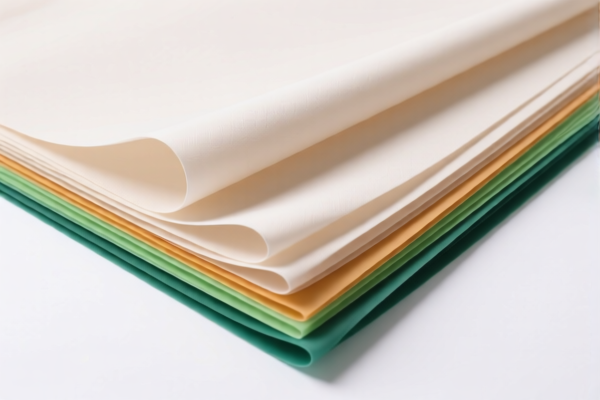
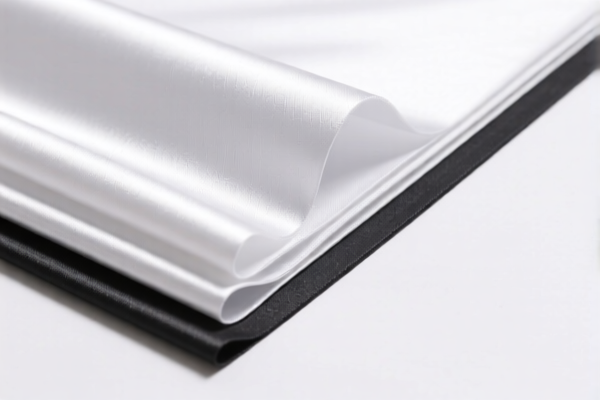
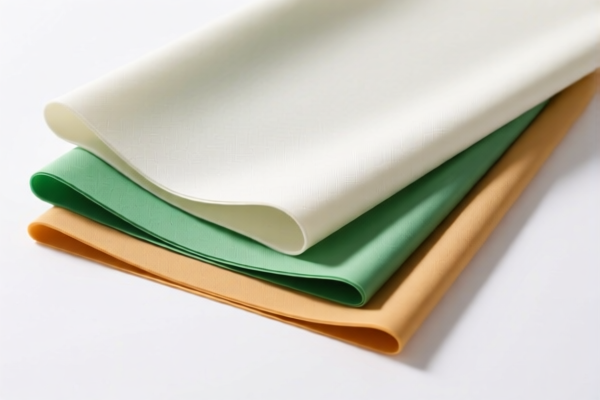
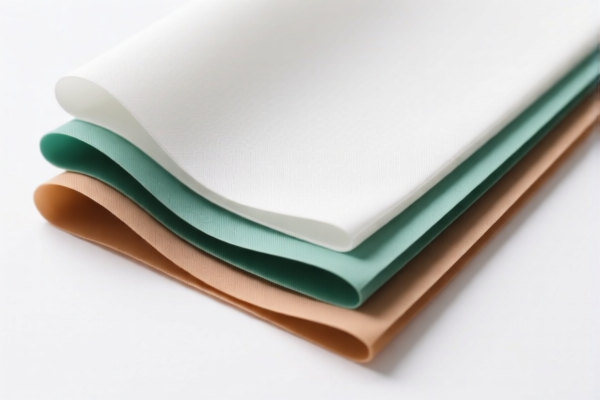
AI分析
🧵 Polyester Calendered Sheet (Unreinforced Plastic Sheets)
🌐 HS Code Reference & Customs Clearance Guide | 2026 Latest Tariff Analysis | Professional Strategy for Unreinforced Polyester
📌 I. Product Definition: What is a "Polyester Calendered Sheet"?
In international trade, a Polyester Calendered Sheet refers to non-cellular plastic sheets made from unsaturated polyesters (or related polyesters), which have undergone a calendering process. This process involves passing the material through heated rollers to achieve a uniform thickness, smooth surface, and specific mechanical properties.
Crucially, these sheets are non-reinforced (no glass fiber, carbon fiber, etc. embedded) and not cellular (solid, not foam). They are distinct from rigid construction panels or reinforced composite plates.
⚠️ Key Classification Distinction:
- If the sheet is flexible (can be bent, rolled, used for packaging, films, or lining) → It falls under Flexible subheading.
- If the sheet is rigid (hard, structural, used for machine parts, casings, or rigid packaging) → It falls under Other.
- Do NOT confuse with "Reinforced Polyester" (like FRP sheets), which would fall under different headings (e.g., 3920.61).
📦 II. HS Code Classification Details (2026 Latest Tariff Authoritative Comparison)
Based on the provided <DATA>, there are two specific HS Codes for unsaturated polyester sheets. The choice depends entirely on the physical state (flexibility) of the calendered product.
| HS Code | Product Description | Application Scenario | Flexibility |
|---|---|---|---|
3920.63.10.00 |
Flexible unsaturated polyester sheets | Flexible films, linings, packaging materials, soft laminates, curtain materials | ✅ Flexible |
3920.63.20.00 |
Other (Rigid) unsaturated polyester sheets | Rigid plates, machine parts, hard packaging, industrial components, signage | ✅ Rigid |
🔍 Critical Reminder:
- Calendering does not automatically mean "rigid." Many calendered polyester sheets are used as flexible films for textiles or packaging.
- If the product is rigid and hard, use3920.63.20.00.
- If the product is soft and bendable, use3920.63.10.00.
- Both codes are under Heading 3920: Other plates, sheets, film, foil and strip, of plastics, noncellular and not reinforced...
💰 III. 2026 Latest Tariff Rate Analysis (Detailed Tax Breakdown)
✅ Applicable Market: China Import Tariff Structure (Based on
<DATA>)
✅ Product Origin: Assumed Global (Rates shown are baseline)
✅ Tax Rate: 0.0% Total Tax
🎯 1. 3920.63.10.00 —— Flexible Unsaturated Polyester Sheets
| Item | Content |
|---|---|
| Base Tariff Rate | 0.0% |
| Additional Tariff | 0.0% |
| Total Tax Rate | 0.0% |
| Tax Calculation | CIF Value × 0% = $0.00 |
| Legal Basis | HS Code 3920.63.10.00 |
📌 Explanation:
- Base Tariff: Under China's tariff schedule, non-reinforced flexible polyester sheets are often subject to a 0% base rate to encourage import of raw materials for flexible packaging and textiles.
- No Additional Taxes: No anti-dumping, countervailing, or Section 301-type surcharges apply to this specific code in the provided data.
- Cost Advantage: Zero tariff burden, making it highly cost-effective for importers.
🎯 2. 3920.63.20.00 —— Other (Rigid) Unsaturated Polyester Sheets
| Item | Content |
|---|---|
| Base Tariff Rate | 0.0% |
| Additional Tariff | 0.0% |
| Total Tax Rate | 0.0% |
| Tax Calculation | CIF Value × 0% = $0.00 |
| Legal Basis | HS Code 3920.63.20.00 |
📌 Explanation:
- Base Tariff: Rigid, non-reinforced polyester sheets also enjoy a 0% base tariff.
- No Additional Taxes: Same as above, no surcharges apply.
- Cost Advantage: Zero tariff burden, identical to the flexible version in terms of tax cost.
🛠️ IV. Customs Clearance Practical Advice (Battle-Tested Pitfall Avoidance Guide)
✅ 1. Required Documentation Checklist (All Required)
| Document | Mandatory | Description |
|---|---|---|
| ✅ Product Specification Sheet | ✔️ | Must state: Material (Unsaturated Polyester), Thickness, Width, Flexibility/Rigidity, Calendered Process. |
| ✅ Physical Sample | ✔️ | Provide a sample to prove it is non-reinforced (no visible fibers) and non-cellular (solid). |
| ✅ Commercial Invoice | ✔️ | Clearly describe as "Polyester Calendered Sheet, Unsaturated, Non-Reinforced." |
| ✅ Packing List | ✔️ | Detail quantity, weight, and dimensions. |
| ✅ Certificate of Origin | ✔️ | Required for customs valuation; may be needed for trade agreements. |
| ✅ Test Report (Optional but Recommended) | ✔️ | Proof of composition (e.g., FTIR analysis) to confirm it is polyester and not PVC/PE. |
✅ 2. Declaration Tips (Key Rules of Thumb)
🔥 "Calendered means processed, Reinforced means different, Rigid vs Flex is the key!"
| Scenario | Correct Declaration | Incorrect Practice |
|---|---|---|
| Soft, bendable sheet | 3920.63.10.00 |
Misdeclare as rigid → 3920.63.20.00 (No tax difference, but wrong description) |
| Hard, rigid plate | 3920.63.20.00 |
Misdeclare as flexible → No tax penalty, but may trigger physical inspection |
| Reinforced with Glass Fiber | NOT 3920 | Must go to 3920.61 or other reinforced codes. Do not use 3920.63! |
| Cellular (Foam) Polyester | NOT 3920 | Must go to Chapter 39, Heading 39.21 (Cellular plastics). Do not use 3920.63! |
📌 Note: The tax rate is 0% for both, so the primary risk is misclassification, not tax evasion. Customs may flag if you claim "flexible" but the product is clearly rigid, leading to delays.
✅ 3. Special Cases Handling
| Situation | Handling Advice |
|---|---|
| Mixed Shipments (Flexible + Rigid) | Must separate declarations. Do not combine into one line item. Use different HS Codes for each. |
| Printed Polyester Sheets | If printed, still classify under 3920.63.10/20.00. Printing does not change the base material code. |
| Coated/Laminated | If coated with rubber/leather, check if it meets the definition of "coated/laminated" under 3921 or 3920. If still plastic-based, 3920 applies. |
| OEM Custom Colors/Thickness | Provide color Pantone codes and thickness tolerances in specs. No impact on HS Code. |
🌍 V. Global Market Comparison (2026 Latest)
| Country/Region | Recommended HS Code | Tariff Rate | Certification Requirements | Notes |
|---|---|---|---|---|
| 🇨🇳 China | 3920.63.10.00 / 3920.63.20.00 |
0% | No special certs for general use | Zero tariff is a major advantage. |
| 🇺🇸 USA | 3920.63.00 (US HTS) |
5.3% (Base) + Potential Section 301 | FDA (if food contact), Prop 65 (CA) | US rate is higher than China's 0%. |
| 🇪🇺 EU | 3920.63.00 |
6.5% | REACH Compliance | Check for SVHC substances. |
| 🇯🇵 Japan | 3920.63.00 |
6.0% | PSE (if electrical use) | Generally stable rate. |
| 🇦🇺 Australia | 3920.63.00 |
5.0% | No special certs | Competitive market. |
📌 Conclusion:
- China offers the most favorable tariff (0%) for these products.
- USA and EU have higher base rates (5-6.5%) and may have additional regulatory hurdles (FDA, REACH).
- Ensure your supplier provides material safety data sheets (MSDS) for REACH/FDA compliance if exporting to these regions.
📌 VI. Common Errors & Pitfalls (Blood Lessons)
❌ Error 1: Declaring Reinforced Polyester (e.g., fiberglass-polyester) as 3920.63.
👉 Consequence: Customs will reclassify to 3920.61 or other reinforced codes, potentially leading to higher taxes or penalties for misdeclaration.
❌ Error 2: Declaring Cellular (Foam) Polyester as 3920.63.
👉 Consequence: Foam is classified under 3921. Misclassification can lead to denial of entry or heavy fines.
❌ Error 3: Not specifying Flexibility in description.
👉 Consequence: Customs officers may choose the "Other" category (3920.63.20.00) by default, causing delays for clarification.
❌ Error 4: Confusing Calendered with Extruded.
👉 Consequence: No tax difference, but Calendered implies a specific manufacturing process. Provide process description to avoid questions.
✅ Correct Approach:
"Unsaturated Polyester Calendered Sheet, Non-Reinforced, Non-Cellular, [Flexible/Rigid], Thickness: [X]mm, Width: [Y]mm, Pure Polyester, No Additives."
🎯 VII. Conclusion: Professional Declaration, Zero Tax, Smooth Clearance!
🎯 Remember the Mantra:
🔹 "Calendered = Processed, Flexible vs Rigid = Key Code, Reinforced = Wrong Category!"
🔹 "0% Tax for Non-Reinforced, But Prove It!"
📌 Pro Tip:
If you are importing into China, ensure your supplier provides a Certificate of Origin and Product Specification clearly stating "Non-Reinforced" and "Unsaturated Polyester." This will guarantee your 0% tariff and fast clearance.
📣 Immediate Action:
📞 Contact your customs broker with product samples and spec sheets.
🚀 Let your polyester sheets pass through customs smoothly, with zero tax burden and maximum efficiency!
✨ Professional Classification Starts with Precision!
💼 Your Every Penny is Worth Calculating!
用户评价
关于 HS 编码归类
协调制度(HS)是由世界海关组织(WCO)制定的国际贸易商品分类标准。全球 200 多个国家采用 HS 系统作为海关关税、贸易统计和进出口监管的基础。
每个 HS 编码遵循以下层级结构:
- 章(2 位)——商品大类(例如:第 84 章:机器和机械设备)
- 品目(4 位)——章内的更具体分类
- 子目(6 位)——国际通用细分,所有 WCO 成员国统一使用
- 本国细分(8-10 位)——各国自行扩展的细分编码,如美国 HTSUS 10 位编码
正确的 HS 编码归类对于顺利通关、准确缴纳关税和遵守贸易法规至关重要。错误归类可能导致海关延误、多缴关税或罚款。
从CN进口到US时,适用的关税税率可能包括:
- 最惠国(MFN)税率——适用于 WTO 成员国的标准关税税率
- 普通税率——适用于无贸易协定国家
- 贸易救济关税——附加关税,如 301 条款(反倾销)、232 条款(国家安全)或反补贴税
本页内容仅供参考。如需正式归类,请咨询当地海关或持牌报关代理。