Polyester Calendered Sheet
CN → US| HS Code | Tariff Rate | Origin | Destination | Doc |
|---|---|---|---|---|
| 5911101000 | 37.9% | CN | US | Official Doc |
| 5911102000 | 38.8% | CN | US | Official Doc |
| 9001909000 | 35.0% | CN | US | Official Doc |
| 9001200000 | 35.0% | CN | US | Official Doc |
| 3920632000 | 40.8% | CN | US | Official Doc |
| 3920631000 | 39.2% | CN | US | Official Doc |
Product Images
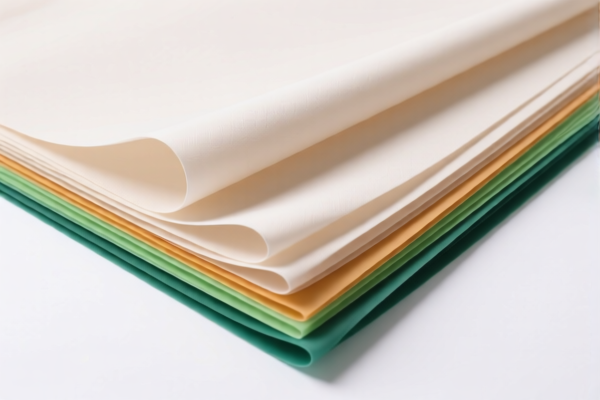
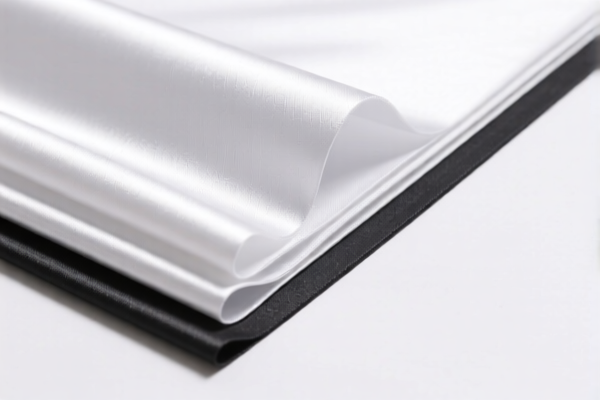
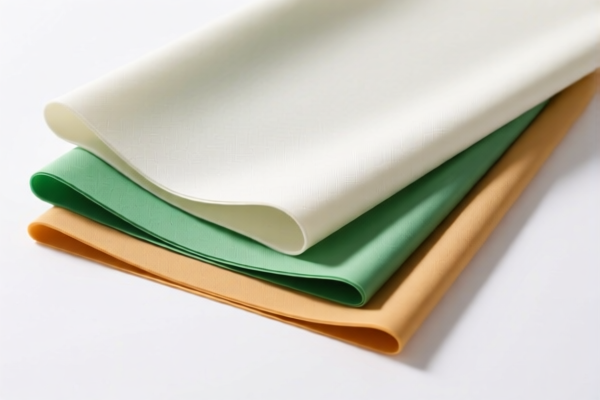

AI Analysis
🧵 Polyester Calendered Sheet (Unreinforced Plastic Sheets)
🌐 HS Code Reference & Customs Clearance Guide | 2026 Latest Tariff Analysis | Professional Strategy for Unreinforced Polyester
📌 I. Product Definition: What is a "Polyester Calendered Sheet"?
In international trade, a Polyester Calendered Sheet refers to non-cellular plastic sheets made from unsaturated polyesters (or related polyesters), which have undergone a calendering process. This process involves passing the material through heated rollers to achieve a uniform thickness, smooth surface, and specific mechanical properties.
Crucially, these sheets are non-reinforced (no glass fiber, carbon fiber, etc. embedded) and not cellular (solid, not foam). They are distinct from rigid construction panels or reinforced composite plates.
⚠️ Key Classification Distinction:
- If the sheet is flexible (can be bent, rolled, used for packaging, films, or lining) → It falls under Flexible subheading.
- If the sheet is rigid (hard, structural, used for machine parts, casings, or rigid packaging) → It falls under Other.
- Do NOT confuse with "Reinforced Polyester" (like FRP sheets), which would fall under different headings (e.g., 3920.61).
📦 II. HS Code Classification Details (2026 Latest Tariff Authoritative Comparison)
Based on the provided <DATA>, there are two specific HS Codes for unsaturated polyester sheets. The choice depends entirely on the physical state (flexibility) of the calendered product.
| HS Code | Product Description | Application Scenario | Flexibility |
|---|---|---|---|
3920.63.10.00 |
Flexible unsaturated polyester sheets | Flexible films, linings, packaging materials, soft laminates, curtain materials | ✅ Flexible |
3920.63.20.00 |
Other (Rigid) unsaturated polyester sheets | Rigid plates, machine parts, hard packaging, industrial components, signage | ✅ Rigid |
🔍 Critical Reminder:
- Calendering does not automatically mean "rigid." Many calendered polyester sheets are used as flexible films for textiles or packaging.
- If the product is rigid and hard, use3920.63.20.00.
- If the product is soft and bendable, use3920.63.10.00.
- Both codes are under Heading 3920: Other plates, sheets, film, foil and strip, of plastics, noncellular and not reinforced...
💰 III. 2026 Latest Tariff Rate Analysis (Detailed Tax Breakdown)
✅ Applicable Market: China Import Tariff Structure (Based on
<DATA>)
✅ Product Origin: Assumed Global (Rates shown are baseline)
✅ Tax Rate: 0.0% Total Tax
🎯 1. 3920.63.10.00 —— Flexible Unsaturated Polyester Sheets
| Item | Content |
|---|---|
| Base Tariff Rate | 0.0% |
| Additional Tariff | 0.0% |
| Total Tax Rate | 0.0% |
| Tax Calculation | CIF Value × 0% = $0.00 |
| Legal Basis | HS Code 3920.63.10.00 |
📌 Explanation:
- Base Tariff: Under China's tariff schedule, non-reinforced flexible polyester sheets are often subject to a 0% base rate to encourage import of raw materials for flexible packaging and textiles.
- No Additional Taxes: No anti-dumping, countervailing, or Section 301-type surcharges apply to this specific code in the provided data.
- Cost Advantage: Zero tariff burden, making it highly cost-effective for importers.
🎯 2. 3920.63.20.00 —— Other (Rigid) Unsaturated Polyester Sheets
| Item | Content |
|---|---|
| Base Tariff Rate | 0.0% |
| Additional Tariff | 0.0% |
| Total Tax Rate | 0.0% |
| Tax Calculation | CIF Value × 0% = $0.00 |
| Legal Basis | HS Code 3920.63.20.00 |
📌 Explanation:
- Base Tariff: Rigid, non-reinforced polyester sheets also enjoy a 0% base tariff.
- No Additional Taxes: Same as above, no surcharges apply.
- Cost Advantage: Zero tariff burden, identical to the flexible version in terms of tax cost.
🛠️ IV. Customs Clearance Practical Advice (Battle-Tested Pitfall Avoidance Guide)
✅ 1. Required Documentation Checklist (All Required)
| Document | Mandatory | Description |
|---|---|---|
| ✅ Product Specification Sheet | ✔️ | Must state: Material (Unsaturated Polyester), Thickness, Width, Flexibility/Rigidity, Calendered Process. |
| ✅ Physical Sample | ✔️ | Provide a sample to prove it is non-reinforced (no visible fibers) and non-cellular (solid). |
| ✅ Commercial Invoice | ✔️ | Clearly describe as "Polyester Calendered Sheet, Unsaturated, Non-Reinforced." |
| ✅ Packing List | ✔️ | Detail quantity, weight, and dimensions. |
| ✅ Certificate of Origin | ✔️ | Required for customs valuation; may be needed for trade agreements. |
| ✅ Test Report (Optional but Recommended) | ✔️ | Proof of composition (e.g., FTIR analysis) to confirm it is polyester and not PVC/PE. |
✅ 2. Declaration Tips (Key Rules of Thumb)
🔥 "Calendered means processed, Reinforced means different, Rigid vs Flex is the key!"
| Scenario | Correct Declaration | Incorrect Practice |
|---|---|---|
| Soft, bendable sheet | 3920.63.10.00 |
Misdeclare as rigid → 3920.63.20.00 (No tax difference, but wrong description) |
| Hard, rigid plate | 3920.63.20.00 |
Misdeclare as flexible → No tax penalty, but may trigger physical inspection |
| Reinforced with Glass Fiber | NOT 3920 | Must go to 3920.61 or other reinforced codes. Do not use 3920.63! |
| Cellular (Foam) Polyester | NOT 3920 | Must go to Chapter 39, Heading 39.21 (Cellular plastics). Do not use 3920.63! |
📌 Note: The tax rate is 0% for both, so the primary risk is misclassification, not tax evasion. Customs may flag if you claim "flexible" but the product is clearly rigid, leading to delays.
✅ 3. Special Cases Handling
| Situation | Handling Advice |
|---|---|
| Mixed Shipments (Flexible + Rigid) | Must separate declarations. Do not combine into one line item. Use different HS Codes for each. |
| Printed Polyester Sheets | If printed, still classify under 3920.63.10/20.00. Printing does not change the base material code. |
| Coated/Laminated | If coated with rubber/leather, check if it meets the definition of "coated/laminated" under 3921 or 3920. If still plastic-based, 3920 applies. |
| OEM Custom Colors/Thickness | Provide color Pantone codes and thickness tolerances in specs. No impact on HS Code. |
🌍 V. Global Market Comparison (2026 Latest)
| Country/Region | Recommended HS Code | Tariff Rate | Certification Requirements | Notes |
|---|---|---|---|---|
| 🇨🇳 China | 3920.63.10.00 / 3920.63.20.00 |
0% | No special certs for general use | Zero tariff is a major advantage. |
| 🇺🇸 USA | 3920.63.00 (US HTS) |
5.3% (Base) + Potential Section 301 | FDA (if food contact), Prop 65 (CA) | US rate is higher than China's 0%. |
| 🇪🇺 EU | 3920.63.00 |
6.5% | REACH Compliance | Check for SVHC substances. |
| 🇯🇵 Japan | 3920.63.00 |
6.0% | PSE (if electrical use) | Generally stable rate. |
| 🇦🇺 Australia | 3920.63.00 |
5.0% | No special certs | Competitive market. |
📌 Conclusion:
- China offers the most favorable tariff (0%) for these products.
- USA and EU have higher base rates (5-6.5%) and may have additional regulatory hurdles (FDA, REACH).
- Ensure your supplier provides material safety data sheets (MSDS) for REACH/FDA compliance if exporting to these regions.
📌 VI. Common Errors & Pitfalls (Blood Lessons)
❌ Error 1: Declaring Reinforced Polyester (e.g., fiberglass-polyester) as 3920.63.
👉 Consequence: Customs will reclassify to 3920.61 or other reinforced codes, potentially leading to higher taxes or penalties for misdeclaration.
❌ Error 2: Declaring Cellular (Foam) Polyester as 3920.63.
👉 Consequence: Foam is classified under 3921. Misclassification can lead to denial of entry or heavy fines.
❌ Error 3: Not specifying Flexibility in description.
👉 Consequence: Customs officers may choose the "Other" category (3920.63.20.00) by default, causing delays for clarification.
❌ Error 4: Confusing Calendered with Extruded.
👉 Consequence: No tax difference, but Calendered implies a specific manufacturing process. Provide process description to avoid questions.
✅ Correct Approach:
"Unsaturated Polyester Calendered Sheet, Non-Reinforced, Non-Cellular, [Flexible/Rigid], Thickness: [X]mm, Width: [Y]mm, Pure Polyester, No Additives."
🎯 VII. Conclusion: Professional Declaration, Zero Tax, Smooth Clearance!
🎯 Remember the Mantra:
🔹 "Calendered = Processed, Flexible vs Rigid = Key Code, Reinforced = Wrong Category!"
🔹 "0% Tax for Non-Reinforced, But Prove It!"
📌 Pro Tip:
If you are importing into China, ensure your supplier provides a Certificate of Origin and Product Specification clearly stating "Non-Reinforced" and "Unsaturated Polyester." This will guarantee your 0% tariff and fast clearance.
📣 Immediate Action:
📞 Contact your customs broker with product samples and spec sheets.
🚀 Let your polyester sheets pass through customs smoothly, with zero tax burden and maximum efficiency!
✨ Professional Classification Starts with Precision!
💼 Your Every Penny is Worth Calculating!
Customer Reviews
About HS Code Classification
The Harmonized System (HS) is an internationally standardized nomenclature developed by the World Customs Organization (WCO) to classify traded products. Over 200 countries use the HS system as the basis for customs tariffs, trade statistics, and import/export regulations.
Each HS code follows a hierarchical structure:
- Chapter (2 digits) — Broad category of goods (e.g., Chapter 84: Machinery and Mechanical Appliances)
- Heading (4 digits) — More specific grouping within the chapter
- Subheading (6 digits) — Internationally standardized breakdown, used by all WCO member countries
- National subdivisions (8-10 digits) — Country-specific extensions for further classification, such as US HTSUS 10-digit codes
Correct HS code classification is essential for smooth customs clearance, accurate duty payment, and compliance with trade regulations. Misclassification can lead to customs delays, overpayment of duties, or penalties.
When importing from CN to US, the applicable tariff rates may include:
- Most-Favored-Nation (MFN) rate — The standard duty rate applied to WTO members
- General rate — Applied to countries without trade agreements
- Trade remedy duties — Additional tariffs such as Section 301 (anti-dumping), Section 232 (national security), or countervailing duties
The information provided on this page is for reference purposes only. For official classification, please consult with your local customs authority or a licensed customs broker.