Polyester Cotton Rope
CN → US| HS编码 | 关税税率 | 原产国 | 目的国 | 文档 |
|---|---|---|---|---|
| 5509530060 | 48.2% | CN | US | 官方文档 |
| 5510300000 | 42.5% | CN | US | 官方文档 |
| 5509530030 | 48.2% | CN | US | 官方文档 |
| 5510906000 | 48.2% | CN | US | 官方文档 |
| 5509530030 | 48.2% | CN | US | 官方文档 |
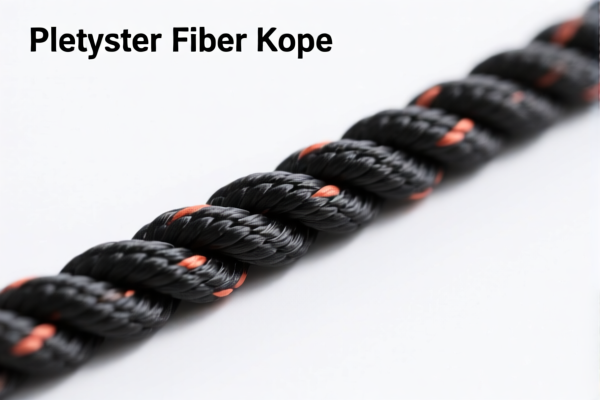
商品图片



AI分析
🧵 Polyester Cotton Rope (Poly-Cotton Blend Yarn/Cord)
🌐 HS Code Reference & Customs Clearance Guide | 2026 Latest Tariff Analysis | Professional Entry Strategy
📌 I. Product Definition & Classification: Do You Really Understand "Polyester Cotton"?
Polyester Cotton Rope (often classified under HS Heading 5509 or 5510 depending on specific composition and yarn structure) refers to textile yarns made from a blend of synthetic staple fibers (Polyester) and natural fibers (Cotton). In international trade, the precise classification hinges on three critical factors:
- Fiber Composition Ratio: The percentage of Polyester vs. Cotton determines whether it falls under synthetic fiber priority or mixed fiber priority.
- Yarn Type: Is it Staple Fiber Yarn (spun from short fibers, Heading 5509/5510) or Continuous Filament Yarn (Heading 5508/5511)? Note: The provided data focuses on Staple Fiber/Mixed classifications.
- Primary Fiber: Which fiber constitutes the majority by weight?
⚠️ Key Distinction Point:
- If Polyester is the majority (>85% or specific mixed rules apply) and mixed with Cotton → Often falls under 5509.53 (Synthetic staple fiber yarn, mainly or solely mixed with cotton).
- If Polyester is mixed with Cotton but does not meet the "mainly/synthetic" criteria for 5509.53, it may fall under 5510.30 (Artificial/ Synthetic staple fiber yarn, mainly or solely mixed with cotton).
- If the yarn contains characteristics of artificial filaments (rare for standard poly-cotton rope, but possible in specific blends) → 5510.90.
📦 II. HS Code Classification Details (2026 Latest Tariff Authority Match)
Based strictly on the provided <DATA>, here are the specific HS Codes, their definitions, and tax implications for Polyester Cotton Rope/Yarn.
| HS Code | Product Description | Specific Definition/Condition | Total Tax Rate |
|---|---|---|---|
5509.53.00.60 |
Polyester-Cotton Blended Yarn | Synthetic staple fiber yarn, mainly/solely mixed with cotton. Meets specific polyester staple/cotton blend requirements. | 48.2% |
5510.30.00.00 |
Polyester-Cotton Blended Yarn | Synthetic staple fiber yarn, mainly/solely mixed with cotton. Does not meet the specific "synthetic main" definition of 5509.53. | 42.5% |
5509.53.00.30 |
Polyester-Cotton Blended Yarn | Synthetic staple fiber yarn, mainly/solely mixed with cotton. Meets "synthetic main spinning yarn" definition. | 48.2% |
5510.90.60.00 |
Polyester-Cotton Blended Yarn | Synthetic/artificial staple fiber yarn. Meets characteristics of artificial filament/yarn category. | 48.2% |
🔍 Critical Note:
- Duplicate Entries: Note that5509.53.00.30appears twice in the source data with identical tax rates and slightly varied descriptions (both emphasizing "synthetic main spinning yarn"). Both carry the 48.2% rate. - Tax Variance: The core difference lies in whether the yarn qualifies for the higher tariff bracket (48.2%) or the slightly lower bracket (42.5%). This is determined by specific national sub-heading rules regarding the primary fiber identity in the blend.
💰 III. 2026 Latest Tariff Rate Breakdown (Including Surtaxes & Policy Surcharges)
✅ Applicable Jurisdiction: United States (US)
✅ Country of Origin: China (CN)
✅ Effective Time: Current 2025/2026 Trade Rules (Section 301, 122, etc.)
🎯 1. High-Tariff Bracket: 5509.53.00.60 & 5509.53.00.30 & 5510.90.60.00
Total Rate: 48.2%
| Component | Rate | Legal Basis / Description |
|---|---|---|
| Basic Duty | 13.2% | Standard MFN (Most Favored Nation) tariff for polyester/cotton yarns. |
| Section 301 Surcharge | 25.0% | Additional duty on Chinese goods under Section 301 of the Trade Act. |
| Section 122 Surcharge | 10.0% | Additional duty under Section 122 (National Security/Emergency Provisions). |
| Total Weighted Rate | 48.2% | Sum of Basic + S301 + S122. |
| Calculation Basis | Ad Valorem (CIF Value × 48.2%) | |
| De Minimis Exemption | ❌ NOT Eligible | Section 321 (De Minimis) does not apply to goods subject to Section 301/122 duties. |
📌 Explanation:
- The 13.2% base rate is standard for textile yarns in this category. - The 25% Section 301 duty is the primary driver of cost for Chinese-origin polyester/cotton blends. - The 10% Section 122 duty applies specifically to certain textile articles under emergency provisions. - Total: 48.2%. This is a very high tariff burden, significantly impacting profit margins.
🎯 2. Mid-Tariff Bracket: 5510.30.00.00
Total Rate: 42.5%
| Component | Rate | Legal Basis / Description |
|---|---|---|
| Basic Duty | 7.5% | Lower base MFN rate for specific mixed staple fiber yarns not classified under 5509.53. |
| Section 301 Surcharge | 25.0% | Additional duty on Chinese goods under Section 301. |
| Section 122 Surcharge | 10.0% | Additional duty under Section 122. |
| Total Weighted Rate | 42.5% | Sum of Basic + S301 + S122. |
| Calculation Basis | Ad Valorem (CIF Value × 42.5%) | |
| De Minimis Exemption | ❌ NOT Eligible | Same as above. |
📌 Note:
- If your product can be legitimately classified under5510.30.00.00(rather than 5509.53), you save 5.7% on the total tariff burden (48.2% - 42.5%). - However, misclassification risks severe penalties. The determination depends on precise fiber content and spinning process documentation.
🛠️ IV. Customs Clearance Operational Advice (Practical Pitfall Avoidance)
✅ 1. Documentation Checklist (Non-Negotiable)
| Document | Required | Purpose |
|---|---|---|
| ✅ Product Specification Sheet | ✔️ | Must detail: % Polyester, % Cotton, Yarn Count (Ne/Tex), Twist Direction, Colorfastness. |
| ✅ Fiber Composition Label | ✔️ | Must match invoice exactly. Discrepancies lead to re-classification. |
| ✅ Commercial Invoice | ✔️ | Clearly state: "Polyester Cotton Spun Yarn/Rope," HS Code, Country of Origin. |
| ✅ Packing List | ✔️ | Include gross/net weight, number of packages. |
| ✅ Certificate of Origin (CO) | ✔️ | Required to prove CN origin (and apply surcharges). If transshipped, prove substantial transformation. |
| ✅ Test Report | ✔️ | Third-party lab report confirming fiber content (e.g., ASTM D276) is highly recommended to support HS Code selection. |
✅ 2. Classification Strategy & Tips
🔥 "Ratio is King, Label is Law!"
| Scenario | Recommended HS Code | Risk Level |
|---|---|---|
| Polyester > 85% + Cotton | 5509.53.00.60 or 5509.53.00.30 |
Medium (High Tax 48.2%) |
| Polyester ~50-84% + Cotton | 5510.30.00.00 |
Low-Medium (Lower Tax 42.5%, but stricter proof needed) |
| Unclear Blend / Filament Characteristics | 5510.90.60.00 |
High Risk (May trigger audit, Tax 48.2%) |
Crucial Tip:
- Do NOT simply label as "Rope." Use "Spun Yarn" or "Cotton/Polyester Blended Yarn" if it is yarn. If it is a finished "Rope" (twisted multiple yarns), it might fall under a different heading (e.g., 5607). The provided data assumes spun yarn classification. - If using De Minimis (Section 321) for small packages: STOP. These codes are not eligible for De Minimis exemption due to Section 301/122 duties. You must pay the full 42.5%-48.2% duty regardless of package size.
✅ 3. Special Circumstances Handling
| Situation | Advice |
|---|---|
| OEM Custom Blends | Provide exact lab reports. If the ratio is borderline (e.g., 84.9% Polyester), classify carefully to avoid "Material Misrepresentation." |
| Transshipment via Vietnam/Mexico | Ensure Substantial Transformation occurred. Simple repackaging or minor processing will not change CN origin. Customs will still apply CN surcharges. |
| Sample Shipments | Even for samples, if duty > $800, file formal entry. If ≤ $800, note that De Minimis does NOT apply to these specific HS codes. |
🌍 V. Global Market Comparison (2026 Context)
| Market | Typical HS Code | Base Duty | Surcharges (China) | Total Est. Duty | Notes |
|---|---|---|---|---|---|
| 🇺🇸 USA | 5509.53 / 5510.30 |
7.5% - 13.2% | +35% (301+122) | 42.5% - 48.2% | Highest burden. No De Minimis. |
| 🇨🇳 China | 5509.53 / 5510.30 |
8% - 10% | None | ~8-10% | Standard import duty. |
| 🇪🇺 EU | 5509 / 5510 |
6.5% | None | 6.5% | Lower risk, lower cost. |
| 🇬🇧 UK | 5509 / 5510 |
6.5% | None | 6.5% | Post-Brexit alignment with EU mostly. |
📌 Conclusion:
- The US market is the most challenging due to the 35%+ in surcharges. - Cost Optimization: Consider sourcing from Vietnam, Bangladesh, or India to avoid China-origin surcharges (if substantial transformation occurs). - Prevention: Use Pre-Ruling (Advance Ruling) from CBP to lock in the HS Code before shipping.
📌 VI. Common Errors & Pitfalls (Blood & Tears Lessons)
❌ Error 1: Declaring as "Rope" (HS 5607) when it is actually "Yarn" (HS 5509/5510).
👉 Consequence: Wrong HS Code, potential penalty, or incorrect duty application.
❌ Error 2: Claiming De Minimis for shipments under $800.
👉 Consequence: Rejected. Section 301/122 duties apply to all entries. You will face detention and required payment of full duty + interest.
❌ Error 3: Mislabeling fiber content (e.g., saying 100% Cotton).
👉 Consequence: Fraud allegations. If found to be Polyester/Cotton blend, back-duties + penalties.
❌ Error 4: Ignoring the "Section 122" 10% surcharge.
👉 Consequence: Underpayment. Customs will assess additional 10% upon audit.
✅ Correct Practice:
"Polyester/Cotton Blended Spun Yarn, 60% Polyester/40% Cotton, 20Ne, For Garment Use, CN Origin, HS 5509.53.00.60"
🎯 VII. Conclusion: Precision is Profit
🎯 Remember the Mantra:
🔹 "Yarn vs Rope: Define Clear.
🔹 Poly-Cotton Ratio: Check the Gear.
🔹 US Market: 48% is the Price.
🔹 De Minimis: It’s Not Nice."
📌 Pro Tip:
If your volume is high, engage a licensed customs broker to apply for a CBP Advance Ruling. This provides legal certainty on whether your specific rope/yarn qualifies for 5510.30.00.00 (42.5%) or the higher brackets.
✨ Professional Clearance, Starts with Precise Classification!
💼 Your Every Cent Saved is a Cent Earned!
用户评价
关于 HS 编码归类
协调制度(HS)是由世界海关组织(WCO)制定的国际贸易商品分类标准。全球 200 多个国家采用 HS 系统作为海关关税、贸易统计和进出口监管的基础。
每个 HS 编码遵循以下层级结构:
- 章(2 位)——商品大类(例如:第 84 章:机器和机械设备)
- 品目(4 位)——章内的更具体分类
- 子目(6 位)——国际通用细分,所有 WCO 成员国统一使用
- 本国细分(8-10 位)——各国自行扩展的细分编码,如美国 HTSUS 10 位编码
正确的 HS 编码归类对于顺利通关、准确缴纳关税和遵守贸易法规至关重要。错误归类可能导致海关延误、多缴关税或罚款。
从CN进口到US时,适用的关税税率可能包括:
- 最惠国(MFN)税率——适用于 WTO 成员国的标准关税税率
- 普通税率——适用于无贸易协定国家
- 贸易救济关税——附加关税,如 301 条款(反倾销)、232 条款(国家安全)或反补贴税
本页内容仅供参考。如需正式归类,请咨询当地海关或持牌报关代理。