Polyester Cotton Rope
CN → US| HS Code | Tariff Rate | Origin | Destination | Doc |
|---|---|---|---|---|
| 5509530060 | 48.2% | CN | US | Official Doc |
| 5510300000 | 42.5% | CN | US | Official Doc |
| 5509530030 | 48.2% | CN | US | Official Doc |
| 5510906000 | 48.2% | CN | US | Official Doc |
| 5509530030 | 48.2% | CN | US | Official Doc |
Product Images

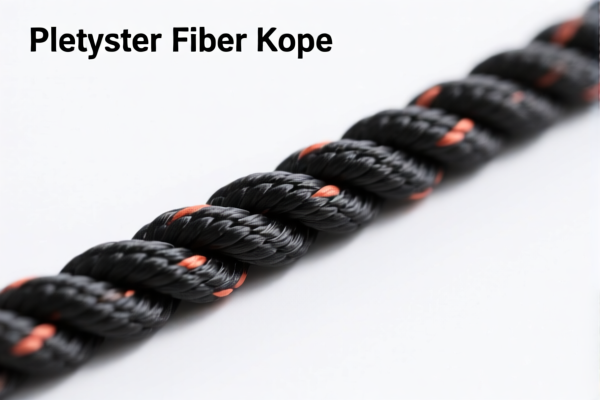


AI Analysis
🧵 Polyester Cotton Rope (Poly-Cotton Blend Yarn/Cord)
🌐 HS Code Reference & Customs Clearance Guide | 2026 Latest Tariff Analysis | Professional Entry Strategy
📌 I. Product Definition & Classification: Do You Really Understand "Polyester Cotton"?
Polyester Cotton Rope (often classified under HS Heading 5509 or 5510 depending on specific composition and yarn structure) refers to textile yarns made from a blend of synthetic staple fibers (Polyester) and natural fibers (Cotton). In international trade, the precise classification hinges on three critical factors:
- Fiber Composition Ratio: The percentage of Polyester vs. Cotton determines whether it falls under synthetic fiber priority or mixed fiber priority.
- Yarn Type: Is it Staple Fiber Yarn (spun from short fibers, Heading 5509/5510) or Continuous Filament Yarn (Heading 5508/5511)? Note: The provided data focuses on Staple Fiber/Mixed classifications.
- Primary Fiber: Which fiber constitutes the majority by weight?
⚠️ Key Distinction Point:
- If Polyester is the majority (>85% or specific mixed rules apply) and mixed with Cotton → Often falls under 5509.53 (Synthetic staple fiber yarn, mainly or solely mixed with cotton).
- If Polyester is mixed with Cotton but does not meet the "mainly/synthetic" criteria for 5509.53, it may fall under 5510.30 (Artificial/ Synthetic staple fiber yarn, mainly or solely mixed with cotton).
- If the yarn contains characteristics of artificial filaments (rare for standard poly-cotton rope, but possible in specific blends) → 5510.90.
📦 II. HS Code Classification Details (2026 Latest Tariff Authority Match)
Based strictly on the provided <DATA>, here are the specific HS Codes, their definitions, and tax implications for Polyester Cotton Rope/Yarn.
| HS Code | Product Description | Specific Definition/Condition | Total Tax Rate |
|---|---|---|---|
5509.53.00.60 |
Polyester-Cotton Blended Yarn | Synthetic staple fiber yarn, mainly/solely mixed with cotton. Meets specific polyester staple/cotton blend requirements. | 48.2% |
5510.30.00.00 |
Polyester-Cotton Blended Yarn | Synthetic staple fiber yarn, mainly/solely mixed with cotton. Does not meet the specific "synthetic main" definition of 5509.53. | 42.5% |
5509.53.00.30 |
Polyester-Cotton Blended Yarn | Synthetic staple fiber yarn, mainly/solely mixed with cotton. Meets "synthetic main spinning yarn" definition. | 48.2% |
5510.90.60.00 |
Polyester-Cotton Blended Yarn | Synthetic/artificial staple fiber yarn. Meets characteristics of artificial filament/yarn category. | 48.2% |
🔍 Critical Note:
- Duplicate Entries: Note that5509.53.00.30appears twice in the source data with identical tax rates and slightly varied descriptions (both emphasizing "synthetic main spinning yarn"). Both carry the 48.2% rate. - Tax Variance: The core difference lies in whether the yarn qualifies for the higher tariff bracket (48.2%) or the slightly lower bracket (42.5%). This is determined by specific national sub-heading rules regarding the primary fiber identity in the blend.
💰 III. 2026 Latest Tariff Rate Breakdown (Including Surtaxes & Policy Surcharges)
✅ Applicable Jurisdiction: United States (US)
✅ Country of Origin: China (CN)
✅ Effective Time: Current 2025/2026 Trade Rules (Section 301, 122, etc.)
🎯 1. High-Tariff Bracket: 5509.53.00.60 & 5509.53.00.30 & 5510.90.60.00
Total Rate: 48.2%
| Component | Rate | Legal Basis / Description |
|---|---|---|
| Basic Duty | 13.2% | Standard MFN (Most Favored Nation) tariff for polyester/cotton yarns. |
| Section 301 Surcharge | 25.0% | Additional duty on Chinese goods under Section 301 of the Trade Act. |
| Section 122 Surcharge | 10.0% | Additional duty under Section 122 (National Security/Emergency Provisions). |
| Total Weighted Rate | 48.2% | Sum of Basic + S301 + S122. |
| Calculation Basis | Ad Valorem (CIF Value × 48.2%) | |
| De Minimis Exemption | ❌ NOT Eligible | Section 321 (De Minimis) does not apply to goods subject to Section 301/122 duties. |
📌 Explanation:
- The 13.2% base rate is standard for textile yarns in this category. - The 25% Section 301 duty is the primary driver of cost for Chinese-origin polyester/cotton blends. - The 10% Section 122 duty applies specifically to certain textile articles under emergency provisions. - Total: 48.2%. This is a very high tariff burden, significantly impacting profit margins.
🎯 2. Mid-Tariff Bracket: 5510.30.00.00
Total Rate: 42.5%
| Component | Rate | Legal Basis / Description |
|---|---|---|
| Basic Duty | 7.5% | Lower base MFN rate for specific mixed staple fiber yarns not classified under 5509.53. |
| Section 301 Surcharge | 25.0% | Additional duty on Chinese goods under Section 301. |
| Section 122 Surcharge | 10.0% | Additional duty under Section 122. |
| Total Weighted Rate | 42.5% | Sum of Basic + S301 + S122. |
| Calculation Basis | Ad Valorem (CIF Value × 42.5%) | |
| De Minimis Exemption | ❌ NOT Eligible | Same as above. |
📌 Note:
- If your product can be legitimately classified under5510.30.00.00(rather than 5509.53), you save 5.7% on the total tariff burden (48.2% - 42.5%). - However, misclassification risks severe penalties. The determination depends on precise fiber content and spinning process documentation.
🛠️ IV. Customs Clearance Operational Advice (Practical Pitfall Avoidance)
✅ 1. Documentation Checklist (Non-Negotiable)
| Document | Required | Purpose |
|---|---|---|
| ✅ Product Specification Sheet | ✔️ | Must detail: % Polyester, % Cotton, Yarn Count (Ne/Tex), Twist Direction, Colorfastness. |
| ✅ Fiber Composition Label | ✔️ | Must match invoice exactly. Discrepancies lead to re-classification. |
| ✅ Commercial Invoice | ✔️ | Clearly state: "Polyester Cotton Spun Yarn/Rope," HS Code, Country of Origin. |
| ✅ Packing List | ✔️ | Include gross/net weight, number of packages. |
| ✅ Certificate of Origin (CO) | ✔️ | Required to prove CN origin (and apply surcharges). If transshipped, prove substantial transformation. |
| ✅ Test Report | ✔️ | Third-party lab report confirming fiber content (e.g., ASTM D276) is highly recommended to support HS Code selection. |
✅ 2. Classification Strategy & Tips
🔥 "Ratio is King, Label is Law!"
| Scenario | Recommended HS Code | Risk Level |
|---|---|---|
| Polyester > 85% + Cotton | 5509.53.00.60 or 5509.53.00.30 |
Medium (High Tax 48.2%) |
| Polyester ~50-84% + Cotton | 5510.30.00.00 |
Low-Medium (Lower Tax 42.5%, but stricter proof needed) |
| Unclear Blend / Filament Characteristics | 5510.90.60.00 |
High Risk (May trigger audit, Tax 48.2%) |
Crucial Tip:
- Do NOT simply label as "Rope." Use "Spun Yarn" or "Cotton/Polyester Blended Yarn" if it is yarn. If it is a finished "Rope" (twisted multiple yarns), it might fall under a different heading (e.g., 5607). The provided data assumes spun yarn classification. - If using De Minimis (Section 321) for small packages: STOP. These codes are not eligible for De Minimis exemption due to Section 301/122 duties. You must pay the full 42.5%-48.2% duty regardless of package size.
✅ 3. Special Circumstances Handling
| Situation | Advice |
|---|---|
| OEM Custom Blends | Provide exact lab reports. If the ratio is borderline (e.g., 84.9% Polyester), classify carefully to avoid "Material Misrepresentation." |
| Transshipment via Vietnam/Mexico | Ensure Substantial Transformation occurred. Simple repackaging or minor processing will not change CN origin. Customs will still apply CN surcharges. |
| Sample Shipments | Even for samples, if duty > $800, file formal entry. If ≤ $800, note that De Minimis does NOT apply to these specific HS codes. |
🌍 V. Global Market Comparison (2026 Context)
| Market | Typical HS Code | Base Duty | Surcharges (China) | Total Est. Duty | Notes |
|---|---|---|---|---|---|
| 🇺🇸 USA | 5509.53 / 5510.30 |
7.5% - 13.2% | +35% (301+122) | 42.5% - 48.2% | Highest burden. No De Minimis. |
| 🇨🇳 China | 5509.53 / 5510.30 |
8% - 10% | None | ~8-10% | Standard import duty. |
| 🇪🇺 EU | 5509 / 5510 |
6.5% | None | 6.5% | Lower risk, lower cost. |
| 🇬🇧 UK | 5509 / 5510 |
6.5% | None | 6.5% | Post-Brexit alignment with EU mostly. |
📌 Conclusion:
- The US market is the most challenging due to the 35%+ in surcharges. - Cost Optimization: Consider sourcing from Vietnam, Bangladesh, or India to avoid China-origin surcharges (if substantial transformation occurs). - Prevention: Use Pre-Ruling (Advance Ruling) from CBP to lock in the HS Code before shipping.
📌 VI. Common Errors & Pitfalls (Blood & Tears Lessons)
❌ Error 1: Declaring as "Rope" (HS 5607) when it is actually "Yarn" (HS 5509/5510).
👉 Consequence: Wrong HS Code, potential penalty, or incorrect duty application.
❌ Error 2: Claiming De Minimis for shipments under $800.
👉 Consequence: Rejected. Section 301/122 duties apply to all entries. You will face detention and required payment of full duty + interest.
❌ Error 3: Mislabeling fiber content (e.g., saying 100% Cotton).
👉 Consequence: Fraud allegations. If found to be Polyester/Cotton blend, back-duties + penalties.
❌ Error 4: Ignoring the "Section 122" 10% surcharge.
👉 Consequence: Underpayment. Customs will assess additional 10% upon audit.
✅ Correct Practice:
"Polyester/Cotton Blended Spun Yarn, 60% Polyester/40% Cotton, 20Ne, For Garment Use, CN Origin, HS 5509.53.00.60"
🎯 VII. Conclusion: Precision is Profit
🎯 Remember the Mantra:
🔹 "Yarn vs Rope: Define Clear.
🔹 Poly-Cotton Ratio: Check the Gear.
🔹 US Market: 48% is the Price.
🔹 De Minimis: It’s Not Nice."
📌 Pro Tip:
If your volume is high, engage a licensed customs broker to apply for a CBP Advance Ruling. This provides legal certainty on whether your specific rope/yarn qualifies for 5510.30.00.00 (42.5%) or the higher brackets.
✨ Professional Clearance, Starts with Precise Classification!
💼 Your Every Cent Saved is a Cent Earned!
Customer Reviews
About HS Code Classification
The Harmonized System (HS) is an internationally standardized nomenclature developed by the World Customs Organization (WCO) to classify traded products. Over 200 countries use the HS system as the basis for customs tariffs, trade statistics, and import/export regulations.
Each HS code follows a hierarchical structure:
- Chapter (2 digits) — Broad category of goods (e.g., Chapter 84: Machinery and Mechanical Appliances)
- Heading (4 digits) — More specific grouping within the chapter
- Subheading (6 digits) — Internationally standardized breakdown, used by all WCO member countries
- National subdivisions (8-10 digits) — Country-specific extensions for further classification, such as US HTSUS 10-digit codes
Correct HS code classification is essential for smooth customs clearance, accurate duty payment, and compliance with trade regulations. Misclassification can lead to customs delays, overpayment of duties, or penalties.
When importing from CN to US, the applicable tariff rates may include:
- Most-Favored-Nation (MFN) rate — The standard duty rate applied to WTO members
- General rate — Applied to countries without trade agreements
- Trade remedy duties — Additional tariffs such as Section 301 (anti-dumping), Section 232 (national security), or countervailing duties
The information provided on this page is for reference purposes only. For official classification, please consult with your local customs authority or a licensed customs broker.