Polyester Portable Beverage Bag
CN → US| HS编码 | 关税税率 | 原产国 | 目的国 | 文档 |
|---|---|---|---|---|
| 3923290000 | 38.0% | CN | US | 官方文档 |
| 3926903300 | 16.5% | CN | US | 官方文档 |
| 3926901000 | 20.9% | CN | US | 官方文档 |
| 4202920809 | 42.0% | CN | US | 官方文档 |
| 4202920807 | 42.0% | CN | US | 官方文档 |
商品图片
AI分析
🥤 Polyester Portable Beverage Bag (Polyester Portable Food/Drink Bag)
🌐 HS Code Reference & Customs Clearance Guide | 2026 Latest Tariff Analysis | Professional Logistics Strategy
📌 I. Product Definition & Classification: What Exactly Is a "Polyester Bag"?
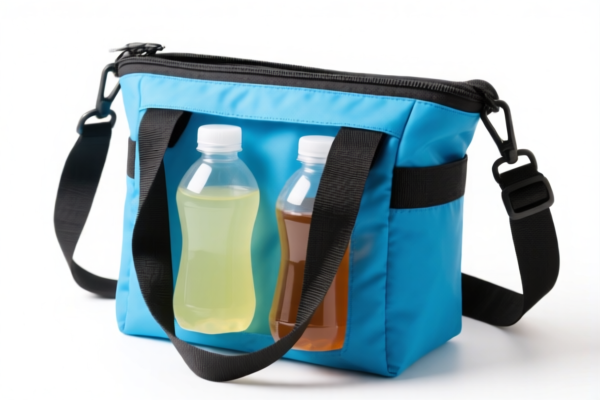
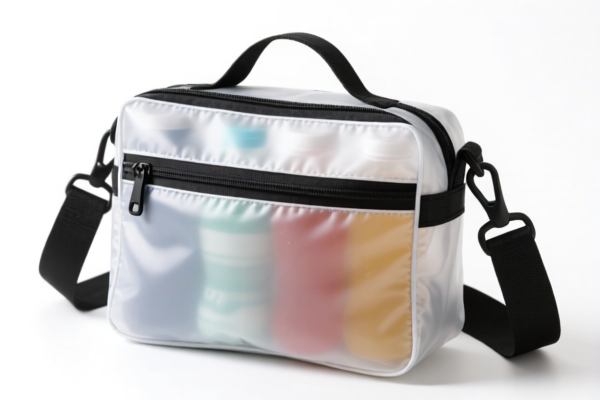
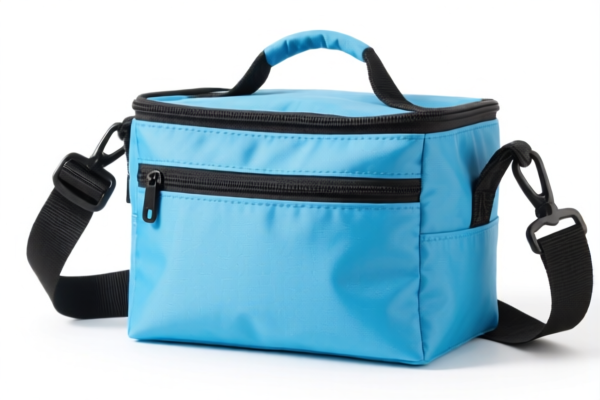
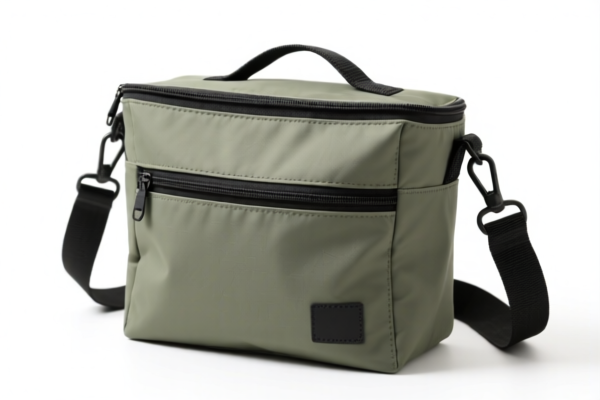
A Polyester Portable Beverage Bag (often referred to as a lunch bag, cooler bag, or insulated food pouch) is a flexible container made from polyester fabric, typically lined with insulation material (like PE foam) to keep food and drinks at temperature.
In international trade, the classification depends heavily on: 1. Structure: Is it just a flexible plastic-lined bag, or is it a structured bag with handles/insulation? 2. Material: Is the primary textile polyester, or is it considered "plastic" due to coatings/linings? 3. Function: Is it for general storage, or specifically for thermal insulation?
⚠️ Key Distinction Points: - If it is primarily a flexible plastic container (even if polyester outer layer) → It may fall under Chapter 39 (Plastics). - If it is a textile article (fabric-based) → It may fall under Chapter 42 (Articles of Leather; Trunk/Bag Articles). - If it has thermal insulation properties specifically for food/drink → It may fall under Chapter 42 (Insulated Bags).
📦 II. HS Code Classification Matrix (2026 Latest Tariff Authority)
Based on the provided data, here are the possible classifications for a Polyester Portable Beverage Bag:
| HS Code | Product Description | Applicability Scenario | Key Characteristic |
|--------|--------------------------|--------------------------|
| 3923.29.00.00 | Plastic Sacs and Pouches (Other) | Classified as a "plastic bag" if the polyester is heavily coated/lined and considered primarily plastic. | ✅ Primary Material: Plastic-like structure |
| 3926.90.33.00 | Other Plastic Articles | Classified as a general plastic product if it doesn't fit the "sac/pouch" definition but is still plastic-dominated. | ✅ Primary Material: Plastic |
| 3926.90.10.00 | Polyester Plastic Articles | Specifically for plastic products made from polyester material. | ✅ Primary Material: Polyester Plastic |
| 4202.92.08.09 | Other Insulated Food/Drink Bags (Other Material) | Classified as an insulated bag made from materials other than textile/plastic (or mixed). | ✅ Function: Insulated Bag |
| 4202.92.08.07 | Insulated Food/Drink Bags (Artificial Fiber) | Specifically for insulated bags made from artificial fibers (like polyester). | ✅ Function: Insulated Bag + Textile |
🔍 Critical Note: - Chapter 39 items are generally cheaper in base duty but may face different "Section 301" or "122" tax structures. - Chapter 42 items (especially
4202.92) are considered "bags" and often attract higher base duties but may have different exemption profiles.
💰 III. 2026 Latest Tariff Rate Breakdown (Including Additional Taxes & Policies)
✅ Applicable Country: United States (US)
✅ Origin: China (CN)
✅ Effective Date: Rates include Base + Section 301 + Section 122 Taxes.
🎯 1. 3923.29.00.00 —— Plastic Sacs and Pouches (Other)
| Item | Detail |
|---|---|
| Base Duty | 3.0% |
| Section 301 (Add-on) | 25.0% |
| Section 122 | 10.0% |
| Total Tax Rate | 38.0% |
| Tax Calculation | CIF Value × 38.0% |
| De Minimis Exemption | ❌ Not Applicable (High tax rate excludes it from $800 threshold benefit in most commercial contexts, though strictly speaking, $800 de minimis can apply to any HTS, but high duties make it uneconomical for bulk). |
| Legal Basis | Base: USITC 3923.29.00.00 → 301: Footnote 9903.88.01 → 122: IEEPA 9903.01.24 |
📌 Interpretation:
- This is the "Plastic Bag" route.
- The 38% rate is high due to the combination of 301 (25%) and 122 (10%) tariffs.
- Use this if the bag is essentially a thin, flexible plastic-lined pouch rather than a structured fabric bag.
🎯 2. 3926.90.33.00 —— Other Plastic Articles
| Item | Detail |
|---|---|
| Base Duty | 6.5% |
| Section 301 (Add-on) | 0.0% |
| Section 122 | 10.0% |
| Total Tax Rate | 16.5% |
| Tax Calculation | CIF Value × 16.5% |
| De Minimis Exemption | ⚠️ Low Tax Risk (More likely to be cost-effective for small parcels). |
| Legal Basis | Base: USITC 3926.90.33.00 → 122: IEEPA 9903.01.24 |
📌 Interpretation:
- This is the "Lowest Cost" option among the Chapter 39 codes.
- Zero Section 301 tax is a huge advantage.
- Only 10% for Section 122.
- Use this if the product can be argued as a "plastic article" rather than a "plastic bag" or "insulated bag."
🎯 3. 3926.90.10.00 —— Polyester Plastic Articles
| Item | Detail |
|---|---|
| Base Duty | 3.4% |
| Section 301 (Add-on) | 7.5% |
| Section 122 | 10.0% |
| Total Tax Rate | 20.9% |
| Tax Calculation | CIF Value × 20.9% |
| Legal Basis | Base: USITC 3926.90.10.00 → 301: Footnote 9903.88.01 (Partial) → 122: IEEPA 9903.01.24 |
📌 Interpretation:
- Specific to polyester-based plastic articles.
- Moderate tax rate. Lower base duty than3926.90.33but has a 7.5% Section 301 component.
🎯 4. 4202.92.08.09 —— Insulated Food/Drink Bags (Other Material)
| Item | Detail |
|---|---|
| Base Duty | 7.0% |
| Section 301 (Add-on) | 25.0% |
| Section 122 | 10.0% |
| Total Tax Rate | 42.0% |
| Legal Basis | Base: USITC 4202.92.08.09 → 301: Footnote 9903.88.01 → 122: IEEPA 9903.01.24 |
📌 Interpretation:
- Classified as a bag under Chapter 42.
- Highest tax rate in the dataset (42%).
- Avoid unless the product clearly fails textile definitions for4202.92.08.07.
🎯 5. 4202.92.08.07 —— Insulated Food/Drink Bags (Artificial Fiber)
| Item | Detail |
|---|---|
| Base Duty | 7.0% |
| Section 301 (Add-on) | 25.0% |
| Section 122 | 10.0% |
| Total Tax Rate | 42.0% |
| Legal Basis | Base: USITC 4202.92.08.07 → 301: Footnote 9903.88.01 → 122: IEEPA 9903.01.24 |
📌 Interpretation:
- Most accurate for a polyester (artificial fiber) insulated bag.
- However, 42% is the most expensive option.
- Strategy: Try to re-classify as Chapter 39 (3926.90.33.00) to save 25.5% in taxes.
🛠️ IV. Customs Clearance Practical Advice (Real-World Pitfall Guide)
✅ 1. Recommended Classification Strategy (Cost Optimization)
| Rank | HS Code | Total Tax | Reason for Choice |
|---|---|---|---|
| 🥇 Best | 3926.90.33.00 |
16.5% | Lowest total tax. Argue that the bag is primarily a "plastic article" due to waterproof lining/coating. |
| 🥈 Good | 3926.90.10.00 |
20.9% | Specific for polyester plastic. Good middle ground. |
| 🥉 Acceptable | 3923.29.00.00 |
38.0% | Standard "plastic bag" classification. High tax. |
| ❌ Avoid | 4202.92.08.07 / 09 |
42.0% | Highest tax. Only use if customs insists it is a "textile bag." |
💡 Pro Tip:
In customs declarations, emphasize "Waterproof Plastic Lining" and "Flexible Plastic Structure" to support3926.90classification. Avoid words like "Textile," "Fabric," or "Insulated Bag" if you want to stay in Chapter 39.
✅ 2. Required Documentation for Customs
| Document | Requirement | Notes |
|---|---|---|
| Product Description | "Polyester-lined plastic pouch" or "Plastic insulated container" | Do NOT write "Fabric Bag" if using HS 39. |
| Material Composition | List % of Plastic vs. Polyester | Higher plastic content supports Chapter 39. |
| Photos | Show internal lining (plastic/foam) | Prove it is not purely textile. |
| Commercial Invoice | Value clearly stated | CIF value is critical for tax calculation. |
| Country of Origin | China | Triggers Section 301 and 122. |
✅ 3. Common Mistakes to Avoid
❌ Mistake 1: Declaring as "Textile Bag" (4202.92) without justification.
👉 Result: 42% Tax.
👉 Fix: Provide material analysis showing plastic lining dominates.
❌ Mistake 2: Using 3923.29.00.00 for a structured, hard-sided cooler bag.
👉 Result: Customs may reclassify to 4202.92 for being "more than a bag."
👉 Fix: Ensure the product is flexible and pouch-like for 3923.29.
❌ Mistake 3: Ignoring Section 122 (10%) in cost calculations.
👉 Result: Unexpected tax bill.
👉 Fix: Always include the 10% in your landed cost model.
🌍 V. Global Market Comparison (2026)
| Country | Recommended HS Code | Total Tax (Approx.) | Notes |
|---|---|---|---|
| 🇺🇸 USA | 3926.90.33.00 |
16.5% | Best option for China origin. |
| 🇨🇳 China | 3926.90.33.00 |
~6.5% | Low import duty. |
| 🇪🇺 EU | 3926.90.97 |
~6.5% | No Section 301/122. |
| 🇬🇧 UK | 3926.90.97 |
~6.5% | Post-Brexit tariffs. |
📌 Conclusion:
For the US market, the key to profitability is avoiding Chapter 42 and minimizing Section 301 exposure.3926.90.33.00is the optimal choice.
📌 VI. Final Checklist for Shippers
- Confirm Material: Is the outer layer polyester but the essential character plastic? → Use HS 39.
- Check Lining: If it has a thick plastic/foam lining, emphasize "Plastic Article."
- Calculate Landed Cost:
Landed Cost = CIF Price + (CIF Price × 16.5%) + Shipping + Duties - Pre-Ruling: For large volumes, consider an Advance Ruling from CBP to secure the 16.5% rate.
🎯 Remember:
🔹 "Plastic vs. Fabric: It's all about the lining!"
🔹 "Chapter 39 saves you 25% compared to Chapter 42!"
🔹 "Don't let 'Polyester' fool you—classify by essential character!"
📣 Action Step:
📞 Contact your freight forwarder with the description:
"Polyester-coated plastic insulated pouch, flexible, with PE foam lining."
🚀 Target HS Code:3926.90.33.00| Target Tax: 16.5%
✨ Smart Classification Saves Money!
💼 Optimize your logistics, maximize your margin!
用户评价
关于 HS 编码归类
协调制度(HS)是由世界海关组织(WCO)制定的国际贸易商品分类标准。全球 200 多个国家采用 HS 系统作为海关关税、贸易统计和进出口监管的基础。
每个 HS 编码遵循以下层级结构:
- 章(2 位)——商品大类(例如:第 84 章:机器和机械设备)
- 品目(4 位)——章内的更具体分类
- 子目(6 位)——国际通用细分,所有 WCO 成员国统一使用
- 本国细分(8-10 位)——各国自行扩展的细分编码,如美国 HTSUS 10 位编码
正确的 HS 编码归类对于顺利通关、准确缴纳关税和遵守贸易法规至关重要。错误归类可能导致海关延误、多缴关税或罚款。
从CN进口到US时,适用的关税税率可能包括:
- 最惠国(MFN)税率——适用于 WTO 成员国的标准关税税率
- 普通税率——适用于无贸易协定国家
- 贸易救济关税——附加关税,如 301 条款(反倾销)、232 条款(国家安全)或反补贴税
本页内容仅供参考。如需正式归类,请咨询当地海关或持牌报关代理。