Polyester Portable Beverage Bag
CN → US| HS Code | Tariff Rate | Origin | Destination | Doc |
|---|---|---|---|---|
| 3923290000 | 38.0% | CN | US | Official Doc |
| 3926903300 | 16.5% | CN | US | Official Doc |
| 3926901000 | 20.9% | CN | US | Official Doc |
| 4202920809 | 42.0% | CN | US | Official Doc |
| 4202920807 | 42.0% | CN | US | Official Doc |
Product Images
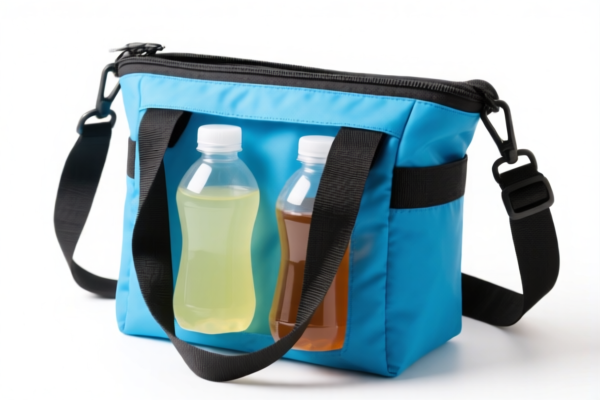
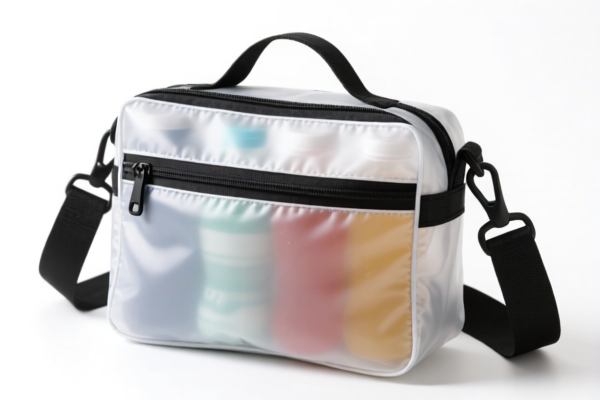
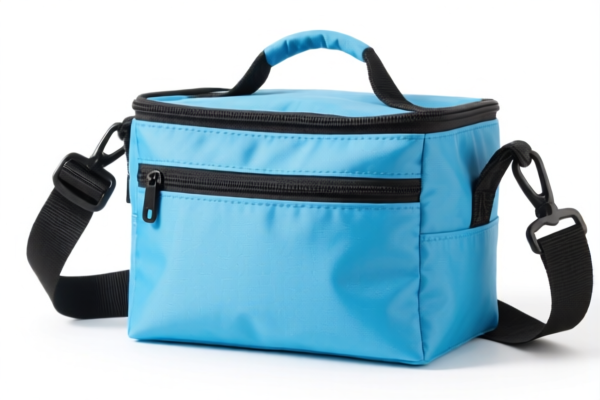
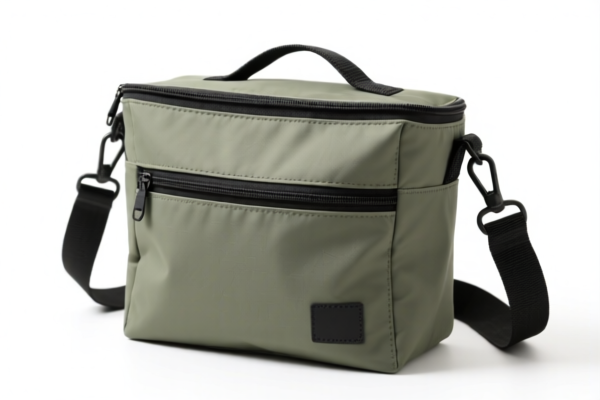
AI Analysis
🥤 Polyester Portable Beverage Bag (Polyester Portable Food/Drink Bag)
🌐 HS Code Reference & Customs Clearance Guide | 2026 Latest Tariff Analysis | Professional Logistics Strategy
📌 I. Product Definition & Classification: What Exactly Is a "Polyester Bag"?
A Polyester Portable Beverage Bag (often referred to as a lunch bag, cooler bag, or insulated food pouch) is a flexible container made from polyester fabric, typically lined with insulation material (like PE foam) to keep food and drinks at temperature.
In international trade, the classification depends heavily on: 1. Structure: Is it just a flexible plastic-lined bag, or is it a structured bag with handles/insulation? 2. Material: Is the primary textile polyester, or is it considered "plastic" due to coatings/linings? 3. Function: Is it for general storage, or specifically for thermal insulation?
⚠️ Key Distinction Points: - If it is primarily a flexible plastic container (even if polyester outer layer) → It may fall under Chapter 39 (Plastics). - If it is a textile article (fabric-based) → It may fall under Chapter 42 (Articles of Leather; Trunk/Bag Articles). - If it has thermal insulation properties specifically for food/drink → It may fall under Chapter 42 (Insulated Bags).
📦 II. HS Code Classification Matrix (2026 Latest Tariff Authority)
Based on the provided data, here are the possible classifications for a Polyester Portable Beverage Bag:
| HS Code | Product Description | Applicability Scenario | Key Characteristic |
|--------|--------------------------|--------------------------|
| 3923.29.00.00 | Plastic Sacs and Pouches (Other) | Classified as a "plastic bag" if the polyester is heavily coated/lined and considered primarily plastic. | ✅ Primary Material: Plastic-like structure |
| 3926.90.33.00 | Other Plastic Articles | Classified as a general plastic product if it doesn't fit the "sac/pouch" definition but is still plastic-dominated. | ✅ Primary Material: Plastic |
| 3926.90.10.00 | Polyester Plastic Articles | Specifically for plastic products made from polyester material. | ✅ Primary Material: Polyester Plastic |
| 4202.92.08.09 | Other Insulated Food/Drink Bags (Other Material) | Classified as an insulated bag made from materials other than textile/plastic (or mixed). | ✅ Function: Insulated Bag |
| 4202.92.08.07 | Insulated Food/Drink Bags (Artificial Fiber) | Specifically for insulated bags made from artificial fibers (like polyester). | ✅ Function: Insulated Bag + Textile |
🔍 Critical Note: - Chapter 39 items are generally cheaper in base duty but may face different "Section 301" or "122" tax structures. - Chapter 42 items (especially
4202.92) are considered "bags" and often attract higher base duties but may have different exemption profiles.
💰 III. 2026 Latest Tariff Rate Breakdown (Including Additional Taxes & Policies)
✅ Applicable Country: United States (US)
✅ Origin: China (CN)
✅ Effective Date: Rates include Base + Section 301 + Section 122 Taxes.
🎯 1. 3923.29.00.00 —— Plastic Sacs and Pouches (Other)
| Item | Detail |
|---|---|
| Base Duty | 3.0% |
| Section 301 (Add-on) | 25.0% |
| Section 122 | 10.0% |
| Total Tax Rate | 38.0% |
| Tax Calculation | CIF Value × 38.0% |
| De Minimis Exemption | ❌ Not Applicable (High tax rate excludes it from $800 threshold benefit in most commercial contexts, though strictly speaking, $800 de minimis can apply to any HTS, but high duties make it uneconomical for bulk). |
| Legal Basis | Base: USITC 3923.29.00.00 → 301: Footnote 9903.88.01 → 122: IEEPA 9903.01.24 |
📌 Interpretation:
- This is the "Plastic Bag" route.
- The 38% rate is high due to the combination of 301 (25%) and 122 (10%) tariffs.
- Use this if the bag is essentially a thin, flexible plastic-lined pouch rather than a structured fabric bag.
🎯 2. 3926.90.33.00 —— Other Plastic Articles
| Item | Detail |
|---|---|
| Base Duty | 6.5% |
| Section 301 (Add-on) | 0.0% |
| Section 122 | 10.0% |
| Total Tax Rate | 16.5% |
| Tax Calculation | CIF Value × 16.5% |
| De Minimis Exemption | ⚠️ Low Tax Risk (More likely to be cost-effective for small parcels). |
| Legal Basis | Base: USITC 3926.90.33.00 → 122: IEEPA 9903.01.24 |
📌 Interpretation:
- This is the "Lowest Cost" option among the Chapter 39 codes.
- Zero Section 301 tax is a huge advantage.
- Only 10% for Section 122.
- Use this if the product can be argued as a "plastic article" rather than a "plastic bag" or "insulated bag."
🎯 3. 3926.90.10.00 —— Polyester Plastic Articles
| Item | Detail |
|---|---|
| Base Duty | 3.4% |
| Section 301 (Add-on) | 7.5% |
| Section 122 | 10.0% |
| Total Tax Rate | 20.9% |
| Tax Calculation | CIF Value × 20.9% |
| Legal Basis | Base: USITC 3926.90.10.00 → 301: Footnote 9903.88.01 (Partial) → 122: IEEPA 9903.01.24 |
📌 Interpretation:
- Specific to polyester-based plastic articles.
- Moderate tax rate. Lower base duty than3926.90.33but has a 7.5% Section 301 component.
🎯 4. 4202.92.08.09 —— Insulated Food/Drink Bags (Other Material)
| Item | Detail |
|---|---|
| Base Duty | 7.0% |
| Section 301 (Add-on) | 25.0% |
| Section 122 | 10.0% |
| Total Tax Rate | 42.0% |
| Legal Basis | Base: USITC 4202.92.08.09 → 301: Footnote 9903.88.01 → 122: IEEPA 9903.01.24 |
📌 Interpretation:
- Classified as a bag under Chapter 42.
- Highest tax rate in the dataset (42%).
- Avoid unless the product clearly fails textile definitions for4202.92.08.07.
🎯 5. 4202.92.08.07 —— Insulated Food/Drink Bags (Artificial Fiber)
| Item | Detail |
|---|---|
| Base Duty | 7.0% |
| Section 301 (Add-on) | 25.0% |
| Section 122 | 10.0% |
| Total Tax Rate | 42.0% |
| Legal Basis | Base: USITC 4202.92.08.07 → 301: Footnote 9903.88.01 → 122: IEEPA 9903.01.24 |
📌 Interpretation:
- Most accurate for a polyester (artificial fiber) insulated bag.
- However, 42% is the most expensive option.
- Strategy: Try to re-classify as Chapter 39 (3926.90.33.00) to save 25.5% in taxes.
🛠️ IV. Customs Clearance Practical Advice (Real-World Pitfall Guide)
✅ 1. Recommended Classification Strategy (Cost Optimization)
| Rank | HS Code | Total Tax | Reason for Choice |
|---|---|---|---|
| 🥇 Best | 3926.90.33.00 |
16.5% | Lowest total tax. Argue that the bag is primarily a "plastic article" due to waterproof lining/coating. |
| 🥈 Good | 3926.90.10.00 |
20.9% | Specific for polyester plastic. Good middle ground. |
| 🥉 Acceptable | 3923.29.00.00 |
38.0% | Standard "plastic bag" classification. High tax. |
| ❌ Avoid | 4202.92.08.07 / 09 |
42.0% | Highest tax. Only use if customs insists it is a "textile bag." |
💡 Pro Tip:
In customs declarations, emphasize "Waterproof Plastic Lining" and "Flexible Plastic Structure" to support3926.90classification. Avoid words like "Textile," "Fabric," or "Insulated Bag" if you want to stay in Chapter 39.
✅ 2. Required Documentation for Customs
| Document | Requirement | Notes |
|---|---|---|
| Product Description | "Polyester-lined plastic pouch" or "Plastic insulated container" | Do NOT write "Fabric Bag" if using HS 39. |
| Material Composition | List % of Plastic vs. Polyester | Higher plastic content supports Chapter 39. |
| Photos | Show internal lining (plastic/foam) | Prove it is not purely textile. |
| Commercial Invoice | Value clearly stated | CIF value is critical for tax calculation. |
| Country of Origin | China | Triggers Section 301 and 122. |
✅ 3. Common Mistakes to Avoid
❌ Mistake 1: Declaring as "Textile Bag" (4202.92) without justification.
👉 Result: 42% Tax.
👉 Fix: Provide material analysis showing plastic lining dominates.
❌ Mistake 2: Using 3923.29.00.00 for a structured, hard-sided cooler bag.
👉 Result: Customs may reclassify to 4202.92 for being "more than a bag."
👉 Fix: Ensure the product is flexible and pouch-like for 3923.29.
❌ Mistake 3: Ignoring Section 122 (10%) in cost calculations.
👉 Result: Unexpected tax bill.
👉 Fix: Always include the 10% in your landed cost model.
🌍 V. Global Market Comparison (2026)
| Country | Recommended HS Code | Total Tax (Approx.) | Notes |
|---|---|---|---|
| 🇺🇸 USA | 3926.90.33.00 |
16.5% | Best option for China origin. |
| 🇨🇳 China | 3926.90.33.00 |
~6.5% | Low import duty. |
| 🇪🇺 EU | 3926.90.97 |
~6.5% | No Section 301/122. |
| 🇬🇧 UK | 3926.90.97 |
~6.5% | Post-Brexit tariffs. |
📌 Conclusion:
For the US market, the key to profitability is avoiding Chapter 42 and minimizing Section 301 exposure.3926.90.33.00is the optimal choice.
📌 VI. Final Checklist for Shippers
- Confirm Material: Is the outer layer polyester but the essential character plastic? → Use HS 39.
- Check Lining: If it has a thick plastic/foam lining, emphasize "Plastic Article."
- Calculate Landed Cost:
Landed Cost = CIF Price + (CIF Price × 16.5%) + Shipping + Duties - Pre-Ruling: For large volumes, consider an Advance Ruling from CBP to secure the 16.5% rate.
🎯 Remember:
🔹 "Plastic vs. Fabric: It's all about the lining!"
🔹 "Chapter 39 saves you 25% compared to Chapter 42!"
🔹 "Don't let 'Polyester' fool you—classify by essential character!"
📣 Action Step:
📞 Contact your freight forwarder with the description:
"Polyester-coated plastic insulated pouch, flexible, with PE foam lining."
🚀 Target HS Code:3926.90.33.00| Target Tax: 16.5%
✨ Smart Classification Saves Money!
💼 Optimize your logistics, maximize your margin!
Customer Reviews
About HS Code Classification
The Harmonized System (HS) is an internationally standardized nomenclature developed by the World Customs Organization (WCO) to classify traded products. Over 200 countries use the HS system as the basis for customs tariffs, trade statistics, and import/export regulations.
Each HS code follows a hierarchical structure:
- Chapter (2 digits) — Broad category of goods (e.g., Chapter 84: Machinery and Mechanical Appliances)
- Heading (4 digits) — More specific grouping within the chapter
- Subheading (6 digits) — Internationally standardized breakdown, used by all WCO member countries
- National subdivisions (8-10 digits) — Country-specific extensions for further classification, such as US HTSUS 10-digit codes
Correct HS code classification is essential for smooth customs clearance, accurate duty payment, and compliance with trade regulations. Misclassification can lead to customs delays, overpayment of duties, or penalties.
When importing from CN to US, the applicable tariff rates may include:
- Most-Favored-Nation (MFN) rate — The standard duty rate applied to WTO members
- General rate — Applied to countries without trade agreements
- Trade remedy duties — Additional tariffs such as Section 301 (anti-dumping), Section 232 (national security), or countervailing duties
The information provided on this page is for reference purposes only. For official classification, please consult with your local customs authority or a licensed customs broker.