Polyester Single Shoulder Lunch Bag
CN → US| HS编码 | 关税税率 | 原产国 | 目的国 | 文档 |
|---|---|---|---|---|
| 3923290000 | 38.0% | CN | US | 官方文档 |
| 3923900080 | 38.0% | CN | US | 官方文档 |
| 4202920807 | 42.0% | CN | US | 官方文档 |
| 4202920809 | 42.0% | CN | US | 官方文档 |
| 6307909884 | 24.5% | CN | US | 官方文档 |
| 6307909891 | 24.5% | CN | US | 官方文档 |
商品图片
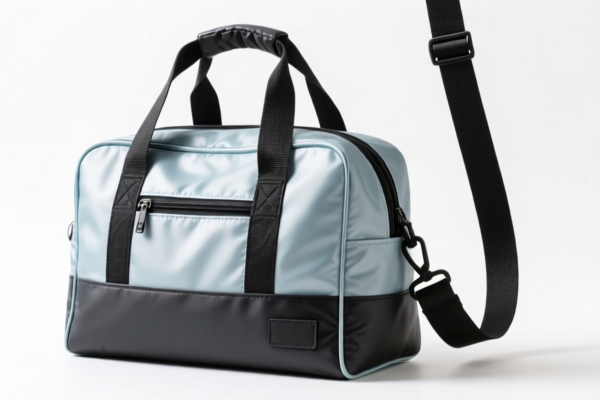
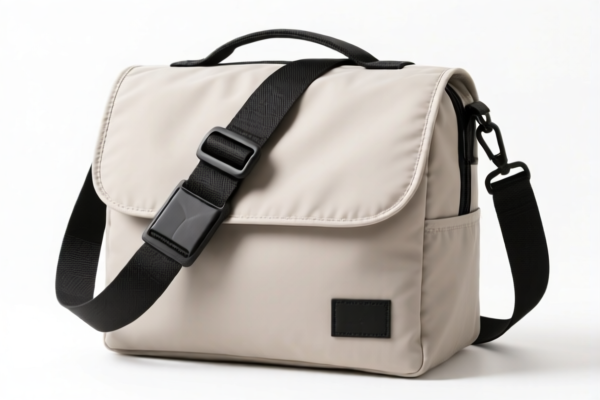
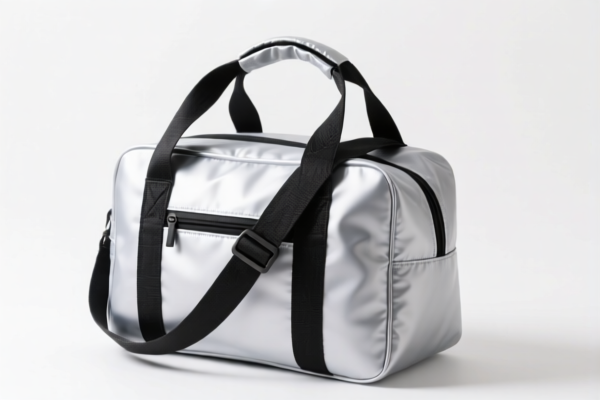
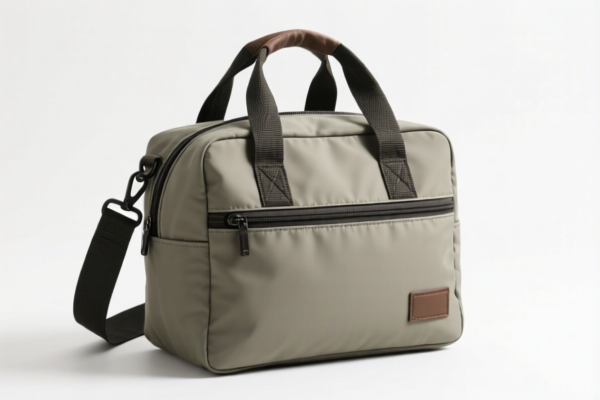
AI分析
👜 Polyester Single Shoulder Lunch Bag (Insulated Food Carrier)
🌐 HS Code Reference & Customs Clearance Guide | 2026 Latest Tariff Analysis | Professional Strategy for US-China Trade
📌 1. Product Definition & Classification: What Exactly Is a "Lunch Bag"?
A "Polyester Single Shoulder Lunch Bag" is a flexible container used for storing and transporting food, typically featuring thermal insulation properties. In international trade, the classification hinges on Material Composition and Primary Function/Structure.
There are two distinct classification paths depending on whether the bag is viewed primarily as a Plastic Container or as a Textile Accessory:
Path A: Plastic/Chemical Product Class (Chapters 39)
If the bag is deemed to be made primarily of plastic sheets/films (even if polyester/nylon, which are synthetic polymers) and functions as a "sack or bag" for packaging goods.
👉 Logic: Focuses on the material as a synthetic plastic article.
Path B: Textile/Accessory Class (Chapters 42 or 63)
If the bag is viewed as a made-up textile article, specifically a "bag" or "sack" of textile materials, or a general "textile article" with no specific name.
👉 Logic: Focuses on the textile nature (woven polyester fabric) and its use as a consumer accessory.
⚠️ Key Distinction Point:
- If classified under Chapter 39, it is treated as a "Plastic Sack/Bag."
- If classified under Chapter 42, it is treated as an "Accessory of Apparel" or "Luggage/Handbag" type article.
- If classified under Chapter 63, it is treated as a "Textile Article, Not Elsewhere Specified."
📦 2. HS Code Classification Details (2026 Latest Tariff Reference)
Based on the provided data, here is the breakdown of potential HS Codes and their logical justifications:
| HS Code | Product Description | Classification Logic | Material Focus |
|---|---|---|---|
3923.29.00.00 |
Other Plastic Sacs & Bags, For Packaging | Fits "Packaging/Containing Articles" | Polyester as Synthetic Plastic |
3923.90.00.80 |
Other Articles of Plastics For Packing | Fits "Plastic Packaging Supplies" | Polyester as Synthetic Plastic |
4202.92.08.07 |
Other Articles With Outer Surface Of Textile Materials | Fits "Lunch Bag" form + "Artificial Fiber" material | Polyester as Artificial Fiber |
4202.92.08.09 |
Other Articles With Outer Surface Of Textile Materials | Fits "Other Categories" + "Insulated Bag" inference | Polyester as Synthetic/Artificial Fiber |
6307.90.98.84 |
Other Made-Up Textile Articles, Not Elsewhere Specified | Fits "Other Textile Articles" (Catch-all) | Polyester as Artificial Fiber |
6307.90.98.91 |
Other Made-Up Textile Articles, Not Elsewhere Specified | Fits "Other Made-Up Articles" (No Conflict) | Polyester as Polyester Fiber |
🔍 Critical Note:
- Ch 39 (Codes 3923.x): Generally lower base duty but subject to the same aggressive US tariffs.
- Ch 42 (Codes 4202.x): Often preferred for branded fashion-style lunch bags, but attracts a higher base duty (7%) compared to plastics.
- Ch 63 (Codes 6307.x): A "catch-all" for textile articles. May have lower additional duties if not classified under 301/IEEPA specific footnotes, but depends on strict customs interpretation of "Textile Article."
💰 3. 2026 Latest Tariff Rate Breakdown (Including Add-Ons)
✅ Applicable Country: United States (US)
✅ Origin: China (CN)
✅ Effective Date: Post-November 10, 2025 (Includes subsequent imports)
🎯 1. Classification A: Plastic Category (3923.29.00.00 & 3923.90.00.80)
| Item | Content |
|---|---|
| Base Duty | 3.0% (Standard MFN Rate) |
| USITC Add-On (Section 301) | +25.0% (Trade Remedy Tariff) |
| IEEPA Add-On (Section 122/8019) | +10.0% (China-specific Emergency Tariff) |
| Total Duty Rate | 38.0% |
| Calculation Basis | CIF Value × 38% |
| De Minimis Exemption? | ❌ NO (deny_de_minimis) |
| Legal Pathway | USITC:3923.29.00.00 → FOOTNOTE:9903.88.01 + IEEPA:9903.01.24 |
📌 Explanation:
- 38% Total: A significant cost burden.
- Breakdown: The 3% base is standard for plastic bags. The 25% is the classic Section 301 tariff on Chinese plastic goods. The 10% is the newer IEEPA tariff targeting specific Chinese imports.
- Risk: High. Customs may scrutinize if it's truly "plastic" vs. "textile."
🎯 2. Classification B: Textile/Accessory Category (4202.92.08.07 & 4202.92.08.09)
| Item | Content |
|---|---|
| Base Duty | 7.0% (Standard MFN Rate for Textile Accessories) |
| USITC Add-On (Section 301) | +25.0% (Trade Remedy Tariff) |
| IEEPA Add-On (Section 122/8019) | +10.0% (China-specific Emergency Tariff) |
| Total Duty Rate | 42.0% |
| Calculation Basis | CIF Value × 42% |
| De Minimis Exemption? | ❌ NO (deny_de_minimis) |
| Legal Pathway | USITC:4202.92.08.07 → FOOTNOTE:9903.88.01 + IEEPA:9903.01.24 |
📌 Explanation:
- 42% Total: This is the most expensive option due to the higher base rate (7% vs 3%).
- Why 7%?: Chapter 42 items are often considered "luggage/accessories," which have higher base duties than industrial plastics.
- Strategy: Generally avoid this classification unless specifically required by brand positioning, as it increases tax liability by 4% compared to the plastic classification.
🎯 3. Classification C: General Textile Article Category (6307.90.98.84 & 6307.90.98.91)
| Item | Content |
|---|---|
| Base Duty | 7.0% (Standard MFN Rate for Other Textile Articles) |
| USITC Add-On (Section 301) | +7.5% (Note: Lower than 25%! Check specific footnote applicability) |
| IEEPA Add-On (Section 122/8019) | +10.0% (China-specific Emergency Tariff) |
| Total Duty Rate | 24.5% |
| Calculation Basis | CIF Value × 24.5% |
| De Minimis Exemption? | ❌ NO (deny_de_minimis) |
| Legal Pathway | USITC:6307.90.98.84 → FOOTNOTE:9903.01.25 (Potentially lower add-on) |
📌 Explanation:
- 24.5% Total: This is the most cost-effective classification IF applicable.
- Why Lower Add-On?: Some Chapter 63 items may not fall under the full 25% Section 301 rate depending on the specific HTS subheading footnote. The data suggests a 7.5% add-on instead of 25%, leading to significant savings.
- Crucial Caveat: This depends heavily on whether US Customs and Border Protection (CBP) accepts "Other Textile Articles" for lunch bags vs. "Textile Bags" (which might be 4202). This is the "Optimization Target."
🛠️ 4. Customs Clearance Practical Advice (Action Plan)
✅ 1. Document Preparation Checklist
| Document | Required? | Purpose |
|---|---|---|
| ✅ Product Specifications | ✔️ | Must detail: Material (100% Polyester), Dimensions, Insulation Type (PEVA foil, etc.). |
| ✅ Material Composition Sheet | ✔️ | Proof that it is Textile Fabric (woven/knitted polyester) to support Ch 63/42, OR plastic film to support Ch 39. |
| ✅ High-Res Photos | ✔️ | Show seams, zippers, handles, and internal lining. Insulating lining helps argue for "Textile Article" rather than simple plastic sack. |
| ✅ Commercial Invoice | ✔️ | Description: "Polyester Insulated Lunch Bag, Single Shoulder." Avoid vague terms like "Plastic Bag." |
| ✅ Packing List | ✔️ | Confirm net/gross weight. |
✅ 2. Declaration Strategy & Keywords
🔥 Golden Rule: "Material Matters, Function Follows!"
| Scenario | Recommended Declaration | Target HS Code | Why? |
|---|---|---|---|
| Aggressive Optimization | "Textile Lunch Bag, Polyester Fabric, Insulated" | 6307.90.98.84 |
Aims for 24.5% rate. Argues it's a general textile item, not a "bag of apparel." |
| Conservative/Standard | "Plastic Insulated Bag for Food" | 3923.29.00.00 |
Aims for 38% rate. Easier to prove if outer material is treated plastic/nylon. |
| High-End/Branded | "Polyester Shoulder Bag for Food" | 4202.92.08.07 |
Aims for 42% rate. Usually avoided due to high tax. |
✅ 3. Special Handling for US Imports
| Issue | Solution |
|---|---|
| De Minimis (Section 321) | ❌ Not Eligible. All these codes are subject to deny_de_minimis. You must file a formal entry (10-digit HS). |
| Section 301 Exclusion | ❌ Expired/Unlikely. Most textile/plastic bags do not have active exclusions. Assume 25% or 7.5% applies. |
| Labeling | Must show "Made in China" prominently. |
| Antidumping/Countervailing | Check if specific polyester fibers have AD/CVD. Usually, finished bags are exempt, but verify raw material source. |
🌍 5. Global Market Comparison (Quick View)
| Country/Region | Recommended HS Code | Est. Total Duty (China Origin) | Notes |
|---|---|---|---|
| 🇺🇸 USA | 6307.90.98.84 (Best Case) |
24.5% | Requires strong justification for Ch 63. |
| 🇺🇸 USA | 3923.29.00.00 (Default) |
38.0% | Safer, but higher tax. |
| 🇪🇺 EU | 6307.90.90 |
~4-6% | No Section 301/IEEPA. Much cheaper. |
| 🇨🇳 China | 6307.90.90 |
~7-10% | Domestic consumption. |
📌 Conclusion for US Market:
The 24.5% rate (Ch 63) is significantly better than 38% (Ch 39) or 42% (Ch 42).
Strategy: Prepare technical documents proving the bag is a "Textile Article" rather than a "Plastic Bag" or "Luggage Accessory" to justify the Ch 63 classification.
📌 6. Common Pitfalls & Red Flags
❌ Pitfall 1: Declaring as 4202 (Luggage)
👉 Result: 42% Tax. Unnecessary cost if it can be Ch 63 or Ch 39.
👉 Fix: Emphasize "Food Storage" function, not "Fashion Accessory."
❌ Pitfall 2: Declaring as 3923 but Customs disagrees
👉 Result: Audit/Dispute. If Customs sees woven fabric, they may force 4202 or 6307.
👉 Fix: Ensure the outer fabric is clearly textile (woven/knitted), not plastic film.
❌ Pitfall 3: Ignoring IEEPA 10%
👉 Result: Underpayment of duties.
👉 Fix: Always add the 10% IEEPA surcharge to your cost model for China-origin goods.
✅ Correct Declaration Example:
"Insulated Lunch Bag, Single Shoulder Strap. Outer Material: 100% Woven Polyester Textile. Inner Lining: PEVA Insulation. For food storage. Country of Origin: China."
🎯 7. Final Recommendation: Minimize Tax, Maximize Compliance
🎯 Optimal Path:
1. Target 6307.90.98.84 (24.5% Total Duty).
2. Justification: The bag is a "Made-Up Textile Article." It is not "Luggage" (Ch 42) because it lacks rigid structure/branded fashion status. It is not "Plastic" (Ch 39) because the outer surface is clearly woven fabric.
3. Documentation: Provide a Material Breakdown showing the outer shell is woven polyester and the inner is a separate insulation layer.
4. Pre-Ruling: If shipment volume is high, consider applying for a Binding Ruling from CBP to lock in the 6307 classification.
📌 Pro Tip:
"Ch 63 is the Hidden Gem for Textile Bags."
While Ch 39 (Plastic) and Ch 42 (Luggage) are obvious, Ch 63 (Other Textiles) often escapes the highest 301 penalties if correctly classified as a general article. Document your textile nature clearly!
📣 Immediate Action:
📞 Consult your customs broker before shipping.
📄 Send product photos and material specs for pre-classification review.
💸 Model costs using 24.5% (Optimistic/Ch 63) vs 38.0% (Conservative/Ch 39) to see impact on margin.
✨ Smart Classification = Lower Duties = Higher Profits!
💼 Don't let HS Code guesswork eat your margins!
用户评价
关于 HS 编码归类
协调制度(HS)是由世界海关组织(WCO)制定的国际贸易商品分类标准。全球 200 多个国家采用 HS 系统作为海关关税、贸易统计和进出口监管的基础。
每个 HS 编码遵循以下层级结构:
- 章(2 位)——商品大类(例如:第 84 章:机器和机械设备)
- 品目(4 位)——章内的更具体分类
- 子目(6 位)——国际通用细分,所有 WCO 成员国统一使用
- 本国细分(8-10 位)——各国自行扩展的细分编码,如美国 HTSUS 10 位编码
正确的 HS 编码归类对于顺利通关、准确缴纳关税和遵守贸易法规至关重要。错误归类可能导致海关延误、多缴关税或罚款。
从CN进口到US时,适用的关税税率可能包括:
- 最惠国(MFN)税率——适用于 WTO 成员国的标准关税税率
- 普通税率——适用于无贸易协定国家
- 贸易救济关税——附加关税,如 301 条款(反倾销)、232 条款(国家安全)或反补贴税
本页内容仅供参考。如需正式归类,请咨询当地海关或持牌报关代理。