Polyester Single Shoulder Lunch Bag
CN → US| HS Code | Tariff Rate | Origin | Destination | Doc |
|---|---|---|---|---|
| 3923290000 | 38.0% | CN | US | Official Doc |
| 3923900080 | 38.0% | CN | US | Official Doc |
| 4202920807 | 42.0% | CN | US | Official Doc |
| 4202920809 | 42.0% | CN | US | Official Doc |
| 6307909884 | 24.5% | CN | US | Official Doc |
| 6307909891 | 24.5% | CN | US | Official Doc |
Product Images
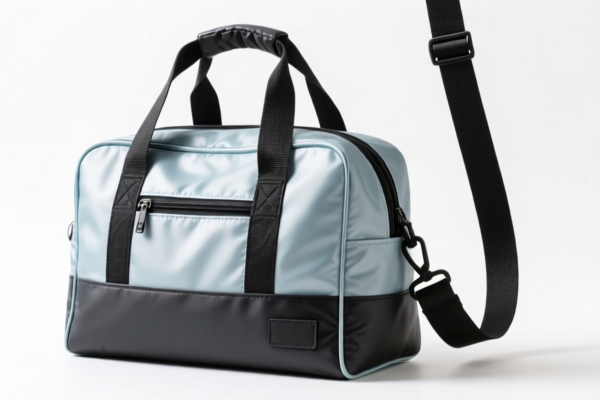
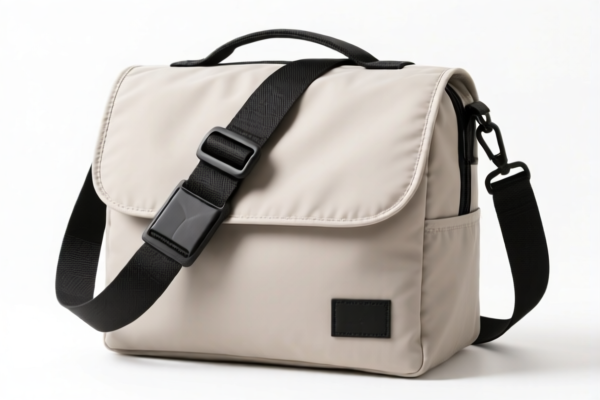
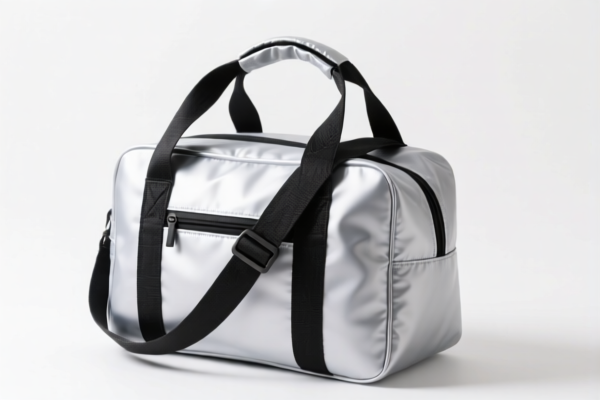
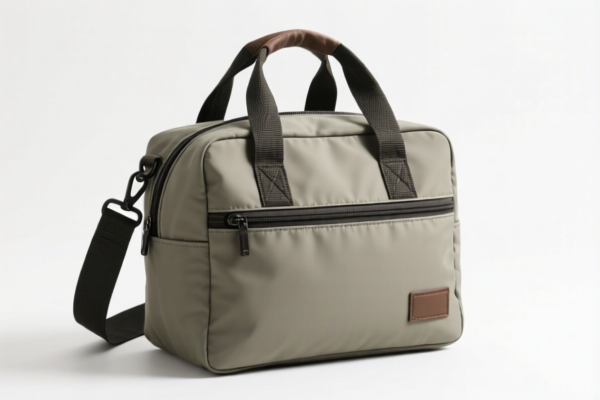
AI Analysis
👜 Polyester Single Shoulder Lunch Bag (Insulated Food Carrier)
🌐 HS Code Reference & Customs Clearance Guide | 2026 Latest Tariff Analysis | Professional Strategy for US-China Trade
📌 1. Product Definition & Classification: What Exactly Is a "Lunch Bag"?
A "Polyester Single Shoulder Lunch Bag" is a flexible container used for storing and transporting food, typically featuring thermal insulation properties. In international trade, the classification hinges on Material Composition and Primary Function/Structure.
There are two distinct classification paths depending on whether the bag is viewed primarily as a Plastic Container or as a Textile Accessory:
Path A: Plastic/Chemical Product Class (Chapters 39)
If the bag is deemed to be made primarily of plastic sheets/films (even if polyester/nylon, which are synthetic polymers) and functions as a "sack or bag" for packaging goods.
👉 Logic: Focuses on the material as a synthetic plastic article.
Path B: Textile/Accessory Class (Chapters 42 or 63)
If the bag is viewed as a made-up textile article, specifically a "bag" or "sack" of textile materials, or a general "textile article" with no specific name.
👉 Logic: Focuses on the textile nature (woven polyester fabric) and its use as a consumer accessory.
⚠️ Key Distinction Point:
- If classified under Chapter 39, it is treated as a "Plastic Sack/Bag."
- If classified under Chapter 42, it is treated as an "Accessory of Apparel" or "Luggage/Handbag" type article.
- If classified under Chapter 63, it is treated as a "Textile Article, Not Elsewhere Specified."
📦 2. HS Code Classification Details (2026 Latest Tariff Reference)
Based on the provided data, here is the breakdown of potential HS Codes and their logical justifications:
| HS Code | Product Description | Classification Logic | Material Focus |
|---|---|---|---|
3923.29.00.00 |
Other Plastic Sacs & Bags, For Packaging | Fits "Packaging/Containing Articles" | Polyester as Synthetic Plastic |
3923.90.00.80 |
Other Articles of Plastics For Packing | Fits "Plastic Packaging Supplies" | Polyester as Synthetic Plastic |
4202.92.08.07 |
Other Articles With Outer Surface Of Textile Materials | Fits "Lunch Bag" form + "Artificial Fiber" material | Polyester as Artificial Fiber |
4202.92.08.09 |
Other Articles With Outer Surface Of Textile Materials | Fits "Other Categories" + "Insulated Bag" inference | Polyester as Synthetic/Artificial Fiber |
6307.90.98.84 |
Other Made-Up Textile Articles, Not Elsewhere Specified | Fits "Other Textile Articles" (Catch-all) | Polyester as Artificial Fiber |
6307.90.98.91 |
Other Made-Up Textile Articles, Not Elsewhere Specified | Fits "Other Made-Up Articles" (No Conflict) | Polyester as Polyester Fiber |
🔍 Critical Note:
- Ch 39 (Codes 3923.x): Generally lower base duty but subject to the same aggressive US tariffs.
- Ch 42 (Codes 4202.x): Often preferred for branded fashion-style lunch bags, but attracts a higher base duty (7%) compared to plastics.
- Ch 63 (Codes 6307.x): A "catch-all" for textile articles. May have lower additional duties if not classified under 301/IEEPA specific footnotes, but depends on strict customs interpretation of "Textile Article."
💰 3. 2026 Latest Tariff Rate Breakdown (Including Add-Ons)
✅ Applicable Country: United States (US)
✅ Origin: China (CN)
✅ Effective Date: Post-November 10, 2025 (Includes subsequent imports)
🎯 1. Classification A: Plastic Category (3923.29.00.00 & 3923.90.00.80)
| Item | Content |
|---|---|
| Base Duty | 3.0% (Standard MFN Rate) |
| USITC Add-On (Section 301) | +25.0% (Trade Remedy Tariff) |
| IEEPA Add-On (Section 122/8019) | +10.0% (China-specific Emergency Tariff) |
| Total Duty Rate | 38.0% |
| Calculation Basis | CIF Value × 38% |
| De Minimis Exemption? | ❌ NO (deny_de_minimis) |
| Legal Pathway | USITC:3923.29.00.00 → FOOTNOTE:9903.88.01 + IEEPA:9903.01.24 |
📌 Explanation:
- 38% Total: A significant cost burden.
- Breakdown: The 3% base is standard for plastic bags. The 25% is the classic Section 301 tariff on Chinese plastic goods. The 10% is the newer IEEPA tariff targeting specific Chinese imports.
- Risk: High. Customs may scrutinize if it's truly "plastic" vs. "textile."
🎯 2. Classification B: Textile/Accessory Category (4202.92.08.07 & 4202.92.08.09)
| Item | Content |
|---|---|
| Base Duty | 7.0% (Standard MFN Rate for Textile Accessories) |
| USITC Add-On (Section 301) | +25.0% (Trade Remedy Tariff) |
| IEEPA Add-On (Section 122/8019) | +10.0% (China-specific Emergency Tariff) |
| Total Duty Rate | 42.0% |
| Calculation Basis | CIF Value × 42% |
| De Minimis Exemption? | ❌ NO (deny_de_minimis) |
| Legal Pathway | USITC:4202.92.08.07 → FOOTNOTE:9903.88.01 + IEEPA:9903.01.24 |
📌 Explanation:
- 42% Total: This is the most expensive option due to the higher base rate (7% vs 3%).
- Why 7%?: Chapter 42 items are often considered "luggage/accessories," which have higher base duties than industrial plastics.
- Strategy: Generally avoid this classification unless specifically required by brand positioning, as it increases tax liability by 4% compared to the plastic classification.
🎯 3. Classification C: General Textile Article Category (6307.90.98.84 & 6307.90.98.91)
| Item | Content |
|---|---|
| Base Duty | 7.0% (Standard MFN Rate for Other Textile Articles) |
| USITC Add-On (Section 301) | +7.5% (Note: Lower than 25%! Check specific footnote applicability) |
| IEEPA Add-On (Section 122/8019) | +10.0% (China-specific Emergency Tariff) |
| Total Duty Rate | 24.5% |
| Calculation Basis | CIF Value × 24.5% |
| De Minimis Exemption? | ❌ NO (deny_de_minimis) |
| Legal Pathway | USITC:6307.90.98.84 → FOOTNOTE:9903.01.25 (Potentially lower add-on) |
📌 Explanation:
- 24.5% Total: This is the most cost-effective classification IF applicable.
- Why Lower Add-On?: Some Chapter 63 items may not fall under the full 25% Section 301 rate depending on the specific HTS subheading footnote. The data suggests a 7.5% add-on instead of 25%, leading to significant savings.
- Crucial Caveat: This depends heavily on whether US Customs and Border Protection (CBP) accepts "Other Textile Articles" for lunch bags vs. "Textile Bags" (which might be 4202). This is the "Optimization Target."
🛠️ 4. Customs Clearance Practical Advice (Action Plan)
✅ 1. Document Preparation Checklist
| Document | Required? | Purpose |
|---|---|---|
| ✅ Product Specifications | ✔️ | Must detail: Material (100% Polyester), Dimensions, Insulation Type (PEVA foil, etc.). |
| ✅ Material Composition Sheet | ✔️ | Proof that it is Textile Fabric (woven/knitted polyester) to support Ch 63/42, OR plastic film to support Ch 39. |
| ✅ High-Res Photos | ✔️ | Show seams, zippers, handles, and internal lining. Insulating lining helps argue for "Textile Article" rather than simple plastic sack. |
| ✅ Commercial Invoice | ✔️ | Description: "Polyester Insulated Lunch Bag, Single Shoulder." Avoid vague terms like "Plastic Bag." |
| ✅ Packing List | ✔️ | Confirm net/gross weight. |
✅ 2. Declaration Strategy & Keywords
🔥 Golden Rule: "Material Matters, Function Follows!"
| Scenario | Recommended Declaration | Target HS Code | Why? |
|---|---|---|---|
| Aggressive Optimization | "Textile Lunch Bag, Polyester Fabric, Insulated" | 6307.90.98.84 |
Aims for 24.5% rate. Argues it's a general textile item, not a "bag of apparel." |
| Conservative/Standard | "Plastic Insulated Bag for Food" | 3923.29.00.00 |
Aims for 38% rate. Easier to prove if outer material is treated plastic/nylon. |
| High-End/Branded | "Polyester Shoulder Bag for Food" | 4202.92.08.07 |
Aims for 42% rate. Usually avoided due to high tax. |
✅ 3. Special Handling for US Imports
| Issue | Solution |
|---|---|
| De Minimis (Section 321) | ❌ Not Eligible. All these codes are subject to deny_de_minimis. You must file a formal entry (10-digit HS). |
| Section 301 Exclusion | ❌ Expired/Unlikely. Most textile/plastic bags do not have active exclusions. Assume 25% or 7.5% applies. |
| Labeling | Must show "Made in China" prominently. |
| Antidumping/Countervailing | Check if specific polyester fibers have AD/CVD. Usually, finished bags are exempt, but verify raw material source. |
🌍 5. Global Market Comparison (Quick View)
| Country/Region | Recommended HS Code | Est. Total Duty (China Origin) | Notes |
|---|---|---|---|
| 🇺🇸 USA | 6307.90.98.84 (Best Case) |
24.5% | Requires strong justification for Ch 63. |
| 🇺🇸 USA | 3923.29.00.00 (Default) |
38.0% | Safer, but higher tax. |
| 🇪🇺 EU | 6307.90.90 |
~4-6% | No Section 301/IEEPA. Much cheaper. |
| 🇨🇳 China | 6307.90.90 |
~7-10% | Domestic consumption. |
📌 Conclusion for US Market:
The 24.5% rate (Ch 63) is significantly better than 38% (Ch 39) or 42% (Ch 42).
Strategy: Prepare technical documents proving the bag is a "Textile Article" rather than a "Plastic Bag" or "Luggage Accessory" to justify the Ch 63 classification.
📌 6. Common Pitfalls & Red Flags
❌ Pitfall 1: Declaring as 4202 (Luggage)
👉 Result: 42% Tax. Unnecessary cost if it can be Ch 63 or Ch 39.
👉 Fix: Emphasize "Food Storage" function, not "Fashion Accessory."
❌ Pitfall 2: Declaring as 3923 but Customs disagrees
👉 Result: Audit/Dispute. If Customs sees woven fabric, they may force 4202 or 6307.
👉 Fix: Ensure the outer fabric is clearly textile (woven/knitted), not plastic film.
❌ Pitfall 3: Ignoring IEEPA 10%
👉 Result: Underpayment of duties.
👉 Fix: Always add the 10% IEEPA surcharge to your cost model for China-origin goods.
✅ Correct Declaration Example:
"Insulated Lunch Bag, Single Shoulder Strap. Outer Material: 100% Woven Polyester Textile. Inner Lining: PEVA Insulation. For food storage. Country of Origin: China."
🎯 7. Final Recommendation: Minimize Tax, Maximize Compliance
🎯 Optimal Path:
1. Target 6307.90.98.84 (24.5% Total Duty).
2. Justification: The bag is a "Made-Up Textile Article." It is not "Luggage" (Ch 42) because it lacks rigid structure/branded fashion status. It is not "Plastic" (Ch 39) because the outer surface is clearly woven fabric.
3. Documentation: Provide a Material Breakdown showing the outer shell is woven polyester and the inner is a separate insulation layer.
4. Pre-Ruling: If shipment volume is high, consider applying for a Binding Ruling from CBP to lock in the 6307 classification.
📌 Pro Tip:
"Ch 63 is the Hidden Gem for Textile Bags."
While Ch 39 (Plastic) and Ch 42 (Luggage) are obvious, Ch 63 (Other Textiles) often escapes the highest 301 penalties if correctly classified as a general article. Document your textile nature clearly!
📣 Immediate Action:
📞 Consult your customs broker before shipping.
📄 Send product photos and material specs for pre-classification review.
💸 Model costs using 24.5% (Optimistic/Ch 63) vs 38.0% (Conservative/Ch 39) to see impact on margin.
✨ Smart Classification = Lower Duties = Higher Profits!
💼 Don't let HS Code guesswork eat your margins!
Customer Reviews
About HS Code Classification
The Harmonized System (HS) is an internationally standardized nomenclature developed by the World Customs Organization (WCO) to classify traded products. Over 200 countries use the HS system as the basis for customs tariffs, trade statistics, and import/export regulations.
Each HS code follows a hierarchical structure:
- Chapter (2 digits) — Broad category of goods (e.g., Chapter 84: Machinery and Mechanical Appliances)
- Heading (4 digits) — More specific grouping within the chapter
- Subheading (6 digits) — Internationally standardized breakdown, used by all WCO member countries
- National subdivisions (8-10 digits) — Country-specific extensions for further classification, such as US HTSUS 10-digit codes
Correct HS code classification is essential for smooth customs clearance, accurate duty payment, and compliance with trade regulations. Misclassification can lead to customs delays, overpayment of duties, or penalties.
When importing from CN to US, the applicable tariff rates may include:
- Most-Favored-Nation (MFN) rate — The standard duty rate applied to WTO members
- General rate — Applied to countries without trade agreements
- Trade remedy duties — Additional tariffs such as Section 301 (anti-dumping), Section 232 (national security), or countervailing duties
The information provided on this page is for reference purposes only. For official classification, please consult with your local customs authority or a licensed customs broker.