Polyethylene Pearl Cotton Film
CN → US| HS编码 | 关税税率 | 原产国 | 目的国 | 文档 |
|---|---|---|---|---|
| 5903902500 | 42.5% | CN | US | 官方文档 |
| 3921190090 | 41.5% | CN | US | 官方文档 |
| 5903902000 | 35.0% | CN | US | 官方文档 |
| 3921190010 | 41.5% | CN | US | 官方文档 |
商品图片
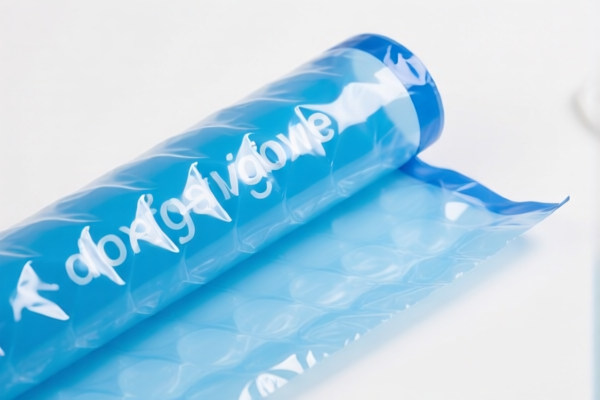
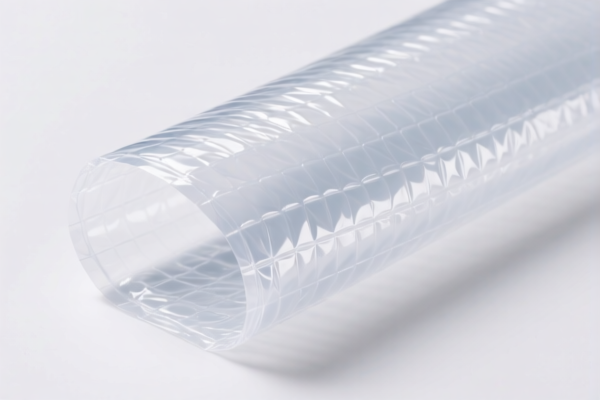
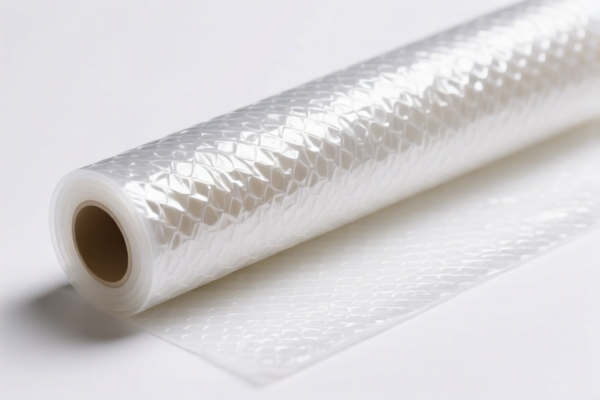
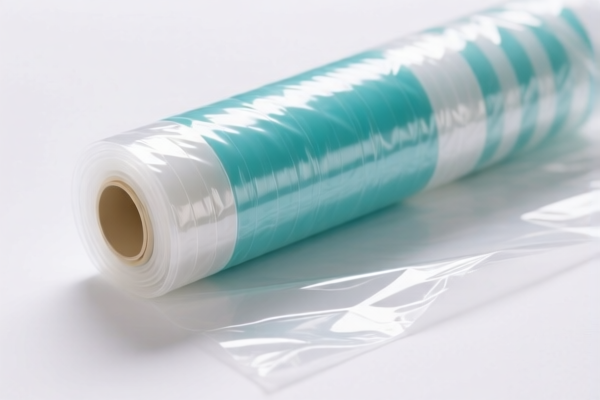
AI分析
🧶 Polyethylene Pearl Cotton Film (PE Foam Composite Membrane)
🌐 HS Code Reference & Clearance Guide | 2026 Latest Tariff Analysis | Professional Customs Strategy
📌 I. Product Definition & Classification: What is "Polyethylene Pearl Cotton Film"?
"Polyethylene Pearl Cotton" (often referred to as EPE Foam) is a closed-cell foam material made from low-density polyethylene (LDPE) blended with various additives and blown into a bubble structure. When compounded with other layers (forming a "composite film" or "laminated membrane"), it serves as packaging material, protective cushioning, or insulation.
Key Distinction in Classification: The classification hinges on two factors: 1. Structure: Is it a pure foam sheet/film, or a laminated structure (e.g., foam + plastic film + metal foil)? 2. Material Composition: Does it fall under Chapter 39 (Plastics) or Chapter 59 (Textiles/Coated Fabrics with plastic/rubber)?
Based on the provided data, there are four potential HS Code matches, ranging from 3921 (Plastics) to 5903 (Textiles/Other materials impregnated/coated with plastic).
📦 II. HS Code Classification Details (Based on Provided Data)
| HS Code | Product Description | Matching Logic Summary | Total Tax Rate |
|---|---|---|---|
| 5903.90.25.00 | Other textile fabrics impregnated, coated, covered or laminated with plastics (Polyethylene) | Logic: Classified as a "composite film" with a "laminated/covered" feature. Material inferred as artificial/synthetic fibers. No obvious material conflict with "Other" category. | 42.5% |
| 3921.19.00.90 | Other plates, sheets, film, foil and strip, of plastics (Polyethylene/Polypropylene foam) | Logic: "Pearl cotton" is identified as PE/PP foam material. The "composite film" form matches "plates, sheets, film, foil." Based on material (foam plastic) and form (film), it fits this code. | 41.5% |
| 5903.90.20.00 | Other textile fabrics impregnated, coated, covered or laminated with plastics | Logic: Inferred as "laminated/covered" type. "Pearl cotton" (often PU-related in some contexts, though here noted as PE) is seen as meeting the ">70% plastic/rubber weight" characteristic for this category. | 35.0% |
| 3921.19.00.10 | Plates, sheets, film, etc., of plastics (Polyolefins like PE) | Logic: The "film" form matches the reference. "Pearl cotton" is inferred as Polyolefin (PE), meeting the material and form requirements for this specific sub-heading. | 41.5% |
🔍 Key Observation:
- The tax rates vary significantly based on whether customs views the product as a Plastic Product (Ch 39) or a Laminated/Coated Fabric/Material (Ch 59).
- HS 5903.90.20.00 offers the lowest total tax burden (35.0%) among the options, while 5903.90.25.00 is the highest (42.5%).
- Most codes incur a 25% additional tariff (Section 301) and a 10% IEEPA tariff (2025/2026 policy), plus a base duty ranging from 0% to 7.5%.
💰 III. 2026 Latest Tariff Rate Breakdown (Including Surcharges)
✅ Applicable Country: United States (US)
✅ Origin: China (CN)
✅ Effective Time: Post-November 2025 (Current Regulatory Environment)
🎯 1. 5903.90.20.00 —— Lowest Tax Option (35.0% Total)
| Item | Details |
|---|---|
| Base Duty | 0.0% (Ad Valorem) |
| USITC Additional Tariff | +25% (Section 301) |
| IEEPA Additional Tariff | +10% (China-specific, 2025 Policy) |
| Total Effective Rate | 35.0% |
| Calculation Basis | CIF Value × 35% |
| De Minimis Exemption | ❌ Not Eligible (Denied) |
| Legal Basis Path | USITC:5903.90.20.00 → FOOTNOTE:301 → IEEPA:9903.01.24 |
📌 Explanation:
- This classification assumes the product is primarily viewed as a "laminated/covered" item where the base duty is 0%.
- The high surcharges (35% total) still apply due to the origin (China).
🎯 2. 3921.19.00.90 & 3921.19.00.10 —— Plastic Foam Classification (41.5% Total)
| Item | Details |
|---|---|
| Base Duty | 6.5% |
| USITC Additional Tariff | +25% (Section 301) |
| IEEPA Additional Tariff | +10% (China-specific) |
| Total Effective Rate | 41.5% |
| Calculation Basis | CIF Value × 41.5% |
| De Minimis Exemption | ❌ Not Eligible |
| Legal Basis Path | USITC:3921.19.00.xx → FOOTNOTE:301 → IEEPA:9903.01.24 |
📌 Explanation:
- If classified under Chapter 39 (Plastics), the base duty is higher (6.5%).
- This is a common classification for pure EPE foam sheets or PE films.
🎯 3. 5903.90.25.00 —— Synthetic Fiber/Composite Classification (42.5% Total)
| Item | Details |
|---|---|
| Base Duty | 7.5% |
| USITC Additional Tariff | +25% (Section 301) |
| IEEPA Additional Tariff | +10% (China-specific) |
| Total Effective Rate | 42.5% |
| Calculation Basis | CIF Value × 42.5% |
| De Minimis Exemption | ❌ Not Eligible |
| Legal Basis Path | USITC:5903.90.25.00 → FOOTNOTE:301 → IEEPA:9903.01.24 |
📌 Explanation:
- This is the highest tax bracket among the provided options. It applies if the product is deemed to be made of "other" synthetic materials or composites with higher base duties.
🛠️ IV. Customs Clearance Practical Advice (Avoid Pitfalls)
✅ 1. Documentation Checklist (Essential)
| Document | Required? | Purpose |
|---|---|---|
| Product Spec Sheet | ✔️ | Must clearly state: "Polyethylene (PE) Pearl Cotton," dimensions, thickness, and density. |
| Material Composition Statement | ✔️ | Explicitly state the percentage of PE vs. other layers (if laminated). Crucial for Ch 39 vs. Ch 59 distinction. |
| Product Photos | ✔️ | Show the cross-section to prove foam structure. Show the "composite" layers if applicable. |
| Commercial Invoice | ✔️ | Use precise description: "PE Foam Composite Film for Packaging" – avoid vague terms like "Plastic Sheet." |
| Certificate of Origin | ✔️ | Required to verify Chinese origin and apply/add surcharges correctly. |
| CoA (Certificate of Analysis) | ✔️ | If claiming specific chemical composition (e.g., >70% PE) to support Ch 59 classification. |
✅ 2. Classification Strategy (Key Tips)
🔥 "Foam Structure is Key, Material % Decides the Chapter!"
| Scenario | Recommended HS Code | Why? |
|---|---|---|
| Pure PE Foam Sheet | 3921.19.00.90 / 3921.19.00.10 |
Clearly a plastic product. Base duty 6.5%. |
| PE Foam Laminated to Fabric/Non-Woven | 5903.90.20.00 |
If the backing is textile/non-woven and PE is the coating/layer. Potential for lower base duty (0%). |
| PE Foam Laminated to Other Synthetic Materials | 5903.90.25.00 |
If the backing is synthetic but not clearly textile, or a "composite" not specified elsewhere. Higher base duty (7.5%). |
⚠️ Critical Warning:
- Do not simply label as "Plastic Film." If it has a fabric backing, customs may push it to Chapter 59.
- Do not label as "Textile." If it's >70% plastic by weight, it stays in Chapter 39 or specific Ch 59 subheadings based on lamination, not general textile rules.
- Accuracy is vital: Misclassification between 3921 and 5903 can lead to underpayment penalties if the correct code has a higher base duty, or overpayment if you miss a lower base duty opportunity.
✅ 3. Special Considerations
| Situation | Action |
|---|---|
| Laminated Structure | Provide a layer-by-layer breakdown (e.g., "Outer PE Film + Middle EPE Foam + Inner PE Film"). This helps customs decide between Ch 39 and Ch 59. |
| Customs Audit | Be prepared to provide a lab test report confirming the PE content percentage. |
| Voluntary Disclosure | If you previously used a different HS Code, consider filing a Voluntary Disclosure for underpaid duties if the difference is significant, to avoid fraud allegations. |
🌍 V. Global Market Comparison (2026 Outlook)
| Market | Likely HS Code | Est. Total Duty | Notes |
|---|---|---|---|
| 🇺🇸 USA | 5903.90.20.00 (Preferred) or 3921.19.00.90 |
35% - 42.5% | High Section 301 & IEEPA surcharges apply. Base duty varies. |
| 🇨🇳 China | 3921.10.00.00 |
~6.5% | Import duty for foreign PE foam. No US-style surcharges. |
| 🇪🇺 EU | 3921.90.90 |
~4% - 6% | No Section 301 equivalents. VAT applies (19-27%). |
| 🇲🇽 Mexico | 3921.90.99 |
15% | USMCA benefits may apply if origin rules are met. |
📌 Conclusion for US Imports:
The US tax burden is heavy (35%+). The best strategy is to argue for5903.90.20.00if the product has any textile/non-woven backing, as the 0% base duty saves 6.5-7.5% compared to Ch 39 codes. If it is pure PE foam, accept the 6.5% base duty under Ch 39.
📌 VI. Common Errors & Pitfalls (Lessons Learned)
❌ Error 1: Claiming "Foam" as a generic "Plastic Product" without specifying layer structure.
👉 Result: Customs may reclassify to a higher-duty subcategory or demand additional documentation, causing delays.
❌ Error 2: Using "Pearl Cotton" as the sole description.
👉 Result: "Pearl Cotton" is a trade term, not a legal HS description. Must use "Polyethylene Foam" or "Laminated Film."
❌ Error 3: Ignoring the 25% + 10% Surcharges.
👉 Result: Budget miscalculation. The base duty is irrelevant if the surcharges make up 70%+ of the tax.
❌ Error 4: Assuming De Minimis ($800) applies.
👉 Result: Strictly Prohibited. Section 301 and IEEPA tariffs explicitly deny de minimis exemption for Chinese goods. Even small shipments are taxed.
✅ Correct Approach:
"Polyethylene (PE) Closed-Cell Foam Composite Film, Laminated Structure, for Industrial Packaging, Origin: China"
+ Accurate HS Code + Full Duty Payment
🎯 VII. Conclusion: Optimize for Cost & Compliance
🎯 Key Takeaway:
🔹 "Check the Layers, Check the Base Duty!"
🔹 "Chapter 59 (0% Base) vs. Chapter 39 (6.5% Base) – The 6.5% Difference Matters!"
🔹 "No De Minimis for China! Tax it All!"
📌 Pro Tip:
If your product is pure PE foam (no fabric backing), stick to 3921.19.00.90. If it is PE foam bonded to a non-woven fabric backing, aggressively pursue 5903.90.20.00 to save on the base duty. Always provide a material composition breakdown to support your claim.
📣 Immediate Action:
📞 Engage a Customs Broker to review your product's physical structure.
📄 Prepare a Material Spec Sheet detailing % of PE vs. other materials.
🚀 File for an Advance Ruling if you have high-volume shipments to secure classification certainty.
✨ Precise Classification Saves Money!
💼 Every 0.1% of Base Duty is Real Savings!
用户评价
关于 HS 编码归类
协调制度(HS)是由世界海关组织(WCO)制定的国际贸易商品分类标准。全球 200 多个国家采用 HS 系统作为海关关税、贸易统计和进出口监管的基础。
每个 HS 编码遵循以下层级结构:
- 章(2 位)——商品大类(例如:第 84 章:机器和机械设备)
- 品目(4 位)——章内的更具体分类
- 子目(6 位)——国际通用细分,所有 WCO 成员国统一使用
- 本国细分(8-10 位)——各国自行扩展的细分编码,如美国 HTSUS 10 位编码
正确的 HS 编码归类对于顺利通关、准确缴纳关税和遵守贸易法规至关重要。错误归类可能导致海关延误、多缴关税或罚款。
从CN进口到US时,适用的关税税率可能包括:
- 最惠国(MFN)税率——适用于 WTO 成员国的标准关税税率
- 普通税率——适用于无贸易协定国家
- 贸易救济关税——附加关税,如 301 条款(反倾销)、232 条款(国家安全)或反补贴税
本页内容仅供参考。如需正式归类,请咨询当地海关或持牌报关代理。