Polyethylene Pearl Cotton Film
CN → US| HS Code | Tariff Rate | Origin | Destination | Doc |
|---|---|---|---|---|
| 5903902500 | 42.5% | CN | US | Official Doc |
| 3921190090 | 41.5% | CN | US | Official Doc |
| 5903902000 | 35.0% | CN | US | Official Doc |
| 3921190010 | 41.5% | CN | US | Official Doc |
Product Images
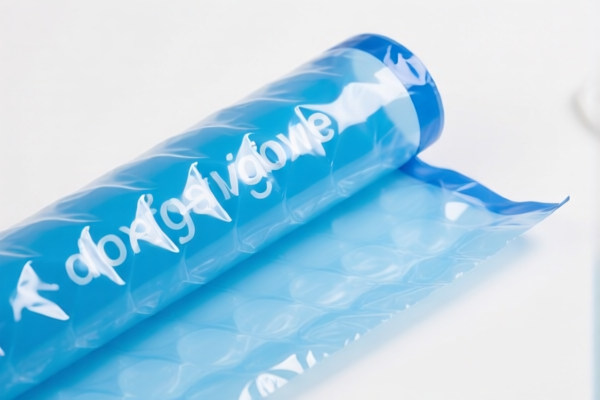
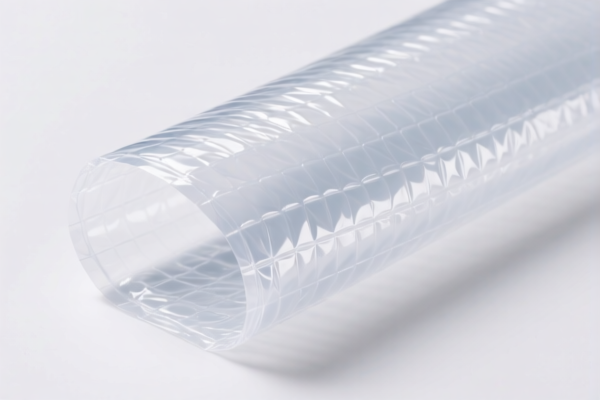
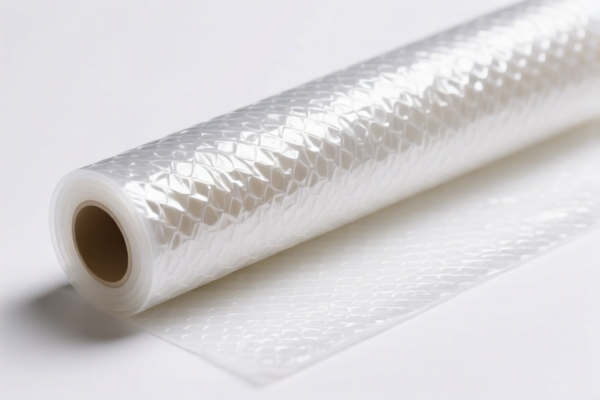
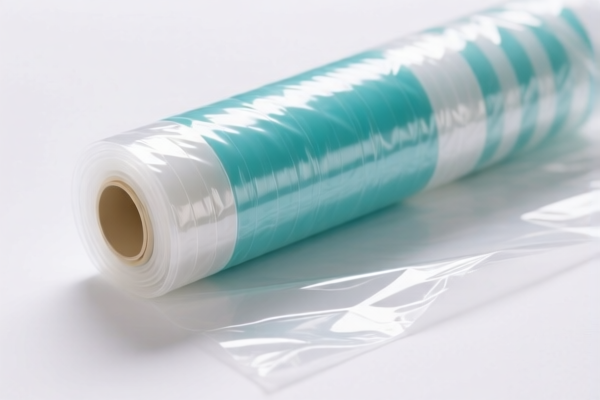
AI Analysis
🧶 Polyethylene Pearl Cotton Film (PE Foam Composite Membrane)
🌐 HS Code Reference & Clearance Guide | 2026 Latest Tariff Analysis | Professional Customs Strategy
📌 I. Product Definition & Classification: What is "Polyethylene Pearl Cotton Film"?
"Polyethylene Pearl Cotton" (often referred to as EPE Foam) is a closed-cell foam material made from low-density polyethylene (LDPE) blended with various additives and blown into a bubble structure. When compounded with other layers (forming a "composite film" or "laminated membrane"), it serves as packaging material, protective cushioning, or insulation.
Key Distinction in Classification: The classification hinges on two factors: 1. Structure: Is it a pure foam sheet/film, or a laminated structure (e.g., foam + plastic film + metal foil)? 2. Material Composition: Does it fall under Chapter 39 (Plastics) or Chapter 59 (Textiles/Coated Fabrics with plastic/rubber)?
Based on the provided data, there are four potential HS Code matches, ranging from 3921 (Plastics) to 5903 (Textiles/Other materials impregnated/coated with plastic).
📦 II. HS Code Classification Details (Based on Provided Data)
| HS Code | Product Description | Matching Logic Summary | Total Tax Rate |
|---|---|---|---|
| 5903.90.25.00 | Other textile fabrics impregnated, coated, covered or laminated with plastics (Polyethylene) | Logic: Classified as a "composite film" with a "laminated/covered" feature. Material inferred as artificial/synthetic fibers. No obvious material conflict with "Other" category. | 42.5% |
| 3921.19.00.90 | Other plates, sheets, film, foil and strip, of plastics (Polyethylene/Polypropylene foam) | Logic: "Pearl cotton" is identified as PE/PP foam material. The "composite film" form matches "plates, sheets, film, foil." Based on material (foam plastic) and form (film), it fits this code. | 41.5% |
| 5903.90.20.00 | Other textile fabrics impregnated, coated, covered or laminated with plastics | Logic: Inferred as "laminated/covered" type. "Pearl cotton" (often PU-related in some contexts, though here noted as PE) is seen as meeting the ">70% plastic/rubber weight" characteristic for this category. | 35.0% |
| 3921.19.00.10 | Plates, sheets, film, etc., of plastics (Polyolefins like PE) | Logic: The "film" form matches the reference. "Pearl cotton" is inferred as Polyolefin (PE), meeting the material and form requirements for this specific sub-heading. | 41.5% |
🔍 Key Observation:
- The tax rates vary significantly based on whether customs views the product as a Plastic Product (Ch 39) or a Laminated/Coated Fabric/Material (Ch 59).
- HS 5903.90.20.00 offers the lowest total tax burden (35.0%) among the options, while 5903.90.25.00 is the highest (42.5%).
- Most codes incur a 25% additional tariff (Section 301) and a 10% IEEPA tariff (2025/2026 policy), plus a base duty ranging from 0% to 7.5%.
💰 III. 2026 Latest Tariff Rate Breakdown (Including Surcharges)
✅ Applicable Country: United States (US)
✅ Origin: China (CN)
✅ Effective Time: Post-November 2025 (Current Regulatory Environment)
🎯 1. 5903.90.20.00 —— Lowest Tax Option (35.0% Total)
| Item | Details |
|---|---|
| Base Duty | 0.0% (Ad Valorem) |
| USITC Additional Tariff | +25% (Section 301) |
| IEEPA Additional Tariff | +10% (China-specific, 2025 Policy) |
| Total Effective Rate | 35.0% |
| Calculation Basis | CIF Value × 35% |
| De Minimis Exemption | ❌ Not Eligible (Denied) |
| Legal Basis Path | USITC:5903.90.20.00 → FOOTNOTE:301 → IEEPA:9903.01.24 |
📌 Explanation:
- This classification assumes the product is primarily viewed as a "laminated/covered" item where the base duty is 0%.
- The high surcharges (35% total) still apply due to the origin (China).
🎯 2. 3921.19.00.90 & 3921.19.00.10 —— Plastic Foam Classification (41.5% Total)
| Item | Details |
|---|---|
| Base Duty | 6.5% |
| USITC Additional Tariff | +25% (Section 301) |
| IEEPA Additional Tariff | +10% (China-specific) |
| Total Effective Rate | 41.5% |
| Calculation Basis | CIF Value × 41.5% |
| De Minimis Exemption | ❌ Not Eligible |
| Legal Basis Path | USITC:3921.19.00.xx → FOOTNOTE:301 → IEEPA:9903.01.24 |
📌 Explanation:
- If classified under Chapter 39 (Plastics), the base duty is higher (6.5%).
- This is a common classification for pure EPE foam sheets or PE films.
🎯 3. 5903.90.25.00 —— Synthetic Fiber/Composite Classification (42.5% Total)
| Item | Details |
|---|---|
| Base Duty | 7.5% |
| USITC Additional Tariff | +25% (Section 301) |
| IEEPA Additional Tariff | +10% (China-specific) |
| Total Effective Rate | 42.5% |
| Calculation Basis | CIF Value × 42.5% |
| De Minimis Exemption | ❌ Not Eligible |
| Legal Basis Path | USITC:5903.90.25.00 → FOOTNOTE:301 → IEEPA:9903.01.24 |
📌 Explanation:
- This is the highest tax bracket among the provided options. It applies if the product is deemed to be made of "other" synthetic materials or composites with higher base duties.
🛠️ IV. Customs Clearance Practical Advice (Avoid Pitfalls)
✅ 1. Documentation Checklist (Essential)
| Document | Required? | Purpose |
|---|---|---|
| Product Spec Sheet | ✔️ | Must clearly state: "Polyethylene (PE) Pearl Cotton," dimensions, thickness, and density. |
| Material Composition Statement | ✔️ | Explicitly state the percentage of PE vs. other layers (if laminated). Crucial for Ch 39 vs. Ch 59 distinction. |
| Product Photos | ✔️ | Show the cross-section to prove foam structure. Show the "composite" layers if applicable. |
| Commercial Invoice | ✔️ | Use precise description: "PE Foam Composite Film for Packaging" – avoid vague terms like "Plastic Sheet." |
| Certificate of Origin | ✔️ | Required to verify Chinese origin and apply/add surcharges correctly. |
| CoA (Certificate of Analysis) | ✔️ | If claiming specific chemical composition (e.g., >70% PE) to support Ch 59 classification. |
✅ 2. Classification Strategy (Key Tips)
🔥 "Foam Structure is Key, Material % Decides the Chapter!"
| Scenario | Recommended HS Code | Why? |
|---|---|---|
| Pure PE Foam Sheet | 3921.19.00.90 / 3921.19.00.10 |
Clearly a plastic product. Base duty 6.5%. |
| PE Foam Laminated to Fabric/Non-Woven | 5903.90.20.00 |
If the backing is textile/non-woven and PE is the coating/layer. Potential for lower base duty (0%). |
| PE Foam Laminated to Other Synthetic Materials | 5903.90.25.00 |
If the backing is synthetic but not clearly textile, or a "composite" not specified elsewhere. Higher base duty (7.5%). |
⚠️ Critical Warning:
- Do not simply label as "Plastic Film." If it has a fabric backing, customs may push it to Chapter 59.
- Do not label as "Textile." If it's >70% plastic by weight, it stays in Chapter 39 or specific Ch 59 subheadings based on lamination, not general textile rules.
- Accuracy is vital: Misclassification between 3921 and 5903 can lead to underpayment penalties if the correct code has a higher base duty, or overpayment if you miss a lower base duty opportunity.
✅ 3. Special Considerations
| Situation | Action |
|---|---|
| Laminated Structure | Provide a layer-by-layer breakdown (e.g., "Outer PE Film + Middle EPE Foam + Inner PE Film"). This helps customs decide between Ch 39 and Ch 59. |
| Customs Audit | Be prepared to provide a lab test report confirming the PE content percentage. |
| Voluntary Disclosure | If you previously used a different HS Code, consider filing a Voluntary Disclosure for underpaid duties if the difference is significant, to avoid fraud allegations. |
🌍 V. Global Market Comparison (2026 Outlook)
| Market | Likely HS Code | Est. Total Duty | Notes |
|---|---|---|---|
| 🇺🇸 USA | 5903.90.20.00 (Preferred) or 3921.19.00.90 |
35% - 42.5% | High Section 301 & IEEPA surcharges apply. Base duty varies. |
| 🇨🇳 China | 3921.10.00.00 |
~6.5% | Import duty for foreign PE foam. No US-style surcharges. |
| 🇪🇺 EU | 3921.90.90 |
~4% - 6% | No Section 301 equivalents. VAT applies (19-27%). |
| 🇲🇽 Mexico | 3921.90.99 |
15% | USMCA benefits may apply if origin rules are met. |
📌 Conclusion for US Imports:
The US tax burden is heavy (35%+). The best strategy is to argue for5903.90.20.00if the product has any textile/non-woven backing, as the 0% base duty saves 6.5-7.5% compared to Ch 39 codes. If it is pure PE foam, accept the 6.5% base duty under Ch 39.
📌 VI. Common Errors & Pitfalls (Lessons Learned)
❌ Error 1: Claiming "Foam" as a generic "Plastic Product" without specifying layer structure.
👉 Result: Customs may reclassify to a higher-duty subcategory or demand additional documentation, causing delays.
❌ Error 2: Using "Pearl Cotton" as the sole description.
👉 Result: "Pearl Cotton" is a trade term, not a legal HS description. Must use "Polyethylene Foam" or "Laminated Film."
❌ Error 3: Ignoring the 25% + 10% Surcharges.
👉 Result: Budget miscalculation. The base duty is irrelevant if the surcharges make up 70%+ of the tax.
❌ Error 4: Assuming De Minimis ($800) applies.
👉 Result: Strictly Prohibited. Section 301 and IEEPA tariffs explicitly deny de minimis exemption for Chinese goods. Even small shipments are taxed.
✅ Correct Approach:
"Polyethylene (PE) Closed-Cell Foam Composite Film, Laminated Structure, for Industrial Packaging, Origin: China"
+ Accurate HS Code + Full Duty Payment
🎯 VII. Conclusion: Optimize for Cost & Compliance
🎯 Key Takeaway:
🔹 "Check the Layers, Check the Base Duty!"
🔹 "Chapter 59 (0% Base) vs. Chapter 39 (6.5% Base) – The 6.5% Difference Matters!"
🔹 "No De Minimis for China! Tax it All!"
📌 Pro Tip:
If your product is pure PE foam (no fabric backing), stick to 3921.19.00.90. If it is PE foam bonded to a non-woven fabric backing, aggressively pursue 5903.90.20.00 to save on the base duty. Always provide a material composition breakdown to support your claim.
📣 Immediate Action:
📞 Engage a Customs Broker to review your product's physical structure.
📄 Prepare a Material Spec Sheet detailing % of PE vs. other materials.
🚀 File for an Advance Ruling if you have high-volume shipments to secure classification certainty.
✨ Precise Classification Saves Money!
💼 Every 0.1% of Base Duty is Real Savings!
Customer Reviews
About HS Code Classification
The Harmonized System (HS) is an internationally standardized nomenclature developed by the World Customs Organization (WCO) to classify traded products. Over 200 countries use the HS system as the basis for customs tariffs, trade statistics, and import/export regulations.
Each HS code follows a hierarchical structure:
- Chapter (2 digits) — Broad category of goods (e.g., Chapter 84: Machinery and Mechanical Appliances)
- Heading (4 digits) — More specific grouping within the chapter
- Subheading (6 digits) — Internationally standardized breakdown, used by all WCO member countries
- National subdivisions (8-10 digits) — Country-specific extensions for further classification, such as US HTSUS 10-digit codes
Correct HS code classification is essential for smooth customs clearance, accurate duty payment, and compliance with trade regulations. Misclassification can lead to customs delays, overpayment of duties, or penalties.
When importing from CN to US, the applicable tariff rates may include:
- Most-Favored-Nation (MFN) rate — The standard duty rate applied to WTO members
- General rate — Applied to countries without trade agreements
- Trade remedy duties — Additional tariffs such as Section 301 (anti-dumping), Section 232 (national security), or countervailing duties
The information provided on this page is for reference purposes only. For official classification, please consult with your local customs authority or a licensed customs broker.