Polyethylene Polymer Plastic Anti Corrosion Sheets
CN → US| HS编码 | 关税税率 | 原产国 | 目的国 | 文档 |
|---|---|---|---|---|
| 3920100000 | 39.2% | CN | US | 官方文档 |
| 3925900000 | 40.3% | CN | US | 官方文档 |
| 3921190090 | 41.5% | CN | US | 官方文档 |
| 3921190010 | 41.5% | CN | US | 官方文档 |
| 3925100000 | 41.3% | CN | US | 官方文档 |
商品图片
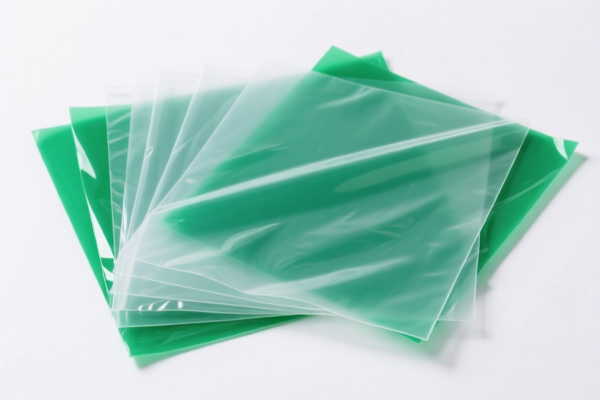
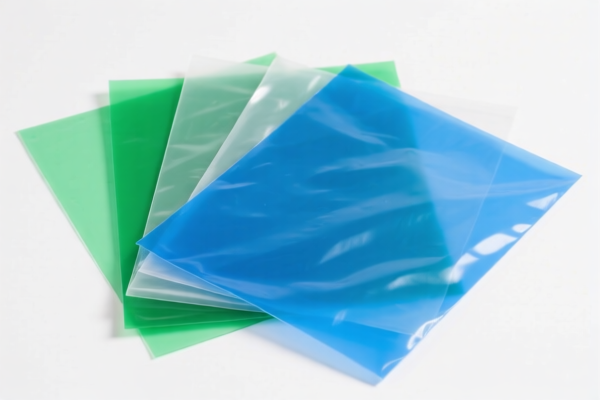

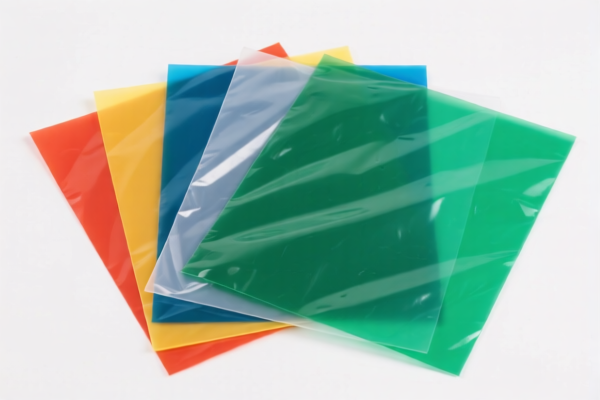
AI分析
🛡️ Polyethylene Polymer Plastic Anti-Corrosion Sheets
🌐 HS Code Classification & Tariff Guide | 2026 Customs Compliance Handbook | Expert Clearing Strategy
📌 One Product, Five HS Codes — Why the Difference? Let’s Break It Down!
📌 一、Product Definition & Key Classification Criteria
Polyethylene Polymer Plastic Anti-Corrosion Sheets are rigid or semi-rigid flat panels made from polyethylene (PE), primarily used to protect industrial structures, tanks, pipelines, and flooring from chemical, moisture, and environmental corrosion.
⚠️ Critical Distinction: - If the sheet is used as a standalone protective layer → likely falls under building/industrial components or other plastic articles. - If it's designed for structural use (e.g., in chemical plants, tanks, or marine environments) → may be classified under building/industrial parts. - If no specific structural function, and not covered by a more precise subheading → general classification applies.
🔍 Why So Many HS Codes?
Because purpose, form, and intended use determine classification — even if the material (polyethylene) and shape (sheet) are identical.
📦 二、HS Code Classification Matrix (2026 Official Tariff Breakdown)
| HS Code | Product Description | Classification Basis | Key Clue |
|---|---|---|---|
3920.10.00.00 |
Polyethylene plastic anti-corrosion sheet, material: polyethylene, form: sheet, purpose: corrosion protection | Material-based — pure polyethylene sheet, no special use | ✅ "Anti-corrosion" is functional, not structural |
3925.90.00.00 |
Polyethylene plastic anti-corrosion sheet, material: polyethylene plastic, form: sheet, classified as building/industrial component | Use-based — used in construction or industrial systems | ✅ "Building/industrial component" triggers this code |
3921.19.00.90 |
Polyethylene plastic anti-corrosion sheet, material: polyethylene, form: sheet, falls under "other" category | General residual category — not covered by more specific headings | ✅ "Other" means no better fit |
3921.19.00.10 |
Polyethylene plastic anti-corrosion sheet, material: polyethylene, form: sheet, meets classification explanation criteria | Legal interpretation — fits description in official notes | ✅ Matches official classification guidance |
3925.10.00.00 |
Polyethylene plastic anti-corrosion sheet, material: polyethylene plastic, form: sheet, classified via residual rule | "Duty to classify" principle — last resort when no better fit | ✅ "Based on兜底 principle" = fallback classification |
📌 Pro Tip:
The same physical product can be assigned different HS codes depending on how it's used, how it's marketed, and what documentation supports it.
💰 三、2026 Tariff Breakdown (U.S. Import – China Origin)
✅ Applicable Country: United States (US)
✅ Origin: China (CN)
✅ Effective Date: November 10, 2025 (inclusive)
✅ Applicable Laws: USITC Section 301, IEEPA (International Emergency Economic Powers Act)
🎯 1. 3920.10.00.00 — Anti-Corrosion Sheet (Material-Based)
| Item | Detail |
|---|---|
| Base Duty | 4.2% (ad valorem) |
| USITC 301 Tariff | +25.0% (from Section 301 of U.S. Trade Act) |
| IEEPA Tariff (122 Clause) | +10.0% (under IEEPA for China-origin goods) |
| Total Effective Rate | 39.2% |
| Tax Calculation | CIF Value × 39.2% |
| De Minimis Exemption? | ❌ No (denied under U.S. law) |
| Legal Pathway | IEEPA:9903.01.25 → USITC:3920.10.00.00 → FOOTNOTE:9903.88.01 |
📌 Why This Rate?
- This code is for basic polyethylene sheets used in anti-corrosion applications. - The 25% USITC tariff applies to all Chinese-origin goods under Section 301. - The 10% IEEPA tariff is triggered by the 122 Clause — a permanent add-on for China.
🎯 2. 3925.90.00.00 — Anti-Corrosion Sheet as Building/Industrial Component
| Item | Detail |
|---|---|
| Base Duty | 5.3% |
| USITC 301 Tariff | +25.0% |
| IEEPA Tariff (122 Clause) | +10.0% |
| Total Effective Rate | 40.3% |
| Tax Calculation | CIF × 40.3% |
| De Minimis? | ❌ No |
| Legal Pathway | IEEPA:9901.25 → USITC:3925.90.00.00 → FOOTNOTE:9903.88.01 |
📌 Why Higher?
- Classified as a building or industrial component → higher base rate. - Still subject to full 35%附加 tariffs (25% + 10%).
🎯 3. 3921.19.00.90 — Anti-Corrosion Sheet (Other Category)
| Item | Detail |
|---|---|
| Base Duty | 6.5% |
| USITC 301 Tariff | +25.0% |
| IEEPA Tariff (122 Clause) | +10.0% |
| Total Effective Rate | 41.5% |
| Tax Calculation | CIF × 41.5% |
| De Minimis? | ❌ No |
| Legal Pathway | IEEPA:9903.01.24 → USITC:3921.19.00.90 → FOOTNOTE:9903.88.01 |
📌 Why This Code?
- Used when the product doesn’t fit into more specific categories. - “Other” category → highest base rate among the five. - Still subject to full 35%附加.
🎯 4. 3921.19.00.10 — Anti-Corrosion Sheet (Meets Classification Explanation)
| Item | Detail |
|---|---|
| Base Duty | 6.5% |
| USITC 301 Tariff | +25.0% |
| IEEPA Tariff (122 Clause) | +10.0% |
| Total Effective Rate | 41.5% |
| Tax Calculation | CIF × 41.5% |
| De Minimis? | ❌ No |
| Legal Pathway | IEEPA:9903.01.24 → USITC:3921.19.00.10 → FOOTNOTE:9903.88.01 |
📌 Why This Code?
- Matches official classification explanation (e.g., from U.S. CBP or HTSUS notes). - Even if it's “other,” if it aligns with legal guidance, this code applies. - Same rate as3921.19.00.90— 41.5% total.
🎯 5. 3925.10.00.00 — Anti-Corrosion Sheet (Residual Rule)
| Item | Detail |
|---|---|
| Base Duty | 6.3% |
| USITC 301 Tariff | +25.0% |
| IEEPA Tariff (122 Clause) | +10.0% |
| Total Effective Rate | 41.3% |
| Tax Calculation | CIF × 41.3% |
| De Minimis? | ❌ No |
| Legal Pathway | IEEPA:9903.01.24 → USITC:3925.10.00.00 → FOOTNOTE:9903.88.01 |
📌 Why This Code?
- Applied under the "duty to classify" principle — when no other heading fits. - Often used for ambiguous or multi-purpose products. - Slightly lower than 41.5% due to lower base rate.
🛠️ 四、Customs Clearance Best Practices (Real-World Tips)
✅ 1. Essential Documentation (Must-Have)
| Document | Required? | Why It Matters |
|---|---|---|
| ✅ Product Specifications | ✔️ | Clarifies material, thickness, dimensions, anti-corrosion rating |
| ✅ Technical Drawings / Schematics | ✔️ | Proves intended use (e.g., for tanks vs. general shielding) |
| ✅ Product Photos (with labels) | ✔️ | Shows surface texture, thickness, markings, branding |
| ✅ Test Reports (e.g., chemical resistance) | ✔️ | Supports anti-corrosion claim |
| ✅ Commercial Invoice | ✔️ | Must clearly state: “Polyethylene Anti-Corrosion Sheet, for Industrial Use” |
| ✅ Certificate of Origin (CO) | ✔️ | Required for tariff calculation; can affect IEEPA/USITC status |
| ✅ Packing List | ✔️ | Shows unit count, weight, packaging — avoids duty disputes |
✅ 2.申报技巧(申报口诀)
🔥 “用途定编码,材料定税率,用途写清楚,税率省一半!”
| Scenario | Correct HS Code | Common Mistake |
|---|---|---|
| Used in chemical tank lining | 3925.90.00.00 |
Misclassified as 3920.10.00.00 → lower rate but wrong |
| General anti-corrosion sheet (no structure) | 3921.19.00.90 or 3921.19.00.10 |
Misclassified as 3920.10.00.00 → higher risk of audit |
| No clear use → fallback | 3925.10.00.00 |
Wrongly assigned as 3921.19.00.90 → higher tax |
✅ 3. Special Cases & Risk Mitigation
| Situation | Recommended Action |
|---|---|
| OEM or custom-designed sheets | Provide engineering drawings + customer use case |
| Used in marine or offshore applications | Emphasize “industrial component” → supports 3925.90.00.00 |
| Sold as raw material for fabrication | Claim “anti-corrosion sheet” with technical proof |
| Multiple uses (e.g., flooring + tank lining) | Choose primary use and document it clearly |
| Dispute with CBP | Request Advance Ruling (AR) — costs $10k–$15k but locks in HS Code & rate |
🌍 五、Global Market Comparison (2026)
| Country | Recommended HS Code | Base Tariff | Additional Taxes | Notes |
|---|---|---|---|---|
| 🇺🇸 USA (China origin) | 3925.90.00.00 or 3921.19.00.10 |
0–6.5% | +35% (25%+10%) | Total: 40.3%–41.5% |
| 🇨🇳 China | 3920.10.00.00 |
5% | None | No IEEPA/USITC |
| 🇪🇺 EU | 3921.19.00.90 |
0% (if CE compliant) | None | No extra tariffs |
| 🇦🇺 Australia | 3921.19.00.90 |
5% | None | No IEEPA/USITC |
| 🇯🇵 Japan | 3921.19.00.90 |
0% | None | No附加税 |
📌 Key Insight:
- Only the U.S. imposes the 35%附加 tariffs on Chinese-origin polyethylene sheets. - China, EU, Australia, Japan have no additional tariffs — ideal for export planning.
🚨 Six Common Mistakes (And How to Avoid Them)
❌ Mistake 1: Using 3920.10.00.00 for industrial tank lining
👉 Risk: Incorrect classification → higher audit risk, reassessment, penalties
❌ Mistake 2: Not specifying "anti-corrosion" in invoice
👉 Risk: CBP may reclassify as "general plastic sheet" → wrong code, wrong tax
❌ Mistake 3: Using “polyethylene sheet” without context
👉 Risk: No proof of purpose → default to highest rate
❌ Mistake 4: Not providing test reports
👉 Risk: Cannot prove anti-corrosion function → denied classification
❌ Mistake 5: Submitting generic photos
👉 Risk: No clarity on thickness, surface, use → delayed clearance
✅ Correct Approach:
“Polyethylene Anti-Corrosion Sheet, 2mm thick, for Chemical Tank Lining, Resistance to HCl, H2SO4, and NaOH, Material: LDPE, Certificate of Resistance Test Attached, HS Code: 3925.90.00.00”
🎯 Final Verdict: Choose Wisely, Pay Less, Ship Faster
🔹 Best HS Code for U.S. Imports?
-3925.90.00.00if used in industrial/builder applications → 40.3% total
-3920.10.00.00if purely anti-corrosion, not structural → 39.2% (lowest)
- Avoid3921.19.00.90or3921.19.00.10unless no better fit🔹 Best Strategy?
✅ Pre-apply for an Advance Ruling (AR)
✅ Provide full technical proof
✅ Use precise product names
✅ Avoid "generic" labels
📌 Summary Table: HS Code vs. Tax Rate (U.S. – China Origin)
| HS Code | Base Duty | USITC 301 | IEEPA 122 | Total | Best Use Case |
|---|---|---|---|---|---|
3920.10.00.00 |
4.2% | +25.0% | +10.0% | 39.2% | Pure anti-corrosion, no structure |
3925.90.00.00 |
5.3% | +25.0% | +10.0% | 40.3% | Industrial/building component |
3921.19.00.90 |
6.5% | +25.0% | +10.0% | 41.5% | No better fit — last resort |
3921.19.00.10 |
6.5% | +25.0% | +10.0% | 41.5% | Matches official explanation |
3925.10.00.00 |
6.3% | +25.0% | +10.0% | 41.3% | Residual classification |
📣 Call to Action: Secure Your Supply Chain Today!
📞 Contact a U.S. Customs Broker + Request an HS Code Pre-Ruling
🚀 Lock in your tariff rate before shipment
💼 Avoid $100k+ in unexpected duties and delays
✨ Precision in Classification = Profit in Export
💼 Your product’s HS Code is not just a number — it’s your bottom line.
用户评价
关于 HS 编码归类
协调制度(HS)是由世界海关组织(WCO)制定的国际贸易商品分类标准。全球 200 多个国家采用 HS 系统作为海关关税、贸易统计和进出口监管的基础。
每个 HS 编码遵循以下层级结构:
- 章(2 位)——商品大类(例如:第 84 章:机器和机械设备)
- 品目(4 位)——章内的更具体分类
- 子目(6 位)——国际通用细分,所有 WCO 成员国统一使用
- 本国细分(8-10 位)——各国自行扩展的细分编码,如美国 HTSUS 10 位编码
正确的 HS 编码归类对于顺利通关、准确缴纳关税和遵守贸易法规至关重要。错误归类可能导致海关延误、多缴关税或罚款。
从CN进口到US时,适用的关税税率可能包括:
- 最惠国(MFN)税率——适用于 WTO 成员国的标准关税税率
- 普通税率——适用于无贸易协定国家
- 贸易救济关税——附加关税,如 301 条款(反倾销)、232 条款(国家安全)或反补贴税
本页内容仅供参考。如需正式归类,请咨询当地海关或持牌报关代理。