Polyethylene Polymer Plastic Anti Corrosion Sheets
CN → US| HS Code | Tariff Rate | Origin | Destination | Doc |
|---|---|---|---|---|
| 3920100000 | 39.2% | CN | US | Official Doc |
| 3925900000 | 40.3% | CN | US | Official Doc |
| 3921190090 | 41.5% | CN | US | Official Doc |
| 3921190010 | 41.5% | CN | US | Official Doc |
| 3925100000 | 41.3% | CN | US | Official Doc |
Product Images
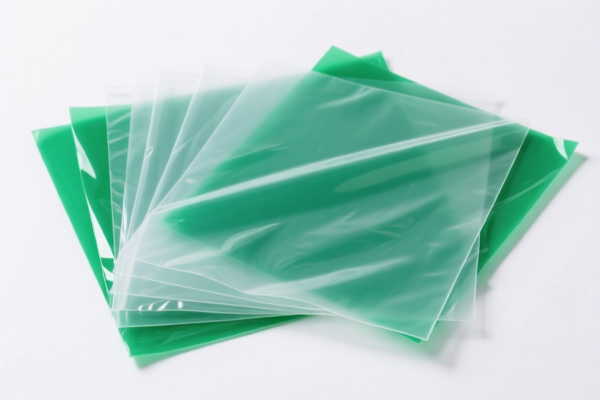
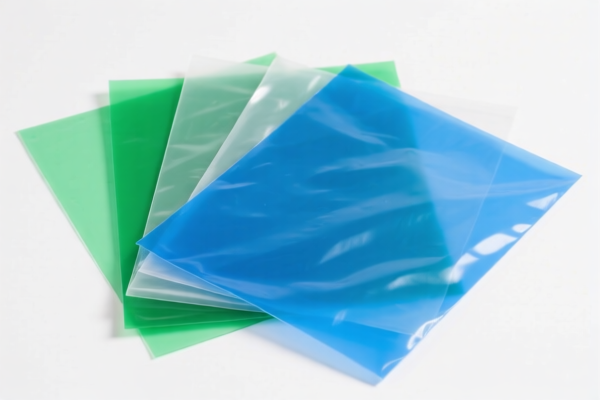

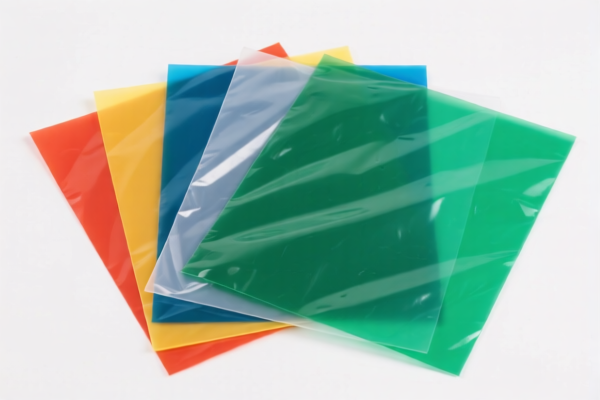
AI Analysis
🛡️ Polyethylene Polymer Plastic Anti-Corrosion Sheets
🌐 HS Code Classification & Tariff Guide | 2026 Customs Compliance Handbook | Expert Clearing Strategy
📌 One Product, Five HS Codes — Why the Difference? Let’s Break It Down!
📌 一、Product Definition & Key Classification Criteria
Polyethylene Polymer Plastic Anti-Corrosion Sheets are rigid or semi-rigid flat panels made from polyethylene (PE), primarily used to protect industrial structures, tanks, pipelines, and flooring from chemical, moisture, and environmental corrosion.
⚠️ Critical Distinction: - If the sheet is used as a standalone protective layer → likely falls under building/industrial components or other plastic articles. - If it's designed for structural use (e.g., in chemical plants, tanks, or marine environments) → may be classified under building/industrial parts. - If no specific structural function, and not covered by a more precise subheading → general classification applies.
🔍 Why So Many HS Codes?
Because purpose, form, and intended use determine classification — even if the material (polyethylene) and shape (sheet) are identical.
📦 二、HS Code Classification Matrix (2026 Official Tariff Breakdown)
| HS Code | Product Description | Classification Basis | Key Clue |
|---|---|---|---|
3920.10.00.00 |
Polyethylene plastic anti-corrosion sheet, material: polyethylene, form: sheet, purpose: corrosion protection | Material-based — pure polyethylene sheet, no special use | ✅ "Anti-corrosion" is functional, not structural |
3925.90.00.00 |
Polyethylene plastic anti-corrosion sheet, material: polyethylene plastic, form: sheet, classified as building/industrial component | Use-based — used in construction or industrial systems | ✅ "Building/industrial component" triggers this code |
3921.19.00.90 |
Polyethylene plastic anti-corrosion sheet, material: polyethylene, form: sheet, falls under "other" category | General residual category — not covered by more specific headings | ✅ "Other" means no better fit |
3921.19.00.10 |
Polyethylene plastic anti-corrosion sheet, material: polyethylene, form: sheet, meets classification explanation criteria | Legal interpretation — fits description in official notes | ✅ Matches official classification guidance |
3925.10.00.00 |
Polyethylene plastic anti-corrosion sheet, material: polyethylene plastic, form: sheet, classified via residual rule | "Duty to classify" principle — last resort when no better fit | ✅ "Based on兜底 principle" = fallback classification |
📌 Pro Tip:
The same physical product can be assigned different HS codes depending on how it's used, how it's marketed, and what documentation supports it.
💰 三、2026 Tariff Breakdown (U.S. Import – China Origin)
✅ Applicable Country: United States (US)
✅ Origin: China (CN)
✅ Effective Date: November 10, 2025 (inclusive)
✅ Applicable Laws: USITC Section 301, IEEPA (International Emergency Economic Powers Act)
🎯 1. 3920.10.00.00 — Anti-Corrosion Sheet (Material-Based)
| Item | Detail |
|---|---|
| Base Duty | 4.2% (ad valorem) |
| USITC 301 Tariff | +25.0% (from Section 301 of U.S. Trade Act) |
| IEEPA Tariff (122 Clause) | +10.0% (under IEEPA for China-origin goods) |
| Total Effective Rate | 39.2% |
| Tax Calculation | CIF Value × 39.2% |
| De Minimis Exemption? | ❌ No (denied under U.S. law) |
| Legal Pathway | IEEPA:9903.01.25 → USITC:3920.10.00.00 → FOOTNOTE:9903.88.01 |
📌 Why This Rate?
- This code is for basic polyethylene sheets used in anti-corrosion applications. - The 25% USITC tariff applies to all Chinese-origin goods under Section 301. - The 10% IEEPA tariff is triggered by the 122 Clause — a permanent add-on for China.
🎯 2. 3925.90.00.00 — Anti-Corrosion Sheet as Building/Industrial Component
| Item | Detail |
|---|---|
| Base Duty | 5.3% |
| USITC 301 Tariff | +25.0% |
| IEEPA Tariff (122 Clause) | +10.0% |
| Total Effective Rate | 40.3% |
| Tax Calculation | CIF × 40.3% |
| De Minimis? | ❌ No |
| Legal Pathway | IEEPA:9901.25 → USITC:3925.90.00.00 → FOOTNOTE:9903.88.01 |
📌 Why Higher?
- Classified as a building or industrial component → higher base rate. - Still subject to full 35%附加 tariffs (25% + 10%).
🎯 3. 3921.19.00.90 — Anti-Corrosion Sheet (Other Category)
| Item | Detail |
|---|---|
| Base Duty | 6.5% |
| USITC 301 Tariff | +25.0% |
| IEEPA Tariff (122 Clause) | +10.0% |
| Total Effective Rate | 41.5% |
| Tax Calculation | CIF × 41.5% |
| De Minimis? | ❌ No |
| Legal Pathway | IEEPA:9903.01.24 → USITC:3921.19.00.90 → FOOTNOTE:9903.88.01 |
📌 Why This Code?
- Used when the product doesn’t fit into more specific categories. - “Other” category → highest base rate among the five. - Still subject to full 35%附加.
🎯 4. 3921.19.00.10 — Anti-Corrosion Sheet (Meets Classification Explanation)
| Item | Detail |
|---|---|
| Base Duty | 6.5% |
| USITC 301 Tariff | +25.0% |
| IEEPA Tariff (122 Clause) | +10.0% |
| Total Effective Rate | 41.5% |
| Tax Calculation | CIF × 41.5% |
| De Minimis? | ❌ No |
| Legal Pathway | IEEPA:9903.01.24 → USITC:3921.19.00.10 → FOOTNOTE:9903.88.01 |
📌 Why This Code?
- Matches official classification explanation (e.g., from U.S. CBP or HTSUS notes). - Even if it's “other,” if it aligns with legal guidance, this code applies. - Same rate as3921.19.00.90— 41.5% total.
🎯 5. 3925.10.00.00 — Anti-Corrosion Sheet (Residual Rule)
| Item | Detail |
|---|---|
| Base Duty | 6.3% |
| USITC 301 Tariff | +25.0% |
| IEEPA Tariff (122 Clause) | +10.0% |
| Total Effective Rate | 41.3% |
| Tax Calculation | CIF × 41.3% |
| De Minimis? | ❌ No |
| Legal Pathway | IEEPA:9903.01.24 → USITC:3925.10.00.00 → FOOTNOTE:9903.88.01 |
📌 Why This Code?
- Applied under the "duty to classify" principle — when no other heading fits. - Often used for ambiguous or multi-purpose products. - Slightly lower than 41.5% due to lower base rate.
🛠️ 四、Customs Clearance Best Practices (Real-World Tips)
✅ 1. Essential Documentation (Must-Have)
| Document | Required? | Why It Matters |
|---|---|---|
| ✅ Product Specifications | ✔️ | Clarifies material, thickness, dimensions, anti-corrosion rating |
| ✅ Technical Drawings / Schematics | ✔️ | Proves intended use (e.g., for tanks vs. general shielding) |
| ✅ Product Photos (with labels) | ✔️ | Shows surface texture, thickness, markings, branding |
| ✅ Test Reports (e.g., chemical resistance) | ✔️ | Supports anti-corrosion claim |
| ✅ Commercial Invoice | ✔️ | Must clearly state: “Polyethylene Anti-Corrosion Sheet, for Industrial Use” |
| ✅ Certificate of Origin (CO) | ✔️ | Required for tariff calculation; can affect IEEPA/USITC status |
| ✅ Packing List | ✔️ | Shows unit count, weight, packaging — avoids duty disputes |
✅ 2.申报技巧(申报口诀)
🔥 “用途定编码,材料定税率,用途写清楚,税率省一半!”
| Scenario | Correct HS Code | Common Mistake |
|---|---|---|
| Used in chemical tank lining | 3925.90.00.00 |
Misclassified as 3920.10.00.00 → lower rate but wrong |
| General anti-corrosion sheet (no structure) | 3921.19.00.90 or 3921.19.00.10 |
Misclassified as 3920.10.00.00 → higher risk of audit |
| No clear use → fallback | 3925.10.00.00 |
Wrongly assigned as 3921.19.00.90 → higher tax |
✅ 3. Special Cases & Risk Mitigation
| Situation | Recommended Action |
|---|---|
| OEM or custom-designed sheets | Provide engineering drawings + customer use case |
| Used in marine or offshore applications | Emphasize “industrial component” → supports 3925.90.00.00 |
| Sold as raw material for fabrication | Claim “anti-corrosion sheet” with technical proof |
| Multiple uses (e.g., flooring + tank lining) | Choose primary use and document it clearly |
| Dispute with CBP | Request Advance Ruling (AR) — costs $10k–$15k but locks in HS Code & rate |
🌍 五、Global Market Comparison (2026)
| Country | Recommended HS Code | Base Tariff | Additional Taxes | Notes |
|---|---|---|---|---|
| 🇺🇸 USA (China origin) | 3925.90.00.00 or 3921.19.00.10 |
0–6.5% | +35% (25%+10%) | Total: 40.3%–41.5% |
| 🇨🇳 China | 3920.10.00.00 |
5% | None | No IEEPA/USITC |
| 🇪🇺 EU | 3921.19.00.90 |
0% (if CE compliant) | None | No extra tariffs |
| 🇦🇺 Australia | 3921.19.00.90 |
5% | None | No IEEPA/USITC |
| 🇯🇵 Japan | 3921.19.00.90 |
0% | None | No附加税 |
📌 Key Insight:
- Only the U.S. imposes the 35%附加 tariffs on Chinese-origin polyethylene sheets. - China, EU, Australia, Japan have no additional tariffs — ideal for export planning.
🚨 Six Common Mistakes (And How to Avoid Them)
❌ Mistake 1: Using 3920.10.00.00 for industrial tank lining
👉 Risk: Incorrect classification → higher audit risk, reassessment, penalties
❌ Mistake 2: Not specifying "anti-corrosion" in invoice
👉 Risk: CBP may reclassify as "general plastic sheet" → wrong code, wrong tax
❌ Mistake 3: Using “polyethylene sheet” without context
👉 Risk: No proof of purpose → default to highest rate
❌ Mistake 4: Not providing test reports
👉 Risk: Cannot prove anti-corrosion function → denied classification
❌ Mistake 5: Submitting generic photos
👉 Risk: No clarity on thickness, surface, use → delayed clearance
✅ Correct Approach:
“Polyethylene Anti-Corrosion Sheet, 2mm thick, for Chemical Tank Lining, Resistance to HCl, H2SO4, and NaOH, Material: LDPE, Certificate of Resistance Test Attached, HS Code: 3925.90.00.00”
🎯 Final Verdict: Choose Wisely, Pay Less, Ship Faster
🔹 Best HS Code for U.S. Imports?
-3925.90.00.00if used in industrial/builder applications → 40.3% total
-3920.10.00.00if purely anti-corrosion, not structural → 39.2% (lowest)
- Avoid3921.19.00.90or3921.19.00.10unless no better fit🔹 Best Strategy?
✅ Pre-apply for an Advance Ruling (AR)
✅ Provide full technical proof
✅ Use precise product names
✅ Avoid "generic" labels
📌 Summary Table: HS Code vs. Tax Rate (U.S. – China Origin)
| HS Code | Base Duty | USITC 301 | IEEPA 122 | Total | Best Use Case |
|---|---|---|---|---|---|
3920.10.00.00 |
4.2% | +25.0% | +10.0% | 39.2% | Pure anti-corrosion, no structure |
3925.90.00.00 |
5.3% | +25.0% | +10.0% | 40.3% | Industrial/building component |
3921.19.00.90 |
6.5% | +25.0% | +10.0% | 41.5% | No better fit — last resort |
3921.19.00.10 |
6.5% | +25.0% | +10.0% | 41.5% | Matches official explanation |
3925.10.00.00 |
6.3% | +25.0% | +10.0% | 41.3% | Residual classification |
📣 Call to Action: Secure Your Supply Chain Today!
📞 Contact a U.S. Customs Broker + Request an HS Code Pre-Ruling
🚀 Lock in your tariff rate before shipment
💼 Avoid $100k+ in unexpected duties and delays
✨ Precision in Classification = Profit in Export
💼 Your product’s HS Code is not just a number — it’s your bottom line.
Customer Reviews
About HS Code Classification
The Harmonized System (HS) is an internationally standardized nomenclature developed by the World Customs Organization (WCO) to classify traded products. Over 200 countries use the HS system as the basis for customs tariffs, trade statistics, and import/export regulations.
Each HS code follows a hierarchical structure:
- Chapter (2 digits) — Broad category of goods (e.g., Chapter 84: Machinery and Mechanical Appliances)
- Heading (4 digits) — More specific grouping within the chapter
- Subheading (6 digits) — Internationally standardized breakdown, used by all WCO member countries
- National subdivisions (8-10 digits) — Country-specific extensions for further classification, such as US HTSUS 10-digit codes
Correct HS code classification is essential for smooth customs clearance, accurate duty payment, and compliance with trade regulations. Misclassification can lead to customs delays, overpayment of duties, or penalties.
When importing from CN to US, the applicable tariff rates may include:
- Most-Favored-Nation (MFN) rate — The standard duty rate applied to WTO members
- General rate — Applied to countries without trade agreements
- Trade remedy duties — Additional tariffs such as Section 301 (anti-dumping), Section 232 (national security), or countervailing duties
The information provided on this page is for reference purposes only. For official classification, please consult with your local customs authority or a licensed customs broker.