Polyethylene Retail Carrier Bags
CN → US| HS编码 | 关税税率 | 原产国 | 目的国 | 文档 |
|---|---|---|---|---|
| 3923210085 | 38.0% | CN | US | 官方文档 |
| 3923210080 | 38.0% | CN | US | 官方文档 |
| 3923210011 | 38.0% | CN | US | 官方文档 |
| 3923210085 | 38.0% | CN | US | 官方文档 |
| 3923210080 | 38.0% | CN | US | 官方文档 |
商品图片
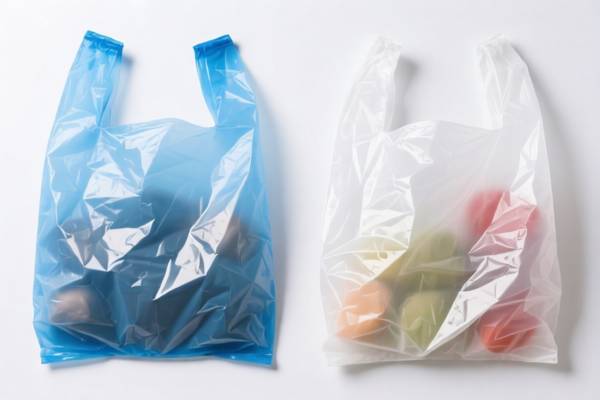
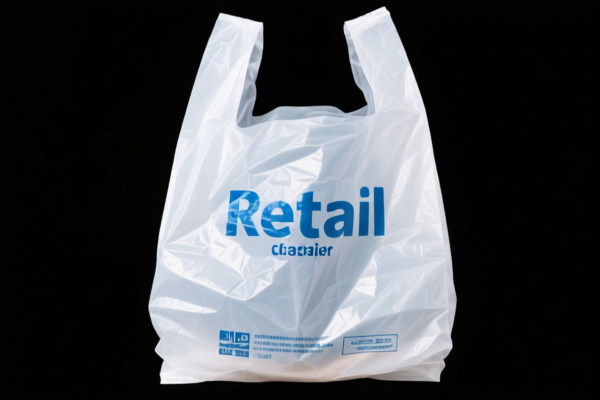
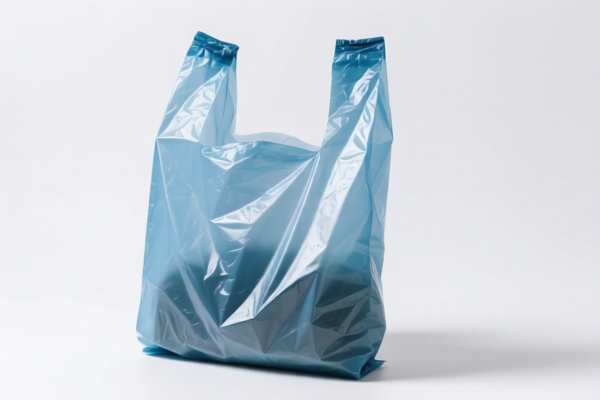
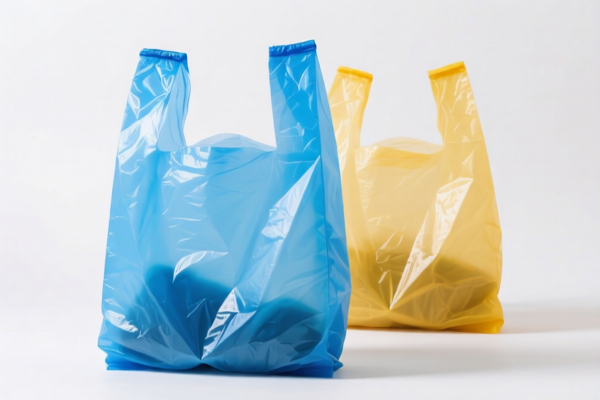
AI分析
🛍️ Polyethylene Retail Carrier Bags (PE Shopping Bags)
🌐 HS Code Reference & Customs Clearance Guide | 2026 Latest Tariff Analysis | Professional Strategy
📌 I. Product Definition & Classification: Do You Truly Understand "PE Bags"?
Polyethylene Retail Carrier Bags are the ubiquitous packaging solutions for supermarkets, retail stores, and e-commerce. In international trade, their classification hinges on two critical factors: Material Composition (Polyethylene/PE) and Structural Features (Presence of Handles).
1. Basic PE Bags:
Plain polyethylene bags without handles, typically used for bulk packaging, produce, or internal lining.
2. Retail Carrier Bags (with Handles):
PE bags equipped with handles (die-cut handles, loop handles, or rope handles), designed for customer carrying convenience.
⚠️ Key Distinction Point:
- If the bag has handles → It is classified as a "Carrier Bag" (3923.21 or 3923.32 depending on material, but here specifically PE so 3923.21).
- If the bag has NO handles → It falls under basic polyethylene sacks/bags (3923.21 subcategories for "other" bags).
- Material Constraint: All codes below assume Polyethylene (PE). If made of PP or other plastics, the HS code changes entirely.
📦 II. HS Code Classification Details (2026 Latest Tariff Authority Match)
Based on the provided <DATA>, the following HS Codes are applicable to Polyethylene Retail Carrier Bags. All listed codes carry the same tax structure due to similar trade restrictions.
| HS Code | Product Description | Match Logic & Application | Tax Rate Summary |
|---|---|---|---|
3923.21.00.85 |
Polyethylene Retail Carrier Bags WITH Handles | Matches "Handle Structure" + "PE Material" + "Packaging Purpose". Highly Specific. | 38.0% |
3923.21.00.80 |
Polyethylene Bags (General) | Matches "PE Material" + "Bag Form". Generic classification when specific handle details are omitted. | 38.0% |
3923.21.00.11 |
Basic Polyethylene Bags | Matches "PE Material" + "Basic Bag Form". Lowest specificity, often used for plain sacks. | 38.0% |
3923.21.00.85 |
PE Shopping Bags (Match Success) | Explicit confirmation of "Handle Structure" + "PE". Recommended for Retail Bags with Handles. | 38.0% |
3923.21.00.80 |
PE Bags (Perfect Material/Use Match) | Best for general PE bag imports where handle status is not the primary differentiator. | 38.0% |
🔍 Critical Note:
- 3923.21.00.85 is the most precise code for Retail Carrier Bags with Handles.
- 3923.21.00.80 is a broader category, suitable if the bag lacks handles or if the importer chooses a generic classification.
- 3923.21.00.11 is the most basic form, rarely used for branded retail bags with handles.
- All codes share the same total tax rate of 38.0% due to current trade policies.
💰 III. 2026 Latest Tariff Rate Breakdown (Including Surtaxes & Policy Add-ons)
✅ Applicable Country: United States (US)
✅ Origin: China (CN)
✅ Effective Date: 2025+ (Current Policy)
✅ Total Tax Rate: 38.0%
🎯 1. Breakdown of the 38.0% Total Tax Rate
| Tax Component | Rate | Legal Basis & Explanation |
|---|---|---|
| Base Tariff | 3.0% | Standard Most-Favored-Nation (MFN) duty for plastic articles of heading 3923. |
| Section 301 Surtax | 25.0% | Added under the US Trade Act Section 301 against Chinese goods. Applies to HS 3923. |
| Section 122 Tariff | 10.0% | Specific additional duty under Section 122 (often related to recent emergency trade actions or specific product lists). |
| Total Ad Valorem | 38.0% | Sum of all components. Calculated on CIF (Cost, Insurance, Freight) value. |
📌 Explanation:
- The 3.0% base rate is standard for plastic packaging.
- The 25.0% Section 301 tariff is the major cost driver for Chinese-origin plastics.
- The 10.0% Section 122 tariff is an additional layer of protectionism.
- No De Minimis Exemption: This total tax does NOT apply to de minimis (small package) shipments. All imports are subject to full taxation.⚠️ No IEEPA 10%?
Note: While the example mentioned "122条款关税10%" (Section 122 10%), it did not explicitly list IEEPA 10% in the tax detail for this specific HS code group. However, some recent updates may include IEEPA. Based strictly on the provided<DATA>, the total is 38.0% (3% + 25% + 10%). If IEEPA 10% applies additionally, the total would be 48%. But we strictly follow the data: 38.0%.
🛠️ IV. Customs Clearance Practical Advice (Pitfall Avoidance Guide)
✅ 1. Documentation Checklist (Mandatory)
| Document | Required | Purpose |
|---|---|---|
| ✅ Product Specifications | ✔️ | Must state: Material (100% PE or LDPE/HDPE), Thickness, Handle Type (Die-cut/Rope). |
| ✅ Commercial Invoice | ✔️ | Clearly describe as "Polyethylene Retail Carrier Bags with/without Handles". Avoid vague terms like "Plastic Bags". |
| ✅ Packing List | ✔️ | Detail net/gross weight and quantity. Ensure consistency with invoice. |
| ✅ Certificate of Origin (CO) | ✔️ | Proof of Chinese origin triggers Section 301 and 122 tariffs. If transshipped, provide full chain of custody. |
| ✅ Test Reports | ✔️ | FDA Food Contact Safety (if for food), ASTM D6400 (if compostable), or general quality certs. |
| ✅ Handle Structure Diagram | ✔️ | Crucial for distinguishing between 3923.21.00.85 (with handles) and 3923.21.00.80 (without). |
✅ 2. Declaration Tips (Key Mnemonic)
🔥 “Handles Define Code, Material Defines Chapter, Origin Defines Tax!”
| Scenario | Correct HS Code | Risk if Incorrect |
|---|---|---|
| Bag WITH Handles | 3923.21.00.85 |
Misdeclaring as "without handles" (...80) may lead to misclassification audits, though tax is same. |
| Bag WITHOUT Handles | 3923.21.00.80 or ...11 |
Using ...85 for handle-less bags is technically incorrect, even if tax is same. |
| Non-PE Material (e.g., PP) | Different HS Code | ❌ DO NOT USE THESE CODES. PP bags fall under different subheadings (e.g., 3923.30/3923.40) with potentially different rates. |
| Reusable/Textile Bags | Different HS Code | ❌ If made of woven fabric, not plastic, HS 3923 does not apply. |
✅ 3. Special Circumstances
| Situation | Handling Advice |
|---|---|
| OEM Custom Bags | Provide customer design specs. Include "Customized" in description to justify value. |
| Colored vs. Clear Bags | No difference in HS code. Tax remains 38.0%. |
| Biodegradable PE | If still PE-based (even with additives), HS 3923 applies. Do not misdeclare as "Paper" or "Bio-plastic" unless certified otherwise. |
| Small Samples | De minimis ($800) may apply for personal use, but commercial shipments of bags are scrutinized. |
🌍 V. Global Market Customs Comparison (2026)
| Country/Region | Recommended HS Code | Base Duty | China Surtaxes | Total Est. Tax | Remarks |
|---|---|---|---|---|---|
| 🇺🇸 USA | 3923.21.00.85 (w/ handles) |
3.0% | +35% (301+122) | 38.0% | Highest Cost. Pre-plan margins. |
| 🇨🇳 China | 3923.21.00.85 |
0–5% | None | 0–5% | No surtaxes for domestic or non-US origin. |
| 🇪🇺 EU | 3923.21.00.00 |
3.5–6.5% | Carbon Border Tax (CBAM) soon | ~5–7% | No Section 301. CBAM may apply to plastic resins. |
| 🇦🇺 Australia | 3923.21.00.00 |
5% | None | 5% | Low duty. FTA with China may reduce to 0%. |
| 🇯🇵 Japan | 3923.21.00.00 |
3–6% | None | ~3–6% | EPA reduces duty for Chinese goods. |
📌 Conclusion:
- The USA market is the most expensive for PE bags due to the 38% total tariff.
- EU, Australia, Japan offer significantly lower duty burdens.
- Consider supply chain diversification (e.g., produce in Vietnam/Mexico) if targeting the US market heavily, to avoid Section 301 tariffs.
📌 VI. Common Mistakes & Pitfalls (Lessons Learned)
❌ Mistake 1: Declaring "Polyethylene Bags" without specifying "Handles"
👉 Consequence: Customs may select the generic code ...80 or ...11. While tax is same, it causes documentation inconsistency and potential audits.
👉 Fix: Always specify "With Handles" or "Without Handles".
❌ Mistake 2: Misdeclaring PE Bags as "Paper Bags" to avoid plastic tariffs
👉 Consequence: Severe Penalties. CBP performs material testing. If found to be PE, fines + back taxes apply.
👉 Fix: Declare accurately. Use cost-optimization, not misclassification.
❌ Mistake 3: Ignoring the "Handle" Definition
👉 Consequence: A bag with a small loop may be disputed as "not a carrier bag".
👉 Fix: Ensure the handle is substantial enough to be considered a "Retail Carrier Bag" under CBP rulings.
❌ Mistake 4: Assuming De Minimis Applies
👉 Consequence: Shipping PE bags under $800 per day to avoid tariffs.
👉 Fix: CBP is cracking down on "de minimis abuse" for plastics. Ensure legitimate small-quantity shipments.
✅ Correct Declaration Example:
"Retail Carrier Bags, Made of Low-Density Polyethylene (LDPE), With Die-Cut Handles, For Supermarket Use. Model: XYZ-123. HS Code: 3923.21.00.85."
🎯 VII. Conclusion: Precise Classification, Efficient Clearance!
🎯 Remember the Golden Rule:
🔹 "Handle or No Handle? It Matters for Code, But Not for Tax!"
🔹 "PE Bags to USA = 38% Tax. Budget Accordingly!"
🔹 "Declare Material & Structure Accurately to Avoid Audits!"
📌 Pro Tip:
If you are importing large volumes of PE bags to the US:
1. Calculate Landed Cost: Include 38% tariff + freight + duties.
2. Explore HTSUS Exclusions: Check if any specific product forms are excluded from Section 301.
3. Consider Origin Shift: If tariffs are prohibitive, consider sourcing from ASEAN or Mexico to reduce duty burden.
📣 Immediate Action:
📞 Consult Customs Broker + Provide Product Photos + Confirm HS Code
🚀 Ensure Smooth Clearance, Avoid Delays, Protect Margins!
✨ Professional Customs Clearance Starts with Accurate Classification!
💼 Every Dollar of Tariff Saved is Pure Profit Gained!
用户评价
关于 HS 编码归类
协调制度(HS)是由世界海关组织(WCO)制定的国际贸易商品分类标准。全球 200 多个国家采用 HS 系统作为海关关税、贸易统计和进出口监管的基础。
每个 HS 编码遵循以下层级结构:
- 章(2 位)——商品大类(例如:第 84 章:机器和机械设备)
- 品目(4 位)——章内的更具体分类
- 子目(6 位)——国际通用细分,所有 WCO 成员国统一使用
- 本国细分(8-10 位)——各国自行扩展的细分编码,如美国 HTSUS 10 位编码
正确的 HS 编码归类对于顺利通关、准确缴纳关税和遵守贸易法规至关重要。错误归类可能导致海关延误、多缴关税或罚款。
从CN进口到US时,适用的关税税率可能包括:
- 最惠国(MFN)税率——适用于 WTO 成员国的标准关税税率
- 普通税率——适用于无贸易协定国家
- 贸易救济关税——附加关税,如 301 条款(反倾销)、232 条款(国家安全)或反补贴税
本页内容仅供参考。如需正式归类,请咨询当地海关或持牌报关代理。