Polyethylene Vegetable Bag
CN → US| HS编码 | 关税税率 | 原产国 | 目的国 | 文档 |
|---|---|---|---|---|
| 3923210080 | 38.0% | CN | US | 官方文档 |
| 3923210095 | 38.0% | CN | US | 官方文档 |
| 3923210011 | 38.0% | CN | US | 官方文档 |
| 3926909989 | 22.8% | CN | US | 官方文档 |
| 3926901000 | 20.9% | CN | US | 官方文档 |
商品图片
AI分析
🛍️ Polyethylene Vegetable Bag (PE Veggie Bags)
🌐 HS Code Reference & Customs Clearance Guide | 2026 Latest Tariff Analysis | Strategic Classification Strategy
📌 I. Product Definition & Classification: Do You Really Understand "PE Vegetable Bags"?
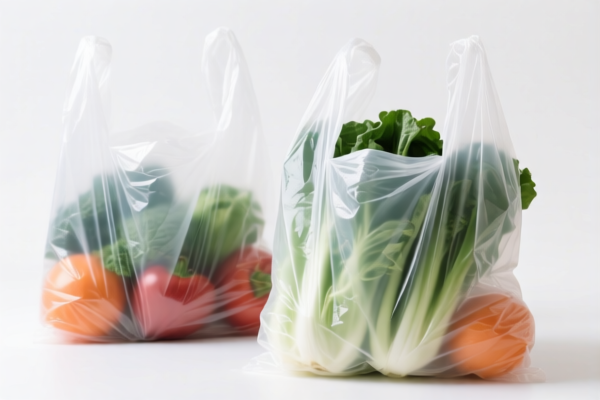
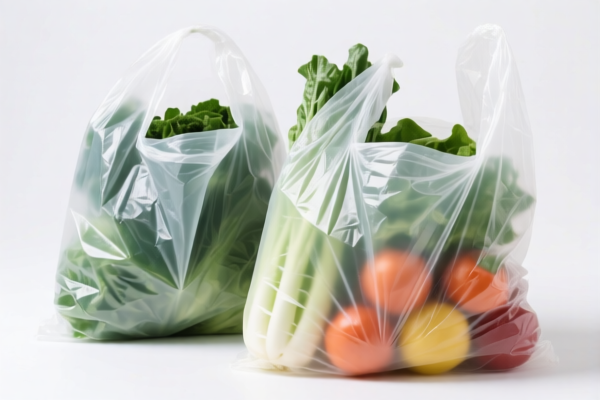
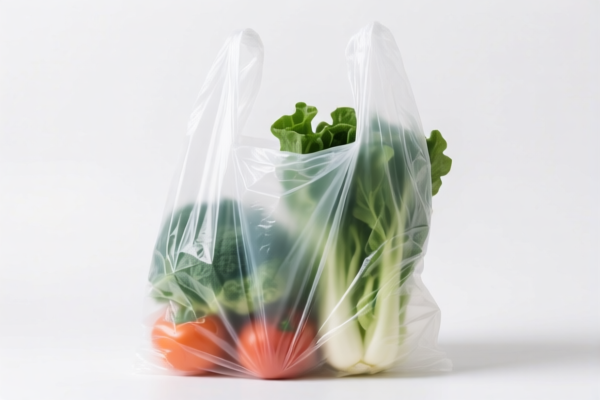
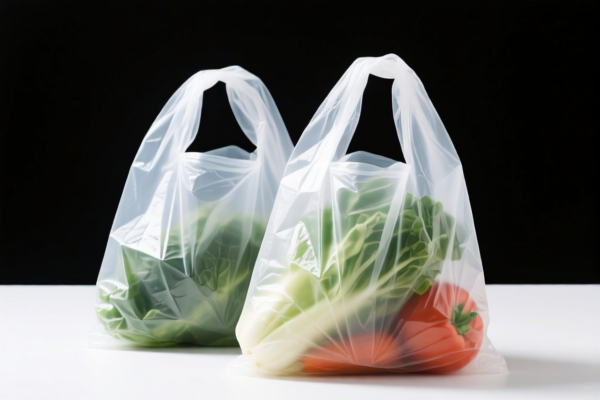
Polyethylene Vegetable Bags are flexible packaging solutions primarily used for displaying and transporting fresh produce in retail environments. In international trade, their classification depends heavily on the specific polymer type and intended use, though most generic PE bags fall under Chapter 39 (Plastics and Articles Thereof).
Key Distinction: * General PE Bags (Polyethylene): Falls under heading 3923.21 (Sacks and bags, including cones). * Container-like Items (Basins/Buckets): If the item is rigid or semi-rigid and shaped like a container rather than a flexible sack, it may fall under 3926.90 (Other plastic articles).
⚠️ Critical Classification Point:
- If the product is a flexible film bag (standard veggie bag) →归类 to 3923.21.00
- If the product is a rigid/semi-rigid basin or bucket for vegetables →归类 to 3926.90.10.00 or 3926.90.99.89
📦 II. HS Code Classification Details (2026 Latest Tariff Authority Mapping)
| HS Code | Product Description | Application Scenario | Material/Form |
|---|---|---|---|
3923.21.00.80 |
Polyethylene Fruit/Veggie Bags, Material: PE, Form: Bag, Purpose: Packaging | Standard flexible produce bags, mesh bags, or sealed poly bags | ✅ Flexible Bag |
3923.21.00.95 |
Polyethylene Fruit/Veggie Bags, Material: PE, Form: Bag, Purpose: Packaging | Generic PE sacks/bags not specified elsewhere in 3923.21 | ✅ Flexible Bag |
3923.21.00.11 |
Polyethylene Bags, Material: PE, Form: Bag | General PE bags meeting material and form requirements | ✅ Flexible Bag |
3926.90.10.00 |
Plastic Vegetable Basin/Container, Form: Container (Buckets/Pails) | Rigid or semi-rigid containers shaped as buckets/pails for veg | ✅ Rigid/Semi-Rigid |
3926.90.99.89 |
Plastic Vegetable Basin, Material: Plastic, Other | Non-specific plastic produce containers not classified as buckets | ✅ Rigid/Semi-Rigid |
🔍 Key Reminder:
- Flexible Bags (soft, foldable, used for holding loose produce) MUST be classified under 3923.21.
- Basins/Buckets (structured, holding their own shape) are classified under 3926.90.
- Misclassification Risk: Declaring a flexible bag as a "basin" or vice versa can lead to significant tax discrepancies and customs delays.
💰 III. 2026 Latest Tariff Rate Breakdown (Including Additional Taxes & Policy Surcharges)
✅ Applicable Country: USA (US)
✅ Origin: China (CN)
✅ Effective Date: Current rates apply (Includes Section 301 & Section 122 surcharges)
🎯 1. Flexible PE Vegetable Bags (HS Codes: 3923.21.00.80 / 95 / 11)
| Item | Details |
|---|---|
| Base Tariff Rate | 3.0% (Ad Valorem) |
| Section 301 Surcharge | +25.0% (USITC Footnote 9903.88.01 range) |
| Section 122 Surcharge | +10.0% (Specific policy tariff) |
| Total Effective Tariff | 38.0% |
| Tax Calculation | CIF Value × 38.0% |
| De Minimis Exemption | ❌ NOT ELIGIBLE (De Minimis waiver denied) |
| Legal Basis Path | Base Tariff → Section 301: 25% → Section 122: 10% |
📌 Explanation:
- The 3.0% is the standard Most Favored Nation (MFN) duty for plastic sacks/bags.
- The 25% is the Section 301 tariff on Chinese plastic products.
- The 10% is an additional policy surcharge (Section 122).
- Total Load: 38%. This is a high-cost category for exporters.
🎯 2. Plastic Vegetable Basins/Containers (HS Codes: 3926.90.10.00 / 99.89)
| Item | Details |
|---|---|
| Base Tariff Rate | 3.4% (for 3926.90.10.00) / 5.3% (for 3926.90.99.89) |
| Section 301 Surcharge | +7.5% (Lower tier surcharge for certain plastic articles) |
| Section 122 Surcharge | +10.0% (Policy surcharge) |
| Total Effective Tariff | 20.9% (for 3926.90.10.00) / 22.8% (for 3926.90.99.89) |
| Tax Calculation | CIF Value × 20.9% ~ 22.8% |
| De Minimis Exemption | ❌ NOT ELIGIBLE |
| Legal Basis Path | Base Tariff → Section 301: 7.5% → Section 122: 10% |
📌 Explanation:
- Rigid/semi-rigid containers (Basins) often attract a lower Section 301 surcharge (7.5%) compared to flexible films (25%).
- Total Load: 20.9% – 22.8%. This is significantly cheaper than flexible bags.
- Strategy: If the product can be designed as a rigid "basin" rather than a "bag," it may reduce tariff costs by ~15-17%.
🛠️ IV. Customs Clearance Practical Advice (Pitfall Avoidance Guide)
✅ 1. Documentation Checklist (Non-Negotiable)
| Document | Must Provide | Purpose |
|---|---|---|
| ✅ Product Specification Sheet | ✔️ | Clearly states material (PE), dimensions, thickness, and usage. |
| ✅ Physical Sample/Photo | ✔️ | Proves if it’s a flexible bag (crinkles) or rigid basin (holds shape). |
| ✅ Commercial Invoice | ✔️ | Description must match HS code logic (e.g., "Polyethylene Bag" vs. "Plastic Basin"). |
| ✅ Packing List | ✔️ | Includes gross/net weight, dimensions, and packaging type. |
| ✅ Certificate of Origin (CO) | ✔️ | Required for tariff determination if claims of origin exist (though US tariffs apply regardless). |
✅ 2. Declaration Tips (Key Mantras)
🔥 “Form Defines Code: Flexible=3923, Rigid=3926. Name Precisely, Tax Accurate.”
| Scenario | Correct Declaration | Incorrect Declaration |
|---|---|---|
| Standard flexible veggie bag | "Polyethylene Vegetable Bag" → 3923.21.00.80 |
Call it "Plastic Container" → Risk of reclassification |
| Mesh produce bag | "Polyethylene Mesh Bag" → 3923.21.00.80 |
Call it "Basket" → Wrong category |
| Rigid plastic tub for salad | "Plastic Vegetable Basin" → 3926.90.10.00 |
Call it "Bag" → Wrong category |
| Reusable silicone veggie bag | "Silicone Bag" (Check Chapter 40/39) | Assume it’s PE → Wrong HS |
⚠️ Warning:
- Do NOT mix flexible bags and rigid basins in one shipment without clear separation in the invoice.
- If the item is semi-rigid (e.g., a stand-up pouch with a flat bottom), it is still considered a bag under 3923, not a basin.
✅ 3. Special Case Handling
| Scenario | Advice |
|---|---|
| Biodegradable PE Bags | If made of starch-blended PE, it’s still 3923 (unless it meets specific EN 13432/ASTM D6400 standards for exemption, but US tariffs usually still apply). |
| Printed Bags | Printing does not change the HS code. Still 3923.21. |
| Samples | Even samples are subject to 38% tax. Do not ship samples as "Gifts" to avoid de minimis if value exceeds threshold or if flagged. |
| Re-export | If the bags are imported into a third country and re-exported, ensure local rules apply. US import duties are paid at entry. |
🌍 V. Global Market Customs Comparison (2026 Update)
| Country/Region | Recommended HS Code | Tariff (China Origin) | Certification/Remarks |
|---|---|---|---|
| 🇺🇸 USA | 3923.21.00.80 |
38.0% (Flexible) 22.8% (Rigid) |
High tariffs. Strict on material declaration. |
| 🇨🇳 China | 3923.21.00 |
5.0% | Low import duty. |
| 🇪🇺 EU | 3923.21.00 |
6.5% | No Section 301/122 equivalents. |
| 🇬🇧 UK | 3923.21.00 |
6.5% | Post-Brexit tariff schedule. |
| 🇯🇵 Japan | 3923.21.00 |
6.0% | No special surcharges. |
📌 Conclusion:
- USA is the most expensive market for polyethylene bags due to Section 301 & 122 tariffs.
- Rigid containers offer a tariff advantage (~22% vs. 38%) over flexible bags.
- Exporters should consider designing products as rigid basins if functionality allows, or diversify supply chains to non-China origins to avoid surcharges.
📌 VI. Common Errors & Pitfalls (Lessons Learned)
❌ Error 1: Declaring a flexible bag as a "Plastic Container" to avoid Section 301.
👉 Consequence: Customs will inspect, determine it’s a bag, and apply 38% tax + penalties.
❌ Error 2: Using "Plastic Bag" as a generic term without specifying PE (Polyethylene).
👉 Consequence: Customs may request clarification, causing shipment delays or misclassification.
❌ Error 3: Assuming De Minimis ($800) applies to PE Bags.
👉 Consequence: Denied. Section 301/122 surcharges are not eligible for de minimis exemption. All 38% tax must be paid.
❌ Error 4: Confusing PE Bags with PP (Polypropylene) Bags.
👉 Consequence: PP bags may have different HS codes (e.g., 3923.21.00 still applies generally, but material declaration must be accurate for customs records).
✅ Correct Approach:
"Polyethylene (PE) Produce Bag, Flexible, 0.05mm Thickness, Clear, 100% Recyclable PE, Made in China"
🎯 VII. Conclusion: Precision Classification Saves Money!
🎯 Remember the Mantra:
🔹 "Flexible Bag = 3923.21 (38% Tax)"
🔹 "Rigid Basin = 3926.90 (22% Tax)"
🔹 "No De Minimis for China-PE Products!"
🔹 "Tax Difference of 16%: Design Matters!"
📌 Pro Tip:
If your volume is high, consider Advance Rulings (CBP Ruling) to lock in the HS code interpretation.
Also, explore Section 301 Exclusions if your specific PE bag type qualifies (check current USTR lists).
📣 Immediate Action:
📞 Contact your freight forwarder with clear photos and material specs.
🚀 Clarify: Is it a BAG (flexible) or BASIN (rigid)?
💡 Optimize packaging design to potentially shift from 38% to 22% if feasible.
✨ Professional Clearance, Starting with Accurate Classification!
💼 Every percentage point matters in global trade.
用户评价
关于 HS 编码归类
协调制度(HS)是由世界海关组织(WCO)制定的国际贸易商品分类标准。全球 200 多个国家采用 HS 系统作为海关关税、贸易统计和进出口监管的基础。
每个 HS 编码遵循以下层级结构:
- 章(2 位)——商品大类(例如:第 84 章:机器和机械设备)
- 品目(4 位)——章内的更具体分类
- 子目(6 位)——国际通用细分,所有 WCO 成员国统一使用
- 本国细分(8-10 位)——各国自行扩展的细分编码,如美国 HTSUS 10 位编码
正确的 HS 编码归类对于顺利通关、准确缴纳关税和遵守贸易法规至关重要。错误归类可能导致海关延误、多缴关税或罚款。
从CN进口到US时,适用的关税税率可能包括:
- 最惠国(MFN)税率——适用于 WTO 成员国的标准关税税率
- 普通税率——适用于无贸易协定国家
- 贸易救济关税——附加关税,如 301 条款(反倾销)、232 条款(国家安全)或反补贴税
本页内容仅供参考。如需正式归类,请咨询当地海关或持牌报关代理。