Polyethylene Vegetable Bag
CN → US| HS Code | Tariff Rate | Origin | Destination | Doc |
|---|---|---|---|---|
| 3923210080 | 38.0% | CN | US | Official Doc |
| 3923210095 | 38.0% | CN | US | Official Doc |
| 3923210011 | 38.0% | CN | US | Official Doc |
| 3926909989 | 22.8% | CN | US | Official Doc |
| 3926901000 | 20.9% | CN | US | Official Doc |
Product Images
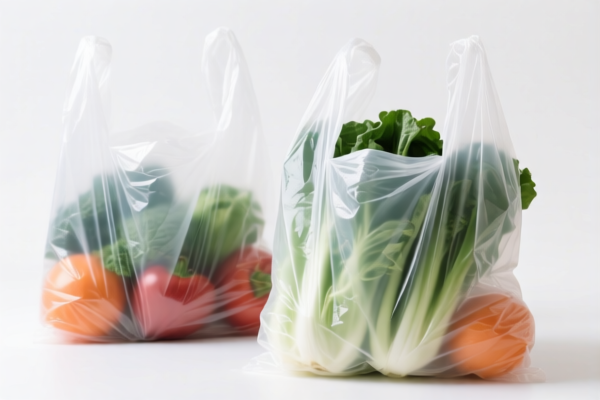
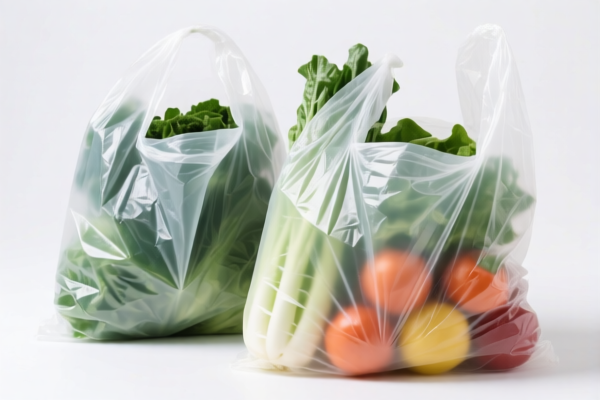
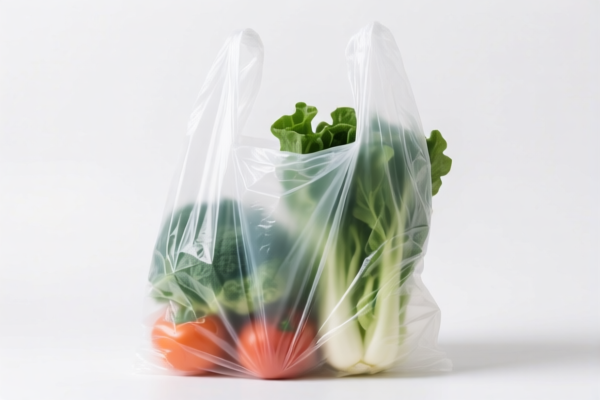
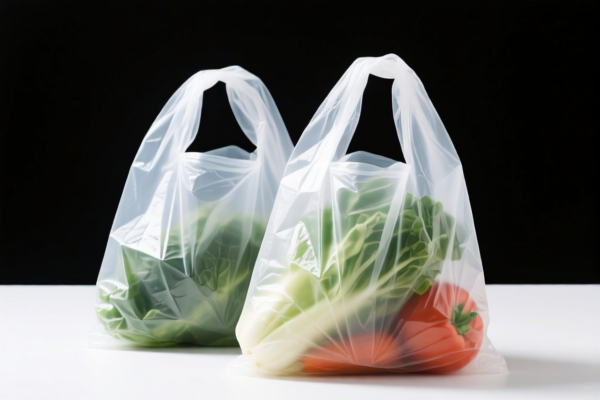
AI Analysis
🛍️ Polyethylene Vegetable Bag (PE Veggie Bags)
🌐 HS Code Reference & Customs Clearance Guide | 2026 Latest Tariff Analysis | Strategic Classification Strategy
📌 I. Product Definition & Classification: Do You Really Understand "PE Vegetable Bags"?
Polyethylene Vegetable Bags are flexible packaging solutions primarily used for displaying and transporting fresh produce in retail environments. In international trade, their classification depends heavily on the specific polymer type and intended use, though most generic PE bags fall under Chapter 39 (Plastics and Articles Thereof).
Key Distinction: * General PE Bags (Polyethylene): Falls under heading 3923.21 (Sacks and bags, including cones). * Container-like Items (Basins/Buckets): If the item is rigid or semi-rigid and shaped like a container rather than a flexible sack, it may fall under 3926.90 (Other plastic articles).
⚠️ Critical Classification Point:
- If the product is a flexible film bag (standard veggie bag) →归类 to 3923.21.00
- If the product is a rigid/semi-rigid basin or bucket for vegetables →归类 to 3926.90.10.00 or 3926.90.99.89
📦 II. HS Code Classification Details (2026 Latest Tariff Authority Mapping)
| HS Code | Product Description | Application Scenario | Material/Form |
|---|---|---|---|
3923.21.00.80 |
Polyethylene Fruit/Veggie Bags, Material: PE, Form: Bag, Purpose: Packaging | Standard flexible produce bags, mesh bags, or sealed poly bags | ✅ Flexible Bag |
3923.21.00.95 |
Polyethylene Fruit/Veggie Bags, Material: PE, Form: Bag, Purpose: Packaging | Generic PE sacks/bags not specified elsewhere in 3923.21 | ✅ Flexible Bag |
3923.21.00.11 |
Polyethylene Bags, Material: PE, Form: Bag | General PE bags meeting material and form requirements | ✅ Flexible Bag |
3926.90.10.00 |
Plastic Vegetable Basin/Container, Form: Container (Buckets/Pails) | Rigid or semi-rigid containers shaped as buckets/pails for veg | ✅ Rigid/Semi-Rigid |
3926.90.99.89 |
Plastic Vegetable Basin, Material: Plastic, Other | Non-specific plastic produce containers not classified as buckets | ✅ Rigid/Semi-Rigid |
🔍 Key Reminder:
- Flexible Bags (soft, foldable, used for holding loose produce) MUST be classified under 3923.21.
- Basins/Buckets (structured, holding their own shape) are classified under 3926.90.
- Misclassification Risk: Declaring a flexible bag as a "basin" or vice versa can lead to significant tax discrepancies and customs delays.
💰 III. 2026 Latest Tariff Rate Breakdown (Including Additional Taxes & Policy Surcharges)
✅ Applicable Country: USA (US)
✅ Origin: China (CN)
✅ Effective Date: Current rates apply (Includes Section 301 & Section 122 surcharges)
🎯 1. Flexible PE Vegetable Bags (HS Codes: 3923.21.00.80 / 95 / 11)
| Item | Details |
|---|---|
| Base Tariff Rate | 3.0% (Ad Valorem) |
| Section 301 Surcharge | +25.0% (USITC Footnote 9903.88.01 range) |
| Section 122 Surcharge | +10.0% (Specific policy tariff) |
| Total Effective Tariff | 38.0% |
| Tax Calculation | CIF Value × 38.0% |
| De Minimis Exemption | ❌ NOT ELIGIBLE (De Minimis waiver denied) |
| Legal Basis Path | Base Tariff → Section 301: 25% → Section 122: 10% |
📌 Explanation:
- The 3.0% is the standard Most Favored Nation (MFN) duty for plastic sacks/bags.
- The 25% is the Section 301 tariff on Chinese plastic products.
- The 10% is an additional policy surcharge (Section 122).
- Total Load: 38%. This is a high-cost category for exporters.
🎯 2. Plastic Vegetable Basins/Containers (HS Codes: 3926.90.10.00 / 99.89)
| Item | Details |
|---|---|
| Base Tariff Rate | 3.4% (for 3926.90.10.00) / 5.3% (for 3926.90.99.89) |
| Section 301 Surcharge | +7.5% (Lower tier surcharge for certain plastic articles) |
| Section 122 Surcharge | +10.0% (Policy surcharge) |
| Total Effective Tariff | 20.9% (for 3926.90.10.00) / 22.8% (for 3926.90.99.89) |
| Tax Calculation | CIF Value × 20.9% ~ 22.8% |
| De Minimis Exemption | ❌ NOT ELIGIBLE |
| Legal Basis Path | Base Tariff → Section 301: 7.5% → Section 122: 10% |
📌 Explanation:
- Rigid/semi-rigid containers (Basins) often attract a lower Section 301 surcharge (7.5%) compared to flexible films (25%).
- Total Load: 20.9% – 22.8%. This is significantly cheaper than flexible bags.
- Strategy: If the product can be designed as a rigid "basin" rather than a "bag," it may reduce tariff costs by ~15-17%.
🛠️ IV. Customs Clearance Practical Advice (Pitfall Avoidance Guide)
✅ 1. Documentation Checklist (Non-Negotiable)
| Document | Must Provide | Purpose |
|---|---|---|
| ✅ Product Specification Sheet | ✔️ | Clearly states material (PE), dimensions, thickness, and usage. |
| ✅ Physical Sample/Photo | ✔️ | Proves if it’s a flexible bag (crinkles) or rigid basin (holds shape). |
| ✅ Commercial Invoice | ✔️ | Description must match HS code logic (e.g., "Polyethylene Bag" vs. "Plastic Basin"). |
| ✅ Packing List | ✔️ | Includes gross/net weight, dimensions, and packaging type. |
| ✅ Certificate of Origin (CO) | ✔️ | Required for tariff determination if claims of origin exist (though US tariffs apply regardless). |
✅ 2. Declaration Tips (Key Mantras)
🔥 “Form Defines Code: Flexible=3923, Rigid=3926. Name Precisely, Tax Accurate.”
| Scenario | Correct Declaration | Incorrect Declaration |
|---|---|---|
| Standard flexible veggie bag | "Polyethylene Vegetable Bag" → 3923.21.00.80 |
Call it "Plastic Container" → Risk of reclassification |
| Mesh produce bag | "Polyethylene Mesh Bag" → 3923.21.00.80 |
Call it "Basket" → Wrong category |
| Rigid plastic tub for salad | "Plastic Vegetable Basin" → 3926.90.10.00 |
Call it "Bag" → Wrong category |
| Reusable silicone veggie bag | "Silicone Bag" (Check Chapter 40/39) | Assume it’s PE → Wrong HS |
⚠️ Warning:
- Do NOT mix flexible bags and rigid basins in one shipment without clear separation in the invoice.
- If the item is semi-rigid (e.g., a stand-up pouch with a flat bottom), it is still considered a bag under 3923, not a basin.
✅ 3. Special Case Handling
| Scenario | Advice |
|---|---|
| Biodegradable PE Bags | If made of starch-blended PE, it’s still 3923 (unless it meets specific EN 13432/ASTM D6400 standards for exemption, but US tariffs usually still apply). |
| Printed Bags | Printing does not change the HS code. Still 3923.21. |
| Samples | Even samples are subject to 38% tax. Do not ship samples as "Gifts" to avoid de minimis if value exceeds threshold or if flagged. |
| Re-export | If the bags are imported into a third country and re-exported, ensure local rules apply. US import duties are paid at entry. |
🌍 V. Global Market Customs Comparison (2026 Update)
| Country/Region | Recommended HS Code | Tariff (China Origin) | Certification/Remarks |
|---|---|---|---|
| 🇺🇸 USA | 3923.21.00.80 |
38.0% (Flexible) 22.8% (Rigid) |
High tariffs. Strict on material declaration. |
| 🇨🇳 China | 3923.21.00 |
5.0% | Low import duty. |
| 🇪🇺 EU | 3923.21.00 |
6.5% | No Section 301/122 equivalents. |
| 🇬🇧 UK | 3923.21.00 |
6.5% | Post-Brexit tariff schedule. |
| 🇯🇵 Japan | 3923.21.00 |
6.0% | No special surcharges. |
📌 Conclusion:
- USA is the most expensive market for polyethylene bags due to Section 301 & 122 tariffs.
- Rigid containers offer a tariff advantage (~22% vs. 38%) over flexible bags.
- Exporters should consider designing products as rigid basins if functionality allows, or diversify supply chains to non-China origins to avoid surcharges.
📌 VI. Common Errors & Pitfalls (Lessons Learned)
❌ Error 1: Declaring a flexible bag as a "Plastic Container" to avoid Section 301.
👉 Consequence: Customs will inspect, determine it’s a bag, and apply 38% tax + penalties.
❌ Error 2: Using "Plastic Bag" as a generic term without specifying PE (Polyethylene).
👉 Consequence: Customs may request clarification, causing shipment delays or misclassification.
❌ Error 3: Assuming De Minimis ($800) applies to PE Bags.
👉 Consequence: Denied. Section 301/122 surcharges are not eligible for de minimis exemption. All 38% tax must be paid.
❌ Error 4: Confusing PE Bags with PP (Polypropylene) Bags.
👉 Consequence: PP bags may have different HS codes (e.g., 3923.21.00 still applies generally, but material declaration must be accurate for customs records).
✅ Correct Approach:
"Polyethylene (PE) Produce Bag, Flexible, 0.05mm Thickness, Clear, 100% Recyclable PE, Made in China"
🎯 VII. Conclusion: Precision Classification Saves Money!
🎯 Remember the Mantra:
🔹 "Flexible Bag = 3923.21 (38% Tax)"
🔹 "Rigid Basin = 3926.90 (22% Tax)"
🔹 "No De Minimis for China-PE Products!"
🔹 "Tax Difference of 16%: Design Matters!"
📌 Pro Tip:
If your volume is high, consider Advance Rulings (CBP Ruling) to lock in the HS code interpretation.
Also, explore Section 301 Exclusions if your specific PE bag type qualifies (check current USTR lists).
📣 Immediate Action:
📞 Contact your freight forwarder with clear photos and material specs.
🚀 Clarify: Is it a BAG (flexible) or BASIN (rigid)?
💡 Optimize packaging design to potentially shift from 38% to 22% if feasible.
✨ Professional Clearance, Starting with Accurate Classification!
💼 Every percentage point matters in global trade.
Customer Reviews
About HS Code Classification
The Harmonized System (HS) is an internationally standardized nomenclature developed by the World Customs Organization (WCO) to classify traded products. Over 200 countries use the HS system as the basis for customs tariffs, trade statistics, and import/export regulations.
Each HS code follows a hierarchical structure:
- Chapter (2 digits) — Broad category of goods (e.g., Chapter 84: Machinery and Mechanical Appliances)
- Heading (4 digits) — More specific grouping within the chapter
- Subheading (6 digits) — Internationally standardized breakdown, used by all WCO member countries
- National subdivisions (8-10 digits) — Country-specific extensions for further classification, such as US HTSUS 10-digit codes
Correct HS code classification is essential for smooth customs clearance, accurate duty payment, and compliance with trade regulations. Misclassification can lead to customs delays, overpayment of duties, or penalties.
When importing from CN to US, the applicable tariff rates may include:
- Most-Favored-Nation (MFN) rate — The standard duty rate applied to WTO members
- General rate — Applied to countries without trade agreements
- Trade remedy duties — Additional tariffs such as Section 301 (anti-dumping), Section 232 (national security), or countervailing duties
The information provided on this page is for reference purposes only. For official classification, please consult with your local customs authority or a licensed customs broker.