Polymer Material Mixture
CN → US| HS编码 | 关税税率 | 原产国 | 目的国 | 文档 |
|---|---|---|---|---|
| 3901909000 | 41.5% | CN | US | 官方文档 |
| 3901905501 | 41.5% | CN | US | 官方文档 |
| 3907995050 | 41.5% | CN | US | 官方文档 |
| 3915900090 | 35.0% | CN | US | 官方文档 |
| 3915900010 | 35.0% | CN | US | 官方文档 |
商品图片


AI分析
🧪 Polymer Material Mixture (高分子材料混合物)
🌐 HS Code Reference & Customs Clearance Guide | 2026 Latest Tariff Analysis | Professional Clearance Strategy
📌 I. Product Definition & Classification: What is a "Polymer Material Mixture"?
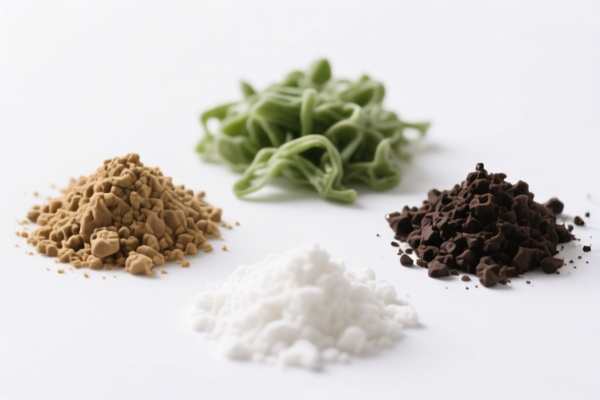
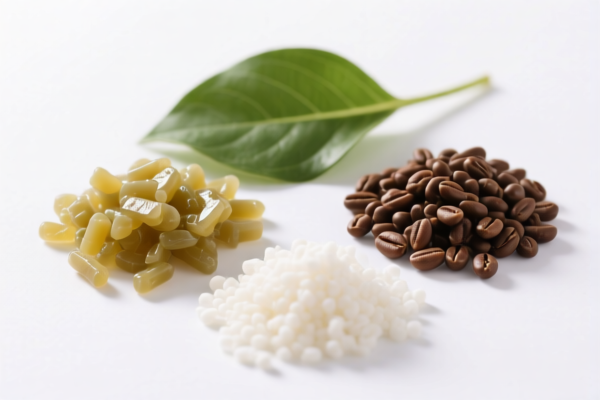
In international trade, "Polymer Material Mixture" is not a single, monolithic product but a category descriptor that depends entirely on the specific chemical composition and polymer type of the mixture. The Harmonized System (HS) classifies these mixtures based on whether they are: 1. Primary Polymers: Mixtures dominated by specific polymer types like Ethylene or Polyester. 2. Waste/Scrap: Recyclable plastic/resin waste or off-cuts.
⚠️ Key Distinction Point:
- If the mixture is based on Ethylene Polymers (including copolymers) → Falls under HS 3901.
- If the mixture is based on Polyesters (e.g., PET, PBT) → Falls under HS 3907.
- If the mixture is classified as Plastic Waste/Scrap (recyclable resin residues) → Falls under HS 3915.
📦 II. HS Code Classification Details (2026 Latest Tariff Authority Comparison)
| HS Code | Product Description | Applicable Scenario | Polymer Basis |
|---|---|---|---|
3901.90.90.00 |
Polymer Material Mixture, Ethylene Polymer Basis, Other | Mixture dominated by Ethylene homopolymers, not elsewhere specified | ✅ Ethylene Homopolymer |
3901.90.55.01 |
Polymer Material Mixture, Ethylene Copolymer Basis | Mixture dominated by Ethylene Copolymers (e.g., LDPE, LLDPE blends) | ✅ Ethylene Copolymer |
3907.99.50.50 |
Polymer Material Mixture, Polyester/Other Polymer Basis | Mixture dominated by Polyesters (PET/PBT) or other unspecified polymers | ✅ Polyester / Other |
3915.90.00.90 |
Polymer Material Mixture, Plastic/Resin Basis (Waste/Scrap) | Recyclable plastic residues, off-cuts, or scrap material, not elsewhere specified | ✅ Plastic/Resin Waste |
3915.90.00.10 |
Polymer Material Mixture, Synthetic Resin Basis (Waste/Scrap) | Recyclable synthetic resin residues or scrap, specifically identified as resin waste | ✅ Synthetic Resin Waste |
🔍 Critical Reminder:
- HS 3901 & 3907 refer to primary polymer mixtures (virgin or recycled pellets/granules for manufacturing).
- HS 3915 refers specifically to waste and scrap of plastics.
- Misclassification between "Virgin Mixture" and "Waste Scrap" can lead to severe customs penalties.
💰 III. 2026 Latest Tariff Rate Breakdown (Including Surtaxes, Policy Surtaxes)
✅ Applicable Country: United States (US)
✅ Origin: China (CN)
✅ Effective Time: 2025-11-10 onwards (including subsequent imports)
🎯 1. 3901.90.90.00 —— Polymer Mixture (Ethylene Polymer Basis)
| Item | Content |
|---|---|
| Basic Duty Rate | 6.5% (ad valorem) |
| Section 301 Surcharge | +25.0% (USITC Footnote associated with HTSUS 3901) |
| Section 122 Surtax | +10.0% (Specific surcharge policy) |
| Total Rate | 41.5% |
| Tax Calculation | CIF Value × 41.5% |
| De Minimis Exemption | ❌ Not Applicable (High duty rate exceeds threshold considerations) |
| Legal Basis Path | Basic: 6.5% → Section 301: 25% → Section 122: 10% |
📌 Explanation:
- "Basic Duty 6.5%": Standard MFN rate for ethylene polymers.
- "Section 301 Surcharge 25%": Additional tariff imposed on Chinese goods under US Trade Act Section 301.
- "Section 122 Surtax 10%": Specific administrative surcharge applicable to this category.
- Total 41.5% is a high-cost item for importers. Cost must be factored into pricing strategies.
🎯 2. 3901.90.55.01 —— Polymer Mixture (Ethylene Copolymer Basis)
| Item | Content |
|---|---|
| Basic Duty Rate | 6.5% |
| Section 301 Surcharge | +25.0% |
| Section 122 Surtax | +10.0% |
| Total Rate | 41.5% |
| Tax Calculation | CIF Value × 41.5% |
| De Minimis Exemption | ❌ Not Applicable |
| Legal Basis Path | Basic: 6.5% → Section 301: 25% → Section 122: 10% |
📌 Note:
- Identical tariff structure to3901.90.90.00.
- Even if the copolymer composition varies (e.g., different monomer ratios), as long as it is an Ethylene Copolymer, the 41.5% rate applies.
🎯 3. 3907.99.50.50 —— Polymer Mixture (Polyester/Other Basis)
| Item | Content |
|---|---|
| Basic Duty Rate | 6.5% |
| Section 301 Surcharge | +25.0% |
| Section 122 Surtax | +10.0% |
| Total Rate | 41.5% |
| Tax Calculation | CIF Value × 41.5% |
| De Minimis Exemption | ❌ Not Applicable |
| Legal Basis Path | Basic: 6.5% → Section 301: 25% → Section 122: 10% |
📌 Warning:
- This covers Polyester-based mixtures (commonly used in textiles, bottles, films).
- Do not confuse with "Polyamide" or "Polyolefin" mixtures, which may have different HS codes.
- High tariff impact on downstream manufacturing costs (e.g., plastic injection molding).
🎯 4. 3915.90.00.90 —— Polymer Mixture (Plastic/Resin Waste/Scrap)
| Item | Content |
|---|---|
| Basic Duty Rate | 0.0% |
| Section 301 Surcharge | +25.0% |
| Section 122 Surtax | +10.0% |
| Total Rate | 35.0% |
| Tax Calculation | CIF Value × 35.0% |
| De Minimis Exemption | ❌ Not Applicable |
| Legal Basis Path | Basic: 0.0% → Section 301: 25% → Section 122: 10% |
📌 Explanation:
- Basic Duty is 0%: Recyclable waste often has lower base duties.
- However, the 25% Section 301 and 10% Section 122 still apply, bringing the total to 35%.
- Crucial: Ensure the material is genuinely "waste/scrap." If it is usable recycled pellets, it may be misclassified as waste.
🎯 5. 3915.90.00.10 —— Polymer Mixture (Synthetic Resin Waste/Scrap)
| Item | Content |
|---|---|
| Basic Duty Rate | 0.0% |
| Section 301 Surcharge | +25.0% |
| Section 122 Surtax | +10.0% |
| Total Rate | 35.0% |
| Tax Calculation | CIF Value × 35.0% |
| De Minimis Exemption | ❌ Not Applicable |
| Legal Basis Path | Basic: 0.0% → Section 301: 25% → Section 122: 10% |
📌 Note:
- Identical tariff structure to3915.90.00.90.
- Specific to Synthetic Resin waste.
- Both3915codes are cheaper than3901/3907by 6.5% due to the 0% basic duty.
🛠️ IV. Customs Clearance Practical Advice (Battle-Tested Pitfall Guide)
✅ 1. Preparation Checklist (Must-Have Documents)
| Document | Required | Description |
|---|---|---|
| ✅ Material Safety Data Sheet (MSDS) | ✔️ | Must specify polymer type (Ethylene, Polyester, etc.) and composition. |
| ✅ Certificate of Composition | ✔️ | Detailed breakdown of polymer percentages (e.g., 60% Ethylene, 40% Additives). |
| ✅ Product Photos | ✔️ | Clear images of pellets/granules/waste to distinguish from "finished goods." |
| ✅ Declaration Form | ✔️ | Explicitly state "Polymer Material Mixture" and specify HS Code basis. |
| ✅ Bill of Lading / Invoice | ✔️ | Match description exactly with MSDS. |
✅ 2. Declaration Tips (Key Mantras)
🔥 "Identify Polymer First, Then Classify; Don't Call Scrap 'Virgin'!"
| Scenario | Correct Declaration | Wrong Action |
|---|---|---|
| Ethylene-Based Mixture | 3901.90.90.00 or 3901.90.55.01 |
Misclassifying as 3907 → Risk of audit/fine |
| Polyester-Based Mixture | 3907.99.50.50 |
Misclassifying as 3901 → Incorrect tax calculation |
| Plastic Waste/Scrap | 3915.90.00.90 or 3915.90.00.10 |
Calling it "Recycled Pellets" if it's waste → Misclassification risk |
| Mixed Polymers | Use primary component rule | Randomly choosing a code → Customs rejection |
✅ 3. Special Case Handling
| Situation | Handling Advice |
|---|---|
| OEM Custom Mixtures | Provide client formula + MSDS. If additives >50%, reclassify under "Other Plastics." |
| Recycled vs. Virgin | If "Recycled," ensure it meets US EPA standards. If "Scrap," declare under 3915. |
| Mixed Packaging | Declare bulk polymer only. Do not include packaging costs in CIF for duty base if possible. |
| Small Samples | Even small quantities are subject to 41.5% or 35% duties. No "free" entry for samples. |
🌍 V. Global Market Comparison (2026 Latest)
| Country/Region | Recommended HS Code | Duty Rate (China Origin) | Certification Requirements | Notes |
|---|---|---|---|---|
| 🇺🇸 USA | 3901 / 3907 / 3915 |
35% - 41.5% | None specific (general) | Highest duty market due to Section 301 + 122 |
| 🇨🇳 China | 3901 / 3907 / 3915 |
5% - 6.5% | None | Low duty, but import quotas may apply |
| 🇪🇺 EU | 3901 / 3907 |
0% - 6.5% | REACH Compliance | No Section 301 surcharge |
| 🇦🇺 Australia | 3901 / 3907 |
5% - 10% | None | Moderate duty |
| 🇯🇵 Japan | 3901 / 3907 |
0% - 6% | None | Low duty |
📌 Conclusion:
- USA is the most expensive market for Polymer Material Mixtures due to Section 301 (25%) and Section 122 (10%).
- Total duties range from 35% (Waste) to 41.5% (Virgin/Primary Polymers).
- Consider supply chain diversification (e.g., sourcing from Vietnam, Thailand) to avoid high US tariffs.
📌 VI. Common Errors & Pitfalls (Blood-Tested Lessons)
❌ Error 1: Declaring "Recycled Pellets" as "Waste/Scrap" (3915) to save tax.
👉 Consequence: If the material is usable and meets quality standards, it is not waste. Customs will reclassify as 3901/3907 → Back taxes + Penalties.
❌ Error 2: Mixing Ethylene and Polyester in one shipment and declaring one HS Code.
👉 Consequence: Customs will split the shipment or reject it. Each polymer type must be declared separately.
❌ Error 3: Ignoring the Section 122 Surtax.
👉 Consequence: Unexpected 10% additional cost on top of 301 tariffs. Budget must include this.
❌ Error 4: Using vague descriptions like "Plastic Mixture" without specifying polymer basis.
👉 Consequence: Customs will apply the highest possible duty rate or hold goods for inspection.
✅ Correct Practice:
"Polymer Material Mixture, Ethylene-Based, 60% Ethylene Homopolymer, 40% Additives, MSDS Attached, HS 3901.90.90.00"
🎯 VII. Conclusion: Professional Declaration Saves Money!
🎯 Remember the Mantra:
🔹 "Identify Polymer: Ethylene = 3901, Polyester = 3907, Waste = 3915"
🔹 "USA Duty: 35% (Waste) vs 41.5% (Virgin). Difference is 6.5%."
🔹 "Don't hide Section 122. It's 10% extra. Plan accordingly."
📌 Pro Tip:
If your polymer mixture originates from Vietnam, Mexico, Thailand, or Malaysia, you may qualify for Section 301 Exemptions or lower tariffs under FTAs.
Recommendation: Apply for Advance Rulings (Rulings) from CBP to confirm HS Code classification before shipping.
📣 Immediate Action:
📞 Contact a Licensed Customs Broker + Provide MSDS + Request HS Code Pre-Ruling
🚀 Ensure your Polymer Mixtures clear US Customs smoothly, avoid unexpected costs, and maximize profit margins!
✨ Professional Clearance, Starting with Accurate Classification!
💼 Your Every Dollar of Duty Should Be Precisely Calculated!
用户评价
关于 HS 编码归类
协调制度(HS)是由世界海关组织(WCO)制定的国际贸易商品分类标准。全球 200 多个国家采用 HS 系统作为海关关税、贸易统计和进出口监管的基础。
每个 HS 编码遵循以下层级结构:
- 章(2 位)——商品大类(例如:第 84 章:机器和机械设备)
- 品目(4 位)——章内的更具体分类
- 子目(6 位)——国际通用细分,所有 WCO 成员国统一使用
- 本国细分(8-10 位)——各国自行扩展的细分编码,如美国 HTSUS 10 位编码
正确的 HS 编码归类对于顺利通关、准确缴纳关税和遵守贸易法规至关重要。错误归类可能导致海关延误、多缴关税或罚款。
从CN进口到US时,适用的关税税率可能包括:
- 最惠国(MFN)税率——适用于 WTO 成员国的标准关税税率
- 普通税率——适用于无贸易协定国家
- 贸易救济关税——附加关税,如 301 条款(反倾销)、232 条款(国家安全)或反补贴税
本页内容仅供参考。如需正式归类,请咨询当地海关或持牌报关代理。