Polyolefin Plasticizer
CN → US| HS编码 | 关税税率 | 原产国 | 目的国 | 文档 |
|---|---|---|---|---|
| 3812205000 | 40.0% | CN | US | 官方文档 |
| 3812201000 | 41.5% | CN | US | 官方文档 |
| 3904220000 | 41.5% | CN | US | 官方文档 |
| 3904210000 | 41.5% | CN | US | 官方文档 |
| 3824999397 | 40.0% | CN | US | 官方文档 |
商品图片
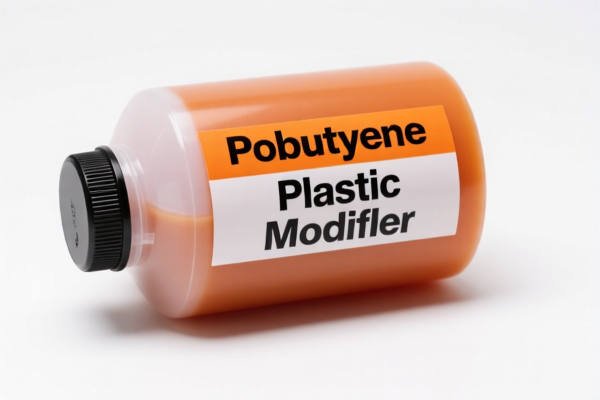


AI分析
🧪 Polyolefin Plasticizer
🌐 HS Code Reference & Customs Clearance Guide | 2026 Latest Tariff Analysis | Professional Entry Strategy
📌 I. Product Definition & Classification: Do You Really Understand "Polyolefin Plasticizer"?
Polyolefin Plasticizers are specialized chemical additives used primarily to improve the flexibility, workability, and durability of polyolefin materials (such as Polypropylene/PP and Polyethylene/PE). Unlike traditional phthalate plasticizers used for PVC, polyolefin plasticizers are chemically distinct, often based on hydrogenated hydrocarbon resins, ester-based formulations, or oligomeric structures compatible with non-polar polyolefin matrices.
In international trade, these products are categorized based on their chemical composition, primary form, and specific application:
- Standalone Plasticizing Agents: Pure chemical compounds or mixtures specifically formulated to act as plasticizers (HS 3812).
- Primary Resin Forms: If the substance is a raw resin material used as a plasticizer/compatibilizer in its primary shape (HS 3904).
- Miscellaneous Chemical Preparations: Complex blends or derived chemicals that don’t fit standard plasticizer definitions but serve a plasticizing function (HS 3824).
⚠️ Key Distinction:
- If the product is a finished additive designed solely for plasticizing → HS 3812
- If the product is a raw polymer/resin used in its primary form → HS 3904
- If it is a complex chemical mixture/preparation for plasticizing PVC or other plastics → HS 3824
📦 II. HS Code Classification Details (2026 Latest Tariff Authority Comparison)
| HS Code | Product Description | Application Scenario | Form/Status |
|---|---|---|---|
3812.20.50.00 |
PVC Plasticizer, PVC-based material, used as a plasticizer, matches rubber/plastic composite plasticizer | Specialty additive for PVC/Rubber compounds | ✅ Finished Additive |
3812.20.10.00 |
PVC Plasticizer, PVC-based material, meets material requirements for rubber/plastic | Standard plasticizing additive for plastic/rubber | ✅ Finished Additive |
3904.22.00.00 |
Plasticized PVC Resin, PVC material, resin form, primary form | Raw PVC resin material for processing | ✅ Raw Resin |
3904.21.00.00 |
Plasticized PVC Resin, PVC material, resin form, original/primary product | Bulk raw PVC resin | ✅ Raw Resin |
3824.99.93.97 |
PVC Plasticizer, PVC-related chemical material, used as plasticizer, chemical product/preparation | Complex chemical blend/preparation | ✅ Chemical Preparation |
🔍 Critical Reminder:
- Although the term "Polyolefin Plasticizer" implies compatibility with PP/PE, the provided data references PVC-based or PVC-related substances. Ensure the actual chemical composition matches the HS code description. - If the product is a finished chemical additive specifically for plasticizing, HS 3812 or HS 3824 is most likely. - If the product is a raw polymer resin that acts as a plasticizer, HS 3904 applies.
💰 III. 2026 Latest Tariff Rate Detailed Breakdown (Including Surtaxes & Policy Surcharges)
✅ Applicable Country: United States (US)
✅ Origin: China (CN)
✅ Effective Date: November 10, 2025 (including subsequent imports)
🎯 1. 3812.20.50.00 —— PVC Plasticizer, Composite Plasticizer for Rubber/Plastic
| Item | Content |
|---|---|
| Base Tariff Rate | 5.0% (Ad Valorem) |
| Section 301 Surtax | +25.0% |
| Section 122 Surtax | +10.0% |
| Total Tariff Rate | 40.0% |
| Tax Calculation | CIF Value × 40% |
| De Minimis Eligibility | ❌ Not Eligible (High value threshold for chemicals) |
| Legal Basis Path | Base Tariff: 5.0% → Section 301: 25.0% → Section 122: 10.0% |
📌 Explanation:
- Base Tariff (5%): Standard MFN rate for chemical plasticizing preparations. - Section 301 Surtax (25%): Imposed under U.S. Trade Act Section 301 against Chinese goods. - Section 122 Surtax (10%): Additional tariff under Section 122 of the Trade Expansion Act. - Total 40%: Significant cost burden. Must be factored into pricing strategy.
🎯 2. 3812.20.10.00 —— PVC Plasticizer, Meets Rubber/Plastic Material Requirements
| Item | Content |
|---|---|
| Base Tariff Rate | 6.5% (Ad Valorem) |
| Section 301 Surtax | +25.0% |
| Section 122 Surtax | +10.0% |
| Total Tariff Rate | 41.5% |
| Tax Calculation | CIF Value × 41.5% |
| De Minimis Eligibility | ❌ Not Eligible |
| Legal Basis Path | Base Tariff: 6.5% → Section 301: 25.0% → Section 122: 10.0% |
📌 Note:
- Slightly higher base rate (6.5%) compared to3812.20.50.00due to specific formulation criteria. - Still subject to full surtaxes. Total burden is 41.5%.
🎯 3. 3904.22.00.00 —— Plasticized PVC Resin (Primary Form)
| Item | Content |
|---|---|
| Base Tariff Rate | 6.5% (Ad Valorem) |
| Section 301 Surtax | +25.0% |
| Section 122 Surtax | +10.0% |
| Total Tariff Rate | 41.5% |
| Tax Calculation | CIF Value × 41.5% |
| De Minimis Eligibility | ❌ Not Eligible |
| Legal Basis Path | Base Tariff: 6.5% → Section 301: 25.0% → Section 122: 10.0% |
📌 Attention:
- If the product is imported as a raw resin (not a pre-mixed additive), it falls under Chapter 39. - Even though it is "plasticized resin," it is treated as a primary plastic material. - Tariff burden remains 41.5%.
🎯 4. 3904.21.00.00 —— Plasticized PVC Resin (Original/Primary Product)
| Item | Content |
|---|---|
| Base Tariff Rate | 6.5% (Ad Valorem) |
| Section 301 Surtax | +25.0% |
| Section 122 Surtax | +10.0% |
| Total Tariff Rate | 41.5% |
| Tax Calculation | CIF Value × 41.5% |
| De Minimis Eligibility | ❌ Not Eligible |
| Legal Basis Path | Base Tariff: 6.5% → Section 301: 25.0% → Section 122: 10.0% |
📌 Note:
- Similar to above, applies to raw, unprocessed PVC resin forms. - 41.5% total rate. No advantage over finished plasticizers in terms of tariff savings.
🎯 5. 3824.99.93.97 —— PVC Plasticizer, Chemical Product/Preparation
| Item | Content |
|---|---|
| Base Tariff Rate | 5.0% (Ad Valorem) |
| Section 301 Surtax | +25.0% |
| Section 122 Surtax | +10.0% |
| Total Tariff Rate | 40.0% |
| Tax Calculation | CIF Value × 40.0% |
| De Minimis Eligibility | ❌ Not Eligible |
| Legal Basis Path | Base Tariff: 5.0% → Section 301: 25.0% → Section 122: 10.0% |
📌 Attention:
- This code is for miscellaneous chemical preparations. - If the product is a complex blend that doesn’t fit strictly under3812(dedicated plasticizers), it may fall here. - Same 40.0% total rate as3812.20.50.00.
🛠️ IV. Customs Clearance Practical Advice (Battle-Tested Pitfall Avoidance)
✅ 1. Required Documentation Checklist (Non-negotiable)
| Document | Mandatory | Explanation |
|---|---|---|
| ✅ Product Specification Sheet | ✔️ | Must clearly state chemical composition, CAS number, and intended use (plasticizer). |
| ✅ Safety Data Sheet (SDS) | ✔️ | Required for chemical imports. Must align with HS code description. |
| ✅ Product Photos (Including Label) | ✔️ | Clear view of packaging, batch number, and chemical warnings. |
| ✅ Third-Party Test Report | ✔️ | Confirm purity and composition to justify HS code classification. |
| ✅ Commercial Invoice | ✔️ | Must explicitly state "Plasticizer for PVC/Rubber" or "PVC Resin." |
| ✅ Certificate of Origin (CO) | ✔️ | If non-Chinese origin, may qualify for lower tariffs. |
| ✅ Packing List | ✔️ | Detail gross/net weight, number of packages, and hazardous material classification (if any). |
✅ 2. Declaration Tips (Key Mantra)
🔥 "Chemical Identity, Composition First, Name Precise, Tariff Clear!"
| Scenario | Correct Declaration | Incorrect Practice |
|---|---|---|
| Finished Plasticizer Additive | 3812.20.50.00 or 3812.20.10.00 |
Misdeclare as raw resin → 41.5% |
| Raw PVC Resin | 3904.22.00.00 or 3904.21.00.00 |
Misdeclare as additive → Potential audit |
| Complex Chemical Blend | 3824.99.93.97 |
Vague description "Plasticizer" → Delay |
| Non-Chinese Origin | Declare Origin Country | Assume CN origin → Overpay tariffs |
✅ 3. Special Situation Handling
| Scenario | Handling Advice |
|---|---|
| OEM Custom Plasticizer | Provide client order + technical data sheet to prove specific formulation. |
| Blended Chemicals | If multiple chemicals are mixed, declare as "Chemical Preparation" (3824) if not a standard plasticizer. |
| Hazardous Chemicals | If classified as hazardous, additional fees and inspections apply. Ensure SDS is up-to-date. |
| Non-Chinese Origin | If produced in Vietnam, Mexico, etc., provide valid CO to avoid Section 301/122 surtaxes. |
🌍 V. Global Major Market Clearance Comparison (2026 Latest)
| Country/Region | Recommended HS Code | Tariff (China Origin) | Certification Requirement | Notes |
|---|---|---|---|---|
| 🇺🇸 USA | 3812.20.50.00 |
40.0% | None Specific | High tariffs due to Section 301/122. |
| 🇨🇳 China | 3812.20.50.00 |
5.0% | None Specific | No additional surtaxes. |
| 🇪🇺 EU | 3812.20.00.00 |
0-6.5% | REACH Registration | REACH compliance is critical. |
| 🇬🇧 UK | 3812.20.00.00 |
0-6.5% | UK REACH | Post-Brexit regulations apply. |
| 🇯🇵 Japan | 3812.20.00.00 |
0-5.5% | PRTR Law | Reporting requirements for chemicals. |
📌 Conclusion:
- USA imposes the highest tariffs due to multiple surtaxes (Section 301 + Section 122). - EU and UK require strict chemical registration (REACH/UK REACH), which can be a barrier to entry. - Non-Chinese origin significantly reduces costs in the US market.
📌 VI. Common Errors & Pitfall Avoidance (Lessons Learned)
❌ Error 1: Declaring "Polyolefin Plasticizer" when the product is PVC-based
👉 Consequence: Misclassification → Penalties + Back Taxes!
❌ Error 2: Failing to provide SDS for chemical imports
👉 Consequence: Customs Hold + Inspection Delays
❌ Error 3: Ignoring Section 122 Surtax (10%)
👉 Consequence: Underpayment by 10% → Late Fees & Interest
❌ Error 4: Using vague terms like "Chemical Additive"
👉 Consequence: Customs Request for Clarification → Clearance Delay
✅ Correct Practice:
"PVC Plasticizer, Chemical Name: [Specific Name], CAS No: [Number], For Use in PVC/Rubber Compounding, HS Code: 3812.20.50.00, Origin: China"
🎯 VII. Conclusion: Professional Declaration, Time-Saving, Cost-Effective!
🎯 Remember the Mantra:
🔹 "Identity Clear, SDS Ready, Surtax Included, Origin Verified!"
🔹 "HS Code Determines Fate, Tariff Difference is Huge, Declaration Error Costs Big!"
📌 Pro Tip:
If your plasticizer is produced in Vietnam, Mexico, Thailand, or Malaysia, you may avoid Section 301 and 122 surtaxes, reducing the tariff to base rate only (5-6.5%).
Recommendation: Apply for Advance Ruling with US Customs to confirm HS code and avoid post-clearance disputes.
📣 Immediate Action:
📞 Contact Professional Broker + Provide Product Specs + Apply for HS Code Advance Ruling
🚀 Let your plasticizer, cleared smoothly, cost-efficiently, and profit-maximized!
✨ Professional Customs Clearance Starts with Precise Classification!
💼 Every Cent of Your Cost Deserves Precise Calculation!
用户评价
关于 HS 编码归类
协调制度(HS)是由世界海关组织(WCO)制定的国际贸易商品分类标准。全球 200 多个国家采用 HS 系统作为海关关税、贸易统计和进出口监管的基础。
每个 HS 编码遵循以下层级结构:
- 章(2 位)——商品大类(例如:第 84 章:机器和机械设备)
- 品目(4 位)——章内的更具体分类
- 子目(6 位)——国际通用细分,所有 WCO 成员国统一使用
- 本国细分(8-10 位)——各国自行扩展的细分编码,如美国 HTSUS 10 位编码
正确的 HS 编码归类对于顺利通关、准确缴纳关税和遵守贸易法规至关重要。错误归类可能导致海关延误、多缴关税或罚款。
从CN进口到US时,适用的关税税率可能包括:
- 最惠国(MFN)税率——适用于 WTO 成员国的标准关税税率
- 普通税率——适用于无贸易协定国家
- 贸易救济关税——附加关税,如 301 条款(反倾销)、232 条款(国家安全)或反补贴税
本页内容仅供参考。如需正式归类,请咨询当地海关或持牌报关代理。