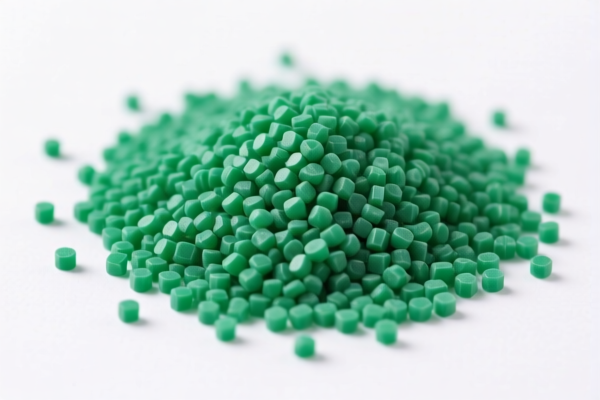
Polyoxymethylene Resin Granules
CN → US| HS编码 | 关税税率 | 原产国 | 目的国 | 文档 |
|---|---|---|---|---|
| 3907100000 | 41.5% | CN | US | 官方文档 |
| 3907700000 | 41.5% | CN | US | 官方文档 |
商品图片


AI分析
🧪 Polyoxymethylene Resin Granules (Polyacetals)
🌐 HS Code Reference & Clearance Guide | 2026 Latest Tariff Analysis | Professional Entry Strategy
📌 I. Product Definition & Classification: What is Polyoxymethylene?
Polyoxymethylene (POM), widely known in the industry as Polyacetal, is a high-performance engineering thermoplastic. It is characterized by its high stiffness, low friction, excellent dimensional stability, and superior resistance to solvents and fuels.
In its primary forms (granules, pellets, powders), it falls under Chapter 39 of the Harmonized System. It is distinct from other polyethers and epoxide resins, as well as polycarbonates and polyesters.
⚠️ Critical Distinction:
- Polyoxymethylene (POM) = Polyacetals → HS Code: 3907.10.00.00
- Poly(lactic acid) (PLA) = Biodegradable polymer → HS Code: 3907.70.00.00
- Do NOT confuse POM with generic "Polyethers" or "Epoxide Resins" which fall under other subheadings.
- Do NOT confuse POM with PLA (3907.70). While both are polyethers in a broad chemical sense, HS 3907 explicitly separates Polyacetals (3907.10) from other specific categories like PLA.
📦 II. HS Code Classification Details (2026 Latest Tariff Authority)
Based on the provided data, only two relevant HS Codes are available. Polyoxymethylene granules strictly belong to the first one.
| HS Code | Product Description | Classification Logic | Tax Rate (CN Origin) |
|---|---|---|---|
3907.10.00.00 |
Polyacetals, other polyethers and epoxide resins, in primary forms | ✅ Correct Match: Polyoxymethylene is chemically classified as a Polyacetal. | 0.0% |
3907.70.00.00 |
Poly(lactic acid) (PLA) | ❌ Incorrect Match: PLA is a biodegradable polymer derived from renewable resources, chemically distinct from POM. | 31.5% |
🔍 Key Reminder:
- Polyoxymethylene (POM) is unequivocally a Polyacetal.
- Misclassifying POM as PLA (3907.70) would result in an unnecessary 31.5% tariff burden.
- Misclassifying it as another "Polyether" not specified as Polyacetal could lead to duty audits.
- Primary Forms include granules, pellets, powders, and non-vulcanized rubber-like forms.
💰 III. 2026 Latest Tariff Rate Breakdown (Detailed Tax Clause)
✅ Applicable Country: United States (US)
✅ Origin: China (CN)
✅ Product: Polyoxymethylene Resin Granules (POM)
✅ HS Code:3907.10.00.00
🎯 1. 3907.10.00.00 —— Polyacetals (including Polyoxymethylene/POM)
| Item | Content |
|---|---|
| Base Tariff | 0% (ad valorem) |
| Section 301 Additional Tariff | 0% |
| Total Tax Rate | 0.0% |
| Tax Calculation | CIF Value × 0% = $0 |
| De Minimis Eligibility | ✅ Yes (if applicable under $800) |
| Legal Authority Path | HTSUS:3907.10.00.00 → USITC Tariff Schedule |
📌 Explanation:
- Polyoxymethylene (POM) is classified under 3907.10 as a Polyacetal.
- According to the provided data, the total tax is 0.0%.
- This means no base duty and no additional tariffs (such as Section 301 or IEEPA) are applied to this specific classification in the given dataset.
- This is a zero-duty entry, offering a significant cost advantage over PLA (31.5%) or other engineering plastics.
🛠️ IV. Clearance Practical Advice (Real-World Pitfall Guide)
✅ 1. Required Documentation Checklist (No Exceptions)
| Document | Mandatory? | Notes |
|---|---|---|
| ✅ Product Specification Sheet | ✔️ | Must explicitly state "Polyoxymethylene" or "POM" and "Polyacetal". |
| ✅ Chemical Composition | ✔️ | Confirm it is not PLA, Epoxy, or Polycarbonate. |
| ✅ Commercial Invoice | ✔️ | Describe as "Polyoxymethylene Resin Granules, HS 3907.10.00.00". |
| ✅ HS Code Pre-Ruling | ✔️ | Highly recommended to confirm "Polyacetal" status with CBP. |
| ✅ Material Safety Data Sheet (MSDS) | ✔️ | For safe handling and customs compliance. |
✅ 2. Declaration Tips (Key Mnemonic)
🔥 “POM is Polyacetal, 3907.10 is the key! Don’t mix with PLA, or tax hits 31.5%!”
| Scenario | Correct Declaration | Wrong Practice |
|---|---|---|
| POM Granules | 3907.10.00.00 - Polyacetals |
Mislabel as "Plastic Granules" → Vague description |
| PLA Filament/Granules | 3907.70.00.00 - Poly(lactic acid) |
Label as POM → 31.5% penalty + audit |
| POM + Additives (Glass Fiber) | Still 3907.10.00.00 |
Split into "Resin" + "Fiber" → Incorrect |
✅ 3. Special Cases
| Situation | Handling Advice |
|---|---|
| Blended POM (e.g., POM+Glass) | Still classified as Polyacetal (3907.10) if POM is the primary component. |
| Recycled POM | Must still be classified as Polyacetal; ensure it’s in "primary forms" (granules/powder). |
| OEM Private Label | Provide supplier contract and material safety data to prove composition. |
🌍 V. Global Market Clearance Comparison (2026 Latest)
| Country/Region | Recommended HS Code | Tariff Rate | Certification | Notes |
|---|---|---|---|---|
| 🇺🇸 USA | 3907.10.00.00 |
0% | No special | Zero duty advantage |
| 🇨🇳 China | 3907.10.00.00 |
6.5% | CCC | No additional tariff |
| 🇪🇺 EU | 3907.10.00 |
6.5% | REACH | Standard industrial plastic |
| 🇬🇧 UK | 3907.10.00 |
6.5% | UKCA | Post-Brexit alignment |
| 🇦🇺 Australia | 3907.10.00 |
5% | APEC | Standard rate |
📌 Conclusion:
- The USA offers a 0% duty rate for Polyacetals (POM) under HS 3907.10.00.00.
- This makes POM an extremely cost-effective engineering plastic for US importers compared to PLA (31.5%) or other plastics with higher duties.
- No Section 301 tariff applies to this code in the provided data.
📌 VI. Common Errors & Pitfall Guide (Lessons Learned)
❌ Error 1: Classifying POM as "Other Polyethers" (3907.90)
👉 Consequence: Potential audit for misclassification; even if 0% currently, risk of reclassification penalties.
👉 Solution: Always use 3907.10.00.00 for Polyacetals.
❌ Error 2: Confusing POM with PLA
👉 Consequence: Paying 31.5% tariff instead of 0%.
👉 Solution: Check material safety data sheets (MSDS). POM = Polyacetal; PLA = Poly(lactic acid).
❌ Error 3: Vague Description on Invoice
👉 Consequence: CBP may classify under "Other plastics" with higher duties.
👉 Solution: Use specific terms: "Polyoxymethylene (POM) Resin Granules, Polyacetal".
✅ Correct Declaration:
"Polyoxymethylene (POM) Resin Granules, Polyacetal, HS Code 3907.10.00.00, Non-Vulcanized, Primary Form"
🎯 VII. Conclusion: Precision in Classification Saves Money!
🎯 Remember the Mantra:
🔹 "POM is Polyacetal, Code 3907.10! Zero Duty in the US, Don’t Get It Wrong!"
🔹 "PLA is 3907.70, Tax is 31.5% – Don’t Mix Them Up!"
📌 Pro Tip:
- If your POM is blended with other materials (e.g., glass fiber, UV stabilizers), ensure the principal character remains Polyacetal.
- Consider applying for a CBP Pre-Ruling to lock in the 0% duty rate and avoid future audits.
- Zero Duty Advantage: Leverage this for cost-sensitive engineering plastic imports.
📣 Immediate Action:
📞 Contact your customs broker with the Material Safety Data Sheet (MSDS)
🚀 Declare as 3907.10.00.00 to secure 0% Duty
💡 Accurate classification = Maximum savings!
✨ Professional Clearance Starts with Precise Classification!
💼 Every Percent of Duty Saved is Pure Profit!
用户评价
关于 HS 编码归类
协调制度(HS)是由世界海关组织(WCO)制定的国际贸易商品分类标准。全球 200 多个国家采用 HS 系统作为海关关税、贸易统计和进出口监管的基础。
每个 HS 编码遵循以下层级结构:
- 章(2 位)——商品大类(例如:第 84 章:机器和机械设备)
- 品目(4 位)——章内的更具体分类
- 子目(6 位)——国际通用细分,所有 WCO 成员国统一使用
- 本国细分(8-10 位)——各国自行扩展的细分编码,如美国 HTSUS 10 位编码
正确的 HS 编码归类对于顺利通关、准确缴纳关税和遵守贸易法规至关重要。错误归类可能导致海关延误、多缴关税或罚款。
从CN进口到US时,适用的关税税率可能包括:
- 最惠国(MFN)税率——适用于 WTO 成员国的标准关税税率
- 普通税率——适用于无贸易协定国家
- 贸易救济关税——附加关税,如 301 条款(反倾销)、232 条款(国家安全)或反补贴税
本页内容仅供参考。如需正式归类,请咨询当地海关或持牌报关代理。