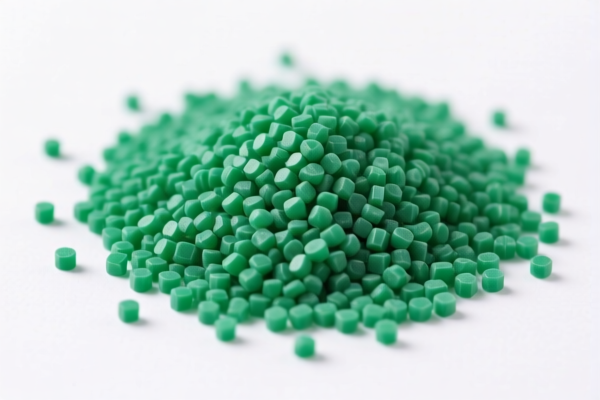
Polyoxymethylene Resin Granules
CN → US| HS Code | Tariff Rate | Origin | Destination | Doc |
|---|---|---|---|---|
| 3907100000 | 41.5% | CN | US | Official Doc |
| 3907700000 | 41.5% | CN | US | Official Doc |
Product Images


AI Analysis
🧪 Polyoxymethylene Resin Granules (Polyacetals)
🌐 HS Code Reference & Clearance Guide | 2026 Latest Tariff Analysis | Professional Entry Strategy
📌 I. Product Definition & Classification: What is Polyoxymethylene?
Polyoxymethylene (POM), widely known in the industry as Polyacetal, is a high-performance engineering thermoplastic. It is characterized by its high stiffness, low friction, excellent dimensional stability, and superior resistance to solvents and fuels.
In its primary forms (granules, pellets, powders), it falls under Chapter 39 of the Harmonized System. It is distinct from other polyethers and epoxide resins, as well as polycarbonates and polyesters.
⚠️ Critical Distinction:
- Polyoxymethylene (POM) = Polyacetals → HS Code: 3907.10.00.00
- Poly(lactic acid) (PLA) = Biodegradable polymer → HS Code: 3907.70.00.00
- Do NOT confuse POM with generic "Polyethers" or "Epoxide Resins" which fall under other subheadings.
- Do NOT confuse POM with PLA (3907.70). While both are polyethers in a broad chemical sense, HS 3907 explicitly separates Polyacetals (3907.10) from other specific categories like PLA.
📦 II. HS Code Classification Details (2026 Latest Tariff Authority)
Based on the provided data, only two relevant HS Codes are available. Polyoxymethylene granules strictly belong to the first one.
| HS Code | Product Description | Classification Logic | Tax Rate (CN Origin) |
|---|---|---|---|
3907.10.00.00 |
Polyacetals, other polyethers and epoxide resins, in primary forms | ✅ Correct Match: Polyoxymethylene is chemically classified as a Polyacetal. | 0.0% |
3907.70.00.00 |
Poly(lactic acid) (PLA) | ❌ Incorrect Match: PLA is a biodegradable polymer derived from renewable resources, chemically distinct from POM. | 31.5% |
🔍 Key Reminder:
- Polyoxymethylene (POM) is unequivocally a Polyacetal.
- Misclassifying POM as PLA (3907.70) would result in an unnecessary 31.5% tariff burden.
- Misclassifying it as another "Polyether" not specified as Polyacetal could lead to duty audits.
- Primary Forms include granules, pellets, powders, and non-vulcanized rubber-like forms.
💰 III. 2026 Latest Tariff Rate Breakdown (Detailed Tax Clause)
✅ Applicable Country: United States (US)
✅ Origin: China (CN)
✅ Product: Polyoxymethylene Resin Granules (POM)
✅ HS Code:3907.10.00.00
🎯 1. 3907.10.00.00 —— Polyacetals (including Polyoxymethylene/POM)
| Item | Content |
|---|---|
| Base Tariff | 0% (ad valorem) |
| Section 301 Additional Tariff | 0% |
| Total Tax Rate | 0.0% |
| Tax Calculation | CIF Value × 0% = $0 |
| De Minimis Eligibility | ✅ Yes (if applicable under $800) |
| Legal Authority Path | HTSUS:3907.10.00.00 → USITC Tariff Schedule |
📌 Explanation:
- Polyoxymethylene (POM) is classified under 3907.10 as a Polyacetal.
- According to the provided data, the total tax is 0.0%.
- This means no base duty and no additional tariffs (such as Section 301 or IEEPA) are applied to this specific classification in the given dataset.
- This is a zero-duty entry, offering a significant cost advantage over PLA (31.5%) or other engineering plastics.
🛠️ IV. Clearance Practical Advice (Real-World Pitfall Guide)
✅ 1. Required Documentation Checklist (No Exceptions)
| Document | Mandatory? | Notes |
|---|---|---|
| ✅ Product Specification Sheet | ✔️ | Must explicitly state "Polyoxymethylene" or "POM" and "Polyacetal". |
| ✅ Chemical Composition | ✔️ | Confirm it is not PLA, Epoxy, or Polycarbonate. |
| ✅ Commercial Invoice | ✔️ | Describe as "Polyoxymethylene Resin Granules, HS 3907.10.00.00". |
| ✅ HS Code Pre-Ruling | ✔️ | Highly recommended to confirm "Polyacetal" status with CBP. |
| ✅ Material Safety Data Sheet (MSDS) | ✔️ | For safe handling and customs compliance. |
✅ 2. Declaration Tips (Key Mnemonic)
🔥 “POM is Polyacetal, 3907.10 is the key! Don’t mix with PLA, or tax hits 31.5%!”
| Scenario | Correct Declaration | Wrong Practice |
|---|---|---|
| POM Granules | 3907.10.00.00 - Polyacetals |
Mislabel as "Plastic Granules" → Vague description |
| PLA Filament/Granules | 3907.70.00.00 - Poly(lactic acid) |
Label as POM → 31.5% penalty + audit |
| POM + Additives (Glass Fiber) | Still 3907.10.00.00 |
Split into "Resin" + "Fiber" → Incorrect |
✅ 3. Special Cases
| Situation | Handling Advice |
|---|---|
| Blended POM (e.g., POM+Glass) | Still classified as Polyacetal (3907.10) if POM is the primary component. |
| Recycled POM | Must still be classified as Polyacetal; ensure it’s in "primary forms" (granules/powder). |
| OEM Private Label | Provide supplier contract and material safety data to prove composition. |
🌍 V. Global Market Clearance Comparison (2026 Latest)
| Country/Region | Recommended HS Code | Tariff Rate | Certification | Notes |
|---|---|---|---|---|
| 🇺🇸 USA | 3907.10.00.00 |
0% | No special | Zero duty advantage |
| 🇨🇳 China | 3907.10.00.00 |
6.5% | CCC | No additional tariff |
| 🇪🇺 EU | 3907.10.00 |
6.5% | REACH | Standard industrial plastic |
| 🇬🇧 UK | 3907.10.00 |
6.5% | UKCA | Post-Brexit alignment |
| 🇦🇺 Australia | 3907.10.00 |
5% | APEC | Standard rate |
📌 Conclusion:
- The USA offers a 0% duty rate for Polyacetals (POM) under HS 3907.10.00.00.
- This makes POM an extremely cost-effective engineering plastic for US importers compared to PLA (31.5%) or other plastics with higher duties.
- No Section 301 tariff applies to this code in the provided data.
📌 VI. Common Errors & Pitfall Guide (Lessons Learned)
❌ Error 1: Classifying POM as "Other Polyethers" (3907.90)
👉 Consequence: Potential audit for misclassification; even if 0% currently, risk of reclassification penalties.
👉 Solution: Always use 3907.10.00.00 for Polyacetals.
❌ Error 2: Confusing POM with PLA
👉 Consequence: Paying 31.5% tariff instead of 0%.
👉 Solution: Check material safety data sheets (MSDS). POM = Polyacetal; PLA = Poly(lactic acid).
❌ Error 3: Vague Description on Invoice
👉 Consequence: CBP may classify under "Other plastics" with higher duties.
👉 Solution: Use specific terms: "Polyoxymethylene (POM) Resin Granules, Polyacetal".
✅ Correct Declaration:
"Polyoxymethylene (POM) Resin Granules, Polyacetal, HS Code 3907.10.00.00, Non-Vulcanized, Primary Form"
🎯 VII. Conclusion: Precision in Classification Saves Money!
🎯 Remember the Mantra:
🔹 "POM is Polyacetal, Code 3907.10! Zero Duty in the US, Don’t Get It Wrong!"
🔹 "PLA is 3907.70, Tax is 31.5% – Don’t Mix Them Up!"
📌 Pro Tip:
- If your POM is blended with other materials (e.g., glass fiber, UV stabilizers), ensure the principal character remains Polyacetal.
- Consider applying for a CBP Pre-Ruling to lock in the 0% duty rate and avoid future audits.
- Zero Duty Advantage: Leverage this for cost-sensitive engineering plastic imports.
📣 Immediate Action:
📞 Contact your customs broker with the Material Safety Data Sheet (MSDS)
🚀 Declare as 3907.10.00.00 to secure 0% Duty
💡 Accurate classification = Maximum savings!
✨ Professional Clearance Starts with Precise Classification!
💼 Every Percent of Duty Saved is Pure Profit!
Customer Reviews
About HS Code Classification
The Harmonized System (HS) is an internationally standardized nomenclature developed by the World Customs Organization (WCO) to classify traded products. Over 200 countries use the HS system as the basis for customs tariffs, trade statistics, and import/export regulations.
Each HS code follows a hierarchical structure:
- Chapter (2 digits) — Broad category of goods (e.g., Chapter 84: Machinery and Mechanical Appliances)
- Heading (4 digits) — More specific grouping within the chapter
- Subheading (6 digits) — Internationally standardized breakdown, used by all WCO member countries
- National subdivisions (8-10 digits) — Country-specific extensions for further classification, such as US HTSUS 10-digit codes
Correct HS code classification is essential for smooth customs clearance, accurate duty payment, and compliance with trade regulations. Misclassification can lead to customs delays, overpayment of duties, or penalties.
When importing from CN to US, the applicable tariff rates may include:
- Most-Favored-Nation (MFN) rate — The standard duty rate applied to WTO members
- General rate — Applied to countries without trade agreements
- Trade remedy duties — Additional tariffs such as Section 301 (anti-dumping), Section 232 (national security), or countervailing duties
The information provided on this page is for reference purposes only. For official classification, please consult with your local customs authority or a licensed customs broker.