Polypropylene Fiber Board Raw Material
CN → US| HS编码 | 关税税率 | 原产国 | 目的国 | 文档 |
|---|---|---|---|---|
| 3915900090 | 35.0% | CN | US | 官方文档 |
| 3902900050 | 41.5% | CN | US | 官方文档 |
| 3902100000 | 41.5% | CN | US | 官方文档 |
商品图片
AI分析
🧱 Polypropylene (PP) Fiber Board Raw Material
🌐 HS Code Reference & Customs Clearance Guide | 2026 Latest Tariff Analysis | Strategic Classification Strategy
📌 I. Product Definition & Classification: What Exactly is "PP Fiber Board Raw Material"?
Polypropylene (PP) is a thermoplastic polymer produced from the polymerization of propylene. In the context of international trade, the classification depends heavily on the physical state (shape/form) of the material at the time of import.
Key Distinction: Primary Forms vs. Waste/Scrap vs. Semi-Finished Sheets
- Primary Form (Resin/Granules/Powder): Unpolymerized or newly polymerized PP in its basic chemical state. This is the standard "raw material" for manufacturing.
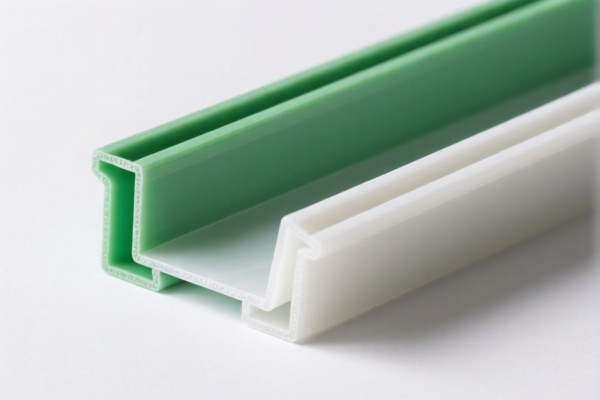
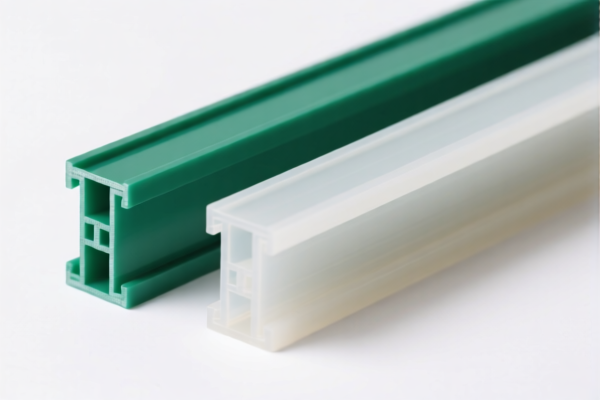
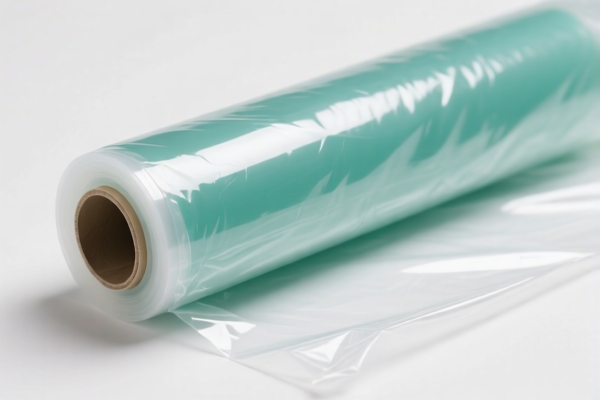
- Semi-Finished Sheets/Strips: PP processed into flat sheets, strips, or plates, but not yet cut into final board structures or finished goods.
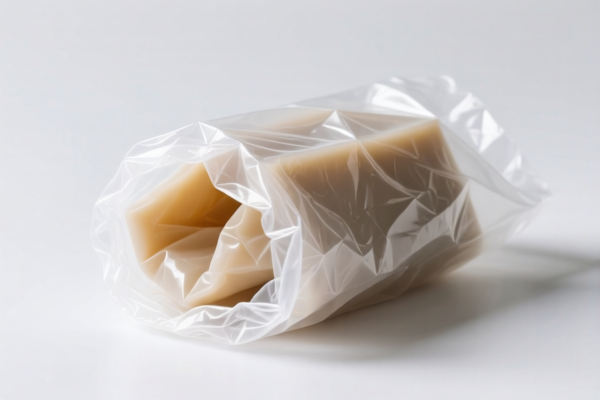
- Waste/Scrap/Offcuts: Discarded PP materials, including filaments or offcuts from cutting processes.
⚠️ Critical Classification Point:
- If the material is resin, granules, or powder (primary shape) → It is a polymer resin.
- If the material is waste, chips, or offcuts (non-primary shape) → It is plastic waste/scrap.
- If the material is solid sheets/strips (formed but not finished) → It falls under plastic articles or sheets.
📦 II. HS Code Classification Details (2026 Latest Harmonized System)
Based on the provided data, here are the three possible classifications for "Polypropylene Fiber Board Raw Material," depending on its specific physical state:
| HS Code | Product Description | Physical State | Tax Rate (Total) | Tax Breakdown |
|---|---|---|---|---|
3902.10.00.00 |
Polypropylene in Primary Form | Granules, Powder, Pellets (Chemical Raw Material) | 41.5% | Base: 6.5% + Section 301: 25% + Section 122: 10% |
3902.90.00.50 |
Other Polyolefins in Primary Form | Other Primary PP Forms (if not specifically listed under 3902.10) | 41.5% | Base: 6.5% + Section 301: 25% + Section 122: 10% |
3915.90.00.90 |
Waste, Scrap, and Offcuts of Plastics (Other) | Filaments, Offcuts, Sheets, Waste (Non-PET Plastic Waste) | 35.0% | Base: 0.0% + Section 301: 25% + Section 122: 10% |
🔍 Key Clarification:
-3902.10.00.00is the most common classification for PP resin/granules. It fits the definition of "Polypropylene in primary form."
-3915.90.00.90applies if the material is waste, scrap, or offcuts (e.g., trimmings from cutting fiber boards, filaments, or non-primary shape waste). It explicitly excludes PET waste.
-3902.90.00.50is a catch-all for other polyolefins in primary form if the specific PP code (3902.10) does not apply due to minor chemical variations.
💰 III. 2026 Tariff Rate Analysis (Detailed Breakdown)
✅ Applicable Country: United States (US)
✅ Origin: China (CN)
✅ Effective Date: November 10, 2025 (and subsequent imports)
🎯 1. 3902.10.00.00 — Polypropylene in Primary Form (Resin/Granules)
| Item | Detail |
|---|---|
| Base Duty Rate | 6.5% (Ad Valorem) |
| Section 301 Duty | +25% (USITC Footnote 9903.88.01) |
| Section 122 Duty | +10% (IEEPA, China-specific) |
| Total Effective Rate | 41.5% |
| Tax Calculation | CIF Value × 41.5% |
| De Minimis Exemption | ❌ Not Eligible (deny_de_minimis) |
| Legal Basis | USITC:3902.10.00.00 → FOOTNOTE:9903.88.01 → IEEPA:9903.01.25 |
📌 Explanation:
- This is the standard rate for PP resin (the raw material for making fibers, sheets, and boards).
- The high total rate (41.5%) is due to the cumulative effect of the base tariff and the aggressive US trade policies (Section 301 and Section 122).
🎯 2. 3902.90.00.50 — Other Polyolefins in Primary Form
| Item | Detail |
|---|---|
| Base Duty Rate | 6.5% |
| Section 301 Duty | +25% |
| Section 122 Duty | +10% |
| Total Effective Rate | 41.5% |
| Tax Calculation | CIF Value × 41.5% |
| Legal Basis | USITC:3902.90.00.50 → FOOTNOTE:9903.88.01 → IEEPA:9903.01.25 |
📌 Note:
- This code is used if the material is PP but does not fit the specific "3902.10" description (e.g., specialized copolymers).
- The tax burden is identical to3902.10.00.00.
🎯 3. 3915.90.00.90 — Waste, Scrap, and Offcuts of Plastics (Other)
| Item | Detail |
|---|---|
| Base Duty Rate | 0.0% |
| Section 301 Duty | +25% |
| Section 122 Duty | +10% |
| Total Effective Rate | 35.0% |
| Tax Calculation | CIF Value × 35.0% |
| Legal Basis | USITC:3915.90.00.90 → FOOTNOTE:9903.88.01 → IEEPA:9903.01.25 |
📌 Note:
- This code applies to waste, offcuts, filaments, or non-primary form PP.
- Although the base rate is 0%, the total rate is still high (35.0%) due to Section 301 and Section 122.
- Crucial: If you misclassify resin as "waste" to save taxes, you face severe penalties. Ensure the material is genuinely waste/scrap.
🛠️ IV. Customs Clearance Practical Advice (Battle-Tested Guidelines)
✅ 1. Document Checklist (Essential for Smooth Clearance)
| Document | Required | Explanation |
|---|---|---|
| ✅ Product Specification Sheet | ✔️ | Must clearly state: Material (PP), Form (Granules/Sheets/Waste), CAS Number (if applicable). |
| ✅ Photos of Product | ✔️ | Show the physical state: Granules vs. Sheets vs. Offcuts. Include scale for reference. |
| ✅ Commercial Invoice | ✔️ | Accurately describe the goods: "Polypropylene Resin, Granules" or "PP Plastic Waste, Offcuts." |
| ✅ Packing List | ✔️ | Detail net/gross weight, packaging type (bags, pallets). |
| ✅ Certificate of Origin | ✔️ | If from China, confirm origin to apply correct Section 122/301 rates. |
| ✅ Manufacturer’s Declaration | ✔️ | Confirm if the material is "Primary Form" or "Waste/Scrap." |
✅ 2. Classification Strategy (Key Mantras)
🔥 "Primary Form is Resin, Waste is Scrap. Don't Mix Them!"
| Scenario | Correct HS Code | Incorrect Classification | Risk |
|---|---|---|---|
| PP Granules/Powder | 3902.10.00.00 |
3915.90.00.90 |
Overpaying taxes? No, underpaying! Customs will assess 41.5% instead of 35%, leading to back taxes + penalties. |
| PP Sheets/Strips (Semi-finished) | 3915.90.00.90 (if offcuts/waste) or 3920.xx (if solid sheets) |
3902.10.00.00 |
Misclassification. If it's not granules, it's not primary form. |
| PP Waste/Offcuts/Filaments | 3915.90.00.90 |
3902.10.00.00 |
Paying 41.5% instead of 35%. Unnecessary cost. |
📌 Important:
- "Fiber Board Raw Material" is ambiguous.
- If it's resin used to make the board →3902.10.00.00(41.5%).
- If it's waste from cutting the board →3915.90.00.90(35.0%).
- If it's sheet stock (not waste) → It might fall under3920(other plastic plates/sheets), which is not in the provided data, but likely has a different rate. Stick to the provided codes: If it's not primary form and not waste, re-evaluate. For this guide, assume it's either Primary (Resin) or Waste.
✅ 3. Special Considerations
| Situation | Advice |
|---|---|
| OEM/Custom Material | Provide technical data sheets to prove it's PP. |
| Mixed Shipments | Separate PP Resin from PP Waste. Do not mix in one container without clear segregation, as it complicates classification. |
| Labeling | Clearly label packages: "PP Resin, Granules" or "PP Waste, Offcuts." Avoid vague terms like "Raw Material." |
🌍 V. Global Market Comparison (2026)
| Country/Region | Recommended HS Code | Tariff Rate | Notes |
|---|---|---|---|
| 🇺🇸 USA | 3902.10.00.00 or 3915.90.00.90 |
41.5% or 35.0% | High tariffs due to Section 301/122. |
| 🇨🇳 China | 3902.10.00.00 |
~6.5% | Low base tariff, no Section 301. |
| 🇪🇺 EU | 3902.10.00.00 |
~2.7% | Lower tariffs, but requires REACH compliance. |
| 🇦🇺 Australia | 3902.10.00.00 |
~5.0% | No Section 301, but GST applies. |
📌 Conclusion:
- The US market is significantly more expensive for PP imports due to geopolitical tariffs.
- Cost Optimization: Ensure correct classification. If your material is waste/scrap,3915.90.00.90saves 6.5% compared to3902.10.00.00.
📌 VI. Common Mistakes & Pitfalls (Learn from Others' Errors)
❌ Mistake 1: Calling "PP Resin" "Plastic Waste" to save 6.5%
👉 Consequence: Customs audit, fines, and potential seizure. If it's granules, it's not waste.
❌ Mistake 2: Calling "PP Sheets/Offcuts" "Primary Form Resin"
👉 Consequence: Paying 41.5% instead of 35%. Inefficient use of funds.
❌ Mistake 3: Vague Description "Raw Material"
👉 Consequence: Customs holds the shipment for clarification, causing delays.
✅ Correct Description:
"Polypropylene Resin, Granules, Virgin, for Fiber Board Manufacturing"
OR
"Polypropylene Plastic Waste, Offcuts and Trimmings, Non-PET"
🎯 VII. Conclusion: Precise Classification Saves Money
🎯 Remember the Mantra:
🔹 "Granules = Resin (41.5%) | Offcuts = Waste (35.0%) | No Mixing!"
🔹 "HS Code Defines Tax Rate, Wrong Code Means Big Fines!"
📌 Pro Tip:
If you are importing PP Sheets (not waste, not granules), check 3920 codes. They may have different rates. However, based on the provided data, focus on Primary Form (Resin) vs. Waste/Scrap.
📣 Immediate Action:
📞 Contact your customs broker with photos and specs to confirm if your "raw material" is resin or waste.
🚀 Get an Advance Ruling to lock in the correct HS Code and avoid surprise costs.
✨ Professional Clearance Starts with Accurate Classification!
💼 Every Percentage Point of Tax Matters!
用户评价
关于 HS 编码归类
协调制度(HS)是由世界海关组织(WCO)制定的国际贸易商品分类标准。全球 200 多个国家采用 HS 系统作为海关关税、贸易统计和进出口监管的基础。
每个 HS 编码遵循以下层级结构:
- 章(2 位)——商品大类(例如:第 84 章:机器和机械设备)
- 品目(4 位)——章内的更具体分类
- 子目(6 位)——国际通用细分,所有 WCO 成员国统一使用
- 本国细分(8-10 位)——各国自行扩展的细分编码,如美国 HTSUS 10 位编码
正确的 HS 编码归类对于顺利通关、准确缴纳关税和遵守贸易法规至关重要。错误归类可能导致海关延误、多缴关税或罚款。
从CN进口到US时,适用的关税税率可能包括:
- 最惠国(MFN)税率——适用于 WTO 成员国的标准关税税率
- 普通税率——适用于无贸易协定国家
- 贸易救济关税——附加关税,如 301 条款(反倾销)、232 条款(国家安全)或反补贴税
本页内容仅供参考。如需正式归类,请咨询当地海关或持牌报关代理。