Polypropylene Spinning Material
CN → US商品图片
AI分析
🧵 Polypropylene Spinning Material (PP Yarn/Strand Feedstock)
🌐 HS Code Reference & Customs Clearance Guide | 2026 Latest Tariff Analysis | Professional Clearance Strategy
📌 I. Product Definition & Classification: Do You Really Know “PP Spinning Material”?
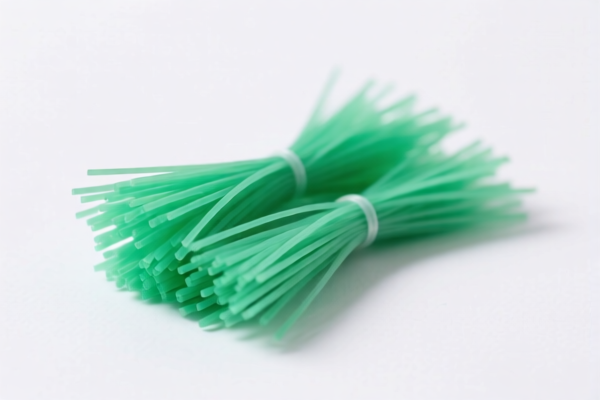
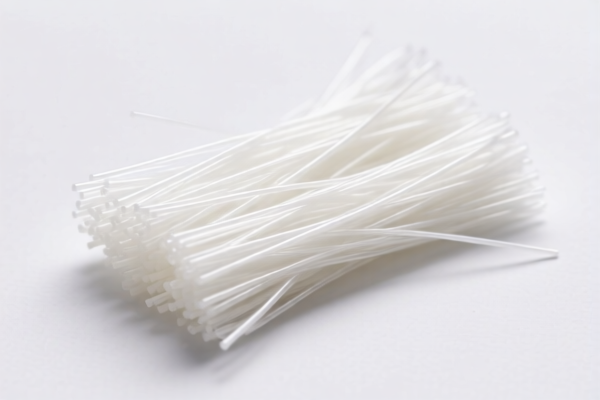
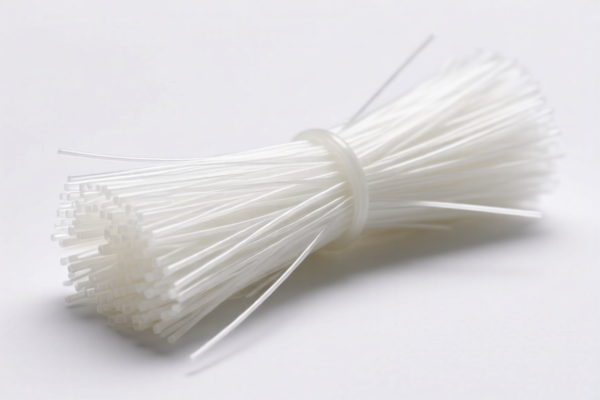
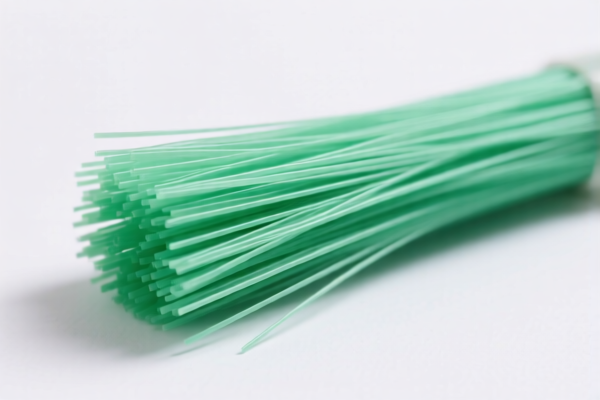
Polypropylene Spinning Material (often referred to as PP Staple Fiber, PP Filament Yarn, or PP Monofilament Feedstock) is a thermoplastic polymer produced by spinning polypropylene pellets into continuous filaments or short fibers. It is widely used in geotextiles, ropes, nets, carpets, hygiene products, and packaging.
In international trade, it is NOT classified as raw plastic pellets (Ch 39) nor as finished fabrics (Ch 54/55), but as Man-Made Continuous Filament Yarn or Staple Fibers depending on its form and twist.
⚠️ Key Distinction Points:
- Un-twisted Monofilaments/Filaments → Often classified under 5402 (Synthetic Filament Yarn);
- Twisted Yarn or Staple Fibers → Often classified under 5503/5504 or 5407;
- Raw PP Pellets → Classified under 3902.10 (NOT spinning material).🚫 Critical Warning:
If you ship PP Pellets but declare as Spinning Material, you risk misclassification. Conversely, if you ship Yarn but declare as Pellets, you may face severe penalties for undervaluation and wrong HS Code.
📦 II. HS Code Classification Details (2026 Latest Tariff Authority Comparison)
| HS Code | Product Description | Application Scenario | Key Feature |
|---|---|---|---|
5402.33.00.00 |
Synthetic Filament Yarn (High Tenacity Nylon/Polyamide) | Not applicable for PP | ❌ N/A |
5402.39.90.00 |
Other synthetic filament yarn, high tenacity, not high modulus | PP Monofilament for ropes, nets, geotextiles | ✅ PP Monofilament (un-twisted) |
5402.61.00.00 |
Other synthetic filament yarn, single yarn (not high tenacity) | PP Yarn for weaving, sewing, basic textiles | ✅ PP Yarn (single strand) |
5402.69.90.00 |
Other synthetic filament yarn, single yarn | PP Yarn with specific finishes or blends | ✅ PP Yarn (specialty) |
5503.20.00.00 |
Polypropylene staple fibers of not less than 3 mm in length | PP Staple Fiber for non-wovens, carpets | ✅ PP Staple Fiber |
3902.10.00.00 |
Polypropylene, in primary forms | PP Pellets/Resin (Raw Material) | ❌ NOT Spinning Material |
🔍 Focus Reminder:
- Monofilament Yarn (single strand, no twist) → 5402.39.90.00 or 5402.61.00.00
- Staple Fiber (short fibers, cut length >3mm) → 5503.20.00.00
- Pellets/Resin → 3902.10.00.00 (Do NOT use this for spun yarn!)
💰 III. 2026 Latest Tariff Rate Details (Including Additional Taxes, Policy Surcharges)
✅ Applicable Country: United States (US)
✅ Country of Origin: China (CN)
✅ Effective Date: From November 10, 2025 (including subsequent imports)
🎯 1. 5402.39.90.00 —— Synthetic Filament Yarn, PP Monofilament (High Tenacity)
| Item | Details |
|---|---|
| Base Rate | 0% (ad valorem) |
| USITC Additional Tax | +25% (from USITC Footnote 9903.88.01) |
| IEEPA Additional Tax | +10% (for China/HK products, from Nov 10, 2025) |
| Total Rate | 45% |
| Tax Calculation | CIF Value × 45% |
| De Minimis Exemption | ❌ Not Available (deny_de_minimis) |
| Legal Path | IEEPA:9903.01.25 → IEEPA:9903.01.24 → USITC:5402.39.90.00 → FOOTNOTE:9903.88.01 |
📌 Explanation:
- "25% USITC Additional Tax" comes from Section 301 tariffs under the U.S. Trade Act;
- "10% IEEPA Tax" is the additional surcharge on Chinese-made products under the International Emergency Economic Powers Act;
- Total 45%, a very high tariff, must be anticipated in advance!
🎯 2. 5402.61.00.00 —— Synthetic Filament Yarn, Single Strand (PP Yarn)
| Item | Details |
|---|---|
| Base Rate | 0% |
| USITC Additional Tax | +25% |
| IEEPA Additional Tax | +10% |
| Total Rate | 45% |
| Tax Calculation | CIF × 45% |
| De Minimis Exemption | ❌ Not Available |
| Legal Path | IEEPA:9901.25 → IEEPA:9903.01.24 → USITC:5402.61.00.00 → FOOTNOTE:9903.88.01 |
📌 Note:
- Same as above, belongs to "filament yarn" category;
- Even if PP yarn is used for geotextiles, nets, or ropes, as long as it is single strand filament, it applies this code.
🎯 3. 5503.20.00.00 —— PP Staple Fiber
| Item | Details |
|---|---|
| Base Rate | 0% |
| USITC Additional Tax | +25% |
| IEEPA Additional Tax | +10% |
| Total Rate | 45% |
| Tax Calculation | CIF × 45% |
| De Minimis Exemption | ❌ Not Available |
| Legal Path | IEEPA:9903.01.25 → IEEPA:9903.01.24 → USITC:5503.20.00.00 → FOOTNOTE:9903.88.01 |
📌 Note:
- PP staple fibers (for non-wovens, carpets) are also subject to 45% total tariff;
- Do not confuse with 3902.10 (pellets), which has different tax treatment.
🛠️ IV. Customs Clearance Practical Advice (Real-World Pitfall Avoidance Guide)
✅ 1. Required Documentation Checklist (No Exceptions)
| Document | Mandatory | Description |
|---|---|---|
| ✅ Product Specification Sheet | ✔️ | Includes fiber type, denier, tenacity, twist, length (staple/monofilament) |
| ✅ Technical Data Sheet (TDS) | ✔️ | Shows tensile strength, elasticity, melting point |
| ✅ Product Photos (Packaging) | ✔️ | Clear label: "PP Spinning Material", model, batch number |
| ✅ Third-Party Test Report | ✔️ | ASTM/ISO standards for fiber strength, dyeability (if applicable) |
| ✅ Commercial Invoice | ✔️ | Must state "Polypropylene Filament Yarn" or "Staple Fiber", NOT "Plastic Pellets" |
| ✅ Certificate of Origin (CO) | ✔️ | If not China-made, claim preferential rates |
| ✅ Packing List | ✔️ | Details gross/net weight, number of packages, dimensions |
✅ 2. Declaration Tips (Key Mnemonic)
🔥 "Yarn is 54/55, Pellets are 39, Mislabeling Costs 45%!"
| Scenario | Correct Declaration | Wrong Practice |
|---|---|---|
| PP Monofilament (un-twisted) | 5402.39.90.00 |
Misdeclare as "Plastic Strip" → 45% |
| PP Yarn (twisted) | 5402.61.00.00 |
Misdeclare as "Fabric" → 32% |
| PP Staple Fiber | 5503.20.00.00 |
Misdeclare as "Cotton Fiber" → 0% (but audit risk) |
| PP Pellets | 3902.10.00.00 |
Misdeclare as "Yarn" → 45% (overpaid) |
✅ 3. Special Case Handling
| Scenario | Handling Advice |
|---|---|
| OEM Custom Yarn | Provide customer order + design specs, avoid being classified as "generic" |
| PP Yarn for Geotextiles | Still 5402.39.90.00, do not use fabric code 5407 unless woven |
| PP Yarn for Medical Hygiene | If sterile, provide additional sterilization certificate, but HS Code remains same |
| PP Yarn for Military | No special exemption, still subject to 45% unless specific waiver approved |
🌍 V. Global Major Market Clearance Comparison (2026 Latest)
| Country/Region | Recommended HS Code | Tariff | Certification Requirement | Notes |
|---|---|---|---|---|
| 🇺🇸 USA | 5402.39.90.00 / 5503.20.00.00 |
45% (China-made) | None specific | High tariff, no de minimis |
| 🇨🇳 China | 5402.39.90.00 / 5503.20.00.00 |
0-5% | CCC (if applicable) | Low tariff, standard clearance |
| 🇪🇺 EU | 5402.39.00 / 5503.20.00 |
0-4.5% | REACH Compliance | No additional tariffs |
| 🇦🇺 Australia | 5402.39.00 / 5503.20.00 |
5% | AICIS Registration | No additional tariffs |
| 🇯🇵 Japan | 5402.39.00 / 5503.20.00 |
0-5.5% | JIS Standards | No additional tariffs |
📌 Conclusion:
- USA is the only market imposing high additional tariffs (45%) on PP spinning materials;
- China-made PP yarn/fiber in US clearance is extremely costly, consider supply chain adjustment or pre-ruling.
📌 VI. Common Errors & Pitfall Avoidance (Lessons Learned)
❌ Error 1: Declaring PP Pellets as Spinning Material
👉 Consequence: Tariff drops from 45% to 0% → Customs audit, fines, retroactive tax!
❌ Error 2: Declaring PP Yarn as Plastic Strip
👉 Consequence: Misclassification → 45% tariff applies anyway, plus delay
❌ Error 3: Using "Plastic Granules" for Yarn
👉 Consequence: Wrong HS Code → Customs rejection, return shipment
❌ Error 4: Not providing Technical Data Sheet
👉 Consequence: Customs cannot verify fiber type → Detention, inspection fees
✅ Correct Practice:
"Polypropylene Monofilament Yarn, Un-twisted, 100 Denier, High Tenacity, for Geotextile Use, Model XYZ, ASTM D1113 Compliant"
🎯 VII. Conclusion: Precise Classification, Save Time, Reduce Costs!
🎯 Remember the Mnemonic:
🔹 "Yarn is 54/55, Pellets are 39, Mislabeling Costs 45%!"
🔹 "HS Code determines life, 25% difference, declaration mistake costs thousands!"
📌 Tips:
If your PP spinning material is originated from Vietnam, Mexico, Thailand, Malaysia, you may claim IEEPA exemption, tariff only 0-5%;
Suggest applying for Advance Ruling in advance to avoid clearance risks.
📣 Take Action Now:
📞 Contact professional customs broker + Provide product specs + Apply for HS Code Advance Ruling
🚀 Let your PP spinning material clear customs smoothly, export efficiently, double profits!
✨ Professional Clearance Starts with Precise Classification!
💼 Every cent of your cost deserves precise calculation!
用户评价
关于 HS 编码归类
协调制度(HS)是由世界海关组织(WCO)制定的国际贸易商品分类标准。全球 200 多个国家采用 HS 系统作为海关关税、贸易统计和进出口监管的基础。
每个 HS 编码遵循以下层级结构:
- 章(2 位)——商品大类(例如:第 84 章:机器和机械设备)
- 品目(4 位)——章内的更具体分类
- 子目(6 位)——国际通用细分,所有 WCO 成员国统一使用
- 本国细分(8-10 位)——各国自行扩展的细分编码,如美国 HTSUS 10 位编码
正确的 HS 编码归类对于顺利通关、准确缴纳关税和遵守贸易法规至关重要。错误归类可能导致海关延误、多缴关税或罚款。
从CN进口到US时,适用的关税税率可能包括:
- 最惠国(MFN)税率——适用于 WTO 成员国的标准关税税率
- 普通税率——适用于无贸易协定国家
- 贸易救济关税——附加关税,如 301 条款(反倾销)、232 条款(国家安全)或反补贴税
本页内容仅供参考。如需正式归类,请咨询当地海关或持牌报关代理。