Polypropylene Spinning Material
CN → USProduct Images
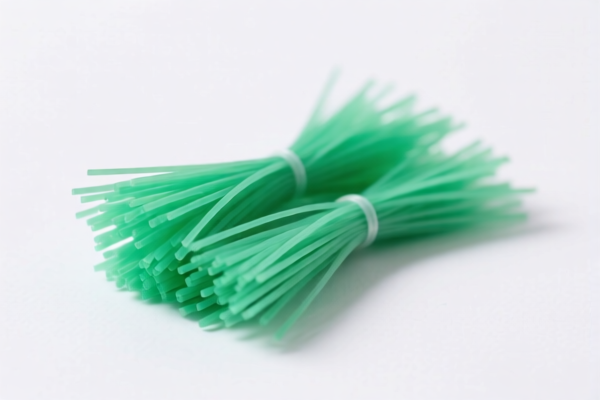
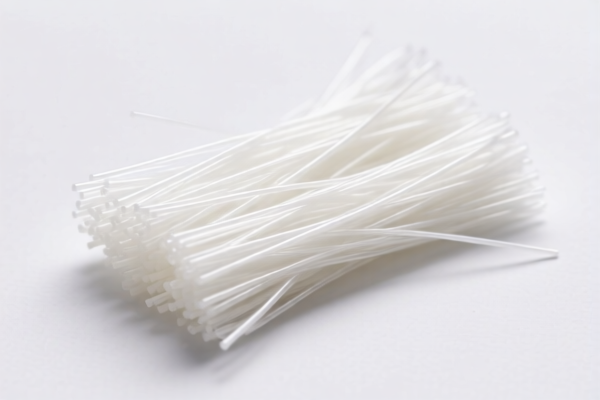
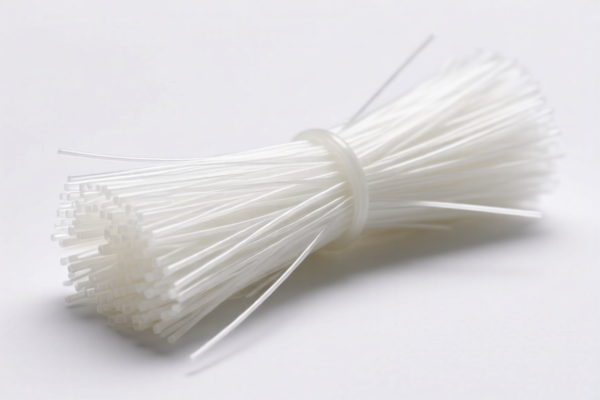
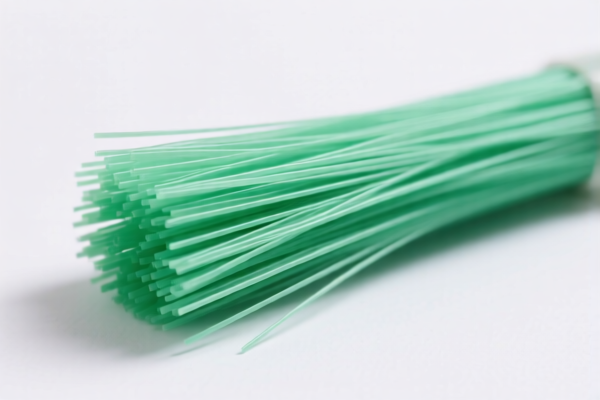
AI Analysis
🧵 Polypropylene Spinning Material (PP Yarn/Strand Feedstock)
🌐 HS Code Reference & Customs Clearance Guide | 2026 Latest Tariff Analysis | Professional Clearance Strategy
📌 I. Product Definition & Classification: Do You Really Know “PP Spinning Material”?
Polypropylene Spinning Material (often referred to as PP Staple Fiber, PP Filament Yarn, or PP Monofilament Feedstock) is a thermoplastic polymer produced by spinning polypropylene pellets into continuous filaments or short fibers. It is widely used in geotextiles, ropes, nets, carpets, hygiene products, and packaging.
In international trade, it is NOT classified as raw plastic pellets (Ch 39) nor as finished fabrics (Ch 54/55), but as Man-Made Continuous Filament Yarn or Staple Fibers depending on its form and twist.
⚠️ Key Distinction Points:
- Un-twisted Monofilaments/Filaments → Often classified under 5402 (Synthetic Filament Yarn);
- Twisted Yarn or Staple Fibers → Often classified under 5503/5504 or 5407;
- Raw PP Pellets → Classified under 3902.10 (NOT spinning material).🚫 Critical Warning:
If you ship PP Pellets but declare as Spinning Material, you risk misclassification. Conversely, if you ship Yarn but declare as Pellets, you may face severe penalties for undervaluation and wrong HS Code.
📦 II. HS Code Classification Details (2026 Latest Tariff Authority Comparison)
| HS Code | Product Description | Application Scenario | Key Feature |
|---|---|---|---|
5402.33.00.00 |
Synthetic Filament Yarn (High Tenacity Nylon/Polyamide) | Not applicable for PP | ❌ N/A |
5402.39.90.00 |
Other synthetic filament yarn, high tenacity, not high modulus | PP Monofilament for ropes, nets, geotextiles | ✅ PP Monofilament (un-twisted) |
5402.61.00.00 |
Other synthetic filament yarn, single yarn (not high tenacity) | PP Yarn for weaving, sewing, basic textiles | ✅ PP Yarn (single strand) |
5402.69.90.00 |
Other synthetic filament yarn, single yarn | PP Yarn with specific finishes or blends | ✅ PP Yarn (specialty) |
5503.20.00.00 |
Polypropylene staple fibers of not less than 3 mm in length | PP Staple Fiber for non-wovens, carpets | ✅ PP Staple Fiber |
3902.10.00.00 |
Polypropylene, in primary forms | PP Pellets/Resin (Raw Material) | ❌ NOT Spinning Material |
🔍 Focus Reminder:
- Monofilament Yarn (single strand, no twist) → 5402.39.90.00 or 5402.61.00.00
- Staple Fiber (short fibers, cut length >3mm) → 5503.20.00.00
- Pellets/Resin → 3902.10.00.00 (Do NOT use this for spun yarn!)
💰 III. 2026 Latest Tariff Rate Details (Including Additional Taxes, Policy Surcharges)
✅ Applicable Country: United States (US)
✅ Country of Origin: China (CN)
✅ Effective Date: From November 10, 2025 (including subsequent imports)
🎯 1. 5402.39.90.00 —— Synthetic Filament Yarn, PP Monofilament (High Tenacity)
| Item | Details |
|---|---|
| Base Rate | 0% (ad valorem) |
| USITC Additional Tax | +25% (from USITC Footnote 9903.88.01) |
| IEEPA Additional Tax | +10% (for China/HK products, from Nov 10, 2025) |
| Total Rate | 45% |
| Tax Calculation | CIF Value × 45% |
| De Minimis Exemption | ❌ Not Available (deny_de_minimis) |
| Legal Path | IEEPA:9903.01.25 → IEEPA:9903.01.24 → USITC:5402.39.90.00 → FOOTNOTE:9903.88.01 |
📌 Explanation:
- "25% USITC Additional Tax" comes from Section 301 tariffs under the U.S. Trade Act;
- "10% IEEPA Tax" is the additional surcharge on Chinese-made products under the International Emergency Economic Powers Act;
- Total 45%, a very high tariff, must be anticipated in advance!
🎯 2. 5402.61.00.00 —— Synthetic Filament Yarn, Single Strand (PP Yarn)
| Item | Details |
|---|---|
| Base Rate | 0% |
| USITC Additional Tax | +25% |
| IEEPA Additional Tax | +10% |
| Total Rate | 45% |
| Tax Calculation | CIF × 45% |
| De Minimis Exemption | ❌ Not Available |
| Legal Path | IEEPA:9901.25 → IEEPA:9903.01.24 → USITC:5402.61.00.00 → FOOTNOTE:9903.88.01 |
📌 Note:
- Same as above, belongs to "filament yarn" category;
- Even if PP yarn is used for geotextiles, nets, or ropes, as long as it is single strand filament, it applies this code.
🎯 3. 5503.20.00.00 —— PP Staple Fiber
| Item | Details |
|---|---|
| Base Rate | 0% |
| USITC Additional Tax | +25% |
| IEEPA Additional Tax | +10% |
| Total Rate | 45% |
| Tax Calculation | CIF × 45% |
| De Minimis Exemption | ❌ Not Available |
| Legal Path | IEEPA:9903.01.25 → IEEPA:9903.01.24 → USITC:5503.20.00.00 → FOOTNOTE:9903.88.01 |
📌 Note:
- PP staple fibers (for non-wovens, carpets) are also subject to 45% total tariff;
- Do not confuse with 3902.10 (pellets), which has different tax treatment.
🛠️ IV. Customs Clearance Practical Advice (Real-World Pitfall Avoidance Guide)
✅ 1. Required Documentation Checklist (No Exceptions)
| Document | Mandatory | Description |
|---|---|---|
| ✅ Product Specification Sheet | ✔️ | Includes fiber type, denier, tenacity, twist, length (staple/monofilament) |
| ✅ Technical Data Sheet (TDS) | ✔️ | Shows tensile strength, elasticity, melting point |
| ✅ Product Photos (Packaging) | ✔️ | Clear label: "PP Spinning Material", model, batch number |
| ✅ Third-Party Test Report | ✔️ | ASTM/ISO standards for fiber strength, dyeability (if applicable) |
| ✅ Commercial Invoice | ✔️ | Must state "Polypropylene Filament Yarn" or "Staple Fiber", NOT "Plastic Pellets" |
| ✅ Certificate of Origin (CO) | ✔️ | If not China-made, claim preferential rates |
| ✅ Packing List | ✔️ | Details gross/net weight, number of packages, dimensions |
✅ 2. Declaration Tips (Key Mnemonic)
🔥 "Yarn is 54/55, Pellets are 39, Mislabeling Costs 45%!"
| Scenario | Correct Declaration | Wrong Practice |
|---|---|---|
| PP Monofilament (un-twisted) | 5402.39.90.00 |
Misdeclare as "Plastic Strip" → 45% |
| PP Yarn (twisted) | 5402.61.00.00 |
Misdeclare as "Fabric" → 32% |
| PP Staple Fiber | 5503.20.00.00 |
Misdeclare as "Cotton Fiber" → 0% (but audit risk) |
| PP Pellets | 3902.10.00.00 |
Misdeclare as "Yarn" → 45% (overpaid) |
✅ 3. Special Case Handling
| Scenario | Handling Advice |
|---|---|
| OEM Custom Yarn | Provide customer order + design specs, avoid being classified as "generic" |
| PP Yarn for Geotextiles | Still 5402.39.90.00, do not use fabric code 5407 unless woven |
| PP Yarn for Medical Hygiene | If sterile, provide additional sterilization certificate, but HS Code remains same |
| PP Yarn for Military | No special exemption, still subject to 45% unless specific waiver approved |
🌍 V. Global Major Market Clearance Comparison (2026 Latest)
| Country/Region | Recommended HS Code | Tariff | Certification Requirement | Notes |
|---|---|---|---|---|
| 🇺🇸 USA | 5402.39.90.00 / 5503.20.00.00 |
45% (China-made) | None specific | High tariff, no de minimis |
| 🇨🇳 China | 5402.39.90.00 / 5503.20.00.00 |
0-5% | CCC (if applicable) | Low tariff, standard clearance |
| 🇪🇺 EU | 5402.39.00 / 5503.20.00 |
0-4.5% | REACH Compliance | No additional tariffs |
| 🇦🇺 Australia | 5402.39.00 / 5503.20.00 |
5% | AICIS Registration | No additional tariffs |
| 🇯🇵 Japan | 5402.39.00 / 5503.20.00 |
0-5.5% | JIS Standards | No additional tariffs |
📌 Conclusion:
- USA is the only market imposing high additional tariffs (45%) on PP spinning materials;
- China-made PP yarn/fiber in US clearance is extremely costly, consider supply chain adjustment or pre-ruling.
📌 VI. Common Errors & Pitfall Avoidance (Lessons Learned)
❌ Error 1: Declaring PP Pellets as Spinning Material
👉 Consequence: Tariff drops from 45% to 0% → Customs audit, fines, retroactive tax!
❌ Error 2: Declaring PP Yarn as Plastic Strip
👉 Consequence: Misclassification → 45% tariff applies anyway, plus delay
❌ Error 3: Using "Plastic Granules" for Yarn
👉 Consequence: Wrong HS Code → Customs rejection, return shipment
❌ Error 4: Not providing Technical Data Sheet
👉 Consequence: Customs cannot verify fiber type → Detention, inspection fees
✅ Correct Practice:
"Polypropylene Monofilament Yarn, Un-twisted, 100 Denier, High Tenacity, for Geotextile Use, Model XYZ, ASTM D1113 Compliant"
🎯 VII. Conclusion: Precise Classification, Save Time, Reduce Costs!
🎯 Remember the Mnemonic:
🔹 "Yarn is 54/55, Pellets are 39, Mislabeling Costs 45%!"
🔹 "HS Code determines life, 25% difference, declaration mistake costs thousands!"
📌 Tips:
If your PP spinning material is originated from Vietnam, Mexico, Thailand, Malaysia, you may claim IEEPA exemption, tariff only 0-5%;
Suggest applying for Advance Ruling in advance to avoid clearance risks.
📣 Take Action Now:
📞 Contact professional customs broker + Provide product specs + Apply for HS Code Advance Ruling
🚀 Let your PP spinning material clear customs smoothly, export efficiently, double profits!
✨ Professional Clearance Starts with Precise Classification!
💼 Every cent of your cost deserves precise calculation!
Customer Reviews
About HS Code Classification
The Harmonized System (HS) is an internationally standardized nomenclature developed by the World Customs Organization (WCO) to classify traded products. Over 200 countries use the HS system as the basis for customs tariffs, trade statistics, and import/export regulations.
Each HS code follows a hierarchical structure:
- Chapter (2 digits) — Broad category of goods (e.g., Chapter 84: Machinery and Mechanical Appliances)
- Heading (4 digits) — More specific grouping within the chapter
- Subheading (6 digits) — Internationally standardized breakdown, used by all WCO member countries
- National subdivisions (8-10 digits) — Country-specific extensions for further classification, such as US HTSUS 10-digit codes
Correct HS code classification is essential for smooth customs clearance, accurate duty payment, and compliance with trade regulations. Misclassification can lead to customs delays, overpayment of duties, or penalties.
When importing from CN to US, the applicable tariff rates may include:
- Most-Favored-Nation (MFN) rate — The standard duty rate applied to WTO members
- General rate — Applied to countries without trade agreements
- Trade remedy duties — Additional tariffs such as Section 301 (anti-dumping), Section 232 (national security), or countervailing duties
The information provided on this page is for reference purposes only. For official classification, please consult with your local customs authority or a licensed customs broker.